Showing posts with label Character. Show all posts

Thursday, 19 January 2023

The Interaction of Characters and Their Settings


Have you ever read a book that had some lovely passages of description, but you still wanted to skip over them? You might be the kind of person who prefers action, and you want to get on with the story rather than knowing the intricacies of Aunt Muriel’s petunias. But another reason is that the description is sitting all by itself and not interacting with poor Aunt Muriel.

I was a social psychology lecturer for 25 years, and environmental psychology was one of the topics I taught. In a nutshell, environmental psychology looks at how people and settings co-influence one another.

  • People affect natural and built environments in both positive and negative ways.
  • Natural and built environments affect people in positive and negative ways.
  • Unlike the boy band, these effects do not just go in One Direction. They interact with each other, such that people affect the environment, which in turn affects people, who in turn affect the environment and so on. (And yes, I realise One Direction has broken up.)

So, what has all of this got to do with writing fiction? Think about it in terms of your setting. Are your characters interacting with their settings or are you just telling us what’s in the setting? Let me give an example.

Interacting With Settings

An Example

I read a manuscript extract in which a woman came home and went into the kitchen to make dinner. The author then gave a long paragraph describing the kitchen. She had really put a lot of thought into it and had excellent skills at technical writing. The walls weren’t just blue or yellow, they were particular shades, like the types you would find on a painter’s chart. Kitchen utensils and pots were hanging from hooks on the ceiling. There was a clear description of the layout of the room, including a window over the sink that looked out across the yard.

However, there was just one problem. The description was static. It was as if the character stood to one side while the description of the setting played out. There was no interaction between the character and the setting. 

Show, Don't Tell

Some good old ‘show don’t tell’ would have gotten across the same information. Instead of the author telling us that pots were hanging from the ceiling, the character could reach for one of the pots and put it on the wooden bench. She could open up the pantry cupboard and move aside the cereal boxes to find the pasta. She could go over to the sink and look out the window while rinsing the cutting board she needs to use. That kind of writing is much more engaging than simply giving us a description. By showing the character interacting with the environment, we're not only getting an idea of the setting, but we're also learning about the person.

Avoid Information Drops

Another advantage of having your character interacting with the setting is that you can drop information in a bit at a time when needed, rather than doing the dreaded info dump that encourages a reader to skip over the boring bits. We don't need to know that Grandpa's hunting knife is in the kitchen drawer until someone uses it to carve the Sunday roast.

Setting as Character

In some books, the environment plays such an important role that it is like a character in itself. For example, Susan May Warren set about half of her novel The Way of the Brave on the snowy slopes of Denali in Alaska, where the characters had to fight the elements to stay alive. If you write biblical fiction, think about what it would have been like for Noah and his family to spend so long in the Ark while waiting until the ground was habitable again. Or what would it have been like for the Israelites to spend 40 years in the wilderness? How would you have liked living in a tent with your family for all those years?

Questions to Ponder

Now think about your current work-in-progress.

  • Are your characters riding the boundary of their drought-stricken farm to check the livestock? Show us the desolation of the land and the riders.
  • Are two people walking through the CBD of a large city? Maybe the traffic is so loud that they have trouble hearing each other, so they have to shout or move to a quieter location.
  • Are they stuck in a crowded elevator? Give us a sense of the claustrophobia and panic as it sets in. Is he loosening his tie? Is she thumping the call button?
  • Do they go fishing and toss their empty drink cans into the river? Or do they spend Saturday mornings doing litter parade at the beach?
  • Do they rearrange the tables and chairs in a coffee shop so that everyone in their group has plenty of room, or do they squish up so there’s four in a booth that usually seats two?

There is a myriad of possibilities, but whatever decisions you make, be sure that your descriptions are advancing character or plot. Don’t just have it rain for the sake of it. Have it rain so we can see how the caterer copes with the quickly rejigged garden party, or so the hero and heroine have to stand close together under a tree to stay dry.

Do you have examples of novels that have done a particularly good job of showing the person interacting with their environment? I’d love to hear your examples.

Author Bio

Nola Lorraine (aka Nola Passmore) has a passion for faith and social justice issues, and loves weaving words that inspire others with courage and hope. Her inspirational historical novel Scattered was published in 2020, and she also co-edited the Christian charity anthology Glimpses of Light with Jeanette O’Hagan. She has more than 150 short publications, including fiction, poetry, devotions, true stories, magazine articles and academic papers. She and her husband Tim also run a freelance writing and editing business, The Write Flourish. She’d love to connect with you through her website: www.nolalorraine.com.au


Photo Sources

Author photo by Wayne Logan at WRLPhoto.

Surfing dog by StarFlames on Pixabay.


Monday, 31 October 2022

Writing for Children: The Genesis of Pepper Masalah

Rosanne Hawke

When I was six I wrote a story about a cat sitting on a mat. Those were the words I could safely spell but what I really wished was to write an exciting story with interesting words.

Writing for younger readers involves our best writing, interesting words, exciting plots with genuine characters and voice. You may say that’s the same for any age group and you would be correct. So what’s different? For younger readers you’ll also need a child (or animal) main character and a topic that children will be intrigued by. Hmm, take a cat and a storm.

One night on our farm a huge storm blew up and my black cat Harry disappeared. Maybe he was disorientated by the storm and the damage in its wake, for he never turned up. I pinned up posters: a photo of him squeezed into a basket, his huge yellow eyes staring into the camera, and above: Have you seen Harry? No one answered and I hope he’s having a good life somewhere.

People consoled me with their ‘lost cat’ stories. One said, ‘We couldn’t find our cat when we had to leave our holiday place and had to leave him behind. He came home fourteen months later. Apart from sore feet, he was fine.’ Fourteen months went by and Harry didn’t return. I read many stories online of cats who disappeared and reappeared. One sneaked onto a plane bound for France and because she was microchipped the airline was able to send her home. 


All my previous cats were farm or rescue cats so I bought a cat that was born in a cattery. A beautiful black British Shorthair who thought he was a prince and had no idea he could go outside and get lost. My daughter Emma helped me name him Pepper Masalah. He was a spicy cat with great orange eyes and a purr like a generator. He loved carpets and so a story was born.

What if a black cat was sitting on a special carpet and a storm caused the branch of a huge olive tree to crash through the lounge room window. The wind whisked the carpet and cat outside and up in the air, seemingly flying on the wind. But what if the carpet had a heart and the wind had woken it. It wanted to find its master in Kashmir but it had been asleep for hundreds of years. Flying isn’t easy to get used to after being dormant for so long. The carpet would keep landing in the wrong place until it found its wings. And only Pepper Masalah could make it fly.

The children I told this story to during Bookweek loved it and ran to get the globe to see where Pepper and the carpet could land next. The MS went to some publishers but wasn’t accepted. When I told this to a class a student said, ‘You need a boy on the carpet. I’d like to read a story like that where I could fly.’ I rewrote Pepper Masalah and the Flying Carpet with a boy called Zamir who shared in the adventure. After this rewrite, the first publisher I sent it to, said, ‘Yes, we’re looking for stories like this.’

So you see, I really did manage to write a story about a cat sitting on a mat that has more interesting words. And this is what I learned through it all: 

1) That real life needs to be fictionised to work well in a story. Pepper Masalah is now a female cat in the story as there were too many incidences of the pronoun ‘he’.

2) I had to be willing to change my original ideas. 

3) I asked the readership what they thought would make the story work better.

4) To rewrite and never give up on a good story.

5) To have confidence because what one publisher doesn’t need on their list may be a treasure to another one.

Book 1, Pepper Masalah and the Flying Carpet, due March 2023 at Wombat Books.

Beautiful illustrations by Jasmine Berry

Pre-order at https://wombatrhiza.com.au/wombat-books/junior-readers-6/ 


Rosanne Hawke is a SA author of over 30 books for young people. She has been a teacher, an aid worker in Pakistan & UAE, and a lecturer in creative writing at Tabor Adelaide. Her books explore cultural and social issues, history, mystery and faith. She often writes of displacement and reconciliation and tells stories of children unheard. Her novel Taj and the Great Camel Trek won the Adelaide Festival Award for Children’s Literature and was highly commended in the 2012 Prime Minister’s Literary Awards. Rosanne has a PhD in creative writing and is the recipient of 4 fellowships, the Nance Donkin Award for a woman author who writes for children, and a Bard of Cornwall.

Monday, 25 April 2022

Characters can Change your Story - Rosanne Hawke

 A year or so ago I sent a copy of my out-of-print YA novel called The Last Virgin in Year 10 to Rhiza Edge to see if they’d republish. The publisher said to rewrite and update it, then they’d see. What transpired defies definition. 

I quickly discovered that I couldn’t rewrite with the same character. The original one needed to change too much and the rewrite wasn’t working. It was like painting a new colour over a different one that was still wet – the colour wasn’t true. Thus, a new character arrived on the scene who could manage the text, plot, and its changes. Essie Pederick. 

When a new character like Essie walks onto the page I do a mind map to get to know her. I like to discover everything that you would want to know of a friend you’ve just met, like personality, likes and dislikes, sports, music, food, dreams, family and cultural background. Particularly, I need to know what the character wants the most. When I can work that out, then the story can start because this information will form the character’s motivations and therefore affect her goals. This then makes the plot turn so the story can move. It’s good for me to know her fears, special talents, and where the character needs to grow (i.e. her flaws). This all helps build the plot as well as having a well-rounded character. It also enables the character to reach a satisfying ending. 

New writers have said to me, ‘I love writing. Rosanne, I’ve even started ten stories but I can’t finish them.’ I ask them what they know about their characters. What is it they want to do? Often the writer will say, ‘Oh I’m writing an adventure, or fantasy. Do I need to know that?’ I gently say that whatever genre we write we need to know our characters well because they make our story and, as I found, can change it too.

Essie Pederick in Flying Blind is a person who is kind and easily manipulated. She has a new set of motivations, desires, goals and a new setting. she isn’t a city girl like the previous character. Essie is a country girl living in a coastal town on the Yorke Peninsula. Liking swimming, music and dogs is probably the only similar attributes Essie shares with the previous character. She is rekindling a relationship with a workaholic dad and navigating a manipulating friendship which involves gaslighting. Thus, Essie grows from emotional immaturity to more maturity in navigating friendships and gaining spiritual insight. But it’s not an easy road to travel. 


Some parts of the plot are similar but any kept text had to be rewritten to be seen through Essie’s perspective. Most importantly, the voice of the first-person narrator has changed. The people she interacts with become different also because they’re relating to a different girl. 

Probably I should have started with a blank page, but there were some plot points I wanted to keep. However, I rewrote all scenes with Essie’s perspective and voice. I deleted most of the original scenes and words and wrote a lot of new ones. Flying Blind is 10,000 words longer than the original. I wrote new material for the early chapters. Gave more scenes to Essie’s little sister, her father and new friend Jowan. A lot of the new material shows another new character, Chloe and how her behaviour is affecting Essie and making her anxious. Even with some similar plot points the story has become totally reconstructed. It is fresh, different. It’s proved something to me that I had always told my students: It is the character who makes the story what it is. Put a new character into a story and the story will change.

Writing Flying Blind has felt like writing a new book using some plot ideas that I’d thought of previously. The structural edit picked up anything I’d left in that didn’t suit Essie. It’s been an enriching experience. But what is a book like this called? It’s too changed to be a new edition, a rewrite, an update or a re-creation. It’s still the same form, i.e. a novel, so it’s not a remake. Is it an adaption, a reconstruction, inspired by the previous book? Or, is it a transmutation? This is my favourite definition of writing Flying Blind. What do you think?


Monday, 30 November 2020

Has anybody Seen my Muse?


by Anusha Atukorala


The other day I was hunting for my runaway shopping list. I hunted here and I hunted there; I hunted everywhere. But no! Like a magician's rabbit who had performed a vanishing trick, my little notebook had completely disappeared from sight. Until … I opened one of the current books I was reading  … and voila! There it was. Hooray!


Have You found anything precious inside a BOOK?  


I’ve found plenty of valuable nuggets inside books. Like … joy from stories that crept into my heart, head knowledge that came from books, heart knowledge that also came from books, courage from tales of bravery, smiles from jokes and humour, wisdom from learned authors, relaxation when chuckling through a good yarn, deep sleep through a good book at bedtime, camaraderie through books shared with friends, a thumping heart when glued to a page-turner, hope from inspirational writing. And more. So much more. For like feasting on delicious morsals  at a banquet, in books too I find numerous delectable goodies that fill and satisfy me.


Early in 2020, my brain hummed with a plethora of writing ideas. I made some impressive writing plans. I even enjoyed lots of extra time to write, courtesy of Covid-19. But now … as I look back on the year that’s fast waning, I don’t have much to show as a Christian writer.


Has anybody seen my muse?


I did find something more precious than gold in a BOOK I’ve read every day of 2020. I’ve had more time this year to pursue God. Like a parched traveler finding an oasis in an arid desert, I’ve been drinking from the inexhaustible spring of the Waters of Life. Through the written Word and the Living Word, I’ve found Life. Hope. Sustenance. Blessing.


So perhaps 2020 has not been a waste after all?


Watching Avatar the movie some years ago, it struck me 

forcibly how we humans borrow God’s ideas. All. The. Time! 

The beings in the planet portrayed in Avatar were so similar to

 humans—with arms, legs, eyes, noses, mouths just like ours

 and tails like those of animals.


The plants in that planet were a whisper of our God’s creation. 

The beauty in that sphere was a reflection of the earth’s loveliness.


The truth is that we can never improve on our Creator's work

when making a movie or in writing a story, for every idea we 

have comes from Him. The exciting reality then is that the 

closer we get to Him the better we can tap into Him and His

creativity. No, I haven’t done much as a writer in 2020. But I

have done one thing well. 


I’ve called it my Year of Jesus, and my Year of Jesus it has been!


So perhaps it was simply a divine pause in my life? 

Perhaps it was a year of being renewed in order to serve Him better in in 2021?


Have you, in 2020 …

1.     Read books?

2.     Edited stories?

3.     Written book reviews?

4.     Encouraged other writers?

5.     Walked with the hurting and helped others?

6.     Cared for family and friends who needed you?

7.     Simply obeyed God in all He asked of you each day?

8.     Drew closer to Jesus, the One who holds all things together?

9.     Chalked up life experiences that you can now use in your writing?

10.  Took a break from writing because of other more important callings?

11.  Lived life the best you could each day in spite of tough circumstances?

12.  Battled difficulties and tough times to become a better version of yourself?


If you have done any of the above, you can hold your head up high. And even if you simply  kept on living, that is something to be proud of. Sometimes life is so hard that just to keep on going is an achievement in itself. 2020 was a year that challenged me and helped me grow and stretch. And that is what I call a really good year even if it doesn’t always feel that way.


As I’ve sought my Muse-giver, in Him I’ve found my muse. 

For in Jesus is life and hope and truth. His light pierces the 

darkness of Covid-19 and the bleakness of our world. 


This Christmas, may you find in Jesus, all that you desire.


And from the the challenging year of 2020 may you birth 

a rich and fulfilling 2021!


Keep writing!


Anusha’s been on many interesting detours in life, as a lab technician, a computer programmer, a full time Mum, a full time volunteer, a charity director, a full time job chaser, until one golden day (or was it a dark moonless night?) God tapped her on her shoulder and called her to write for Him. She has never recovered from the joy it brought her. She loves to see others enjoying life with Jesus and does her mite to hurry the process in her world through her writing and through her life. The goodness of God is her theme song through each season, as she dances in the rain with Jesus.


Her first book Enjoying the Journey contains 75 little God stories that will bring you closer to your Creator. Her 2nd book ‘Dancing in the Rain’ brings you hope and comfort for life’s soggy seasons. Her 3rd book, ‘Sharing the Journey’ is a sequel to 'Enjoying the Journey' and was released in March 2020.


Do stop by at her website Dancing in the Rain to say G’day!


Her latest Blogs are found at Light in the Darkness - where she continues her writings on the Truth who lights up this dark world  - JESUS!


Anusha's Books


A collection of 75 little God stories to bring you closer to our Saviour.


Words that will bring comfort and hope during life's tough seasons.


A sequal to Enjoying the Journey. 75 more stories that will bless and inspire.


Anusha's Facebook Author Page

Anusha on Good Reads


Thursday, 20 July 2017

Digging Deeper With Character by Nola Passmore


(Photo from photobucket.com; 
http://i703.photobucket.com/albums/ww33/bacalacabuckett/wed-nov16-dog-winter-games.jpg)


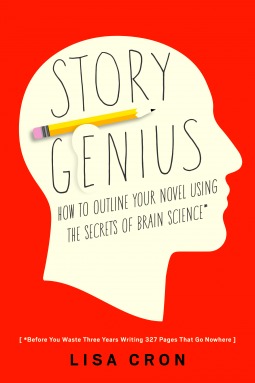
My protagonist has a really clear goal.  Maggie is a young Englishwoman travelling to Nova Scotia in 1881 to find her young brother and sister who've been sent to Canada as part of the Home Children program (a scheme that sent orphans and waifs from England to homes and farms in Canada). She was working abroad as a governess when their mother died, and the children were shipped off to Canada without her knowledge.  Sounds like a pretty good premise, doesn't it?  Well I thought so, until Lisa Cron arrived and shook my world.  Lisa Cron is the author of Story Genius: How to Use Brain Science to Go Beyond Outlining and Write a Riveting Novel.

If someone had asked me a few months ago about my character's motivation, I would have said that she wants to reunite her family.  If they'd asked why, I would have looked at them with a blank expression.  Well isn't it obvious?  Anyone in that situation would want to find their siblings and reunite their family.  The trouble is that I was looking at the external motivation without considering what was going on under the surface.  In Story Genius, Cron shows how to dig deeper to find out what your characters are really about.  What is the internal struggle going on that's fleshed out in the plot?  Do they have misconceptions that drive their behaviour?  Who were they the day before your novel began and how is that going to change as the novel progresses? Without that underlying conflict, the story can just become a bunch of things that happen, regardless of how beautifully written it is.


To avoid spoilers, I don't want to say too much more about my novel, except that I've discovered Maggie's main issue is abandonment.  Instead, let me use a hypothetical example to show you how 'digging down' might work.

Imagine your protagonist, Miranda, has a dream of becoming the CEO of a large corporation.  She starts out as an Administrative Assistant and overcomes a barrage of obstacles to finally reach the top.  However, the story won't necessarily engage the reader.  Unless we can connect with Miranda in some way, we won't want to go with her on the journey.  We won't care if she makes it or not. To build a connection with readers, you need to go deeper into her motivation. Why does she want to get to the top?  There are many possible reasons, but let's say she wants to have a job where she can earn a lot of money.  Why does she want to earn a lot of money?  So she can buy the things she's always wanted (e.g. nice clothes, house, car, travel).  But why does she want those things?  It's because her family didn't have a lot of money when she was growing up and she often missed out on things like a new dress.

So far, we've discovered some of the reasons that make Miranda tick, but it's still pretty general.  Most people would like more money so they can buy things they want.  Why does this mean so much to Miranda?  Think of a specific event when she couldn't afford something she wanted.  How about this?  When she was in Grade 10 at school, a boy she liked asked her to the school dance, but she didn't have anything suitable to wear.  She couldn't afford to buy a new dress and she didn't want to wear one of her old ones because some of the girls at school had previously made fun of her clothes.  So rather than be embarrassed, she turned down the invitation.  The boy asked someone else to the dance and she stayed home.  So how did that make her feel?  She felt like she was a second-class citizen who wasn't as good as the other girls.  She felt unloved.  What is the incorrect belief that guides her current behaviour?  She thinks that if she can rise to the top of the corporation and earn a lot of money, she will finally gain the love and acceptance she craves.  However, this is a mistaken belief because money doesn't guarantee love and happiness.  The plot then shows Miranda's internal struggle and we see her change over the course of the novel.  There's still more drilling down to do, but hopefully you're getting a sense of what is needed.  It's the internal struggle that drives the plot and builds connections with readers.

Lisa Cron explains it much better in her book, with lots of examples and practical tips.  I highly recommend Story Genius if you want your novel to really connect with readers rather than just being pretty prose that goes nowhere.  Now I just have to apply that advice to my own novel!

Could you dig deeper with any of your characters?  I'd love to hear your thoughts.


Nola Passmore is a writer and editor who has had more than 140 short pieces published, including fiction, poetry, devotions, magazine articles, and true stories.  She and her husband Tim own and operate a freelance writing and editing business called The Write Flourish.  You can find her weekly writing tips blog on their website.  She is currently penning her ever-changing debut novel, which involves lots of digging down :)

Website: http://www.thewriteflourish.com.au/
Facebook: https://www.facebook.com/TheWriteFlourish/
Twitter: https://twitter.com/NolaPassmore


Thursday, 8 December 2016

A Life of Their Own


Have you ever felt as if your characters have taken over your story? In one of my works in progress my characters keep taking over the narrative. I want the tale to go in a certain direction and voila I wake up the next day and the characters insist on doing their own thing. I mean, how rude? I’m the author and so I should be the boss of my story. Right?

I suspect something like this is happening:

It was quiet. The author had gone to bed but Chloe couldn’t sleep—not now that she’d found out what could happen to her. She stared at the screen that was the barrier between herself and her creator. What could she do? She didn’t want to die.

It was a conundrum. She had only just become aware of the screen and that there was someone on the other side determining her destiny. What right had the author to dictate her fate? That she could die in 1952? It wasn’t fair and it wasn’t right. But, other than Ethan possibly saving her, what could she do about it? She had to save herself.

Chloe reached out and touched the screen. She thought it might have been electrified but it was cool to the touch. She placed both hands on the shimmering surface and to her astonishment they went through the iridescence. She stumbled forward and found herself in another realm.

She caught her breath. How could this be possible? Then again she’d travelled in time and space from present day Melbourne to 1950s France. That hadn’t been impossible—not according to the author—so why couldn’t she leap beyond the story? She was real—in all the ways that mattered—and she could determine her own destiny.

Chloe glanced around the room. She was in a house not that much bigger than her own. She smiled to herself at the snoring coming from what must be the bedroom then jumped as a little voice behind her said, “Hello.” She let out a nervous giggle when she realised it was a small, pet bird.

The snoring stopped and she held her breath, cursing her lack of self-control. What would she do if she were discovered? But the snoring resumed again and all was well.

Chloe turned her attention to the computer. She’d memorised the password from the last log on and it was simple to find the file. She frowned as she read through the latest chapter. This would never do. She pondered for a moment. If she erased the text, the author would just rewrite it. Chloe didn’t know if she’d be able to escape from the pages again any time soon. The author usually shut the computer down at night. She bit her lip as she searched through the other files. Research … character … outline ... . That was it!

Chloe opened the file. Her eyebrows lifted as she read. She hadn’t thought of that outcome! She chewed on her lip again and a small smile quirked on her lips as she began typing.

The sky outside held the first blush of dawn when Chloe finished her work. She stood, stretched and placed both hands on the cool screen. In an instant she was back in her own world. At least now her destiny was surer.

The antagonist watched as Chloe reappeared through the shimmering screen and hurried away down a dark street. He’d been waiting for his chance ever since he’d seen her disappear into that other world. He placed his hands on the screen as she had done and leapt. He smiled with delight as he sat at the desk, cracked his knuckles and began to type.

Several hours later, the author plonked down into her seat and placed a steaming mug of coffee on the desk next to her computer. She yawned as she logged on but the yawn developed into a sigh. The outline file was open—again. Who was it this time? Last week it was Ethan who seemed to have a life of his own. Didn’t these characters realise that she, the author, was in charge? Why did they always want to take over? She pondered for a while then decided that this would be a great topic for a blog.

It fascinates me that this phenomenon happens again and again when I write. Well … characters don’t literally leap out of the screen and rewrite the story. Mind you, sometimes it would be good if they could. It would help me dig myself out of those dreaded plot holes. But most of us have experienced the protagonist who refuses to behave in the way we want them to. The characters take over the story and leave us, the creators of the work, to clean up the mess.

I once heard author Diana Gabaldon talk about the writing of her Outlander series. In the initial stages she tried hard to give Claire, her female protagonist, an eighteenth century voice but she kept sounding like a 20th century nurse. In the end Diana gave up and constructed a scenario where she could get this 20th century woman into the eighteenth century. The rest, as they say, is history.

There is an element to every creative process that goes beyond the normal workings of our rational mind. The creative brain (mind, soul, spirit) reaches into places we would never have dreamed of going ourselves (or maybe we would only have gone there in a dream). It makes writing a wonderful, crazy voyage of discovery.

How about you? Have you had characters take over your story. Do they have a life of their own? Did it help or hinder the story? Please let me know in the comments below :).


Sue Jeffrey was born in Scotland but moved to Brisbane, Australia with her family when she was just a wee lass. After a childhood spent reading, drawing and accumulating stray animals, Sue studied veterinary science and later moved to Adelaide where she worked as both a vet and a pastor. After a sojourn of several years in the Australian Capital Territory, Sue returned to Adelaide with two dogs, a very nice husband, and a deepdesire to write. Sue has a MA in creative writing and her short stories and poems have appeared in several anthologies including Tales of the Upper Room, Something in the Blood: Vampire Stories With a Christian Bite and Glimpses of Light. Sue won the 'short' category in the inaugural Tabor Adelaide/ Life FM 'Stories of Life' award and her e-book, 'Ruthless The Killer: A Short Story,' is available from Amazon.com. Sue also paints animal portraits.