Showing posts with label reading. Show all posts

Thursday, 19 March 2026

Perfection Not Required!

by Anusha Atukorala 


Ever since we came to this beautiful Land Down Under, 27 years ago, our local library has enjoyed plenty of custom from all three of my family, and especially from little old me! I’d often emerge after a browsing session, carrying over 40 books. And how wonderful to know that that number was still less than half the number of items anyone is allowed to check out at a given time! Amazing! Thank You God for libraries!

A few months ago, I discovered that I had plenty of unread books in my own personal collection. The fact is, I always gave priority to my library books, since they needed to be returned by a certain date and therefore, I never seemed to get to my own. I had to do something about those unread books! Before my two cataract operations, the first in mid-January this year, I plunged into a frenzied de-cluttering and re-arranging spree of all of my books in our bedroom, and placed all my unread books (mostly gifts) on one shelf for easy access. Brilliant!

After my first surgery, I was delighted that I could SEE clearly again! What a difference good eyesight made! The titles of the books on my bookshelves were not a vague blur as they used to be … I could even read the titles while lounging on my bed, a fair distance away. I stopped borrowing too many from the library so I could concentrate on those close at hand. One of the first books that I read was Christian fiction – a long novel it was. I had no idea if I’d found this book at a second hand bookshop or if someone had gifted it to me. I mostly read secular fiction or Christian nonfiction, so this was unusual.

At first, the story seemed to be a basic plot. There was also quite a bit of head hopping … hmm … how good would this story be? And was it worth my time? As I kept reading, I decided it was. I even began to find great enjoyment in the story. Its main character Sophie became very real to me. She had a beautiful faith and a gentle heart that impacted others around her for good. Although the Christian content was perhaps too explicit for my liking, it still continued to capture my interest. I stayed with it for all 425 pages of it, finally loving the story and especially the happy ending.


And what did I learn from reading this story? That as Christian writers, perfection doesn’t have to be our aim. Yes, God calls us to excellence, and we need to do the best we can. Yes, we must take our writing seriously. We must work hard to polish and cultivate our craft. But … perfection? Now that is another matter! Perfection rarely exists on this side of eternity. 

The thing is, that if we don’t get to publish our writing because we can’t stop editing it … no one will ever read our work. If we compare our writing with other gifted writers, we might give up in frustration, hanging our heads in shame down like a child who’s been sent to her room as punishment for bad behaviour. We each have a calling from our Almighty God. Psalm 139 verse 16 says, “All the days ordained for me were written in your book before one of them came to be.” Psalm 139:16 Which means that He who created us, planned that you and I would write for His glory, well before the beginning of time! Wow!

So here’s my encouragement to you today, dear friend. If you feel less than enough as a Christian writer, think again. If He called you to write (and you know He has), your best is good enough. Your efforts to write as well as you can for Jesus is enough. You can communicate the love of God, even without a perfect story. You can communicate the heart of God, simply by following the whispers of the Holy Spirit. Yes, we need to aim at excellence in our craft and with all of our being. But self-condemnation and comparison with other writers is not required.

What IS required is a humble trusting heart, a pen yielded to the God who writes our own stories and a desire to be used of Him. So ... what are you waiting for? Keep sharing the stories He laid on your heart. In the bigger scheme of things, reviews or the lack of them, the number of books you sell or don’t sell isn’t what is most important. Reaching hearts, one at a time, is a goal we can all aim at. Doing what you can, when you can, how you can, with our faithful God’s help, is all that’s needed. So keep those stories coming, dear friend and let your voice be heard. God’s created you to bless and build His world. It won’t be complete without you and your awe-inspiring stories! Keep writing!


P.S. As for our spiritual lives, now that is a tad different! Jesus said to his disciples, "Be perfect, therefore, as your heavenly Father is perfect." Matthew 5:48  Like our books, our lives too will not reflect His perfection, this side of heaven, but our goal is to become like Jesus. So let's work long and hard on our books, and let's work even harder to become more like our Creator, the Author of each of our stories, JESUS!


Anusha’s been on many interesting detours in life, as a lab technician, a computer programmer, a full time Mum, a full time volunteer, a charity director, a full time job chaser, until one golden day (or was it a dark moonless night?) God tapped her on her shoulder and called her to write for Him. She has never recovered from the joy it brought her. She loves to see others enjoying life with Jesus and does her mite to hurry the process in her world through her writing and through her life. The goodness of God is her theme song through each season, as she dances in the rain with Jesus.


Her first book Enjoying the Journey contains 75 little God stories that will bring you closer to your Creator. Her 2nd book ‘Dancing in the Rain’ brings you hope and comfort for life’s soggy seasons. Her 3rd book, ‘Sharing the Journey’ is a sequel to 'Enjoying the Journey'.


Do drop in on her two websites to say G’day! She’d love to connect with you.

Dancing in the Rain 

Light in the Darkness


Monday, 25 October 2021

Adult Literacy: Are We Part of the Problem or Part of the Solution?


Many years ago, I knew a woman who'd recently become a Christian. Her first Bible was written in a fairly easy-to-read translation, and she enjoyed reading it. She could understand it. Then one day, I was attending a Christian talk with her, and the speaker made a couple of throwaway comments about this particular version of the Bible. He didn't like it because of a couple of points in the translation. His talk wasn't about Bible translation. He wasn't aiming his comments directly at my friend. He simply dropped those couple of snippets and moved on. But they had an effect. My friend got the impression that she didn't have the 'right' Bible and that she needed to get a 'proper' Bible.


I was annoyed at the time, and I'm still annoyed more than 30 years later. Why? Not because of some finer points of Bible translation, but because this Bible was at a reading level that was comfortable for my friend. Many people have been blessed by this Bible, it sells millions each year, and I have a copy of it next to my bed that I read every night. It's not my main study Bible, but I enjoy reading it. Why put unnecessary barriers in front of people that would make it hard for them to read and understand God's Word?

When looking at children's literacy, we understand that there are a range of different reading levels, and there are different kinds of books that cater to this. However, when we see an adult, especially in Western culture, we assume they can read and do so at a reasonable level. 

My view of this was challenged recently when I watched an excellent SBS documentary series called 'Lost for Words'. Across three episodes, it followed eight adult Australians with literacy challenges. Two of them could only recognise a few sight words. The others could read a bit, but had trouble with a lot of everyday reading tasks that most of us would take for granted; such as reading a public transport timetable, sending an email or looking for ingredients in a supermarket. They were placed into an intensive reading program, and it was amazing to see their progress over the course of the series. If you're in Australia, you can watch the series on SBS On Demand. 

When we write for adults, do we assume everyone has a high reading level? Do we dig out the thesaurus to find fancy words? When writing Christian books, devotions and study guides, do we use Christian jargon that a lot of Christians wouldn't even understand? Do we see an adult reading a comic book and secretly think they should have left those behind in childhood? Do we inadvertently leave people out of 'the conversation' because they can't read it and understand it?  I'm talking to myself here as much as anyone. 

So What Can We Do?

  • Many people with reading challenges have been shamed in the past and have become adept at hiding their gaps in literacy. Let's watch our own attitudes, expectations and stereotypes and try to create an atmosphere in which people with literacy challenges feel accepted rather than further shamed or stigmatised. 
  • Think about our audience. Are they people with theological degrees? People who've successfully completed high school? The average person on the street? That 'average' person may be someone with a learning disability, someone who has English as a second language, someone who had disrupted schooling due to family trauma. How do we craft our words so that we don't exclude people?
  • By all means use a thesaurus to help you think of other words for variety or for different shades of meaning. But don't use a thesaurus to come up with highfalutin words that make you look clever without regard for the reader. (Actually, 'highfalutin' might be one of those highfalutin words!)
  • If you have to use an unfamiliar or technical term, use context to help the reader grasp what you mean. For example, if you're writing a book set in the 1800s, you might want to use the term 'portmanteau' rather than 'suitcase', as it's more historically accurate. However, you can help the reader by hinting at its use. For example, 'Helena packed her clothes in the new portmanteau she'd bought for the trip.' If you have a lot of technical terms, you could also consider using a glossary. It's not about 'dumbing down'. If we believe God wants us to share his love through our stories, memoirs, poetry, devotions and more, shouldn't we do our best to make our words clear? 
  • Think of alternative ways of presenting your material. For example, audiobooks are wonderful for people who find reading difficult. However, you still need to make the language accessible. Depending on the type of work you've written, summaries and recaps can also help. For example, mystery novels often have sections where two or more characters get up to speed on the latest clues or evidence.
  • Children's stories are often presented in different ways for different reading levels. For example, books featuring superheroes or the characters from children's films such as 'Frozen', have been produced as picture books, early readers, chapter books, comic books, graphic novels and junior novellas or novels. Could our work for adults also be presented in different ways? 

So what happened to the friend I mentioned at the beginning of this post? She did buy a different version of the Bible, and God obviously blessed her with his Word because she's still a Christian today and going strong with the Lord. In spite of all of our efforts, we need to remember that it's the Holy Spirit who helps us to understand God's Word in spite of human failings. May the Holy Spirit guide us as we seek to share the message God has placed on our hearts.

Further Reading

In a recent post about adult literacy for the ACW site, I included some further suggestions and links to literacy organisations and resources. You can read it here.

Photo Credits

Featured photo of alphabet by Monfocus on Pixabay.

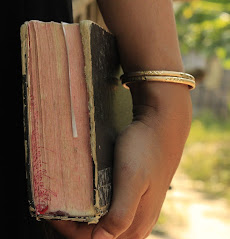
Girl holding Bible by Tep Ro on Pixabay.

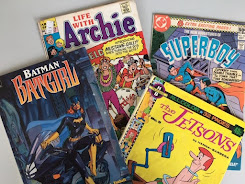
Comics from the author's collection. (Yes, she still reads comics!)

Author Bio

Nola Lorraine (aka Nola Passmore) has a passion for faith and social justice issues, and loves weaving words that inspire others with courage and hope. Her inspirational historical novel Scattered was published in 2020, and she has also co-edited the Christian charity anthology Glimpses of Light with Jeanette O’Hagan. She has more than 150 short publications, including fiction, poetry, devotions, true stories, magazine articles and academic papers. She and her husband Tim also run a freelance writing and editing business, The Write Flourish, from the home they share with their two adorable cavoodles in southeast Queensland, Australia. She’d love to connect with you through her website: www.nolalorraine.com.au


Monday, 30 November 2020

Has anybody Seen my Muse?


by Anusha Atukorala


The other day I was hunting for my runaway shopping list. I hunted here and I hunted there; I hunted everywhere. But no! Like a magician's rabbit who had performed a vanishing trick, my little notebook had completely disappeared from sight. Until … I opened one of the current books I was reading  … and voila! There it was. Hooray!


Have You found anything precious inside a BOOK?  


I’ve found plenty of valuable nuggets inside books. Like … joy from stories that crept into my heart, head knowledge that came from books, heart knowledge that also came from books, courage from tales of bravery, smiles from jokes and humour, wisdom from learned authors, relaxation when chuckling through a good yarn, deep sleep through a good book at bedtime, camaraderie through books shared with friends, a thumping heart when glued to a page-turner, hope from inspirational writing. And more. So much more. For like feasting on delicious morsals  at a banquet, in books too I find numerous delectable goodies that fill and satisfy me.


Early in 2020, my brain hummed with a plethora of writing ideas. I made some impressive writing plans. I even enjoyed lots of extra time to write, courtesy of Covid-19. But now … as I look back on the year that’s fast waning, I don’t have much to show as a Christian writer.


Has anybody seen my muse?


I did find something more precious than gold in a BOOK I’ve read every day of 2020. I’ve had more time this year to pursue God. Like a parched traveler finding an oasis in an arid desert, I’ve been drinking from the inexhaustible spring of the Waters of Life. Through the written Word and the Living Word, I’ve found Life. Hope. Sustenance. Blessing.


So perhaps 2020 has not been a waste after all?


Watching Avatar the movie some years ago, it struck me 

forcibly how we humans borrow God’s ideas. All. The. Time! 

The beings in the planet portrayed in Avatar were so similar to

 humans—with arms, legs, eyes, noses, mouths just like ours

 and tails like those of animals.


The plants in that planet were a whisper of our God’s creation. 

The beauty in that sphere was a reflection of the earth’s loveliness.


The truth is that we can never improve on our Creator's work

when making a movie or in writing a story, for every idea we 

have comes from Him. The exciting reality then is that the 

closer we get to Him the better we can tap into Him and His

creativity. No, I haven’t done much as a writer in 2020. But I

have done one thing well. 


I’ve called it my Year of Jesus, and my Year of Jesus it has been!


So perhaps it was simply a divine pause in my life? 

Perhaps it was a year of being renewed in order to serve Him better in in 2021?


Have you, in 2020 …

1.     Read books?

2.     Edited stories?

3.     Written book reviews?

4.     Encouraged other writers?

5.     Walked with the hurting and helped others?

6.     Cared for family and friends who needed you?

7.     Simply obeyed God in all He asked of you each day?

8.     Drew closer to Jesus, the One who holds all things together?

9.     Chalked up life experiences that you can now use in your writing?

10.  Took a break from writing because of other more important callings?

11.  Lived life the best you could each day in spite of tough circumstances?

12.  Battled difficulties and tough times to become a better version of yourself?


If you have done any of the above, you can hold your head up high. And even if you simply  kept on living, that is something to be proud of. Sometimes life is so hard that just to keep on going is an achievement in itself. 2020 was a year that challenged me and helped me grow and stretch. And that is what I call a really good year even if it doesn’t always feel that way.


As I’ve sought my Muse-giver, in Him I’ve found my muse. 

For in Jesus is life and hope and truth. His light pierces the 

darkness of Covid-19 and the bleakness of our world. 


This Christmas, may you find in Jesus, all that you desire.


And from the the challenging year of 2020 may you birth 

a rich and fulfilling 2021!


Keep writing!


Anusha’s been on many interesting detours in life, as a lab technician, a computer programmer, a full time Mum, a full time volunteer, a charity director, a full time job chaser, until one golden day (or was it a dark moonless night?) God tapped her on her shoulder and called her to write for Him. She has never recovered from the joy it brought her. She loves to see others enjoying life with Jesus and does her mite to hurry the process in her world through her writing and through her life. The goodness of God is her theme song through each season, as she dances in the rain with Jesus.


Her first book Enjoying the Journey contains 75 little God stories that will bring you closer to your Creator. Her 2nd book ‘Dancing in the Rain’ brings you hope and comfort for life’s soggy seasons. Her 3rd book, ‘Sharing the Journey’ is a sequel to 'Enjoying the Journey' and was released in March 2020.


Do stop by at her website Dancing in the Rain to say G’day!


Her latest Blogs are found at Light in the Darkness - where she continues her writings on the Truth who lights up this dark world  - JESUS!


Anusha's Books


A collection of 75 little God stories to bring you closer to our Saviour.


Words that will bring comfort and hope during life's tough seasons.


A sequal to Enjoying the Journey. 75 more stories that will bless and inspire.


Anusha's Facebook Author Page

Anusha on Good Reads


Thursday, 30 November 2017

The People Read It

by Jeanette O'Hagan


The people read it and were glad for its encouraging message. Acts 15:31 (NIV)


 'Why do you write?'


I love words. Writing allows time to choose and shape my words without interruption. I love telling stories - anecdotes, family legends, funny happenings.  I love making up stirring tales about heroes and heroines, strange lands and epic adventures. I love to teach, to impart shared wisdom, acquired knowledge. I love the way poetry encapsulates emotion and beauty and wonder. Writing helps me process my thoughts, to discover meaning -  to understand myself, to commune with God and to communicate with others. Writing is a calling though it can never take the place of a living relationship my Lord.

There are a multitude of reasons to write.  I think most writers write because they love writing, because they have something to say, stories to tell. Those that write for fame or fortune are surely soon disillusioned.

Why do you write?

And who do you write for?


Do you write for yourself? For an audience of One? For your family or friends? Or for strangers? Perhaps, for those who haven't yet been born?

Or, to ask it another way. Why is it important to you to be published?

The reasons for writing and the reasons for (wanting/seeking/being) published are perhaps different. Maybe, we write because we must, it's a passion or a necessity. But, we seek publication so that our words and stories will be read  - not just by us, or a select group of friends and family - but by those we don't know and may never meet.


Words Unread


Words are powerful. Yet, unread words wait in silence, wait to uncoil and be unleashed in the mind of the reader.

Of course, as many have reminded us - we can't choose the impact of our words or the size of our audience. God is the God of the harvest and He directs the workers. Paul say (1 Cor), one sows, another waters. We write - as well as live - by faith and by God's grace. This is true whether we write Christian fiction or for the general market, if we write  to shine a light or to entertain, to challenge (or all of the above).

At no time is our worth or our standing with God predicated on the state of our manuscript or our publication status or the size of our social following.

There is a balance - between resting in and on God and doing the good He has planned for us. Grace is not an excuse to be idle when we could be working, though there are fallow seasons, there are times when God calls us into the wilderness, times when He passes the mantle onto others - and then there are times of planting and harvest.

For me, and probably for you, writing is also about finding and connecting with readers - not only my friends and family, and not only other writers (though I love you all and I appreciate everyone who buys and reads (and reviews ;) ) my books and the books of other writers). I think its wonderful and necessary that we support each other  - but just as the Church needs to extend into the workday week and connect with the community beyond her doors to be effective, we also need connect with general readers.


In some ways, I think that is actually the hardest part of being a writer. And, it does require some effort and lateral thinking.


Here are some of ideas how we do this - not in any particular order or importance:

  • Readers in our existing networks - family, friends, work colleagues etc.
  • Being an expert or at least interesting in a related subject
  • Social media - being interactive not pushy
  • Blogging 
  • Readers groups and book clubs
  • Reviews, reviews, reviews
  • Cross-promotions with other authors
  • Blog tours, interviews, character cameos
  • Anthologies and book bundles 
  • Newsletters and events
  • Launches
  • Book signings & bookshop events
  • Author talks, School & Library visits
  • Study notes
  • Different formats
  • Donating books
  • Promotions and ads
  • Quirky promotions
  • Leaving books in mystery locations
  • Markets
  • Conventions and Book Fairs
  • Begging (joking, don't beg, pray instead)

Not that we can necessarily do it all and certainly not all of the time.  We do what we can - and rest in the Lord of the Harvest.

What ideas or experiences of connecting with readers have you had?


New International Version (NIV)
Holy Bible, New International Version®, NIV® Copyright ©1973, 1978, 1984, 2011 by Biblica, Inc.® Used by permission. All rights reserved worldwide.
----
Jeanette started spinning tales in the world of Nardva at the age of eight or nine. She enjoys writing secondary world fiction, poetry, blogging and editing. Her Nardvan stories span continents, time and cultures. They involve a mixture of courtly intrigue, adventure, romance and/or shapeshifters and magic users.

She has published stories and poems in over a dozen anthologies, including Glimpses of Light, Futurevision, Tales From the Underground, and Quantum Soul. She recently released her debut novel Akrad's Children - the first in the Akrad's Legacy series.

Find her at her Facebook Page or at Goodreads or on Amazon or on her websites JennysThread.com or Jeanette O'Hagan Writes . if you want to stay up-to-date with latest publications and developments, sign up to Jeanette O'Hagan Writes e-mail newsletter.

Thursday, 19 January 2017

Read Outside the Box by Nola Passmore


Author:      I’ve just written a groundbreaking novel that’s bound to be a bestseller.
Publisher:  What’s so innovative about it?
Author:      There’s this teenage girl who falls in love with a vampire.
Publisher:  Um … it’s been done before.  You’ve heard of the Twilight series?
Author:      Is that a TV show?
Publisher:  It’s a series of young-adult novels that’s sold millions.
Author:      I don’t read much fiction.  Most of it's not to my taste.  But my novel is different.
Publisher:  How do you know it’s different if you’re not reading in the area?
Author:      Just take a look and you’ll see what I mean.  
                  (Author shoves manuscript under publisher’s nose).
Publisher:  Oh it’s an historical novel?
Author:      No, contemporary.
Publisher:  Then why does the teenage girl sound like someone out of an Austen novel?
Author:      I like Pride and Prejudice and I thought I’d do something similar.
Publisher:  With vampires?

I’m going to go out on a limb and assume that if you’re a writer, you ARE reading in your genre.  If you’re not, you may face the pitfalls of our hapless wannabe-novelist. 

Now I’m going to go out on a bigger limb and suggest that you should also be reading OUTSIDE your genre.  If you have eclectic tastes in literature, that won’t be a problem for you.  However, a lot of us tend to stick within the confines of our preferred style.  We only read murder mysteries or romances or Christian biographies or Amish steampunk.  It’s comfortable in our little genre box.  We know what to expect.  We don’t have to do any unwelcome stretching.  We don’t get lumbered with a book we’re not going to enjoy.  Why try the baklava when you can eat the lamington?

But what if you peeked out of your genre box and sampled a different taste?  There are at least three benefits.

It exposes you to other possibilities.  You may find another genre or sub-genre that you enjoy reading.  You may even try writing in that genre and discover you’re good at it.  I spent eight years struggling with watercolours before stepping out and doing an acrylics workshop.  I had instant success and have even sold one of my paintings.  If I’d never looked beyond by watercolour palette, I wouldn’t have discovered that I’m better suited to acrylics and mixed media.  You could make a similar discovery with your writing.

It helps you to engage with a broader readership and learn what sells.  Do you have a Christian message that you want to get out to a mainstream audience?  How are you going to do that if you don’t know what themes and styles are popular in mainstream literature?  Do you want to write a fantasy novel with universal themes?  How are you going to do that if you’ve never read a novel set in a different kind of world than your own? A popular catchphrase at the moment is ‘join the conversation’.  If you read outside your genre, you’ll be able to participate in more of those conversations. 

It can help improve your writing in your preferred genre.  Here are some of the strengths of different genres that we can apply to our own manuscripts.

  • Suspense/thriller – hooks the reader by getting straight into the action; has good pacing that keeps the story moving; ends each chapter with a page-turning sentence or phrase.
  • Romance – develops characters we care about; delves into relationships and family issues; offers hope.
  • Science fiction/fantasy – stretches the imagination and shows what’s possible; builds a world that supports and enhances the story.
  • Literary fiction – uses beautiful language; adds layers to the plot through nuance; explores deeper themes; provokes thought.
  • Historical fiction – uses background research to enhance a story; shows how to use setting to create the story world; explores the past through the eyes of the present; experiments with alternative interpretations of history.
  • Memoir – shows how to take the main character on a journey; connects with the reader emotionally; explores universal themes.
  • Creative non-fiction – shows how to make facts entertaining and accessible.
  • Poetry – reduces ideas to their essence; expertly uses language and imagery for maximum impact; allows for expression and exploration of different forms.
  • Humour – relieves stress and entertains; provides lighter moments for more serious works; can be used to critique and question systems or ideologies (e.g. through satire).
  • Children’s literature – stretches the imagination; shows how visual and textual material work together; helps us to get in touch with our own inner child; explains key concepts simply; explores values.

This list is certainly not exhaustive and many of the strengths cross over into different genres.  Can you think of others?

Set a Goal

You’re more likely to read outside of your genre if you have a specific goal.  You might identity a couple of genres or sub-genres that you would like to try and then set yourself a goal to read a certain number of books in each.  Although you might want to start with something close to your literary home, I’d encourage you to aim a little broader than that – fiction, non-fiction and poetry; contemporary and historical; realist and speculative; Christian and mainstream; bestsellers and award winners; books for adults, young adults and children.

There are also many established reading lists you can use.  For the last two years, I’ve participated in the Popsugar Reading Challenge in which you read books from different categories.  Some are specific (e.g. an espionage thriller), but most of the categories are quite broad (e.g. a book with a red spine), so you have a lot of scope in your selections. I’m part of a Facebook group that discusses books we’re reading and it’s been a great way to learn about different genres and styles. I’ve come across a few duds, but I’ve also discovered many gems I wouldn’t have read otherwise.  If you’d like to try this year’s challenge, you can find the 2017 list here.


Set Boundaries

While it’s good to read widely, it’s also wise to determine the types of books that you’re not going to include.  I don’t read erotica, but I wouldn’t necessarily rule out a book with one or two sex scenes.  It depends how they’re done and their importance to the story.  I don’t read grisly horror or books with strong occult or paranormal themes because I know they affect me negatively.  However, I’m not averse to the odd ghost, werewolf or magical twist. The list will be different for everyone, but you should still be left with dozens of genres and sub-genres that you can happily explore.

Do you read outside your genre?  Has it helped in your writing?  What pearls have you discovered?  I’ll be back later to respond to your comments, but right now I have to check out steampunk titles on Goodreads.  Will I choose Beauty and the Clockwork Beast or stick with a classic like H. G. Wells’ The Time Machine?  Perhaps I’ll read them both.


Nola Passmore is a freelance writer who has had more than 140 short pieces published, including devotionals, true stories, magazine articles, academic papers, poetry and short fiction.  She loves sharing what God has done in her life and encouraging others to do the same.  She and her husband Tim have their own freelance writing and editing business called The Write Flourish.  You can find her writing tips blog at their website:  http://www.thewriteflourish.com.au  

Monday, 1 August 2016

To Blog or Not to Blog ... that is the Question!


History repeats itself. Last year at our annual Writer’s Conference I spoke on SPEAKING. Today on CWD/ACW, I am blogging on BLOGGING.
What would you say is next? Should I read a book on READING?

The helpful aspect about speaking on speaking was that the material I used to prepare my talk helped me perform my workshop better. So perhaps my research into blogging will help me write a readable blog? My little offering today is for those who are considering the pros and cons of blogging on your writing journey and would like a whiff of its perfume in order to be convinced of its lasting fragrance.


4 ½ years ago, I began my belated blessed blogging journey with a few bumbling baby steps forward. I have now written 220 blogs to date. I must confess though that I came kicking and screaming into it. You see, I couldn’t see the point of adding my mite to the surplus of blogs out there. Who would read them? Google tells me that in 2013 there were 152 million blogs in the world. Not a small number. A publisher friend finally convinced me that I should dive in. Surprisingly enough, once I jumped in (with a mighty splash), you couldn’t get me out of the blogging pool. The lake was cool and refreshing, and I am still being invigorated by its healing waters.


So what is a Blog? A Blog is short for "Web Log" later turned into ‘Weblog’ and finally the simple four letter word: ‘Blog’. As recently as 1999, there were supposedly only 23 blogs on the Internet. The reason for there being so few was that 17 years ago, bloggers needed to be web designers who created everything from scratch. Thankfully, times have changed and we have easy access to free blogging hosts in the 21st century world. So what’s your excuse to not blogging? None!

But let me add that as a Christian writer, you will of course need to ascertain if it’s right for you at this point of your writing journey. “The first thing you need to decide when you build your blog is what you want to accomplish with it, and what it can do if successful.” Ron Dawson.


How does a blog help an Author/Writer/Would be Writer?
1. It helps build your platform
2. It gives credibility to your writing
3. It helps develop publicity for your writing
4. It can promote your work
5. It helps you develop a fan base
6. It helps you keep in touch with your readers
7. It helps agents and publishers take you seriously
8. It keeps you writing regularly
9. It lets your readership enjoy bite-sized flavourful chunks of your writing
10. It connects you to the world—writing can often be a lonely occupation

Some Important aspects to work out before you begin:
1. Name of your website/blog site—think hard. Think well. Let it stand out.
2. A page about yourself—allow your readers get to know you
3. Frequency of blog – daily/3 times a week/weekly/fortnightly/monthly/other
4. Subject matter – what would you like to focus on?
5. Make it readable – not only in content but also in presentation

Are pictures necessary? I’d say they are not essential but having at least one picture in your blog would add to it. I've done a little research and uncovered some sites with free pictures with no copyright issues attached, but please ensure you read the ‘terms of use’ before you download them.
Some Free Images for you: Please click on the links below.
Dreamstime

Gratisography

New Old Stock

Free Nature Stock

Function

What hosts are available? There are plenty of free hosting blog builders that will help you create your blog or website from scratch and with ease. I used Webnode.com and have been more than satisfied with their services—it hasn’t cost me a cent. Other sites like Blogger.com, Wordpress.com, SimpleSite.com, Tumblr.com, and Wix.com are used widely as you may know. If you would like to use your own domain name, you will need to pay for it. Here’s a useful site which shares information on blog hosts: Web Hosting Free Reviews

What kinds of Writer Blogs are out there? There are blogs that teach the writer’s craft, those that talk of the writer’s life, others that write about current issues, some which share their experiences, others that write how-to articles, some which focus on book reviews and more. Fiction writers may share snippets of their stories to hook their readers or even serialise their work through a regular blog. When I started blogging, what a blessing it was to discover that God made it part of my ministry. It was a gift from Him, and has grown me and shaped me as a writer. But we are unique beings—called by God to different tasks. So follow His heart for yourself, not for anyone else. Your blog and mine will be vastly different. And that’s exactly how it should be.

A few Good Blogging Practices:

1. Determine the length of your blog. 300 – 600 words is a good number.
2. Images will add to the blog—use them.
3. Ask a question at the end or lead them to take action
4. Make it easy for others to share—make it public on Facebook
5. Link up with other writers’ blogs
6. Create a free email newsletter
7. Invite other writers to write guest blogs on your site—a good way of joining hands (and words) with other writers!

I hope I've whet your writerly appetite to discover if blogging is something beneficial to you as a writer. Everything we do as Christian writers must be in response to a call from God. Is He calling you to start one? There are many of us bloggers on CWD and ACW who would be very glad to pitch in if you need a hand. So if you believe God is calling you to it, do jump right in. And may your expedition be God breathed, exhilarating and worthwhile.


If you have other things in your life—family, friends, good productive day work—these can interact with your writing and the sum will be all the richer.”
David Brin

“Writing is its own reward.” – Henry Miller

“Don’t try to figure out what other people want to hear from you; figure out what you have to say. It’s the one and only thing you have to offer.”
Barbara Kingsolver

Anusha Atukorala is a writer and speaker with music in her heart and a message to proclaim. The abundant love of a faithful God is her theme song. God’s call to writing in 2007 led Anusha on a Grand Adventure which continues to surprise and thrill her. Anusha loves to build the body of Christ and to encourage others through the written and spoken word. Her first book ‘Enjoying the Journey’ is comprised of 75 little God stories. She has twelve short stories published in Anthologies and lots more in the pipeline. Do drop in to say G’day at her website Dancing in the Rain. She’d love to meet you.