Thursday, 9 June 2022

No barriers

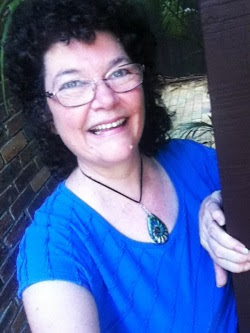
 Jo-Anne Berthelsen

Soon after my first novel Heléna was published in 2007, I became curious about where all those early copies would get to. I remember wishing I could install a tracking device on them so I could see who read them and what interesting adventures they had along the way. Of course, I also realised that could be discouraging. After all, some might end up unopened on dusty bookshelves somewhere or, worse still, in the recycling bin! On the other hand, some readers might love the novel and even lend it out—or buy it as a gift. Some copies might end up in libraries too and hopefully be borrowed often. The possibilities were endless!

During COVID lockdown, I had several requests for my older novels, especially All the Days of My Life, the sequel to Heléna. It seemed people had re-discovered Heléna on their bookshelves while bored at home, then decided they would like the sequel. I do not stock any of these two novels now, so asked family and friends if they would part with their old copies. Several were unearthed in this way and it was fun to give them another chance at life with new owners.

Then this past week, I received another request via email for All the Days of My Life. A lady wrote to tell me her husband had just finished reading Heléna and loved it. So … did I have any second-hand copies of the sequel available? I didn’t—but I knew a friend had one. I drove to pick it up and emailed the prospective buyers to sort out postage, only to discover this couple actually live in Canada! Apparently, they found my novel Heléna in their church library—but how did it get there? What’s more, the copy is signed by me, so I must have sold it personally to someone.

To be honest, I am amazed people anywhere are still reading my very first novel published way back in 2007—and I am certainly amazed a copy has ended up in a church library in Canada! Somehow, time and distance have been no barrier for this particular copy at least.

Yet, as I have reflected on this whole story, I have realised something even more amazing. I may not be able to install tracking devices on my books, but God knows where they have all got to—and God is quite able to carry them through time and space to wherever they can minister to someone. Those fifteen years since Heléna was published here in Australia are the mere blink of an eye to God—they are certainly no barrier to the One who was and is and always will be.

But do not forget this one thing, dear friends: With the Lord a day is like a thousand years, and a thousand years are like a day. 2 Peter 3:8

I find this verse so reassuring, don’t you? Somehow, it puts everything I worry about into much better perspective. Things may take longer to unfold in life than I might have hoped—and yes, my books may also not have as wide a distribution as others. But I can be at peace about it all, because I belong to the most awesome, powerful Creator of the universe for whom no barriers are ever insurmountable.

Jo-Anne Berthelsen lives in Sydney but grew up in Brisbane. She holds degrees in Arts and Theology and has worked as a high school teacher, editor and secretary, as well as in local church ministry. Jo-Anne is passionate about touching hearts and lives through the written and spoken word. She is the author of seven published novels and two non-fiction works, ‘Soul Friend’ and ‘Becoming Me’. Jo-Anne is married to a retired minister and has three grown-up children and four grandchildren. For more information, please visit www.jo-anneberthelsen.com.


Monday, 6 June 2022

Starlit Realms

 by Jeanette O'Hagan


I don't know about you, but I've always struggled with words - that is in writing too many.  

With essays and assignments, I'd usually spend a good proportion of my time removing the huge pile of words over the word limit. In one Arts assignment on medicine in ancient Egypt, after shaving off all the that I possibly could, I 'killed my darling' and surgically remove a beautiful paragraph on the Egyptian pregnancy test. 

So. Hard. To. Do. 

So it won't surprise you that most of my stories turn into novels and my novels turn into series and my series beget other series. 

When various pundits suggested short stories as a way to hone one's writing, I was sceptical. I didn't know how to write short stuff. But I gave it a try - first for a charity anthology - Tied in Pink.

The word limit was 5000 words - so not as restrictive as many such enterprises. In the end, it took me three tries and three stories to hit the mark - Wolf Scout, Full Moon Rises - and finally The Herbalist's Daughter. Each one of those stories included a mention of a pink ribbon (part of the requirements of the anthology), but it was the last that made it within the word count and into the anthology.


The Herbalist's Daughter, in 2014, was my debut into publishing. And I discovered along the way that, yes I can write short stories - usually long short stories - but short stories none the less.  


(Here's another confession - it took me two goes to hit the more generous word limit of 7000 words for the Glimpses of Light anthology - Heart of the Mountain (which later became the first novella in the Under the Mountain series), was my first failed attempt, with the second attempt, Ruhanna's Flight coming out at exactly 7000 words. 

Strangely enough - I have more success in keeping to 700 or even 500 words than 3000.  

 From being a sceptic, I became a believer. I love short stories because:

*Getting a short story accepted is easier than finding a home for a novel
*It's fun to write them
*They help sharpen writing skills
*It's encouraging to collaborate with other writers 
*While not exactly easy to write, they do take up less time (I almost said lives) than a full novel
*Short stories are a great way to experiment or try something new.


Since that first heady acceptance, I've continued to write and have short stories accepted and published - as well as a few knock backs. Mostly, I'm neck deep in edits of my novels - and probably will be for a while as I hone and polish my next two or three drafts. 

At the beginning of the year, I jumped at the chance to write a new short story for submission to the Starlit Realms anthology. Writing a new story revitalised me. Even though I linked the story to my other stories in the world of Nardva (in this case the prequel to Ruhanna's Flight), I explored new characters in a different time and background. 

The story made it into the anthology along with the stories of a bunch of other great writers - including some fellow travellers - Elizabeth Klein (the mastermind and editor), Adele Jones, Rebekah Rodda. Sally Odgers and Jenny Woolsey. 

Starlit Realms: a fantasy anthology - is free on Amazon and other retailers. So why not download it and enjoy :) 

Ten unforgettable stories of mystery and adventure from ten fantasy writers are woven together by the great Storyteller's own eternal magic.
*The mysterious Logunder Library houses no ordinary books, but those created from trees from the Enchanted Forest in a bid to save itself.
*A young princess must choose a husband from four unlikely and undesirable suitors.
*A girl's father goes off to battle dragons in an alternate war and she undergoes dangers to find him.
*A shape-shifting queen risks her life for a family condemned by age-old prejudice.
*One young slave girl risks her life for the sake of reading sacred texts.
*The final day of one of the waterfolk is celebrated with songs and music as she wanders back into the sea.
*A magic boot takes a young couple for the ride of their lives.
*A poor girl deceives the royal family to snag a husband, but it is not as easy as she thinks.
*A biological lab covers up the truth about its research and sends two science students into danger.
*On the summer solstice at Willow Woods Peak, animals may speak and a cat enlists the help of a human to unravel a secret.


And, if you haven't already, give short stories a go. 


Jeanette O'Hagan has spun tales in the world of Nardva from the age of eight. She enjoys writing fantasy, sci-fi, poetry, and editing. Her Nardvan stories span continents, millennia and cultures. Some involve shapeshifters and magic. Others include space stations and cyborgs.


She has published over forty stories and poems, including the Under the Mountain Series (5 books), Ruhanna's Flight and Other Stories, Akrad's Children and Rasel's Song, the first two books in the Akrad's Legacy series - and new short story in the Starlit Realms: Fantasy anthology.

Jeanette has practised medicine, studied communication, history, theology and a Master of Arts (Writing). She loves reading, painting, travel, catching up for coffee with friends, pondering the meaning of life.

Thursday, 2 June 2022

When you have no energy to write. What I’m doing to revive my spark.

 I let go of my self-publishing dreams two years ago. 

No doubt it was 2020, and COVID-19 was raging around the world, so my judgement may be impacted by that. But in truth, it was a decision that was building up for years. 


Life gets to you. And life really got to me since 2018, when I left the comforts of my day job in a dying industry to carve what I thought was a new, exciting one in digital marketing.


The struggle to establish myself in a new niche was more daunting than I thought. I endured toxic jobs, crammed massive amounts of knowledge and struggled to maintain a foothold in impatient corporations that were more than willing to toss you out if you couldn’t catch up.


As I struggled with these challenges, writing stories about spaceships and aliens faded into the background. The worry of putting food on the table and saving enough for retirement was all-consuming. 


And then the pandemic hit. I found myself without a job like thousands around the world (though of my own choosing — long story) and having to grapple with lockdowns, social distancing, isolation and family health crises. 


I wish this was a “10 things to do if you don’t feel like writing” post. But I have no easy answers except to share my experience as I try to revive my dying flame of creativity.


Overcoming my mental blocks


When I think about my space opera series, I still get twinges of the happiness I used to have when I first built the world. But the moment I think about what’s involved to get my work out there — the high editing fees that I probably can’t afford, the arduous revisions, the promotion and marketing I’d have to do, my enthusiasm deflates like a popped balloon.


Like most authors, I don’t enjoy these activities. Especially when your day job is marketing! You’d think that it’ll be easy to do marketing stuff in your free time, but this is like working all the time without a break. Fiction writing becomes work, not a fun escape.


It came to a point where I couldn’t listen to my favourite self-publishing podcasts — Self Publishing Show or The Creative Penn. I even told friends to stop sending me self-publishing marketing articles because all these were triggering the guilt and despair of not being able to act on my dreams.


Each time I open the pages of my unfinished novel, I’m filled with the crushing sense of failure. And pressure. So much pressure! The “musts” that invade my mind as I try to just complete the story — you must market this. You must advertise. You must, must must. My eye on self-publishing success, although I’ve given up on ever achieving it, is still ever present.


And I have so little mental energy these days.


My day job takes an immense amount of energy. So much so that none is left at the end of the day, and all I could do is flop on the couch, exhausted and turn on Netflix.


I feel like a failure for not even having the energy to pen a sentence. I’ve tried to overcome my mental energy problem with various productivity hacks, but no luck.


Times like these I reread Kristin Kathyrn Rusch’s article, When to Stop Writing where she says, “If you’re a driven person and writing has been at the heart of that drive, not writing is a terrible thing to go through. You can push through it—sometimes. But you can’t always. Sometimes you have to rest. Sometimes you have to let the brain adjust to the new reality, whatever it is.”


I would say I’d have to adjust to many new realities in the last few years!


Becca Syme of Strengths for Writers has an explanation for my lack of energy to write, saying that while life’s dramas fueled some personalities to write, there are others who are so drained by them that the creative faucet runs dry.


My writing retreat

I am the latter, and I’ve grown to accept that.


I’m in a much better place now, but the tough years of 2018-2020 still haunt me, and I am still burnt around the edges. Fortunately, I’m now able to live my ideal life while earning a good salary (touch wood) and I’m now working on reviving my dying creative flame. Here’s what I’ve been doing:


Putting aside the pressure to earn


I put a lot of pressure on myself, so I’m still avoiding podcasts that scream, “you got to do this or that to succeed”. I’m avoiding anxiety-provoking articles that yell, “If you don’t do this your books will never sell.” My aim now is to regain the love and sense of fun I used to have when creating and writing new worlds. I’m pushing aside thoughts of monetary success for now, as they don’t seem to motivate me but crush my creativity instead.


Allow myself to dream again


Not of self-publishing success but of my characters’ stories. I have a soundtrack for each one of my characters. Each time I put it on, my mind dreams up new possibilities for them. I go for long walks while listening to their songs, watching them live their lives like an observer.


Absorb inspiring stories


Some writers say that TV is a distraction and should be eliminated so you can write better. For me, TV shows and movies are food. I’ve been watching shows such as Star Trek: Picard, Dune, the Marvel movies to give me creative food to fuel my stories. 


Set my stories free


I have a feeling that I am such a rebel that I want to do things the opposite of what people recommend. The tried and tested method of being a self-published author don’t seem to appeal to me. I realise what fuels my writing is not just money (money is always nice, isn’t it?). It is community.


I began my writing life writing fiction online, posting them chapter by chapter in my website or online portals. Free. I used to get such a thrill seeing a reader comment on the chapter. This connection with my readers is something I miss dearly.


People are still doing this online, posting chapter by chapter in places such as Royal Road. Webnovels are hugely properly in Asia, and it’s such a pity it has not caught on in the West, because there’s such creative freedom in being able to write this way. Nevertheless, I’m exploring it despite the ardent naysayers, setting my novel free on the Internet. There are opportunities to monetise using this method, but I’m trying not to think about them too much right now.


Taking good care of myself


During the hard years of 2018 to 2020, everything seemed so uncertain. My future, my career prospects, certainly my income. During this time I really envied married friends who could rely on their other halfs to take care of the financial matters while they take time off to do something creative.


The burden of my survival lies solidly on my shoulders, and mine alone. So I put my head down to do just that. I was in survival mode, even if I didn’t realise it at the time. 


I compromised a lot. I lived in a cramped, roach-infested apartment because I could pay cheap rent. I ate junk food because it was easy and preparing healthy meals seemed arduous. I barely exercised because it was far easier to flop down on a couch and watch TV.


Late 2021, I started prioritising myself, starting with a 2-month sojourn in the lovely island of Penang, living by the beach. Then, I left my awful apartment and moved into a lovely walk-up apartment with really reasonable rent. It’s on top of a hill. Now, my mornings are filled with birdsong instead of screaming toddlers. My balcony has become a haven to rest, meditate, read and write. In fact, I’m typing this in my balcony, which has wooden floors and is surrounded by beautiful green plants.


I cook most of my meals now, taking pains to ensure they are not processed but are all natural. I exercise every morning if I can, taking walks on roads lined with old, giant trees.


Recently I spoke to a friend, who is on the same road of trying to get herself motivated to start her creative venture. Both of us promised to get our work out there this year.


That’s a promise I’m making myself this year — to get my work out there, pushing aside dreams of glory and self-publishing success … and to regain my joy in creating worlds again.


Wish me luck.


Elizabeth Tai writes Science Fiction as Tai Weiland. For more, visit http://taiweiland.weebly.com/

Monday, 30 May 2022

Wonderful Criticism

By Charis Joy Jackson


I hate criticism. OK that’s not true, I used to dislike it, but now, I’ve discovered how much constructive criticism has made me a better writer. I’m still learning and I hope I will still be honing this craft well into my 90’s. But most of all I hope by reading this, it will help you change the way you look at criticism.

Let’s be honest, none of us really like it. We want people to read our stuff and say it’s THE shining example of what the written word should be. We want to take home all the awards and praise of how amazing we are as creatives, but often we deny one of our biggest allies. Criticism.

Yes, you can receive criticism that’s hard to hear. But one of the biggest lessons I’ve learned about it, is to accept it as often as I can, because it’s helping to sharpen my skill.

When we look at criticism and use our time and energy to fight what’s been said about our writing, we’re wasting our creative juices on negative actions and thoughts. We’re effectively shutting our creativity down and the next time we sit down to write, it’s gonna be harder for us to put pen to paper.

As a young creative all I heard was the negative criticism offered and it hit me on a personal level. Now as a more experienced creative I actually understand the purpose of constructive criticism. Not just criticism, but constructive criticism.

The point is not to tear someone's work apart, but to make it stronger.

I think if more people understood the fine art of constructive criticism we'd live in a happier, more creative environment. And I'm talking about people receiving it and people giving it.

To give helpful criticism, we need to start with what we like. Talk about how it moved you. Be specific to point out things you especially enjoyed. It's ok to gush a bit about these parts. It's a huge encouragement for the artist.

Then move into areas you think could be strengthened. The more specific, the better. As a writer, I need those specifics. Especially if it's dealing with character development and the choices the character made.

On the reverse, if you struggle to receive criticism, the best thing for you to remember, is your work does not define you. Say it with me.

Your work does not define you.

Your identity is not in what you do. So when you hear someone “tearing” apart your hard work, smile and remember they’re not talking about you.

If you get someone who doesn't know how to give criticism, have grace for them and take what they say with a grain of salt, because even some of the harshest criticisms may actually be hitting the nail on the head. Even if it isn't said the right way.

When I was first learning to receive criticism, I never wanted to listen or make the changes that were being suggested. I felt that if I did, it would no longer be my work, but a joint effort. Truth is, it's still your work and you should listen to that criticism, because you want your work to be the best it can possibly be.

If we all believed that to take on board someone's criticism made it no longer your work, then we'd never have any epic stories. There would be no Tolkien's or Lewis'. Your work is still your own.

And at the end of the day, you choose how much you take in from the criticism you receive. Use it as a tool and not your enemy.


Charis Joy Jackson works as a full-time missionary with Youth With A Mission (YWAM) a non-profit organisation. During the day she mentors young adults, teaches on several topics including worship, intercession and how to makes movies. In her spare time she spins stories of speculative fiction and captures her crazy dreams in print.


Follow Charis Joy Jackson:
Previous articles: https://randomthoughtsanddreams.blogspot.com/
The Dreamcatcher’s Journal: https://theddreamcatchersjournal.wordpress.com/
Amazon Author Page:  amazon.com/author/charisjoyjackson  
Facebook: https://www.facebook.com/charisjjackson/
Instagram: https://www.instagram.com/charisjoyjackson/  

Thursday, 26 May 2022

Behind the Scenes: Big Apple Atonement by Carolyn Miller

Today we go 'behind the scenes' as Jeanette (Jenny) O'Hagan interviews the fabulous and prolific author Carolyn Miller.


Jenny: Congratulations on your upcoming release of Big Apple Atonement – the fifth book in the Original Six - slightly sporty sweet romance - series. What inspired you to write this series?

Thanks so much, Jenny! The first two books I ever wrote (before any historicals) were two ice hockey books featuring Christian athletes who played for Chicago and Toronto, which just so happened to be two of the original six hockey teams in the National Hockey League of North America. I loved these books (Love on Ice and Muskoka Blue), and wanted to see them published, but because it’s a fairly niche market publishers weren’t so interested, so I decided to publish them myself as part of a series. This meant writing four other books (including a book serving as a prequel to Love on Ice, which became The Breakup Project), based in the other Original Six cities: Boston, Detroit, Montreal and New York. I’d visited four of these six cities, so I was thrilled to get the chance to showcase some of the amazing places I’d seen, such as Chicago’s Art Institute in Checked Impressions, and Montreal’s Botanic Gardens in Heart and Goals. The heroes of these books are linked by an online Bible study group, which I later discovered is a legitimate thing, where Christian hockey players encourage and support each other. I love that high profile Christian athletes (high profile in the US and Canada at least!) can have similar questions to many Christians, but with the added tension of money, fame, and other trappings of pro sports, which means each book has a slightly different focus. It’s been great to see numbers of readers have loved the books in this series too!


Jenny: Since publishing your popular Regency Brides romance series, you’ve been quite prolific with the Regency Wallflowers, the Independence Island and now the Original Six series. How do you come up with fresh ideas?

Several of these books and series stemmed from books I already had sitting in my computer, so it’s been a process of finding the right one for the right time. (I figure some of these books in my computer could be making me money!) But really, I find stories are everywhere – you just have to pay attention to the news, to your own life, to what God is challenging you about, to conversations, to people. I’ve recently started doing ballet fitness, and my instructor is a former ballet pro and shared some amazing stories about her life, so guess what? I now see a ballet book in my future.

Jenny: That should be fun 😊 What do you enjoy most about writing in the romance genre? Have other romance authors influenced your writing? In what ways?

Romance is basically the process of developing a relationship, which is what we all do in various ways every day. No, not every relationship involves romance, but the same kinds of challenges face us all: misunderstandings, learning to trust, to forgive, to not judge, etc I love that romance can reflect God’s ‘wooing’ of His children, and I do enjoy bringing faith elements into my books. Some of my fave Christian romance authors include Becky Wade, Susan May Warren, Susan Tuttle, Jaycee Weaver and Kara Isaac, all of whom create relatable characters and include faith elements in a non-preachy way, which is my hope too.

Jenny: After gaining a reputation and avid fans for your regency romances, you made the call to write in a different sub-genre – contemporary romance.  Were you nervous at the time? What challenges and opportunities did you face in making the change?

Ooh, good question! Yes, I was nervous, but because I’d originally written contemporary (and even won awards for it!) I knew I could do this, and to be honest, it’s been GREAT. Switching between genres is like a palate cleanser, so I write (or edit) a historical then go write (or edit) a contemporary, which means I’m mentally fresh. I joined the Independence Islands series (published by Celebrate Lit) as a transition step to gain some contemporary readers, as I fear some of my historical readers have pigeon-holed me in the Regency vein. It feels funny to have to reassure my readers that they’ll still find the same sorts of stories in my contemporary books (faith! relatable characters! realistic settings! humour!) that they’re used to seeing in my historicals, but hopefully time will win them over. It’s been great to meet some new readers, some of whom are now reading my Original Six series because they found me as part of the Independence Islands series. It’s also been great to connect with other authors as part of that series.


Jenny: You’ve successfully made the switch from being published by a traditional publisher to indie publishing. What motivated you to change. What pros and cons have you discovered along the way?

I write full time, and to be honest, my earnings are not nearly what I’d like them to be (ha - whose are, right?). I also found that I was feeling a little creatively constricted by just sticking to Regency. When my publishers told me in 2019 they weren’t interested in publishing my contemporaries, I knew the only way I could get my books out there was to self publish them. So, knowing that I had a Winter Olympics story, which would be perfect to release during the 2022 winter Olympics, I decided to push to create the series and write the four remaining books in 2020 and 2021.

Some of the challenges include the huge learning curve in learning what self publishing involves (hey, I’m still learning!), but I love the creative control I have, with everything from story ideas to release dates, cover design (my daughter is now designing my contemporary covers!), to editing, to links to future book series, and promotions. I’m not hedged in by other people’s expectations, so I can try things. And I’ve found that with more books out there I’m earning more money too which is awesome. (I can now pay for our mortgage!)


Jenny: Awesome! What do you know now about the craft and business of writing that you didn’t when you started?


When I first started writing it was all about the joy of creating a story. Now I know that if you want that story to be published, you need to treat this process as a business. I’ve always been pretty good at staying motivated and enjoy beating my publisher’s deadlines for edit returns and the like, and I think that’s served me well to stay productive when it’s my own self-imposed deadlines I’m working towards. So I write (or focus on writing things) most days from 9am until my kids return from school/ uni. It’s my job, not something I fluff around with when I feel like it.

Part of that means investing in things like conferences. I have learned so much from attending the Omega Writers conferences, and they have been instrumental in helping me write in series, learn craft, and develop author connections I deeply value now. If people are serious about being authors then they should invest the time and dollars into conferences like this. I’m so glad I did. (Find out more about the Omega Christian Writers conference here – it’s only in-person every 2 years, so this is the year to make it happen!)

Marketing is huge, whether you’re traditionally or independently published, so us more reticent types need to be okay with letting others know about our books, and joining with other authors to cross promote and find new readers. That’s my goal at the moment: find new readers, and that takes time.

I’m very thankful to have learned some of the business of writing through being trad pubbed first, and that’s helped me gain readers and connections that would’ve been harder otherwise. I’m so thankful I stepped out and trusted God (not just my agent or publisher) for my writing career, especially with stepping into writing the kinds of books I like – and that other readers seem to enjoy too!


Jenny: Now that you’re nearing the end of the The Original Six series, do you have any plans for another series in mind? What elements will be the same and what will be different from your previous series?


Yes! The sixth book in this series is Muskoka Blue which releases July 28. This was actually the second book I ever wrote (don’t worry: it’s been heavily edited and tweaked since then) and I had a loose kind of series that built on it. So I plan to have two more books based on a small town in the Muskoka region (a gorgeous lake-filled area I’ve visited, which is 2 hours north of Toronto, Canada), one of which will be a Christmas book. If I can get my act together, I hope to see them release this year (yes, this self-pubbing thing might be addictive!).


I also hope to link to another hockey series set in the North-western areas of North America, so it’ll be a similar Bible study group but for players based in Calgary, Vancouver, Seattle, etc (some of these are places I’ve seen too). I LOVE writing in series, and it’s been fun to see the preorders as people move through the books, checking in on various characters to see how they’re doing 😊

I’ve also got plans for a cowboy-type series that will be part of another multi-author series releasing next year. I never thought I’d write about cowboys, but I love the fact these kinds of books are based on things I care about: relationships, the environment, faith, and the small-town factor - as I live in a small town, that works well for me!

Really, in all of my books, historical or contemporary, I’m writing about similar things: relatable characters, realistic settings and scenarios, relationships & romance, non-preachy faith threads, all mixed together with some banter and humour. I’m so grateful people have taken a chance on reading the wild imaginings of a small-town Aussie girl, and so thankful to God I get to do this amazing job!

Something to look forward too :) Thank you, Carolyn, for taking the time to share about your books and experiences.


Carolyn Miller lives in the beautiful Southern Highlands of New South Wales, Australia, with her husband and four children. Together with her husband she has pastored a church for ten years, and worked as a public high school English teacher.

A longtime lover of romance, especially that of Jane Austen, Georgette Heyer and LM Montgomery, Carolyn loves drawing readers into fictional worlds that show the truth of God’s grace in our lives. Her contemporary romance series includes the Original Six hockey romance series, and the Independence Islands series, and her historical series include the Regency Brides and Regency Wallflowers series.


Links: website |newsletter| facebook | pinterest | twitter | instagram amazon | bookbub
Buy Big Apple Atonement at Amazon or Koorong

Monday, 23 May 2022

The Typical Teenager?


If you write for teen readers, how do you imagine them? How do they interact with their peers, their parents, other students at school? What do they like to think about, what struggles do they have, what temptations do they face?


My first novel was published in 2017, with a male protagonist who was just shy of 18 years old. The Golden Hour was written in first person so we are in James’ head as he wrestles with uncertainty about how to relate to girls, his sense of being overlooked by his parents in favour of his younger siblings, and ambivalence about his work future. James is keen on graphic art, but his parents don’t value it, so he’s trying to study computing.


One of the few spontaneous reviews the book attracted was by a male reader who declared that James was not like he was as a young man and therefore the character was not credible. Apart from issues of males reading female authors’ work and whether or not I had managed to portray a male believably, I was struck by the assumption that we can know what all male teenagers/female teenagers are like by our own experience.


My adult daughter commented on how many of her friends had been recently tested for autism and/or ADHD. They perhaps had always felt ‘different’ from their peers and decided to find a non-blaming reason for it. My own children always felt ‘different’ too, but put it down to the family having Christian values, or not having grown up with a television. How many young people feel ‘different’? Are they any more different than their peers, or are they simply different from the common narrative we perpetuate in fiction and media of the ‘typical teenager’?


My latest novel, Evernow, has several characters who are atypical according to that narrative. Emilia is a ‘good girl’ and model student; her boyfriend Doran willingly stays within the boundaries set by Emilia’s strict mother; and Doran’s brother Bailey is an emotionally intelligent 15 year old. In an early version of the novel, a friend commented that no reader would believe Emilia’s lack of sexual temptation when alone with Doran. That may have been my friend’s experience as a teenager, but Emilia represented mine. My characters face all sorts of challenges and temptations but they are not necessarily the ones of  the imaginary ‘typical teenager’.


Teenagers struggle with as wide a range of issues as anyone else. They have in common the developmental and social challenges of moving between childhood and adulthood. But how that plays out will be influenced by a wide range of family, community, educational, spiritual and personality differences. How could they all be characterised in the same ways?


There are far more obvious differences between some teenagers than the ones my characters face, but I write what I am familiar with. There are issues-based stories that deal with ethnic stereotypes, gender bias, educational and social disadvantage, disability, atypical neurology and more. These stories give us the opportunity to become aware of the inside view of externally evident difference. I would also like to see more stories that challenge the narrative of the ‘typical teenager’ among characters who are otherwise indistinguishable from their peers – because all of us are unique, more different from our peers than we feel comfortable acknowledging. Wouldn’t it be great if every reader found more than one book which made them feel like someone understood them? Wouldn’t it be wonderful if they all gained freedom to be their unique selves because of the books we write and they read?


Monday, 16 May 2022

Introducing The 2022 Omega Writers Conference, and The Hub

Omega Writers is delighted to announce that bookings for the 2022 Omega Writers Conference are now open. The conference will take place at Peppers Salt Resort & Spa, Bells Boulevard, Kingscliff, New South Wales from 7 to 9 October 2022.  

Peppers Kingscliff Resort

Whether you are brand new Christian writer or an established author, a non-fiction writer or a creator of kids’ lit, the 2022 Omega Writers Conference is for you. This year’s line-up of speakers has been deliberately curated to encourage, resource and inspire you on your writing journey. With ample opportunities to network with other likeminded and supportive writers, you will leave with new ideas, new connections, and a renewed excitement for your writing project.

This is a not-to-miss conference for Christian writers!

The keynote speaker will be Steven James, author of Synapse and several books for writers. Others speakers include:
  • Collett Smart will present a plenary session on Self-Compassion, Resilience, and Well-being for Writers, as well as a practical non-fiction workshop.
  • Lystra Rose, winner of the Black&Write Writing Fellowship will present on The unspoken rules of Indigenous protocols every writer should know.
  • Hands-On Workshop Streams for Writers of Fiction and Non-Fiction
  • A Marketing Intensive with Lisa Renee
  • Tips and Advice on writing for the US Market
  • Writing for Children and YA
Click here to find out more, and book before 18 June to save $50.

We will also be offering participants the opportunity to book an appointment in The Hub.

What is The Hub?

The Hub is an opportunity for conference delegates to book appointments with agents, publishers, editors and industry experts to discuss their work in progress, or to pitch a manuscript ready for submission. Writers will gather valuable feedback, suggestions and guidance, as well as increase their understanding of the publishing process. This year, the Hub will include Zoom appointments for the first time. This will give delegates the opportunity to meet with agents and editors from the UK and USA, as well as around Australia.

Appointments are on a first-in, first-served basis and can be made on registration, and are $70 each, or $50 for Omega members.

If you’ve already booked to go to conference, you can book Hub appointments separately. The Omega discount code will be in the same email as your conference discount code. Alternatively, log in to the members section of the website to find the discount code.

Why Should I Book a Hub Appointment?

If you’re newer to the writing world, then an appointment with a Hub professional will give you valuable advice and tips on how to improve your writing. This can save you literally years of editing and revision, because they will give you advice based on current market trends and practices.

Should you meet with an agent, publisher, freelance editor, or publishing professional?

That will depend on what you want to get out of the appointment:

If you want to pitch a specific project, I suggest booking an appointment with an agent or publisher. If you want to be published with a major Christian publisher like Bethany House, book a meeting with one of the literary agents. If you’re looking for a smaller publisher, you could meet Donna Harris (UK), Rochelle Stephens (Australia) and Rowena Beresford (Australia). If you want general information on traditional vs. self-publishing, book an appointment with me or with an author like Meredith Resce or Lisa Renee who has self-published and worked with a small traditional publisher. If you want advice about your writing, marketing, or general publishing advice, then book an appointment with an editor or author offering that kind of advice. Click here to find the professionals you can meeting The Hub, and what they each offer. 

How do I Prepare for a Hub Appointment?

Some professionals will give you the opportunity to submit material ahead of time, so they can review your manuscript and consider their response. This could be a synopsis, your first few pages or chapters, or a one-sheet. Click here for tips on how to write a synopsis.  Click here for how to write a one-sheet. 

If the professional doesn’t require material ahead of time, then how you prepare will depend on the kind of information you’re seeking:

If you want editorial feedback on your writing, come prepared with a printed sample of your writing e.g. a one-page synopsis and your first chapter or two (I suggest one copy for each appointment, and at least one spare copy). If you want to pitch your manuscript to an agent or publisher, prepare your verbal elevator pitch (one to two sentences that give your hook and describe your manuscript). Again, take a paper synopsis and sample chapter for a novel or nonfiction work, or the full manuscript for a picture book. If you want marketing advice, do some advance research and consider exactly what you want to know. Then book an appointment with the expert who will be able to answer those questions. For example:
  • I (Iola Goulton) can give you good advice on how to set up an author platform as an unpublished author.
  • Cecily Paterson has some great tips on copywriting and blogging.
  • Lisa Renee is the excerpt on author newsletters, paid advertising, and book launch strategies.
Our Hub participants are all professionals with years of experience, and we’d all love to share that experience with you. To get the most out of your Hub appointment, know what you want to find out, and ask as many questions as you want. Take advantage of the opportunity.

Leave a comment if you have any questions, and we’ll find the expert to answer you.

Thursday, 12 May 2022

CWD Member Interview – Claire Bell


Most Thursdays this year we will be interviewing one of the members of Christian Writers Downunder – to find out a little bit more about them and their writing/editing goals.


Todays interview: Claire Bell


Question 1: Tells us three things about who you are and where you come from. 

1. I grew up in the Adelaide Hills but, like previous generations on both sides of my family, I was born in a different country (in my case, the UK).

2. I aim to live a ‘slow life’ – time to reflect, to live in the present, and to enjoy the extraordinary ordinary gifts of life. 

3. I’m hopeless at genres – identifying them and writing them. Which is ironic, as I once worked as an occupational taxonomist (i.e. assigning categories to the world of paid work).


Question 2: Tell us about your writing (or editing/illustrating etc).  What do you write and why?

I have never been able to settle to one form of writing. I have so far published a YA novel (Evernow, published in March 2022) and a crossover novel (post-secondary teens). I made up a term to describe the genre: speculative realism, meaning that it’s realism with a twist in time or space.

I also write poetry, and occasionally short fiction, creative non-fiction, and devotional articles.

I write to work out what’s going on in my head and heart, and to try to integrate it with what’s going on in the world around me.


Question 3: Who has read your work? Who would you like to read it? 

I was thrilled when a friend bought a copy of my first novel, read it on his way to Manus Island, and gave it to a refugee friend there. My second novel is also currently being read by a refugee friend who is settling into Canada after 8 years of detention in Australia. He quoted a favourite line to me recently and that made me think more about those words than all my editing had.

When writing cover letters to publishers who want to know whose my work is similar to, I struggle. Not working in recognised genres leaves my work out in left field! But I think it’s a bit like Brian Caswell’s early writing (Australian YA author of Meryll of the Stones and other great books) and I would love him to read it – and see if he can recognise any similarity.


Question 4: Tell us something about your process. What challenges do you face? What helps you the most?

I worked hard to develop a writing practice, and succeeded for a few years after completing a masters degree in creative writing. But I’ve lost that habit now, and my writing tends to be just one of many activities I attempt to weave into my eclectic days. 

Having a deadline helps me to prioritise writing. After a few challenging years with ageing parents and health issues, my recent novel was only completed because Mark Worthing of Stone Table Books pressed me to have it ready for publication. Competitions, anthology and writing journal deadlines help to keep me writing with purpose.


Question 5: What is your favourite Writing Craft Book and why? 

I read craft books when I have a writing problem. The one that most recently helped with plotting and pacing was Dara Marks’ Inside Story: the power of the transformational arc. It’s a screenwriting guide but I think the directness of film shifted me from being overly focused on the characters’ inner lives to create more outward action.


Question 6: If you were to give a shout-out to a CWD author, writer, editor or illustrator – who would they be?

Rosanne Hawke has been more influential in my writing journey than she realises. Not only her fabulous teaching, her highly enjoyable stories and her belief in me as a writer; Rosanne’s diligent writing practice has been an example and a goad. She’s like the Duracell bunny – she just keeps writing, keeps sharing her stories and herself with young readers, and keeps working to improve her skills. She’s my writing hero.


Question 7: What are your writing goals for this year? How will you achieve them?

My goal this year is to gather stories from my relatives about my larger-than-life grandmother, Mirabel Cobbold. It’s a labour of love as I don’t expect it to be published beyond family copies. But her story needs to be preserved for future generations as she shaped much of our family identity, which is shared across four continents.

How to gather those stories is a challenge. Given that almost all my relatives are not in Australia and I’m not able to travel to them any time soon, I’m trying to work out how to have the non-writers share their memories of Grannybelle. I’m thinking of creating an informal set of questions that might prompt anecdotes, and maybe try different media so those who want to talk rather than write can do so. I’m open to suggestions on how this might be achieved…


Question 8: How does your faith impact and shape your writing?

To be honest, I’m not really sure how it does. I assume that the way I relate to Jesus and feed myself spiritually becomes evident in every aspect of my life.  I write largely for the mainstream – that is, I don’t often write about faith or God – so I trust that as my values and thinking are being shaped by God, it shows. Occasionally someone says something to make me think that’s happening.

I put time into writing and seeking to publish because I think God has a reason for making me passionate about the written word. I see my role as pre-evangelistic: using story to help readers envisage love, integrity, hope and the spiritual side of human existence. That’s why I write speculative realism. 


Claire Bell writes as Claire Belberg for her mainstream works of fiction and poetry. She is the author of two speculative realism novels for young adults (Evernow) and older teens (The Golden Hour). She has had shorter work published in inScribe journal, inDaily (Adelaide’s independent digital news service), and various anthologies. Claire lives in the Adelaide Hills where the abundance of native birds is a constant delight. She blogs occasionally at The Character Forge

Sunday, 8 May 2022

Motivation and priority


Forget vicious circles. I like to think of life as a triangle. A triangle has three points and three sides, right? Well, there is the physical, the mind life (or mental) and the spiritual. And it is good to exercise these to keep them strong and connected. After all, a triangle with a collapsed side is no longer a shape.

Photo by: sebastiaan-stam-IkzP__YsL6s-unsplash

I like to keep in shape. I walk and swim to keep the physical side going well—and, of course, drink plenty of water and eat a healthy diet. Just don’t ask me how I’m going on the diet thing! 

Next comes the mental. I’ve a desk job that allows me to contribute to the family of five’s budget (Sue and I plus three pets: Nikita, Amber, and Joey). We all have wills. It takes energy to know what to allow and what to crack down on. 

And then there’s the spiritual. I’m not just talking about God life, but the things that God uses in us to make life worthwhile for others, like creativity. God created, so it’s natural as his progeny that we create. Whether that comes out in the arts and writing, in innovation, in thoughtful acts of kindness or as a word in season to break up a disagreement or to bring hope—the ultimate source of that is spiritual. 

And when I was younger, I had shiploads of energy. As a single man living in the Canberra region, I ran, walked, rode a bike, and swam for exercise and relaxation, I played keyboards in two secular bands (one rock, the other hip hop/ experimental) as well as being part of the worship team at church, playing fortnightly. I was also on several committees. I found time to be involved in community campaigns, do advocacy, support a candidate in a state election. I published a magazine for my employer where I worked full time and collaborated to bring innovative speakers to my workplace. Oh yeah, and I still found odd bits of time to write my stuff. 

Sure, some things suffered in the process—I should have spent more time on some relationships—but that’s all part of maturing. 

Ah, yeah, maturing. There’s a good and bad part of that. The good looks at what is important to others; at what is worthwhile to build into. I drop or attenuate other things. Some of those things I am sorry to let go, because they brought me and other people pleasure.

But the other is motivation, not just giving permission to yourself, but giving it the time and energy. There is no longer time and energy for everything. If I try something new, something else may need to go. If it goes, I need to look at what that means for others. Aging speaks, as do priorities. Energy is not where it was in my twenties and thirties. There are weeks where I get through the have-tos for the day and there’s no time left for me. So, I stagger through to the weekend only to be reminded of things I agreed to and forgot about. They especially raise their ugly heads just when I think I have the time and energy to spend on something requiring quality time and thought.

Photo by: brett-jordan-UQ7Vf_rmEFc-unsplash


I’ve chosen to blog today about motivation. I no longer have the energy or time to do everything without suffering serious burn out. And most of the things I must do are not innately enjoyable, so do not refresh me. 

Motivation’s close brother is priority. Priority is so often driven by others. ‘On 

some fixed date, you said you would do such-and-such by a set time.’ So, you do it, because you said you would; and you don’t want to damage the relationship with the person you agreed with. But, meanwhile, you delay again the things that you permitted yourself to do.

But you can raise their priority. You have the access.

‘Hope deferred makes the heart sick, but a longing fulfilled is a tree of life,’ says the writer (ascribed to King Solomon: Proverbs 13:12). So, remember, no matter how busy life gets; no matter how many other things become your priority (rightly or wrongly); if you decide to write, then writing is a priority for you. As it is a priority, you are both permitted and need to give it time.

There is your motivation.

So, go write!

Your thoughts?

Marc Jeffrey is an Adelaide-based author and poet who loves to craft words in times when his beautiful wife and lively dog (Shih tzu cross Chihuahua) are asleep. He writes of hope and justice, depositing his characters in the nexus between the ‘what is’ and the ‘what if’ – while wondering if he can leave the house without waking anyone up. 

He is long-time member of the ‘Literati’ writing group, that grew out of the Tabor Adelaide Creative Writing program. When he’s not writing, Marc listens to his favourite music, which ranges from Cold Chisel to Claude Debussy

Monday, 2 May 2022

Putting ourselves out there


I well remember how I felt when I saw the cover of my first novel Heléna for the first time, way back in 2007, in the middle of cooking dinner. What a moment! I tried to take in all I saw in that email attachment—the artwork the publisher had chosen, the layout, the back cover blurb, even the spine. But what caught my eye above all else was my own name in large, capital letters across the top of the front cover. Even now, fifteen years later, I still remember the shock I felt at seeing it there and the question I almost blurted out loud.

‘What have I done?’

Of course, I had known my name would be there on that cover. But in that moment, the sheer vulnerability of having a book published finally dawned on me. So many questions tumbled through my mind, one after another. Would anyone want to read this novel I had so loved writing? Would they be able to relate to the storyline? Would they like or hate my characters?

Was it… was it too late to change my mind about the whole idea?

It definitely was, I knew that. Now, eight books later, I am so glad I didn’t. Yet with each new book I launch, I still experience that feeling of deep vulnerability and reluctance to reveal my work in public. And that is why I particularly appreciated the email I recently received from a youngish male friend who had read my latest novel Down by the Water, released in January last year. He had bothered to write a lovely review of it on Goodreads and, because I knew him, I wrote to thank him. Here is part of his response:

It occurs to me that authors like you show great vulnerability to offer your work to the general public where anyone can say whatever they like in a public forum like Goodreads. So, I honour the risk you take in publishing your work, and not just your ‘work’ but your treasured baby that you have poured yourself into for months and even years. I try to honour that risk in my reviews…. I hope you find publishing is worth that risk—because, if you didn’t publish, so many of us would miss out on enjoying your gift.

I share these gentle, thoughtful words of his here to encourage us all that there are those out there who appreciate the risk we take in being published and cheer us on. From my own experience too, I would say that walking this vulnerable path is so worth it. If God has given us stories to share, we need to work hard to refine them, then put them out there. There will be those who criticise and point out flaws in our writing, some of which may well be justified. This is, after all, how we learn. But even if that criticism is unfair, does it really matter? After all, as Christians, we follow the one who made himself so vulnerable, walked the humble road and endured so much for our sakes. So, let’s all take courage, keep writing and keep putting ourselves out there!

Each of you should use whatever gift you have received to serve others, as faithful stewards of God’s grace in its various forms. 1 Peter 4:10


Jo-Anne Berthelsen
lives in Sydney and is the author of seven published novels and two non-fiction works, Soul Friend and Becoming Me. She holds degrees in Arts and Theology and has worked in teaching, editing and local church ministry. Jo-Anne loves encouraging others through both the written and spoken word and is a keen blogger.

www.jo-anneberthelsen.com

www.joanneberthelsen.wordpress.com