Thursday, 17 September 2015

Oh, The Places You’ll Go!


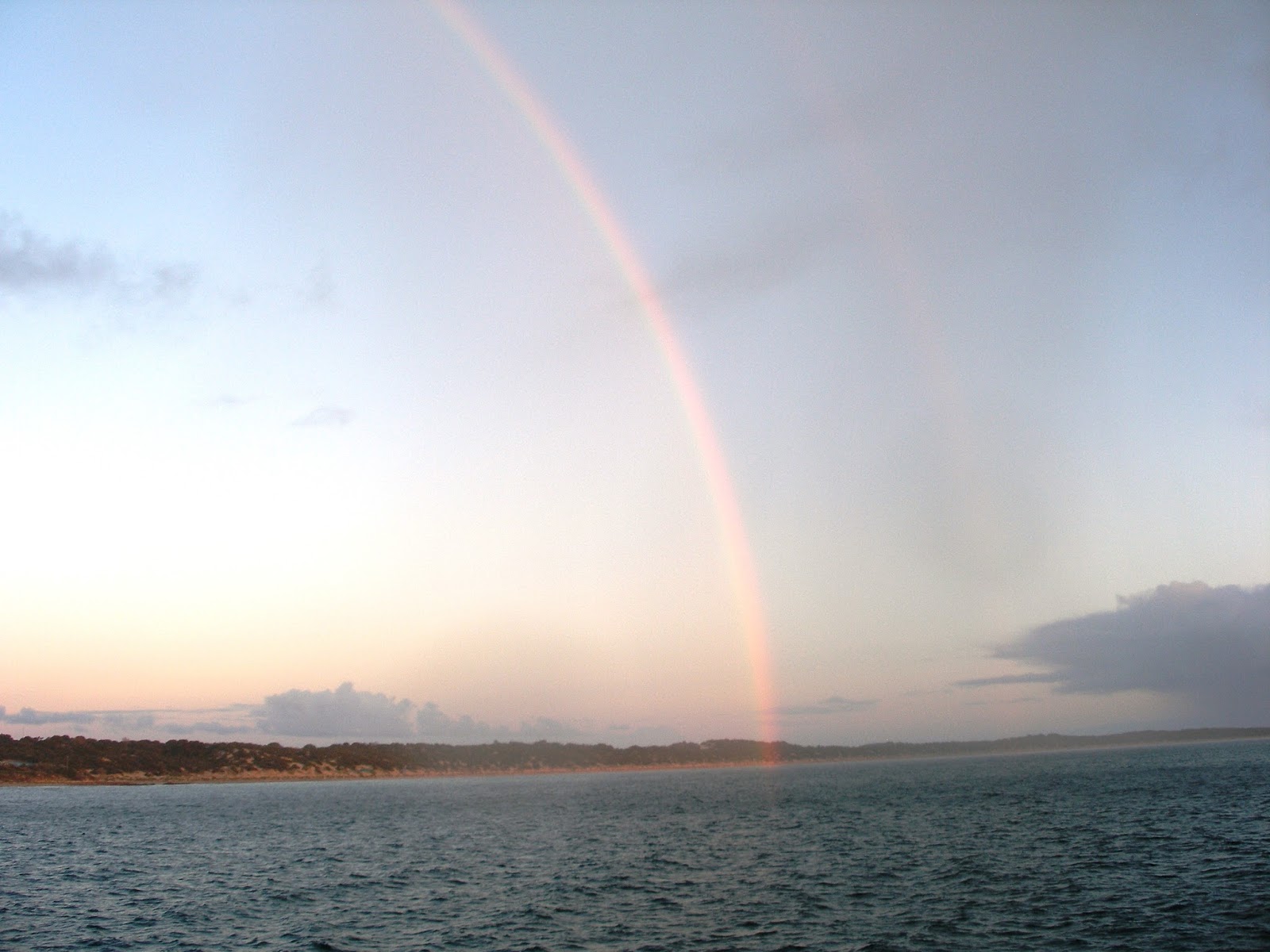
“So be sure when you step, Step with care and great tact. And remember that life’s A Great Balancing Act. And will you succeed? Yes! You will, indeed! (98 and ¾ percent guaranteed) Kid, you’ll move mountains.”
Dr. Seuss, Oh, The Places You'll Go!

TM & copyright © by Dr Seuss Enterprises, L.P. 1960, copyright renewed 1988.

Ninety-eight and three-quarter percent guaranteed? That’s pretty good odds, and this is how I approach author visits. With great anticipation. In the past few weeks I’ve had a string of events, many for CBCA Book Week, 2015.

For Book Week, I went touring in the Western Downs to libraries and schools: always fun. Workshops, author visits and signings were squeezed around work days, and then there was another event in Brisbane. Good travel week, that! Last week I also got to visit a group of students who’ve been reading my YA novel Integrate as part of their English studies. All in all, I’ve been privileged to meet some amazing young people through these opportunities.

But as you’d know, not every event goes swimmingly. One must not overlook that one-and-a-quarter percent exception.

Over the past year there have been signings and events where I’ve sold a reasonable number of books. Other times I’ve sold none. (Not much compensation for hours of travel and overnight accommodation ...) There have been events where the group has been wonderfully interactive and attentive. I have also had the experience where a portion of attendees simply weren’t interested in what I’ve had to say or sell. Frustrating, but thankfully, rare.

This is the roller-coaster of an ‘unknown’ author. And even for better known writers, it seems it can be hard to draw a crowd, which can be disappointing. Does this mean we authors are foolish to persist engaging in this way? It's a lot of hard work and certainly doesn’t pay a great deal.

Just remember the 98 and ¾ component.

For this reason it is all the more meaningful when people actually make the effort to come and, even more so, purchase one (or more) of your novels. And when the audience at a workshop or speaking engagement are leaning in, interactive and enthusiastic, it makes any preparation and travel time worthwhile. It’s also great motivation to ensure our social media efforts are strategic, and this is something we can only grow and develop over time. It's also a great reminder of just how important it is to support each other as writers and 'spread the word' as we each work towards building a solid author platform.

All in all, I believe author visits are a wonderful experience. Not only does it raise the profile of local writers and publishers, even when the event doesn't yield much in the way of sales, but I’ve engaged with some remarkable individuals through such opportunities. Further, I’ve been honoured to invest in the writing journey of future authors, and have been able to introduce my novel to attendees' TBR list.
So ...


“You’re off to Great Places!
Today is your day!
Your mountain is waiting,
So... get on your way!”
Dr. Seuss, Oh, The Places You'll Go!


Adele Jones lives in Queensland, Australia. She writes young adult and historical novels, poetry and short works. Her first YA novel Integrate was awarded the 2013 CALEB Prize for unpublished manuscript, with the sequel Replicate being released in October 2015. Her writing is inspired by a passion for family, faith, friends, music and science – and her broad ranging imagination. To find out more visit www.adelejonesauthor.com or email contact@adelejonesauthor.com

Monday, 14 September 2015

Hearing Aids and Blog Pages by Pamela Heemskerk

I’ve been a member of CWD for a while now and regularly look at the FB page. I’ve thought quietly to myself – hmmm, this page doesn’t change much. Recently a friend explained that the FB page is not the blog page... My lack of computer knowledge prevented me from accessing the really useful information.

I found getting hearing aids rather like that – it’s a foreign country. And the explanation about use may be quite brief. Things sound quite different, and aids are not helpful in certain situations.
In the same way that I needed specific instructions to access the blog page, new users to hearing aids need some pointers as to what to look out for. I knew if I as a long-term wearer, was struggling with hearing aids, there must be many others struggling too.

And so, Rather a Small Chicken…a Guide to Hearing Loss for Family and Friends was born.

I am a non-fiction writer – usually from life experiences and lessons learned along the way. Writing about these things can be cathartic, and expressing my exasperations with hearing aids and hearing loss certainly was! I did many revisions.

Some of the things I learned about writing from life:

  • When writing on an emotional topic, put the writing aside for a time (months – or a year if you happen to be me) and go back over it with a careful ear as to the tone of the writing. Bitterness, unintended slurs or anger can come across to readers in describing highly charged life experiences.
  • Examine clarity of ideas - I wanted to write to people with widely varied backgrounds, and needed to keep sentences and information easily accessible.
  • Length of work – this was to be an information booklet, not a novel length piece. It changed size several times and I had to act on the decision of ‘booklet’, not book, or fact sheet.
  • Non-fiction from real life must reflect some facts - concise and accurate information was important.
  • A little humour can make even an emotionally loaded topic less intense. (Thanks Anne B)
  • A really good editor with an understanding of what appeals to readers is so important. I changed from structured third person to more conversational first and second person, on the advice of my editor. (Thanks Anne H)
  • A really good friend with a ‘ministry in nagging’ to keep you moving forward. (Thanks N…)


It has been a journey – a long one, as I have wandered around, wondering if I really am a writer and whether I really do have anything to say. But the end of this part of the journey is close – with the booklet converted to the final file for printing just this week. Soon I will be learning about print on demand, e-books, marketing and book launches. But that is for the next blog…

I would love to have on-line discussions with others with hearing loss, so please pass on the BlogSpot to those you know who have a hearing loss. pgheemskerk@blogspot.com


 (My deepest apologies to all who have taken time and trouble to post on CWD! I will be working my way back through many blogs…)


Pamela Heemskerk found writing took her by surprise when recuperating from an illness and it has become a major part of her life.  She has a passion for art, embroidery, children and telling people about hearing loss.  She works as a physiotherapist with young children with a disability.
http://pgheemskerk.blogspot.com.au/


Thursday, 10 September 2015

Part Three: Reading Fantasy

by Jeanette O'Hagan


In the last post, we explored the fantasy genre from a writer’s perspective. Today, I want to think of it from a reader’s perspective.

Of course, there is considerable overlap between the two, but I know I often read far more widely than I would be comfortable writing.

As a Christian, I want what I write to be consistent with my values, beliefs as well as drawing on my experience, research and imagination. While my faith may not always be explicit, it informs who I am, what I write about and how I write it. 

However, I don’t just read Christian fiction or Christian authors. Whether fiction or non-fiction, fantasy or some other genre, I read books by atheists, agnostics, people of other religions or of no stated religion.

Why read beyond a Christian ‘bubble’?


It’s possible to learn from non-Christians.

In the Old Testament Joseph, Moses and Daniel and his friends learn from the pagan wisdom even while they remain true to Yahweh, the one True God. In the New Testament, Paul was not only educated in the Torah, but also in Greco-Roman philosophers and poets. He sometimes drew on these sources to persuade Christians (e.g. Titus 1:12) or connect with those outside the faith (Acts 17:24-29). 

It helps in understanding the worldview of non-Christians.

Even the most innocent romance or formulaic detective novel has an implicit world view – concepts about what or who matters, good, evil, the nature of truth, authority etc. However, fantasy and science fiction often bring big world themes and perspectives to the fore. And just as reading a novel embedded in a particular culture is a great why of understanding the nuances and mores of that culture, so is reading general market fantasy a great way of understanding contemporary worldviews.

It helps us connect to people.

We not only develop a better understanding of beliefs, values and concerns of people in the wider society, we can talk intelligently about the shows, films and books they enjoy – as I attempt to here, here or here.

For instance, Ursula Le Guin’s EarthSea explores facing fears and being willing to acknowledge that we are deeply flawed. In the original book Ged awakes a destructive shadow, which he flees, but eventually realises is part of himself. Do I agree with everything Le Guin portrays? No. For one thing, I don’t accept her view that life after death is no more than a shadowy echo or nonexistence (The Farthest Shore). Yet, her books make me think and can provide a discussion point about the nature of humanity and life after death.

And after all, great literature is great literature and we can learn from it but we need our eyes ‘wide open.’ I think this is true of all the fiction (and non-fiction) we read (or watch).

Hedges


But that doesn’t mean I would read anything and everything.

While it is fantasy of a different kind, I have held off reading the notorious 50 Shades of Grey – not just because, by all reports, it is atrociously written, but because of its glorification of a manipulative sexual relationship as romance, among other things.

The strong and the weak

Paul’s discussion of ‘food offered to idols’ (I Corinthians 8-10) is relevant here. In the ancient world, animals sacrificed at the temple could later be sold in the meat market. For some Christians (especially new converts from Paganism) – this caused a quandary. Was buying the sacrificed meat from the market equivalent to offering it to idols? Or, to put it another way, is reading about magic in fiction the same as practicing it?

Paul argues that all food comes from God, so the meat could be eaten with a clear conscience. However, he acknowledges that believers should certainly refrain from participating in a temple meal (or the actual sacrifice) because of the malign spiritual forces involved (see post 2).

Paul states that we shouldn’t ignore the inner warnings of the conscience – though some people have oversensitive consciences while others’ consciences can be seared or hardened. He also urges people with a ‘strong conscience’ (informed and trained by God’s Word, the Holy Spirit and faith) to respond graciously to others’ scruples (1 Corinthians 10:28). Yes, he says, all things are permissible to the believer (a touch of sarcasm there) but not all things are beneficial or constructive, and some things can control us (I Corinthians 6:12; 10:23-24).


I think it’s important to put hedges around what images or ideas we bring into our imagination.  However, where those boundaries are drawn might differ between different Christians, because we all have different areas of weakness.

For instance, in my late teens, I was profoundly disturbed by Emily Bronte’s Wuthering Heights because of the way it romanticised Heathcliff and Cathy’s selfishness, cruelty and twisted love, rewarding them, it seemed, with their special brand of heaven. Yet I know many people love this book.

And Children?

As adults we can make our own decisions guided by the Word and a Spirit-informed conscience. Yet, we have a duty of care with children because of their immaturity and vulnerability. Up to the age of seven or eight, children can have difficulty in separating the real world from the imaginary and older children and teens are developing their moral sense and the foundation for values and identity. Appropriate hedges will depend on the particular child and their age. The older the child, the more appropriate discussion rather than outright prohibition or careful supervision becomes.

While I’ve discussed appropriate hedges in more depth in the previous post, in summary, I think it’s appropriate to consider:

  1. How obvious is it that the fantasy world is different from or separate to the real world?
  2. What is the source of magic (God, natural or innate abilities or forces – or something else more illicit)?
  3. Is the magic metaphorical or allegorical in some way? What is the overall message — or themes of the story?
  4. Does the positive magic closely correspond with something a child (or adult) could become involved in the real world e.g. being able to fly as opposed to astrology or Satanic rituals?
  5. Are the magic users role models that children might chose to emulate (maybe even a ‘cool’ villain).

While some books are probably just not helpful or may open doors best kept shut, the appropriateness of many stories will depend on the sensitivities and age of the reader. Sometimes even the most innocuous book may be wrong for a particular reader because it triggers past experiences, weaknesses or harmful obsessions. But let's not forget the opportunities and possibilities as well.

What fantasy books (or movies) have you found helpful or have got you thinking? What stories have been less beneficial for you and why? What hedges would you suggest?

Previous Posts:
Part Three – Reading fantasy (That's this one)

Other posts:
Saints, Seekers and Sleepers
What is Christian Fiction?

Fantasy Image: Jeanette O'Hagan © 2015 
The Lady and the Bird Image: Jeanette O'Hagan  © 2013


Jeanette O'Hagan has a short story published in the general market Tied in Pink Romance Anthology  (profits from the anthology go towards Breast Cancer research) in December 2014 and two poems in the Poetica Christi’s Inner Child anthology launched in July 2015. She has practiced medicine, studied communication, history and theology and has taught theology.  She cares for her school-aged children, has a Masters of Arts (Writing) at Swinburne University and is writing her Akrad's fantasy fiction series.  You can read some of her short fiction here

You can find her at her Facebook Page or at Goodreads or at JennysThread.com or Jeanette O'Hagan Writes .

Monday, 7 September 2015

Part Two Writing Fantasy

by Jeanette O'Hagan


A few weeks ago, we discussed some reasons why Christians may be wary of Fantasy (What is Fantasy). Yet this genre also offers great opportunities to talk about God and faith. Fantasy can engage the reader, often highlights the ongoing struggle between good and evil on a cosmic scale, and provides opportunities for analogy and metaphor of important themes. 

So how might Christians include fantastical and supernatural elements in fiction? Before we answer that question, I think it's important to understand some basic concepts.

Different Types of Fantasy

Fantasy comes in a number of different forms—from high fantasy, low fantasy, sword and sorcery, fairy tales, secondary world, portal, allegorical, animal tales, historical, ghost stories, paranormal, urban, even horror—and may include magical realism or supernatural/spiritual tales. 

Each of these approaches includes fantastical and supernatural elements to different extents and with a different relationship to realism. 

To confuse the picture even more, there can be a cross-over between science-fiction and fantasy— for instance Anne Macaffrey’s Dragons of Pern series includes dragons but eventually gives a natural explanation for these creatures. Similarly popular origin stories of superheroes give a naturalistic explanations for their fantastic superpowers.

High Fantasy is usually about world shaking events, involves prophecies, wizards, magical creatures, quests, battle between good and evil, and high stakes while low fantasy may be on a smaller scale, grittier, less magical elements or more political. Much fantasy is secondary world (an alternative reality other than earth— like Tolkien’s Middle Earth or the world of Eragon), portal (where there is a doorway to another world e.g. Narnia, the Wizard of Oz, or Alice in Wonderland) or alternative reality. Fantasy may be set in our world but still clearly meant to be imaginary— for instance fairy tales, animal anthropomorphism (animals acting like humans as in Wind in the Willows, Peter Rabbit or Watership Downs), historical (Mary Stewart’s Merlin trilogy) or verge on allegory (Anna Elizabeth Stengl’s Heartless or many of George MacDonald’s fairy tales). Paranormal and urban fantasy is about creatures of legend such as vampires, werewolves, witches, zombies or ghosts and are usually set in a modern, contemporary world (eg the Twilight series but also Mike Duran’s The Ghost Box – or even Dickins The Christmas Carol). Magical realism might include symbolic supernatural elements in otherwise realist story which are presented without comment (Life of Pi, Chocolat). And for some stories the supernatural is included as a higher rather than an imagined reality— stories of angles, prayer, miracles (eg Frank Peretti or Angelguard). Some writers of fantasy are naturalists and/or may use fantastical elements with a basic anti-supernatural message (eg Pullman’s The Golden Compass).


Different Definitions of Magic

To further confuse the issue, 'magic' like 'love' is an amorphous word—it has a range of meanings from the illusionist’s tricks, the purely imaginary or unrealistic tropes of fiction (flying horses or carpets), to actual practices of traditional and tribal religions or neo-paganism (New Age, Wiccan, modern Shamanism etc). Miracles might also appear to be ‘magic’ to an outsider.

In fantasy, the fantastical and magical elements are not meant to correspond to the world as we know it. Fantasy is more than magic— imaginative visions of different worlds, fantastic or imaginary creatures or different realities.  These imaginative forays push the boundaries of our known reality, in part to entertain, but also as a way of thinking about the world.

As Neil Gaiman says in Coraline (paraphrasing G. K. Chesterton), ‘Fairy tales are more than true – not because they tell us dragons exist, but because they tell us dragons can be beaten.’ 

However, with the resurgence of alternative spirituality and post-modernism, magical elements can begin to bleed into real-world beliefs and practices about a magic that draws from a polytheistic or animistic world-view. Prayers, rituals, divination either invoke or seek to control and manipulate spiritual beings (gods, spirits) or forces (mana, chi, life-force) or tap into an essential fatalism (implicit in omens, astrology etc). 


Fictional magical systems (overlap with ‘real’):
  1. True words— finding the true word or name gives you control over a person or thing.
  2. Gifts, talents or abilities— telepathy, prescience, telekinesis, superpowers, illusion or changing shape.
  3. Knowledge— of atomic structure, of the true nature of things, of natural or supernatural power source.
  4. Spiritual or religious— through prayer, ritual or relationship with God (or in polytheism–gods, spirits, ghosts).
  5. Communication, manipulation, control of spiritual entities or the dead.
  6. Possession by or channelling a supernatural being/s.
  7. Curse or failure to move on after death – e.g. werewolves, vampires, ghosts
  8. Magical nature – e.g. unicorns, fairies


So what is at stake here?

The Bible clearly prohibits real-world magical practices because:
  1. The Creator is the ultimate source of blessing and He determines our destiny.  He wants us to depend on Him, not to go through intermediaries.
  2. While the spiritual forces invoked have some power, they are both deceitful and hostile.
  3. So ‘magic’ (calling or using supernatural power through a supernatural intermediary other than God) is ultimately harmful and entangles us in malign spiritual forces.

However, the Bible doesn’t discourage the expression of the supernatural in the Christian’s life through the right channels such as faith, prayer, the working of the Holy Spirit and spiritual gifts.  ‘Magic’ is a counterfeit of God’s (supernatural) work in the world.

And, I would add that the Bible also warns us against another extreme – a materialism that, if it doesn’t deny God’s existence, at the very least claims achievements and prosperity as the result of our own intelligence and effort. Pride and rebellion against God are just as destructive and soul destroying as sorcery and witchcraft (Deuteronomy 8:17,18; 9:4; 1 Samuel 15:23).

In both cases, we need to acknowledge God as the source of blessing and direction.

Different Approaches for Writing Christian Fantasy

Steven D. Greydanus suggests J R R Tolkien and C S Lewis put ‘hedges’ around the portrayal of magic in their fantasy fiction through a clear distinction between the imaginary fictional world and real-world practices and by confining the use of magic to supporting characters (the wise old wizard that helps the protagonist rather than the protagonist themselves).

Travis Perry suggests six positive ways to include magic in Christian fantasy:
  1. Only the villains use ‘magic’ – while the ‘good guys’ either use ordinary means or rely on God’s power.
  2. Rename miracles ‘magic’ and prophets ‘wizards’ (that is, have prophets and miracles dependent on God’s power— even though using the terms ‘magic’ and ‘wizards’).
  3. Treat magic as an allegory for the workings of God (deep magic in Lion, Witch and Wardrobe).
  4. Magic is a form of undiscovered science (just as our use of electricity and machines would appear magical to a medieval person).
  5. Blur the lines between the supernatural and the natural, by making the supernatural a fabric of everyday life (eg Alice in Wonderland – everything is fantastical).
  6. Have innate supernatural talents as an analogy for spiritual gifts.

I think it helps to consider the source of magic, how it is used, by whom and for what reasons. The nature of the magic within the world may be explicitly stated or implicit. I’d suggest that you:
  1. Have a clear distinction between good and evil (though there may be shades of grey, heroes and heroines are flawed & villains are never pure evil).
  2. Ask what is the source of 'magic' in your world – is it from a good God, from innate power or ability (which would be directly or indirectly a gift of God), or is there a natural explanation (e.g. telepathy as brainwaves)? Be cautious about magic drawing on a life force or power lines or some esoteric knowledge, while invoking, manipulating or controlling spiritual beings other than God might be confined to antagonists or presented as a false step by protagonists.
  3. Ask who can use ‘magic’ and how—is it something everyone can use or is it reserved to special people (superpowers or professionals), is it intuitive or does it require study and training, does it depend on one’s relationship with God (or other supernatural beings) or on natural abilities?
  4. Indicate the motivation for using magic— is it to manipulate other people, to harm (black magic) or to heal and help them (white magic). Yet even ‘white magic’ is harmful if it comes from the wrong source.
  5. Show how the villains’ use of ‘magic’ differs from the ‘good guys’? Do they use a different type of magic or do they wield it in a different (maybe illicit) ways or for different reasons?
  6. Consider how blurred the lines are between what is clearly imagination and reality. Could it be confused for contemporary dabbling in magic and thus encourage further involvement or exploration of such avenues?


Some examples:

Paul Gallico’s The Man Who Was Magic— A magician arrives in town of magicians or illusionists famous for their use props, sleights of hands and tricks. The difference is the stranger can do ‘real’ magic— producing a real rose out of thin air with the dew still on the petals. Jealous and afraid of losing their livelihoods and reputations, the false magicians wish to kill the stranger. This story is a powerful allegory of Jesus’ story (the true magician where the magic of the others is counterfeit).

C S Lewis Narnia series—the villains are often witches or magicians (Jardis, the White Witch, the Lady of the Green Kirtle, Uncle Andrew). Their magic is used for selfish reasons or to control and manipulate others, and is opposed to the powerful and true magic of Aslan the Lion (analogy for Christ-figure) and his father, the Emperor over the Seas. The children are given gifts (including Lucy’s magical cordial which heals) or signs (as with Jill in the Silver Chair) but it is their faith in Aslan that is most important. Narnia is a fantastical world in which animals talk and the stars have human form.

In Tolkien’s Middle Earth—the elves have innate magical abilities while men, dwarves and hobbits do not. The magicians like Gandalf are physical personifications of angels (Istari), sent by the creator God to guide elves and men back to him. Necromancy, sorcery are condemned and the great power of the One Ring will corrupt and subvert the good in even the best and must be destroyed rather than used.

This is a complex issue and I found it hard to cover all the issues succinctly—so I do apologise for a rather lengthy post. I hope I’ve given some direction and, more importantly, something to think about.  On Thursday, I want to approach this issue from the perspective of the reader, including young readers.

What about Fantasy?
Part One - Should we read/write Fantasy
Part Two - Writing Fantasy (that's this one)
Part Three - Reading Fantasy

Other posts:
Saints, Seekers and Sleepers
What is Christian Fiction?

http://www.decentfilms.com/articles/magic
https://droppedpebbles.wordpress.com/fantasy-and-faith-part-one/
http://mikeduran.com/2015/09/dont-wake-the-watchful-dragons/


Fantasy Image: Jeanette O'Hagan © 2015 


Jeanette O'Hagan has a short story published in the general market Tied in Pink Romance Anthology  (profits from the anthology go towards Breast Cancer research) in December 2014 and two poems in the Poetica Christi’s Inner Child anthology launched in July 2015. She has practiced medicine, studied communication, history and theology and has taught theology.  She cares for her school-aged children, has just finished her Masters of Arts (Writing) at Swinburne University and is writing her Akrad's fantasy fiction series.  

You can read some of her short fiction here

You can find her at her Facebook Page or at Goodreads or on her websites  JennysThread.com or Jeanette O'Hagan Writes .


Monday, 31 August 2015

Words On Fire

by Buffy Greentree

Words have power. They've always had power, right from the very beginning when there was just The Word with God. It was words that brought the universe into being, and it was also just words that allowed evil in. Satan didn't have to overpower humanity, he just uttered a few simple words. 

It is therefore no surprise that James warns, "The tongue also is a fire, a world of evil among the parts of the body. It corrupts the whole body, sets the whole course of one’s life on fire, and is itself set on fire by hell." (James 3:1, 6). As writers, this should terrify us. 

In my first year writing, I flooded the world with more words than 90% of people throughout history wrote in their entire lives. I started blogs, did guest posts, submitted articles and self-published three books. All in the hope of getting noticed amongst the tsunami of writing crashing down on the world. 

Of course, I was sure God would reward my efforts, the time I spent creating these words. They were for him, after all. It may come as a surprise to you, but he didn't. It took me a while to realise, but he was not impressed with my lack of respect for the power of words, or my lack of control in using them.  

Then I got a challenge: to take an 80,000 word manuscript and make it 40,000. When asked to do it, I thought it was a joke. But I started. I cut out every spare word, florid description, and tangential plot I could. It's now 60,000, and I've learnt more about writing in deleting those 20,000 words than I ever learnt in writing 200,000.  

So I'm taking up God's challenge to purify through fire all of my writing. Though, since that includes over 460,000 words worth of drafts, don't be surprised if you don't hear from me for a while. And yes, the process is as painful as it sounds. But the results should be pure gold. 

So how are you learning to tame your words? 

(And by the way, this post was originally 1,000 words long.)

Buffy Greentree
Still happy with her two non-fiction books: The Five Day Writer's Retreat and The Nice Guy's Guide to Online Dating Profiles, both available on Amazon. 

Thursday, 27 August 2015

C-O-N-N-E-C-T-I-N-G


Dianne Riley

When our son was young he was given a wonderful hand me down.  Two buckets of Lego - Duplo.  What enjoyment we had with him making endless configurations from the bits held within those two buckets.  Naturally he has become a Lego enthusiast.  He is 23 now and would be most disappointed if there wasn't some sort of Lego treat tucked into his birthday or Christmas presents.

All those little Lego blocks, little pieces when connected in a certain way can make amazing things. 

It's somewhat like writing.
I enjoy being told how someone has connected with what I have written.
When I'm reading I love it when the words, story connects with my heart and my mind.

Crafting words in a way to connect with people.  To make them laugh, feel inspired or lead them to a place of escape.  The thrill of a writer.

A friend recommended a book to me recently.  I haven't been so keen on the author but she was insistent I read the book.

So I did.
Albeit skeptically, at first.

In the end I was sobbing my heart out.

This story connected to a pocket in my heart I had kept bolted, barred and locked away with a 'no trespassing' sign hanging firmly on it.

Isn't it a joy my fellow Christian Writers Downunder?
Words
Connections
.....used by God.

Like Lego, words when put together in a certain way can make amazing things, to touch hearts and change lives.

May our pens and keyboards flourish under the inspiration of our great God.


The place you can find what I am thinking about or find interesting.  
Where you can email me to buy my book.

Monday, 24 August 2015

Try something new

by Charis Joy Jackson

All my life I've enjoyed writing, but I've never considered myself a comment writer. Preferring the relative safety of fiction.

That way, if someone gets upset about something, I can always blame it on one of the characters.

This year I started writing for PSI, a volunteer comment section of Christian Today. It's been a fun challenge to find things to write about. To find topics where I feel like I have something to say.

I'm still wet behind the ears but over the last eight months I've learned a lot and grown heaps. In a nutshell, not only have I learned I have a voice and something worth sharing, but I've also learned I do have opinions on more things than I thought. The biggest area of growth, surprisingly enough, is that I've learned I actually have an opinion in politics.

Anyone who knows me, will tell you how I mentally shut down when people bring up politics, but over the last few months, I've started to listen and not just that, but share my own opinions too.

Earlier this month I was invited to attend the annual PSI conference being held in Sydney.

During the award section of the conference I sat with the rest of my hopeful peers, never dreaming I'd win anything. After all, I'm still new to comment writing.

Then my name was called and I found myself walking to the front as my peers clapped. I took home the international "Most Outstanding" young writer award.


I was speechless.

But more than any award to be won, I'm glad I took the risk to write comment pieces.

It's pushed me past my comfort zone, helped me define my voice as an author and taught me the valuable lesson that my words do have power and all those jumbled thoughts that run through my mind can actually form coherent sentences on important topics.

Which leads me to my challenge to you.

If you write, try writing in another genre. If you write fiction, try writing non-fiction. If you write romance, try writing a crime thriller.

You may just find yourself being pleasantly surprised by the outcome.


Charis Joy Jackson is working as a missionary with Youth With a Mission (YWAM) a non-profit organization & is part of The Initiative Production Company. She loves creating stories & is currently writing a novel, which she hopes to create into a seven part series. 

Here's to a life lived in awe & wonder. 
Welcome to the adventure.


Thursday, 20 August 2015

Intensivesophobia

I found a new word today. Metathesiophobia. Even my spell-checker doesn’t recognise it, so if you do, I’m impressed. What does it mean? “Fear of Change”

Not just a normal fear of change, but one that is irrational and excessive and prevents a person living a quality life. To some extent, we all have a fear of change. I believe it comes from a fear of feeling out of control.

Am I allowed to make up a new word? In good faith that none of you have metathesiophobia I will take a leap and do it. Here it is:

Editophobia: “Fear of external input into your manuscript or current writing project”.

This refers to the people who fear changing their manuscripts; who fear critique and loss of control. And the consequences are that it prevents the person publishing a full, quality, life-giving manuscript in God’s control and not their own.

I’ve had editophobia, and none of my books were published until God took them from my hands, placed them in the hands of a very good editor and brought more than my own filtered mind and experience to the manuscript.

Now another word for you: Intensivesophobia. Yes, I just made it up in the hope that you might discover you have it, decide to fight it, and put your name down for the Intensives at the Christian Writers’ Conference in October this year.

I attended an ‘Intensive’ day with an author/editor a few years back. I arrived on the day with an expectant but cautious heart to be sat in a room with two other writers and my tutor. I was handed a flash drive to put into my laptop, which had changes to the manuscript I had forwarded to my tutor 6 weeks earlier. By the end of the day I had made very special new friends, I had learned to use track changes on my computer (I previously had technophobia), I had learned many new skills and knew how to make my manuscript publishable. Eager and inspired by my tutor, who had been coaching me through editing the whole day, I went home and cut, pasted and changed without fear until my manuscript was ready. Blaze in the Storm is now published and God has used it to change lives.

Why? Because He put it on my heart that it was okay to CHANGE it. It was okay to have someone else come alongside and edit. In fact it was NECESSARY!

If you are thinking about the Intensives on the Friday of the Christian Writers’ Conference this year I cannot encourage you enough to actually register and do it. To register, go to:

www.christianwritersconference.org.au/Intensives

If you are unable to attend on the Friday, there are also opportunities for 30 minute appointments with an editor during the actual conference. Appointment request forms are available on the Costing page of our website.

www.christianwritersconference.org.au/costingdetails

Let us not fear change and loss of control, but rather, fear our own limited knowledge and inability to change, which hinders the work of God in our lives, making Him unable to use us for His glory. Our God is all about change, renewal, rebirth and growth.

*****


Jenny is the wife of Rob Glazebrook and the mother of Micah, Merridy, Clarity and Amelia. They live in the country town of Gundagai with lots of pets. Jenny is the author of 5 published novels with the final 2 of her Aussie Sky Series due out this year. Jenny enjoys inspirational speaking, and is passionate about sharing her writing knowledge and experience and encouraging others in their walk with Jesus. To find out more about her and her books, go to www.jennyglazebrook.com

Monday, 17 August 2015

What about Fantasy? Part One

by Jeanette O'Hagan


What does Christian faith and fantasy have to do with each other? Should Christians write or read fantasy? Is it Biblical? Is it perhaps harmful or deceptive?

Supernatural tales have been around since the dawn of time (myths, legends, fairy tales, tall stories) and the 18th century novelists loved tales of Gothic thrills (ghosts, spooky castles etc), With advent of rationalism and modernism such romantic fantasies became less popular in the 19th and 20th century though arguably, in the mid-twentieth century, it is two staunch Christians, C. S. Lewis and J.R.R Tolkien, who did much to  reignite the interest in fantasy which the proliferation of the genre one sees today in books and film. It’s hard to deny the influence that Tolkien has had on modern fantasy – and it has been recently been cogently argued that Dr Who may (in part) have been inspired by Lewis’ Narnia (which makes the 2013 Christmas Special even more poignant). Both Lewis and Tolkien were influenced by George MacDonald’s modern fairy tales (another Christian writer). Many would argue (myself included) that Lewis’ fantasies strengthened their understanding of God and, in some cases, brought them to faith in Christ. Philip Yancy (an influential Christian author) credits reading Lewis’ fiction as part of his way back from atheism to Christian faith. In a world that often tries to exclude the supernatural, fantasy can whet people’s appetite for the transcendent.

On the other hand, when the Harry Potter phenomena was sweeping the world, turning reluctant readers into avid fans, many Christians argued that the books were harmful and should be shunned. To be honest, I had my doubts about them and resisted the pressure to read them when my daughter was young – though we have both since read the entire series. I was once told that the Narnia series shouldn’t be read because it ‘had witches in it.’

Some Christians would say that fantasy is harmful, perhaps even demonic, and should be avoided. Of course, some even argue against Christian romance – or any fiction at all because it is ‘telling lies’ or mere escapism. But fantasy (and certainly horror or paranormal fiction) seems to be particularly open to criticism because it pushes the envelope of reality and usually (but not always) includes supernatural beings and magical powers. After all, doesn’t the Bible enjoin truth telling? Doesn’t it say:

And now, dear brothers and sisters, one final thing. Fix your thoughts on what is true, and honorable, and right, and pure, and lovely, and admirable. Think about things that are excellent and worthy of praise. Philippians 4:8 (NLT)

And doesn’t it also contain strong prohibitions against witchcraft and the practice of magic:

I will put an end to all witchcraft, and there will be no more fortune-tellers (Micah 5:12, NLT) or And do not let your people practice fortune-telling, or use sorcery, or interpret omens, or engage in witchcraft. (Deut 18:10, NLT).   (See also Lev 19:26, 31; Deut 18:14, Isa 2:6-8, 18, 20; 8:19-20; 47:9,12; Ezek 13:18-21; Acts)

Is fiction telling lies?


God does value honesty and the Bible is full of history — with a careful respect for the names, dates, locations (Genesis to Chronicles, the Gospels and Acts). However, both the prophets and Jesus used parables, some realistic and some more imaginative. God himself used symbolism in dreams — and the Apocalyptic books (much of Daniel and Revelation) revel in the use of symbolism and almost bizarre images to express God’s truth. An imaginative use of metaphor and story can engage our emotions and reveal truths we may not otherwise have understood.

Is fiction, and particularly fantasy, escapist?


Well yes, to some extent. Freud claimed fiction was ‘fantasizing’ – a form of egregious wish fulfilment. The hero always wins, the heroine gets her happily-ever-after or we can imagine ourselves visiting other worlds or having superpowers. Yet, as we have seen with parables, imaginative stories can help us see and deal with profound truths. In fiction we can use themes, metaphors and images to communicate realities that can touch the heart in the way a treatise or rational argument may not. Stowe’s Uncle Tom’s Cabin and Charles Dickens’ novels had a tremendous impact on 19th century social consciences. We can tell stories not only to sooth, but also challenge and inspire, to imagine other possibilities and other ways of dealing with the world’s problems. Science Fiction and Fantasy are particularly good at exploring the big philosophical questions as well as the personal. Moreover, fantasy (along perhaps with historical fiction) is genre where inclusion of the supernatural and/or religion is almost expected even in the general market.

Is it unsavoury?


Some Christians will argue that we should only read ‘clean’ fiction that doesn’t deal with difficult issues. Some object to any portrayal of dark or satanic forces or magic in Christian fiction.  However, it seems to me that the Bible itself is not a ‘clean’ read by these standards. Like God himself, His Word doesn’t shy away from showing life in all its grittiness or displaying the ugly, broken side of human nature, sometimes in rather earthy language. It also mentions spiritual forces and practices opposed to God. It includes demons, witches, sorcerers and magical practices (through a critical lens). What it doesn’t do is glorify immorality (calling bad good or good bad) and it always points to a way forward in God, sometimes boldly (Exodus, the Gospels) and at other times with more subtlety (Ruth, Esther).

It seems to me that we need to be careful to honour God in all the fiction we write and read and that fantasy is not isolated in this respect. Some time ago my husband and I decided to stop watching a heavy diet of crime shows, because the shows seemed to be getting grislier and more bizarre to maintain their shock value and this was giving a distorted picture of the world. Another friend stopped devouring romance novels because it fuelled a sense of dissatisfaction in her marriage when her husband did not come close to living up to the romantic leads. Does this mean it’s wrong to watch crime shows or that romance is not helpful? No, I don’t think so. What I think it means is that we need to be sensitive to the effect of what we read and watch has on us and that this will differ between different people.

This post has just opened the lid of this fantastical ‘can of worms’ J Next month, I will continue exploring the issues it raises:

Monday, September 7 Part Two — I’ll look at writing about magic/supernatural in fiction.
Thursday, September 10 Part Three — I’ll look at what’s helpful/beneficial in reading fantasy. 

For a more extended look at what fantasy  is - check out Fantasy and Faith: Part 1 & Part 2.

What about Fantasy?
Part One - Should we read/write Fantasy (that's this one)
Part Two - Writing Fantasy
Part Three - Reading Fantasy

Other posts:
Saints, Seekers and Sleepers
What is Christian Fiction?

Fantasy Image: Jeanette O'Hagan © 2015 

Scripture quotations marked (NLT) are taken from the Holy Bible, New Living Translation, copyright ©1996, 2004, 2007, 2013 by Tyndale House Foundation. Used by permission of Tyndale House Publishers, Inc., Carol Stream, Illinois 60188. All rights reserved.


Jeanette O'Hagan has a short story published in the general market Tied in Pink Romance Anthology  (profits from the anthology go towards Breast Cancer research) in December 2014 and two poems in the Poetica Christi’s Inner Child anthology launched in July 2015. She has practiced medicine, studied communication, history and theology and has taught theology.  She cares for her children, has just finished her Masters of Arts (Writing) at Swinburne University and is writing her Akrad's fantasy fiction series.  You can read some of her short fiction here

You can find her at her Facebook Page or at Goodreads or on her websites  JennysThread.com or Jeanette O'Hagan Writes

Thursday, 13 August 2015

Don't let the world squeeze you

by Anusha Atukorala

Recently we had the joy of having a beloved niece visit us. On the last day of her stay, we planned a full day’s celebration of her birthday. God blessed us with golden sunlight and blue skies and we revelled in a day packed with family frolic. After she left, there were a few cheery reminders of her visit. A chair in our family room had a little red balloon tied to it. I smiled to myself as I removed it, recalling the fun we’d enjoyed.

This little balloon was fast losing air. I squeezed it gently. It was transformed into an oblong shape, like a large brightly coloured Easter egg. I hadn’t realised I could change the contour of a balloon and was fascinated. I left it on the table and got busy with a few chores. Later, I saw to my dismay that its shape had changed. It now looked a sad, messy piece of rubber. As I looked at it, I was reminded of wisdom from the Word:
Don’t let the world around you squeeze you into its own mould
Because of course when the world squeezes me into its mould – it offers me only temporary glory.

I don’t know about you, but I find that the modern world tries hard to mould me differently to what God intends. As a Christian writer – the present day lifestyle crowds into my God space – and into my freedom, demanding that I fill it up with many activities. Some of it is good. But a lot of it detracts from my calling.

What are ways the world can squeeze us Christian Writers into its mould?
1. It urges us to spend hours on numerous have-to-be-done projects – building our platform, networking, social media, blogging, marketing, self promotion – all which are good and right but could be at cost to other vital areas of our lives.

2. Counting the world’s standards of success as our yardstick. Success for us is not:
a. How many books we have published or
b. How many books we sell or
c. Doing what other writers do, because they are the done things or
d. Pleasing publishers and readers first rather than God

3. Filling our lives with good things but pushing out our relationship with God into the periphery.


The modern world is a very interesting place. We have numerous distractions which keep us happy. Technology has given us a leg up with great writing equipment, constant contact with other writers, computers, iPads, phones and a plethora of connections. Much if it is needed. But we can easily get swamped in the vastness of it all. And we can focus on the wrong things. Worse, we can even forget our calling.

What does success mean for you and me? What is the litmus test for us Christian writers? Success for me I believe is that I am faithful to my calling. Each of us has a different mandate within the larger context of being a writer. Perhaps it is a good practice for me to have a frequent check on my life?
Am I spending my time wisely?
• Am I being obedient to what God has called me to?
• Am I being a good steward of all the gifts He has endowed me with?
• Am I being faithful to what God requires of me to during this present season?
• Am I willing to give up what matters to me (even some of the ‘good things’) if God asks it of me?
• Am I bearing fruit that pleases Him?
• Is God being glorified in and through my life?


Romans 12 verse verses 1 and 2 shows me what to do each day.
“So here’s what I want you to do, God helping you: Take your everyday, ordinary life—your sleeping, eating, going-to-work, and walking-around life—and place it before God as an offering. Embracing what God does for you is the best thing you can do for him. Readily recognize what he wants from you, and quickly respond to it.”

May you and I be faithful to our calling. When God greets us at heaven’s gate may He be able to say to each of us:
Well done my good and faithful servant. Enter into the joy of the Lord.


Anusha loves life. She is passionate about Jesus and the difference He has made in her life. Writing is one of the many things she loves to do. Invigorating walks on cold winter evenings, connecting with family and friends, writing contentedly at her computer, connecting with people, singing and making music, sharing the love of Jesus – these are some of her passions. Her first book ‘Enjoying the Journey’ contains 75 little God stories about life. Do drop in at her website to say G’day – Dancing in the Rain. She’d love to connect with you.


Monday, 10 August 2015

Writing – Why Bother?

This is a question I have often asked myself over the last twelve months. At times I have felt as though I was pushing pens uphill rather than setting the world on fire with my words.

It’s been a hard slog, but I suspect it’s a slog that most budding authors have had at some stage or another. For those of us with hearts of lions and pocketbooks of change, becoming a recognized author can be a long process of perseverance and faith.

Thankfully, for Christian authors, faith has more to do with why we write than anything else. Writing is my ministry, my calling, my joy. When I find myself dispirited, or kneeling before the Lord with discouragement in my heart, I remind myself that my writing is the outworking of my faith. 

Having commanded the discouragement to get behind me, I forge ahead, placing my talent and resources in the hands of the One who gave them to me in the first place. With this application of service and faith in mind, I present to you the cover of my next release, Ehvah After. Watch out for it in your favorite online bookstore over the next month.

And in the words of Churchill (and my Dad, who frequently quoted this);

“Never give in. Never give in. Never, never, never, never - in nothing, great or small, large of petty - never give in…Never yield to the apparently overwhelming might of the enemy.” Winston S Churchill

And more to the point of my life:

“And whatever you do, whether in word or deed, do it all in the name of the Lord Jesus, giving thanks to God the Father through him.”
Colossians 3:17


Thank you, Lord Jesus, Father for the gifts you have given me, the heart to serve, and the resources to show your love. 

Rose, who holds a Bachelor of Arts Degree, was born in North Queensland, Australia. Her childhood experiences growing up in a small beach community would later provide inspiration for her first novel, Back to Resolution.
Her novels are inspired by the love of her coastal home and desire to produce exciting and contemporary stories of faith for women.
Beyond Resolution and A New Resolution are the second and third books in the Resolution series.
Rose’s debut novel Back to Resolution won the Bookseller’s Choice award at the 2012 CALEB Awards, while A New Resolution won the 2013 CALEB Prize for Fiction.
She has also released The Greenfield Legacy, a collaborative novel, written in conjunction with three other outstanding Australian authors.
Rose resides in Mackay, North Queensland with her husband, young son, and mischievous pup, Noodle.
Visit Rose at: http://rosedee.com/

Thursday, 6 August 2015

The Unpredictable Evolution Of A New Adult Colouring Book


Sometimes when we inquire of the Lord; He gives the most unexpected answers. I always find it is a good idea to listen, no matter how strange it may seem at the time. Recently, I questioned if He wanted me to continue in publishing.  I was financially stretched and it was demanding too much time from my family. I was in conflict. I knew He had initially called me to it, but the expenses outweighed the meager returns and I was tired. Should I continue? I knew I was touching lives with existing books but it was the 11th hour in practical terms. I hoped God would unveil new secure work opportunities and continue to use the existing books. What I heard was strange.

He told me to play; adopt the idea of creative exploration with no itinerary for a season. I had a sense that I may not earn anything for a time - to let go and trust. You’d think exploring creativity more freely would have been music to my ears, but I was disillusioned by the result of my efforts. Never the less, C’est la vie - I began to celebrate His instruction, decline most invitations for work and began to play.

Knowing what gives us joy

I experienced a relief as the demand lifted and began to get excited. A few things animated me; patterns, sketching in ink, hand lettering and typography. I challenged myself and questioned why I hadn’t adopted it before now. Around the same time I began sharing my illustrated church notes publicly. I was incredibly reluctantly at first but, it became easier as I saw God using my notes-powerfully! I began to combine all these areas in a daily indulgence of heavenly bliss!
A new illustration style blossomed, replicating elaborate line art suitable for adults colouring book illustrations. Friends began suggesting I make my work more accessible and to create a colouring book for adults.

I then realised what God was doing. His instruction lost some of its mystery. He loves to turn our passions into something special. He is also more interested in obedience than sacrifice. I couldn’t see a kingdom purpose but I could see a people purpose and that was enough for me. I also felt loved by His blessing my down time.

I began creating a colouring book as a collaborative experience. This colouring book would encourage others by combining affirming words and illustrations. Apart from scripture, these are the kind of words I incorporate into my life and enjoy blessing others with. The whole process was playful, exciting and invitational to everyone no matter what faith.

His way is the best and blessed way

Thankfully I have been blessed with pre-orders. I’m yet to see how successful the book will be financially but already seeing the joy it’s will bring others. The excitement from the community already has been electrifying. Should this be financial success I am planning eye surgery. I’m open to a miracle for my sight but if the funds become available through this book, it is laser surgery for me! Either way, metaphorically, it’s open my eyes to many lessons and blessings.

It’s my hope that the audience from this book draws more attention to other wonderful Christian books. It’s good for community to know Christians love creating books that build the health of our community and are not all are bible stories.

Positively Quote Colouring Book is unique. It is the first to be printed in beautiful sepia lines for an authentic artistic finish. The colouring book is A4 so illustrations can be inexpensively framed as gifts to encourage friends or displayed as reflections to encourage your own family. I pray it blesses you or a friend more now you know a little about the creation of it. More details here: http://kayleenwest.com.au/portfolio/shop/crafts-and-activities/positively-quote-colouring-book/


Kayleen West is a children's book Author and Illustrator from Victoria. 
Her picture books include Adoptive Father, Without Me?, Better Than A Superhero and Celia and Nonna
Her portfolio can be seen at: www.kayleenwest.com.au