Showing posts with label fantasy. Show all posts

Monday, 16 December 2019

Christmas Stories & Fairytales


https://www.amazon.com.au/Too-Bright-stories-inspired-Dreamcatchers-ebook/dp/B07ZWN8RW2/ref=sr_1_1?crid=3COUVQXLRO564&keywords=too+bright+charis+joy+jackson&qid=1576471096&sprefix=Too+Bright+Charis%2Caps%2C438&sr=8-1

by Charis Joy Jackson

Once upon a time, I wrote a short story about a girl who wanted a Father because Father's are good at providing for their families and because the girl needed to be provided for. It was allegorical and fantastical in nature. The girl travels to Faerie and finds a Wish Box and wishes her father into existence.

I wrote it because I'd forgotten what my Heavenly Father was like as a Dad. I'd conformed to the world's idea and my relationship with Papa God was suffering for it. Especially in the area of provision.

It was winter in Alaska, and we were a couple weeks away from Christmas. I'd been lying in bed, complaining to God, when a sudden stirring filled me to write. It was already near midnight, but I crawled out of bed, and the comfort of warm blankets, pulled out a notebook and pen and began to write:

Ava watched the hail pound on the thin sheet of glass and wondered if the window would hold against the relentless assault. Far on the street below fairy lights danced in the storm, silent reminders of the Christmas season. Ava tucked herself back under the covers but couldn't lie still, the events of the day filled her young mind with worry.
Today, more than anything, she wished she had a Papa. The landlord had come and Ava heard him tell Mama that they needed to come up with this month's rent by next Friday or he’d be forced to have them evicted. She’d seen the look on Mama’s face and knew unless there was a miracle, they would be spending Christmas on the streets.

Within a short time, The Fairytale Child was finished, and I settled back under the covers, escaping the chill of the room, and fell into a deep slumber. Dreaming of my story and the revelations God had taught me in those wee hours about Him being a Father, especially one who provided for His children.

All this happened about fifteen years ago now. Strange to think I'm on a similar journey, and needing, yet again, another reminder that Papa God is a good provider. Funny how we sometimes have to learn things over and over again. I think that's why Jesus told stories because we can read them again and again and glean new lessons each time.

Other than reading The Fairytale Child aloud to a small group of women about fifteen years ago, who wept and thanked me for the powerful words, this story has been buried under a mountain of snow, aka - lost in a digital field of white and blue folders in my writing files.

That is, until one Australian winter day ...

At the beginning of the year, God spoke to me about 2019 being a year of renewing hope. Renewing my understanding, giving me hope for the Big Story He wanted, and still wants, to tell with my life and pushing me to join the adventure of hope by joining the world of indie publishing.

So, I toyed with the idea of releasing my novel, The Rose Of Admirias, as an indie author. But as I researched how to do this, I was soon lost in a world of new vocabulary and technology. And overwhelmed by how much editing my novel still needed. The whole process became daunting. Terrifying. And I found excuse after excuse to not follow through.

But Papa God was whispering to me, telling me to be brave. To hope for the future He had for me. Reminding me of little Ava and the terrifying adventure she faced one lonely Christmas.

Then a friend of mine released a short book as a means to gain more readers before they release their book next year. Something about this stirred me to action, and the next thing I knew, I was piecing together a collection of original short stories to indie publish. And Too Bright: And Other Stories Inspired By The Dreamcatcher's Journal was born.

https://www.amazon.com/Too-Bright-stories-inspired-Dreamcatchers-ebook-dp-B07ZWN8RW2/dp/B07ZWN8RW2/ref=mt_kindle?_encoding=UTF8&me=&qid=1572680241

And ...  

The Fairytale Child found a new home. A new place to shine.

As I began to edit the collection together, I was reminded of the lessons learned along the way. Co-creating worlds and characters with Papa God, weaving space operas together alongside high fantasy. Each story a creation, each story inspired by life lessons. Especially little Ava's.

The Christmas season is one filled with joy and celebration. But life's obstacles don't wait for holidays to come and go before bringing trouble, and for many, this season will be filled with hardship, tears, and heartache for the closeness of family, among other heavy burdens.

While it would be easy to allow the weight of uncertainty pull us down, we can find hope in the stories around us. Whether that be in creating a new short story, novel, or watching a film. We can look for God in every word and ask Him to teach us the important lesson Ava learned:

That night after Mama tucked her in, Ava thought of Papa and his promise to take care of them. She smiled, knowing he'd shown up today. He really was faithful.

Perhaps it's because it's the holidays, but I'm reminded of the hardships another family endured long ago. A small family who shared the warmth of a stable, while a chorus of angels sang of Papa God's provision to the world. Despite their difficulties of having no room after a long journey, I like to think Mary and Joseph,  still smiled and rejoiced while shepherds came and angels sang.

Only God knew this story would end at a cross, and yet He still sent his angels to sing, still planted a star (a thousand years in advance to that day) to shine for wise men to come and celebrate the birth of the King of hope.

Whatever you face this holiday season, whether it's the joy of being surrounded by family or pushing through a season of heaviness, I hope these glimpses of stories, some true and some inspired by true things, help you find new hope and new reasons to rejoice. And new stories of your own. Imagined and dreamed and created with the Creator. Because through the thick and thin Papa God is right there and always will be, a faithful provider who gives good gifts to His children.


Charis Joy Jackson works as a full-time missionary with Youth With A Mission (YWAM) in Queensland. During the day she mentors young adults, teaches on several topics including worship, intercession, and how to makes movies. In her spare time, she spins stories of speculative fiction and captures her crazy dreams in print. 

 
FOLLOW CHARIS


Thursday, 17 October 2019

CWD Meet Our Members - Jenny Woolsey


Most Thursdays in 2019 we will be interviewing one of the members of Christian Writers Downunder – to find out a little bit more about them and their writing/editing goals.

Today's interview: Jenny Woolsey

Question 1: Tells us three things about who you are and where you come from.


I am a motivational speaker, educator, advocate and mum living, north of Brisbane. 

I am visually disabled and have three children who have a range of disabilities. 

I facilitate the Moreton Bay Region Local Writer Meet and Greet and the Moreton Bay Region Book Feasts. And of course I love God! 


Question 2: Tell us about your writing (or editing/illustrating etc). What do you write and why?


I write on the theme of Be Weirdly Wonderful! Embrace your difference. I have 5 published junior fiction/YA books, been included in 5 short story anthologies and I also write blogs on the subject. Within these stories I use a combination of fantasy, contemporary realism and my blog posts address mindsets for coping with being different and societal issues. My world is one of difference and disability, so God has put on my heart that I must help others to feel worthy and valuable, and to know they are perfect the way they are.


Question 3: Who has read your work? Who would you like to read it?


My stories have been read internationally. My first novel, Ride High Pineapple, was endorsed by the Children’s Craniofacial Association which I was excited about. I would dearly love for my stories to be in all libraries and schools, read by as many children as possible, because they deal with such current pertinent topics. 

Question 4: Tell us something about your process. What challenges do you face? What helps you the most?


I think my biggest challenge is forming the initial idea then planning a unique and engaging storyline. 

A spark of an idea normally comes from a book I read, something I see in a movie or on TV, a real-life event, or talking to someone. When I am reading other authors’ stories, I always study the structure, how they use point of view and how they use the element of surprise or twists.

Once I have my idea, I play with it in my mind, working out the characters, the setting, and the story line. I plot out the story on a large piece of paper or by using post it notes on a story arc picture. If the idea doesn’t work, I scrap it, and rethink. For my children’s novels I want stories that have a message and will keep the child turning the pages.


My blog posts are written in reaction to something I see on the news or on social media, or after I have been triggered by an event.

I think what helps me the most is my inner determination to not give up and the fact that I am willing to toss a story away and start back at the beginning if I believe it isn’t going to be good enough. 

Question 5: What is your favourite Writing Craft Book and why?


I use blogs on the internet and YouTube videos often to check on different types of story structure and grammar rules. I have style guides in my home library. I haven’t found one craft book that has all my answers, so am happy to read from a variety of sources.

A friend has just lent me the book, How to Write Your Blockbuster by Fiona McIntosh and I am enjoying reading it, as it has many general topics – and you can always learn something you didn’t know!


Question 6: If you were to give a shout-out to a CWD author, writer, editor or illustrator – who would they be?


I would have to give a shout-out to Jeanette O’Hagan (Jenny) who I met early on in my writing journey. She has always supported my writing and I have enjoyed watching her successes, reading her stories and her friendship. Jenny also facilitates this wonderful blog so needs to be congratulated for that! 

Question 7: What are your writing goals for 2019/2020? How will you achieve them?


My goal is to publish two books - my self-help book, Be Weirdly Wonderful! Embrace your difference. How to be yourself in this world of perfection and prejudice; and the second book in my Daniel Barker Series. I will also continue to write my blogs. I am nearly up to the editing stage of Be Weirdly Wonderful! so it is well on its way. I have the storyline for Daniel Barker #2 worked out, so after I finish my self-help book it will be my focus. I also will continue to write short stories for anthologies and blog posts, that fit within my theme.

To help me achieve my writing goals I have a vision board with the specific names of the books on it. I then break the process down into smaller steps and give them an accomplishment date. From there I break these smaller steps up into weeks then to daily to do lists. If it isn’t written down, it won’t happen.


Question 8: How does your faith impact and shape your writing?


I put my faith into my children’s stories in some capacity. They are aimed at the general public so sometimes it is just that Grandma goes to church as in Daniel Barker: By Power or Blight. In Ride High Pineapple, Issy says in her journal that she believes in God and prays. I will not write stories that have topics that God would see as inappropriate, and when I write fantasy, I am careful with the characters and props. If I can, I will add a verse or theme from the Bible, as I did in Land of Britannica with the coat of armour Brittney wears being similar to the Armour of God, and also the quote in the front is Faith, Hope, Love – the greatest of these is love. I pray before and during the writing process and ask for guidance.

Jenny Woolsey is a visually-impaired author and motivational speaker who is passionate about making the world a better place for people who have disabilities or are labelled as different. In Proverbs 31: 8 it says to speak for those who can’t, so she does.
North of Brisbane is where Jenny hangs out with her family and adorable fur baby, Smokey.
Jenny facilitates the Moreton Bay Region Local Writer Meet and Greet, and Moreton Bay Region Book Feasts.
You can find Jenny at www.jennywoolsey.com, on Facebook,  Instagram, Twitter, YouTube, Pinterest and on Blogger . Her books are available from most online bookstores or from her website.

Thursday, 9 May 2019

Meet Our Members: Ben Dixon


Each Thursday in 2018 we will be interviewing one of the members of Christian Writers Downunder – to find out a little bit more about them and their writing/editing goals.


Today interview is with Ben Dixon (aka Wolf McTavish)


Tells us three things about who you are and where you come from, Ben. 


I’ve had a lot of jobs over the years, I’ve pastored in several churches from NSW to Outback and North Queensland, but by far, my favourite job was in the Christian Bookselling industry. For over ten years I worked as a Bookshop Manager for a non-profit Christian book chain. You could say I married into it. When I moved to North Queensland to take up a position as a youth pastor I found the local Christian bookshop. There nice young lady who volunteered at this shop, and was also a member of my church, so it made visiting the shop all the more attractive.

After we married we were presented with two options, move out to a small outback mining town and continue as a pastor there or join the Christian mission as managers of a new book shop they were opening. We choose the latter. It was an interesting time. One of the things I loved about working for this small company was that there was a lot of job variety if you wanted it. I got to create several websites, train new staff and help set up shops in places like Mount Isa and Alice Springs.

By far my greatest achievement, and biggest challenge is parenting my four children and supporting my wife as she home schools them.

Tell us about your writing. What do you write and why?


Most of my writing can be described as non-fiction, I have a blog (and a YouTube channel) where I write about books, reading and why we should read. It focuses on science fiction mostly. I blog under the pen name Wolf McTavish.


I'm currently working on an adventure novel with a fantasy twist, along with a superhero novel, a non-fiction book for home schooling dads and two science fiction novels. I think I need to focus on one and get it finished.


When I was younger I tried my hand at writing a few science fiction stories. I presented them to my Grandfather to proofread and provide some feedback. He tore my stories to shreds and went to great detail describing how scientifically impossible my stories were. I know he meant well, but it did shake my confidence in writing.


Years later I discovered blogging, but as I looked around I noticed the internet was clogged with so many blogs already, some just waffly streams of conscious post that went nowhere. I decided that there was too much 'noise' on the internet already so why should I contribute to it as well. Then I read an article about how creating content (like writing a blog post) rather than consuming content passively is a far more rewarding use of your time and energy. It may be more difficult to do but this well eventually help you develop character. 

So, I decided instead of just reading books, I would review them. Rather than reading about books I would write about them. The other reason I decided to blog was for the experience. Recently my desire to write and publish some novels has been rekindled so part of my plan was to write more in order to improve my writing skill. 

We were all created in the image of God and have an innate desire to create as well. So in order to grow I believed we need to become creators, not for the recognition that might follow (even though that would be good), but for the sake of the process itself. My preferred way of creating is to write. 


Who has read your work? Who would you like to read it? 


Most of my work can be read online, it’s free to view on various platforms: Blogger, Medium, Wattpad and YouTube. I’ll add the links below so you can take a look for yourselves. 

My novels, though, haven’t been read by anyone yet. The exception would be the Adventure Story with the fantasy twist. My father has read a few chapters and told me to blow something up and I’m currently getting feedback on the first chapter from the Omega Sci-fi / Fantasy chapter. 

My target audience for the novels would be a general audience, with maybe the exception of the superhero story which I’m trying to write for my children to enjoy. 


Tell us something about your process. What challenges do you face? What helps you the most? 


For my blog posts, I normally read a book or an article which starts me thinking about a certain topic. I’ll write down some ideas that I have, then read what others have to say about that topic and grab some quotes. I’ll them mash that together into article.

Process


In regards to writing a novel this is my process so far:


· I come up with an idea and think about it for a while.


· Then start world building – basically I do a mind dump and write down everything about this universe: the characters, their backgrounds, the way the magic or tech works etc.


· Start drafting out a few chapters…


· Come up with another idea and start world building that universe.


· Get distracted by life, which gets in the way and give up for a few weeks before starting the cycle again.

Challenges


My greatest challenge is completing a writing project. But I find that becoming part of a community of like-minded writers, CWD is a good example, provides the encouragement that I need, along with the opportunity to help others by sharing my knowledge and story to encourage them.


So hopefully you feel encouraged :)


Silence would help me the most, but trying to work from home with four children who don’t know the meaning of silence, is definitely a challenge.


What is your favourite Writing Craft Book and why?


I have two for this list: 

· Writing into the Dark: How to Write a Novel without an Outline by Dean Wesley Smith 

· How to Write a Novel Using the Snowflake Method by Randy Ingermanson 


I knew I wanted to write novels but I didn’t know where to start so I just kept reading more books on the craft of writing. In the introduction of Writing into the Dark, Dean Wesley Smith says he wanted to motivate writers to write and not be bogged down or scared by preconceived ideas of how you should write. It certainly helped me. After reading all those other books on the craft this was the one that really motivated me to start writing and stop being scared of starting. 

Randy Ingermanson’s Snowflake Method was another book that I found really helpful. He claims that his snowflake method will work for people who plot, those who write without an outline and those in between. But the line that really stood out to me what this one: “You’re going to get lots of advice on how to write a novel. But that’s all it is. Advice. If you don’t like that advice, if it doesn’t work for you, then ignore it. If it does work for you, then run with it.” 


If you were to give a shout-out to a CWD author, writer, editor or illustrator – who would they be?


That would be Adam Collings and Jeanette O'Hagan. Adam introduced me to this group and the Omega writers group and both Adam and Jenny have made me feel welcome within the group.


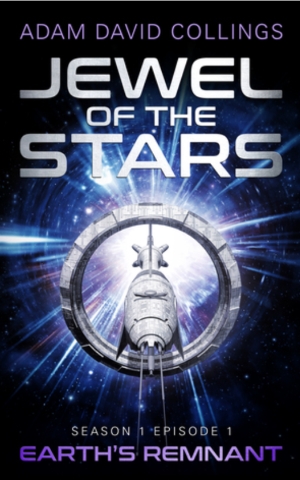
Also they both write the type of genre l love to read, science fiction and fantasy. I can't say how much I enjoyed reading Adam’s Jewel of the Stars novels and would recommend it to anyone who loves science fiction. I was privileged to beta read book two in this series and can say that both stories are better than a lot of the newer science fiction novels I've read over the last few years.


I've just started reading and enjoying Jenny's Heart of the Mountain fantasy series too. What I also like about both of these authors is the way they’re able to subtly weave in ideas about Christianity and their faith without breaking the reader out of the story. This is something I'm still working on with my writing. 


What are your writing goals for 2019? How will you achieve them?


I have an ambitious goal of completing and publishing two books by the end of this year. That was my goal last year but I ended up helping my wife publish a nature journal. (Still a win!) 


I believe the first and most important step to achieving this year’s goal is to finish a first draft of at least one of my projects.

(Could place image BenHeatherNatureJournal.JPG here with following link  Ben and Heather with the One Year Nature Journal. Click on link to find out more and purchase in Australia.) 


How does your faith impact and shape your writing?


I grew up in a Christian home and have been a Christian from an early age so I view everything that happens through a Gospel worldview and hopefully my writing and videos reflect that too. I’ve read some really good science fiction and fantasy novels which teach scientific principles or discuss philosophical and religious ideas as its part of the storyline in a way that seems natural. A good example of this, despite its name is Amish Vampires in Space which juxtaposes Amish, Christian and Secular beliefs, discusses each in detail and keeps the tension of the story going at the same time. It’s well worth the read. (See Adam Collings YouTube review for more detail)

This is what I want to do with in my novels, write them from a Gospel worldview and be able to have the characters discuss ideas like redemption or show these ideas through their actions without ‘taking the reader out of the story’ because it’s to cheesy or seems forced. This is something I’m struggling with but want to accomplish especially if I’m aiming at the general market.

---


Ben Dixon spends his days taking photos of his beard and dog to post on his Instagram page, while his wife, Heather home school's their 3 children.

He is also on a quest for a good book. While Science Fiction is his favourite genre to escape to, he also enjoy Fantasy and Detective Fiction. In the non-fiction section he likes to read Theology, History and Leadership books.

This quest is never ending as there are always more good books to read.


You can read Ben Dixon aka Wolf McTavish's work at:

BloggerYouTube |  Wattpad | Meduim | Facebook | Twitter 

Thursday, 24 May 2018

Meet Our Members: Charis Joy Jackson


Each Thursday in 2018 we will be interviewing one of the members of Christian Writers Downunder
– to find out a little bit more about them and their writing/editing goals. 

Today's interview Charis Joy Jackson

Question 1: Tells us three things about who you are and where you come from.

I am a missionary filmmaker, author, and actress. I am from the US and grew up in several places, but have lived in Australia for ten years - which is actually the longest I’ve lived in one place my entire life.

Question 2: Tell us about your writing (or editing/illustrating etc). What do you write and why?

I love to write anything in the speculative genre. My novel, The Rose Of Admirias, is a fantasy. But I also have several sci-fi and dystopian books in the works too.

I've also started a little blog called The Dreamcatcher's Journal, where I capture all the crazy adventurous dreams I've had. I started it because I used to show up to work and tell everyone about my dreams. They couldn't believe how well told the stories were - like full novels or movies, so I thought, I've got to start keeping these written down somewhere. 


Question 3: Who has read your work? Who would you like to read it?
 
Friends and family that I know of, but my novel was just released at the beginning of this month as part of a limited release of 22 novels in an ebook box set called On The Horizon. Besides the fact that I’d love EVERYONE to read my novel ;) I’d love for two of my favorite authors to read it. Robin Hobb and Stephen R. Lawhead. These two have really inspired my own work and I’d love to get their feedback on my writing because I want to keep growing as an author.

Question 4: Tell us something about your process. What challenges do you face? What helps you the most?
 
I’m the worst when it comes to having a process. Each story I write seems to have a process of its own. Most of my stories I know where I want my characters to end up, but I don’t often write out a whole process of how they’re gonna get there. I have a vague idea of where I’m going, but there are a lot of things that happen along the way that surprise me and that’s my favorite. If I can surprise myself, then hopefully I can surprise the audience.

Because I am one of those writers who doesn’t plan a lot this can sometimes be an obstacle I need to overcome. I’ve written myself into holes I don’t know how to get out of, but thankfully I’ve always been able to find a way out in the end. I think a big reason for that is that I am co-creating my story with the Creator or story. With God there’s no such thing as writer's block - instead, they are the adventures we get to find our way out of. 

I think it was C.S. Lewis and Tolkien who said they wrote what they wanted to read. I’m the same, I write what I want to read and that is the thing that helps me the most. It keeps the passion of the story alive and I hope that translates better to the reader too.

Question 5: What is your favorite Writing Craft Book and why?

I really enjoyed Stephen King’s On Writing. While it didn’t cover as much story craft as I thought, it actually opened my mind up to more stories and possible adventures in the future. It taught me a lot about living the life of a novelist and not just dreaming about being one.

Question 6: If you were to give a shout-out to a CWD author, writer, editor or illustrator – who
would they be?

 
There’s several I’d like to give a shout out to - but Jeanette O’Hagan is definitely someone I want the world to know about. Her books are phenomenal. Excellent storytelling and amazing world building. She’s a huge inspiration to my own writing and has been one of my champions. My novel wouldn’t be published yet if it hadn’t been for her. It was because of her encouragement that I finally finished The Rose Of Admirias after writing it for four years! Please read her books. You won’t regret it!

Buy all her books!!!

Question 7: What are your writing goals for 2018? How will you achieve them?
 
My writing goals for the rest of 2018 are to publish The Rose Of Admirias as a paperback. I’d love to write the sequel this year and also finish up the novel I’ve been writing based on the film I produced in 2016 called Out Of The Woods.


Question 8: How does your faith impact and shape your writing?
 
As I mentioned earlier it’s a huge factor. I consider every story I’ve written to be co-written by the ultimate Creator. When I get stuck, I talk to God about how to get the character out of a situation. Sometimes, the best ideas come to me during a time of worship, so I often bring a journal so I can write them out. My passion, tenacity, and creativity are a gift from the Lord and I want to honor him by using it to the best of my abilities.


KEEP UP TO DATE ON WHAT CHARIS IS WRITING. SIGN UP TO HER NEWSLETTER NOW & RECEIVE A NEVER BEFORE SEEN SHORT STORY - FOR FREE!


Charis Joy Jackson is working as a missionary with Youth With a Mission (YWAM) a non-profit organization & is part of The Initiative Production Company. She loves creating stories & her first novel, The Rose Of Admirias, was released this May in a limited release box set called On The Horizon - 22 authors, 22 novels.

Here's to a life lived in awe & wonder.
Welcome to the adventure.

www.charisjoyjackson.com

Thursday, 4 January 2018

CWD Member Interview - Adele Jones


Question 1: Tells us three things about who you are and where you come from.

1)      I grew up on a farm on Queensland’s Darling Downs.  As such, I spent a lot of time fencing, horse riding and handling cattle as a girl.

2)      As a young reader, I loved animals, especially horses. Many of the books I read for years were horsey stories, both fiction and non-fiction. (And I still love a good horsey story, like those by CWD members Cecily Anne Paterson and Jenny Glazebrook.)

3)      As a young person, my career goal was to either become a vet or a professional musician. I did neither of these. 


Question 2: Tell us about your writing (or editing/illustrating etc).  What do you write and why?

My interest in writing stems from being raised in a family that valued stories. Presently, I’m primarily writing young adult novels, and have published a technical thriller YA trilogy (Blaine Colton trilogy). Many years ago I was focussed more on writing historical fiction and I also write poetry. My coming release, Porcelain Dream, a time-slip YA science fantasy, brings together the historical and YA genres.


Question 3: Who has read your work? Who would you like to read it?

My YA novels have a fairly broad readership, but the scientific elements tend to attract readers who have an interest in sci-fi. It's probably useful to note I write near science fiction, so my stories are written in the real world, in Australia, and the technology seems like it could be feasible in our current age. (Based on the 'What if science could?' premise, some readers expect something quite different.) I aim for a target age of 13+ though the youngest readers I know of are 11 and the most mature 'young adult' reader I know of is 98. 😊 As any author can attest, the best compliment is when a reader contacts you to say how much they loved your work, and to ask when the next book is being released. My aim is to share my stories with a broader readership, and I’m currently working through a variety of online features via my blog to showcase the different aspects of my novels.


Question 4: Tell us something about your process. What challenges do you face? What helps you the most?

I used to say a lack of quality writing time was the greatest challenge to my creative process, but lately I’ve had a great deal happening in my world. My head is overflowing with many things, few to do with writing, and when I do get those mini-writing opportunities, it’s much harder to generate purposeful creative thought to make the most of those times. Just like any other area of life, writing is also subject to seasons of change (like this current one!). For this reason I think it’s important to have a flexible approach to writing, and even if you can’t get actual writing done for a few days … weeks … keep jotting down ideas and engaging the imagination in story development. That way when an opportunity does arrive to get writing, it’s much easier to get back on track.


Question 5: What is your favourite Writing Craft Book and why?

I’ve read quite a number of quality writing craft books, and I found those by Writers Digest, Kate Grenville, James Scott Bell particularly good, but based on the conversations by other writers, there’s one book I’m SUPER keen to read: Story Genius by Lisa Cron.


Question 6: If you were to give a shout-out to a CWD author, writer, editor or illustrator – who would they be?

That’s a really hard question! There are so many amazing writers in CWD, with diverse gifts and writing styles. That said, if I were to base my criteria on the active encouragement and promotion of other writers, there are some stand out authors, including Jeanette O’Hagan, Anusha Atukorala and Nola Passmore. Not only are they talented writers, but these gorgeous humans also have a generous heart for seeing other writers succeed. I'd also love to give the 2017 Omega Writer's CALEB prize finalists a shout out. This names some fabulous writers and CWD members, including long term advocates of Australasian Christian writers (speaking of gorgeous humans seeking the success of other writers), Anne Hamilton and Ruth Bonetti. It's definitely worth checking out the authors in the 2017 prize finals. (Seriously, this shout out list could go on all day!)


Question 7: What are your writing goals for 2018? How will you achieve them?

2018 holds some exciting opportunities, including release of my next novel. Porcelain Dream, through Rhiza Press, is due out mid-year. It's been a long-term project, rewriting a story I penned over a decade ago. Much editing and revision has been needed, but it's  been satisfying finally seeing the novel come together. There are also some exciting Omega Writers events in store: the Toowoomba Chapter Writer’s Retreat in May; the annual Omega writers conference in October; and the Omega Book Fair in March. I’m also hoping to attend another pop-culture festival as a stall holder with fantasy/sci-fi authors, Jeanette O’Hagan and Lynne Stringer. We had a blast at our first ever pop-culture event, it would be a shame to not make the effort again in 2018.


Question 8: How does your faith impact and shape your writing?
Faith shapes our perception of the world, our values, and our responses to each situation we encounter in life. If a person is living out their faith, I think it’s impossible to separate those beliefs from who we are, even in our creative pursuits. Personally, my writing probes some pretty key issues of life, including self-worth, the value of life, bioethics, relationships, faith and more, and these perspectives are intrinsically informed by whatever belief system we hold. I try and put a face to these issues through my characters, and let the reader journey with them as they try and work out what they think/believe, and why.


Adele Jones is an award-winning Queensland author. She writes young adult and historical novels, poems, inspirational non-fiction and fictional short works, along with juggling family responsibilities and a ‘real job’ in the field of science. Her first YA novel Integrate was awarded the 2013 CALEB Prize for unpublished manuscript. Her writing explores issues of social justice, humanity, faith, natural beauty and meaning in life’s journey, and as a speaker she seeks to present a practical and encouraging message by drawing on these themes. For more visit www.adelejonesauthor.com or contact@adelejonesauthor.com

Thursday, 19 January 2017

Read Outside the Box by Nola Passmore


Author:      I’ve just written a groundbreaking novel that’s bound to be a bestseller.
Publisher:  What’s so innovative about it?
Author:      There’s this teenage girl who falls in love with a vampire.
Publisher:  Um … it’s been done before.  You’ve heard of the Twilight series?
Author:      Is that a TV show?
Publisher:  It’s a series of young-adult novels that’s sold millions.
Author:      I don’t read much fiction.  Most of it's not to my taste.  But my novel is different.
Publisher:  How do you know it’s different if you’re not reading in the area?
Author:      Just take a look and you’ll see what I mean.  
                  (Author shoves manuscript under publisher’s nose).
Publisher:  Oh it’s an historical novel?
Author:      No, contemporary.
Publisher:  Then why does the teenage girl sound like someone out of an Austen novel?
Author:      I like Pride and Prejudice and I thought I’d do something similar.
Publisher:  With vampires?

I’m going to go out on a limb and assume that if you’re a writer, you ARE reading in your genre.  If you’re not, you may face the pitfalls of our hapless wannabe-novelist. 

Now I’m going to go out on a bigger limb and suggest that you should also be reading OUTSIDE your genre.  If you have eclectic tastes in literature, that won’t be a problem for you.  However, a lot of us tend to stick within the confines of our preferred style.  We only read murder mysteries or romances or Christian biographies or Amish steampunk.  It’s comfortable in our little genre box.  We know what to expect.  We don’t have to do any unwelcome stretching.  We don’t get lumbered with a book we’re not going to enjoy.  Why try the baklava when you can eat the lamington?

But what if you peeked out of your genre box and sampled a different taste?  There are at least three benefits.

It exposes you to other possibilities.  You may find another genre or sub-genre that you enjoy reading.  You may even try writing in that genre and discover you’re good at it.  I spent eight years struggling with watercolours before stepping out and doing an acrylics workshop.  I had instant success and have even sold one of my paintings.  If I’d never looked beyond by watercolour palette, I wouldn’t have discovered that I’m better suited to acrylics and mixed media.  You could make a similar discovery with your writing.

It helps you to engage with a broader readership and learn what sells.  Do you have a Christian message that you want to get out to a mainstream audience?  How are you going to do that if you don’t know what themes and styles are popular in mainstream literature?  Do you want to write a fantasy novel with universal themes?  How are you going to do that if you’ve never read a novel set in a different kind of world than your own? A popular catchphrase at the moment is ‘join the conversation’.  If you read outside your genre, you’ll be able to participate in more of those conversations. 

It can help improve your writing in your preferred genre.  Here are some of the strengths of different genres that we can apply to our own manuscripts.

  • Suspense/thriller – hooks the reader by getting straight into the action; has good pacing that keeps the story moving; ends each chapter with a page-turning sentence or phrase.
  • Romance – develops characters we care about; delves into relationships and family issues; offers hope.
  • Science fiction/fantasy – stretches the imagination and shows what’s possible; builds a world that supports and enhances the story.
  • Literary fiction – uses beautiful language; adds layers to the plot through nuance; explores deeper themes; provokes thought.
  • Historical fiction – uses background research to enhance a story; shows how to use setting to create the story world; explores the past through the eyes of the present; experiments with alternative interpretations of history.
  • Memoir – shows how to take the main character on a journey; connects with the reader emotionally; explores universal themes.
  • Creative non-fiction – shows how to make facts entertaining and accessible.
  • Poetry – reduces ideas to their essence; expertly uses language and imagery for maximum impact; allows for expression and exploration of different forms.
  • Humour – relieves stress and entertains; provides lighter moments for more serious works; can be used to critique and question systems or ideologies (e.g. through satire).
  • Children’s literature – stretches the imagination; shows how visual and textual material work together; helps us to get in touch with our own inner child; explains key concepts simply; explores values.

This list is certainly not exhaustive and many of the strengths cross over into different genres.  Can you think of others?

Set a Goal

You’re more likely to read outside of your genre if you have a specific goal.  You might identity a couple of genres or sub-genres that you would like to try and then set yourself a goal to read a certain number of books in each.  Although you might want to start with something close to your literary home, I’d encourage you to aim a little broader than that – fiction, non-fiction and poetry; contemporary and historical; realist and speculative; Christian and mainstream; bestsellers and award winners; books for adults, young adults and children.

There are also many established reading lists you can use.  For the last two years, I’ve participated in the Popsugar Reading Challenge in which you read books from different categories.  Some are specific (e.g. an espionage thriller), but most of the categories are quite broad (e.g. a book with a red spine), so you have a lot of scope in your selections. I’m part of a Facebook group that discusses books we’re reading and it’s been a great way to learn about different genres and styles. I’ve come across a few duds, but I’ve also discovered many gems I wouldn’t have read otherwise.  If you’d like to try this year’s challenge, you can find the 2017 list here.


Set Boundaries

While it’s good to read widely, it’s also wise to determine the types of books that you’re not going to include.  I don’t read erotica, but I wouldn’t necessarily rule out a book with one or two sex scenes.  It depends how they’re done and their importance to the story.  I don’t read grisly horror or books with strong occult or paranormal themes because I know they affect me negatively.  However, I’m not averse to the odd ghost, werewolf or magical twist. The list will be different for everyone, but you should still be left with dozens of genres and sub-genres that you can happily explore.

Do you read outside your genre?  Has it helped in your writing?  What pearls have you discovered?  I’ll be back later to respond to your comments, but right now I have to check out steampunk titles on Goodreads.  Will I choose Beauty and the Clockwork Beast or stick with a classic like H. G. Wells’ The Time Machine?  Perhaps I’ll read them both.


Nola Passmore is a freelance writer who has had more than 140 short pieces published, including devotionals, true stories, magazine articles, academic papers, poetry and short fiction.  She loves sharing what God has done in her life and encouraging others to do the same.  She and her husband Tim have their own freelance writing and editing business called The Write Flourish.  You can find her writing tips blog at their website:  http://www.thewriteflourish.com.au  

Monday, 18 April 2016

Exploring the Tangible Terrible & the Magical, Mystical Mystery

By Charis Joy Jackson  


"If we discover a desire within us that nothing in this world can satisfy, also we should begin to wonder if perhaps we were created for another world."
-C.S. Lewis


The first time I found this quote, by one of my favorite authors, I longed for some portal that would transport me to this other world I knew I was really created for.

Could I be like Lucy Pevensie and step into some magical wardrobe where all the Daughters of Eve were revealed in their true form to be Princesses and Queens? Where could I find the ship that would carry me to the shores of Middle Earth or Faerie?

My desire for this other world was so strong I decided to start breaking it down. What was it about those places that seemed more real than this place called Earth?

Here's some of the things I learned...

The Terrible Tangible

We have so carefully wrapped ourselves up in dreams and bubbles. We've shut the world out and live safely behind hidden screens of computers, TV and video games.

None of these things are wrong in proportion, but when most of our lives consist of us hiding behind these things we forget how to interact with the world outside our door.

We fear like Bilbo or Frodo Baggins that once we step onto the Road there's no knowing where we will be swept away.

Strangely enough, this is exactly what excites us about Narnia, Middle Earth and Faerie.

There's nothing to hide behind in those worlds. In those worlds the protagonist is forced to deal with the terrible tangible they find themselves in. Their fingernails are caked with dirt, the laugh lines on their faces are smudged with grime that won't come away.

To me this sounds beautiful and terrible. Terrible in the "totally awesome" sense. However, stick me in the middle of the forest and I'll start freaking out about all the little bugs that happen to cross my path. This is mostly because I like many others, spend a lot of my time, hiding behind the computer or TV.

I want this to change. I want to embrace life around me.

I want to get dirty.

Cultural Wells

Another vast difference I've seen about these other worlds is their traditions and the deep wells of culture that permeate every part of life.

Living in this modern time things like Common Sense are not common anymore. We live in an age where we can do what we want, when we want and we don't have to worry about how it will affect anyone else.

We get tattoos for the sake of getting a tattoo, we pierce our ears because everyone else is getting their ears pierced. We have trends that last for a moment and then we're forced to keep up with the newest and latest thing.

Unfortunately, these things sometimes mean the depth of our culture is lost. Why else does this current generation go looking for typewriters or old books, or suitcases from the 1920's?

We are searching for the depth of our culture, because what we have today only lasts for a moment. We're the microwave generation and demand everything now.

But, in these other worlds things take time- sometimes years.

People in these worlds still get tattoos, but they're given with a purpose. They're used to identify who they are or the call they have on their lives. People in these worlds still get piercings, but it's done for the sake of the life they lead.

Common Sense not only exists, but there's also the unspoken Rules of Conduct. Like the Welcome Cup, which whether you like the person or not, you will offer to them, because of common courtesy.

Men in these stories care more about honor than their own lives.

Have we fallen short of something key to our society in this?

Journey = Story, not Blip

When I look at people traveling in these other worlds it takes time to get anywhere.

With modern conveniences of cars and planes, our stories have started to lose some of their depth because we count those times in the car or on planes as the blip in the timeline, instead of counting them as big parts of the story.

If we counted the journey of Frodo and Sam as the blip to when they get to Mount Doom so much of their story would be gone and Sam's love and sacrifice would lose almost all of it's poignancy and depth.

So maybe our story is really in the journey and not the destination.

Magical, Mystical Mystery

I think one of the things I love more than anything is the Great Mystery permeating these stories.

Only in fantasy is it possible for many people to experience that magical mystery of a Creator, or Someone higher than them.

It's through these stories that we see more of what Love looks like in the flesh.

Aslan is a perfect example of this. Aslan is full of Majesty. He screams of mystery and magic. With one breath he turns stone into living flesh, with one growl he can scare the most evil witch. Even the massive water god waits for a small nod of approval from him before the god can wreck havoc on the bridge that's stopped its flow.

And the more you get to know him, the bigger he becomes because we can comprehend more about him.

Perhaps there is something about the idea of Magic that helps us come a little closer to the One who created us all. It's almost like magic opens a hidden door for us to experience more of His character.

My words fail me for the perfect description of the awesome, raw, amazingness of His Mystical Mysterious Self.

There's so much I could say about Fantasy awakening in us something unique, but I will leave you with this quote and let you mull if over for yourself. For if I gave you all the answers, then there would be no adventure and thrill of discovery for yourself. Not that I have it all figured out myself...

"...Stand by the ways and see and ask for the ancient paths, where the good way is, and walk in it..."
-Jeremiah 6:16 


Charis Joy Jackson is working as a missionary with Youth With a Mission (YWAM) a non-profit organization & is part of The Initiative Production Company, an independent film company. Where she gets to make movies for a living.

She loves creating stories & is currently writing a novel in her spare time, which she hopes to publish in the next year.

Here's to a life lived in awe & wonder.  Welcome to the adventure.


Monday, 7 September 2015

Part Two Writing Fantasy

by Jeanette O'Hagan


A few weeks ago, we discussed some reasons why Christians may be wary of Fantasy (What is Fantasy). Yet this genre also offers great opportunities to talk about God and faith. Fantasy can engage the reader, often highlights the ongoing struggle between good and evil on a cosmic scale, and provides opportunities for analogy and metaphor of important themes. 

So how might Christians include fantastical and supernatural elements in fiction? Before we answer that question, I think it's important to understand some basic concepts.

Different Types of Fantasy

Fantasy comes in a number of different forms—from high fantasy, low fantasy, sword and sorcery, fairy tales, secondary world, portal, allegorical, animal tales, historical, ghost stories, paranormal, urban, even horror—and may include magical realism or supernatural/spiritual tales. 

Each of these approaches includes fantastical and supernatural elements to different extents and with a different relationship to realism. 

To confuse the picture even more, there can be a cross-over between science-fiction and fantasy— for instance Anne Macaffrey’s Dragons of Pern series includes dragons but eventually gives a natural explanation for these creatures. Similarly popular origin stories of superheroes give a naturalistic explanations for their fantastic superpowers.

High Fantasy is usually about world shaking events, involves prophecies, wizards, magical creatures, quests, battle between good and evil, and high stakes while low fantasy may be on a smaller scale, grittier, less magical elements or more political. Much fantasy is secondary world (an alternative reality other than earth— like Tolkien’s Middle Earth or the world of Eragon), portal (where there is a doorway to another world e.g. Narnia, the Wizard of Oz, or Alice in Wonderland) or alternative reality. Fantasy may be set in our world but still clearly meant to be imaginary— for instance fairy tales, animal anthropomorphism (animals acting like humans as in Wind in the Willows, Peter Rabbit or Watership Downs), historical (Mary Stewart’s Merlin trilogy) or verge on allegory (Anna Elizabeth Stengl’s Heartless or many of George MacDonald’s fairy tales). Paranormal and urban fantasy is about creatures of legend such as vampires, werewolves, witches, zombies or ghosts and are usually set in a modern, contemporary world (eg the Twilight series but also Mike Duran’s The Ghost Box – or even Dickins The Christmas Carol). Magical realism might include symbolic supernatural elements in otherwise realist story which are presented without comment (Life of Pi, Chocolat). And for some stories the supernatural is included as a higher rather than an imagined reality— stories of angles, prayer, miracles (eg Frank Peretti or Angelguard). Some writers of fantasy are naturalists and/or may use fantastical elements with a basic anti-supernatural message (eg Pullman’s The Golden Compass).


Different Definitions of Magic

To further confuse the issue, 'magic' like 'love' is an amorphous word—it has a range of meanings from the illusionist’s tricks, the purely imaginary or unrealistic tropes of fiction (flying horses or carpets), to actual practices of traditional and tribal religions or neo-paganism (New Age, Wiccan, modern Shamanism etc). Miracles might also appear to be ‘magic’ to an outsider.

In fantasy, the fantastical and magical elements are not meant to correspond to the world as we know it. Fantasy is more than magic— imaginative visions of different worlds, fantastic or imaginary creatures or different realities.  These imaginative forays push the boundaries of our known reality, in part to entertain, but also as a way of thinking about the world.

As Neil Gaiman says in Coraline (paraphrasing G. K. Chesterton), ‘Fairy tales are more than true – not because they tell us dragons exist, but because they tell us dragons can be beaten.’ 

However, with the resurgence of alternative spirituality and post-modernism, magical elements can begin to bleed into real-world beliefs and practices about a magic that draws from a polytheistic or animistic world-view. Prayers, rituals, divination either invoke or seek to control and manipulate spiritual beings (gods, spirits) or forces (mana, chi, life-force) or tap into an essential fatalism (implicit in omens, astrology etc). 


Fictional magical systems (overlap with ‘real’):
  1. True words— finding the true word or name gives you control over a person or thing.
  2. Gifts, talents or abilities— telepathy, prescience, telekinesis, superpowers, illusion or changing shape.
  3. Knowledge— of atomic structure, of the true nature of things, of natural or supernatural power source.
  4. Spiritual or religious— through prayer, ritual or relationship with God (or in polytheism–gods, spirits, ghosts).
  5. Communication, manipulation, control of spiritual entities or the dead.
  6. Possession by or channelling a supernatural being/s.
  7. Curse or failure to move on after death – e.g. werewolves, vampires, ghosts
  8. Magical nature – e.g. unicorns, fairies


So what is at stake here?

The Bible clearly prohibits real-world magical practices because:
  1. The Creator is the ultimate source of blessing and He determines our destiny.  He wants us to depend on Him, not to go through intermediaries.
  2. While the spiritual forces invoked have some power, they are both deceitful and hostile.
  3. So ‘magic’ (calling or using supernatural power through a supernatural intermediary other than God) is ultimately harmful and entangles us in malign spiritual forces.

However, the Bible doesn’t discourage the expression of the supernatural in the Christian’s life through the right channels such as faith, prayer, the working of the Holy Spirit and spiritual gifts.  ‘Magic’ is a counterfeit of God’s (supernatural) work in the world.

And, I would add that the Bible also warns us against another extreme – a materialism that, if it doesn’t deny God’s existence, at the very least claims achievements and prosperity as the result of our own intelligence and effort. Pride and rebellion against God are just as destructive and soul destroying as sorcery and witchcraft (Deuteronomy 8:17,18; 9:4; 1 Samuel 15:23).

In both cases, we need to acknowledge God as the source of blessing and direction.

Different Approaches for Writing Christian Fantasy

Steven D. Greydanus suggests J R R Tolkien and C S Lewis put ‘hedges’ around the portrayal of magic in their fantasy fiction through a clear distinction between the imaginary fictional world and real-world practices and by confining the use of magic to supporting characters (the wise old wizard that helps the protagonist rather than the protagonist themselves).

Travis Perry suggests six positive ways to include magic in Christian fantasy:
  1. Only the villains use ‘magic’ – while the ‘good guys’ either use ordinary means or rely on God’s power.
  2. Rename miracles ‘magic’ and prophets ‘wizards’ (that is, have prophets and miracles dependent on God’s power— even though using the terms ‘magic’ and ‘wizards’).
  3. Treat magic as an allegory for the workings of God (deep magic in Lion, Witch and Wardrobe).
  4. Magic is a form of undiscovered science (just as our use of electricity and machines would appear magical to a medieval person).
  5. Blur the lines between the supernatural and the natural, by making the supernatural a fabric of everyday life (eg Alice in Wonderland – everything is fantastical).
  6. Have innate supernatural talents as an analogy for spiritual gifts.

I think it helps to consider the source of magic, how it is used, by whom and for what reasons. The nature of the magic within the world may be explicitly stated or implicit. I’d suggest that you:
  1. Have a clear distinction between good and evil (though there may be shades of grey, heroes and heroines are flawed & villains are never pure evil).
  2. Ask what is the source of 'magic' in your world – is it from a good God, from innate power or ability (which would be directly or indirectly a gift of God), or is there a natural explanation (e.g. telepathy as brainwaves)? Be cautious about magic drawing on a life force or power lines or some esoteric knowledge, while invoking, manipulating or controlling spiritual beings other than God might be confined to antagonists or presented as a false step by protagonists.
  3. Ask who can use ‘magic’ and how—is it something everyone can use or is it reserved to special people (superpowers or professionals), is it intuitive or does it require study and training, does it depend on one’s relationship with God (or other supernatural beings) or on natural abilities?
  4. Indicate the motivation for using magic— is it to manipulate other people, to harm (black magic) or to heal and help them (white magic). Yet even ‘white magic’ is harmful if it comes from the wrong source.
  5. Show how the villains’ use of ‘magic’ differs from the ‘good guys’? Do they use a different type of magic or do they wield it in a different (maybe illicit) ways or for different reasons?
  6. Consider how blurred the lines are between what is clearly imagination and reality. Could it be confused for contemporary dabbling in magic and thus encourage further involvement or exploration of such avenues?


Some examples:

Paul Gallico’s The Man Who Was Magic— A magician arrives in town of magicians or illusionists famous for their use props, sleights of hands and tricks. The difference is the stranger can do ‘real’ magic— producing a real rose out of thin air with the dew still on the petals. Jealous and afraid of losing their livelihoods and reputations, the false magicians wish to kill the stranger. This story is a powerful allegory of Jesus’ story (the true magician where the magic of the others is counterfeit).

C S Lewis Narnia series—the villains are often witches or magicians (Jardis, the White Witch, the Lady of the Green Kirtle, Uncle Andrew). Their magic is used for selfish reasons or to control and manipulate others, and is opposed to the powerful and true magic of Aslan the Lion (analogy for Christ-figure) and his father, the Emperor over the Seas. The children are given gifts (including Lucy’s magical cordial which heals) or signs (as with Jill in the Silver Chair) but it is their faith in Aslan that is most important. Narnia is a fantastical world in which animals talk and the stars have human form.

In Tolkien’s Middle Earth—the elves have innate magical abilities while men, dwarves and hobbits do not. The magicians like Gandalf are physical personifications of angels (Istari), sent by the creator God to guide elves and men back to him. Necromancy, sorcery are condemned and the great power of the One Ring will corrupt and subvert the good in even the best and must be destroyed rather than used.

This is a complex issue and I found it hard to cover all the issues succinctly—so I do apologise for a rather lengthy post. I hope I’ve given some direction and, more importantly, something to think about.  On Thursday, I want to approach this issue from the perspective of the reader, including young readers.

What about Fantasy?
Part One - Should we read/write Fantasy
Part Two - Writing Fantasy (that's this one)
Part Three - Reading Fantasy

Other posts:
Saints, Seekers and Sleepers
What is Christian Fiction?

http://www.decentfilms.com/articles/magic
https://droppedpebbles.wordpress.com/fantasy-and-faith-part-one/
http://mikeduran.com/2015/09/dont-wake-the-watchful-dragons/


Fantasy Image: Jeanette O'Hagan © 2015 


Jeanette O'Hagan has a short story published in the general market Tied in Pink Romance Anthology  (profits from the anthology go towards Breast Cancer research) in December 2014 and two poems in the Poetica Christi’s Inner Child anthology launched in July 2015. She has practiced medicine, studied communication, history and theology and has taught theology.  She cares for her school-aged children, has just finished her Masters of Arts (Writing) at Swinburne University and is writing her Akrad's fantasy fiction series.  

You can read some of her short fiction here

You can find her at her Facebook Page or at Goodreads or on her websites  JennysThread.com or Jeanette O'Hagan Writes .