Showing posts with label Ian Acheson. Show all posts

Thursday, 12 July 2018

Meet our Members: Ian Acheson


Each Thursday in 2018 we will be interviewing one of the members of Christian Writers Downunder – to find out a little bit more about them and their writing/editing goals.
Today's interview is with Ian Acheson

Tell us three things about who you are and where you come from.
Hi all, I’m Ian from Sydney. I’m a strategy consultant and author. I’ve released one supernatural fiction novel, Angelguard, many moons ago. The second in the series, Wrestling with Shadows, is written and ready to be published (I say recognising it will need another round of edits, ideally by an editor from a publishing house).
I’ve also started work on a non-fiction project that explores the topic of ‘Intimacy’ and how there is a genuine lack of it in the modern world starting with our relationships with God who desires it for every one of us.
Tell us about your writing (or editing/illustrating etc).  What do you write and why?
I write fiction to answer questions I have on the Christian walk. So in Angelguard I was led to explore the thin veil that exists between the natural and supernatural as I genuinely believe it exists. Angelguard was a plot-based story and in “Shadows” I wanted to go deeper with Jack Haines, the hero, and how he grapples with his own darkness (ie, his shadows). The third in the series, which I’m researching now, I’m looking to have Jack on “fire for the Lord” and to see what this looks like in a fictional context of good up against some pretty mean bad guys.
Who has read your work? Who would you like to read it?
A bunch of kind of readers who gave up a few hours of their time to meet Jack. I’d like a lot more readers to do similar.
Tell us something about your process. What challenges do you face? What helps you the most?
With Angelguard I started with two words: “It’s time.” That’s it and some vague notion of having angels and demons battling while humans went about their day. I sat and wrote 2,000 words a day (because Stephen King did it) for 9 months and produced a monster of a manuscript of 707 pages. Yes, you guessed it, I didn’t know what to leave out.
Having gone through a laborious process of edits and more edits and some more edits I didn’t want to repeat the process with “Shadows” so I tried a bunch of plotting techniques which just didn’t work. Eventually I gave up and trusted in Jack to take me on a merry ride once again. A dear editor friend of mine helped me re-work the first 50 pages and reviewed my overall story. And I’m planning on doing similar with the third one.
What is your favourite Writing Craft Book and why?
King’s “On Writing” was the only book I read before starting out on Angelguard. I figured I better see if I really do have a story in me before I spend time reading more books.
Since then I’ve found I have a love/hate relationship with craft books. I’ve bought dozens of them, read the first 50 or so pages and then moved on. I think I work better with a coach. My first editor who, yes, read most of the 707 pages of Angelguard, taught me how to write and since then I’ve enjoyed working with two others, the one I mentioned above, and Jan, who my publisher, Lion Fiction, engaged for me. I go in with any editor with the attitude that I have so much to learn and in so doing find it very easy to take on board their recommendations, no matter how gentle or severe they may be.
One craft book I have finished is Story Engineering by Larry Brooks which I found really useful and I still refer back to it. Here’s my review on ACW. 
If you were to give a shout-out to a CWD author, writer, editor or illustrator – who would they be?
I’d like to shout out to Simon Kennedy on his Safe Harbour success. It was a bit of a treat to hear his name mentioned last week on the Logies. Simon, did you get an invite to the night?
What are your writing goals for 2018? How will you achieve them?
I have two: find a new publisher for the two Angelguard novels. Lion Fiction went through a hard time a year or so back and in the end gave me the rights back to Angelguard. My second goal is to get a wriggle along on book three so I can demonstrate to a prospective publisher that the third one is not too far away.
How will I achieve them? Write, write, write and then contact two agents who I know to see if there is any interest from them to representing me.
How does your faith impact and shape your writing?
I can’t separate it as the premise of my stories is to explore a question I have on the Christian experience. My challenge is to minimise the “telling” in the message.
I think writing great Christian characters is hard. To be able to show the intimacy of a relationship with God in all its facets is challenging without “telling”. It also creates a new layer of challenge in demonstrating the fruits of the Spirit alongside the “story” and all the while showing characters having a vibrant or otherwise relationship with an invisible God. It’s what makes writing Christian fiction so much fun.


Ian Acheson is an author and strategy consultant based in Sydney. Ian's first novel of speculative fiction, Angelguard was recognised with the 2014 Selah Award for Speculative Fiction.You can find more about Angelguard at Ian's website, on his author Facebook pageand Twitter

Monday, 4 December 2017

Exploring Genre 2017

by Jeanette O'Hagan


This year, the cross posts between Christian Writers Downunder and Australasian Christian Writers are focusing on genre. I've found it an interesting series and some more in depth look at different sub-genres in more depth. So just to recap -

Why Genre?


Iola Goulton started off the year asking the question - why genre?  She reminded us that genre's are useful for managing reader expectations and in helping to target promotion and marketing.

Then over the next several months we've looked at specific subgenres - or some broader categories - in fiction, non-fiction and poetry.

Fiction


Fiction has a number of broad categories such as romance, speculative fiction (science fiction and fantasy), crime and detective fiction, historical dramas, thrillers, military, women's fiction and literary - among others.  Fiction can also be aimed at children (picture books, chapter books, middle-grade), young adult (teens), new adults (teen-early twenties) or adults.

Romance


While romance can often be a subplot or theme in a range of other genres, in category romance the focus is on the relationship and the obstacles to a romantic relationship between the hero and heroine or romantic couple.  Category romance is hugely popular and generally has some firm expectations. It can also range from sweet to steamy (or blend into erotica, which is really another category).

There are a wide range of sub-genres with romance.

Carolyn Miller introduced us to historical romance (romance set before the present day) and in particular regency romance - romance inspired by Jane Austen and set in or around the regency period - eg. early 19th century.  You can find her delightful post here.

Nicky Edwards took us on a tour of rural romance (set in the country) and medical romance (with nurses or doctors as protagonists and which includes medical drama), usually set in contemporary times. You can read more here.

Speculative Fiction


Speculative Fiction images a different reality - whether that be a variation of earth as we know it or different world altogether. It is generally divided into Science Fiction (where science or a imagined science explains the world) or Fantasy (in which a non-scientific - often super-natural - explanation is given), though these can cross-overs such as science fantasy and mixtures. There is easily over 100 sub-genres within this field - including crazy mash-ups like gaslamp fantasy or weird west.

Adam Collings  introduced us to Space Opera - epic Science Fiction set in space with a focus more on the story than a detailed or hard science - think Star Trek or Doctor Who.  And, also the Superhero sub-genre which can used a scientific (Superman) or a supernatural (eg Thor) explanation for the special powers.  Read more here.

Jeanette O'Hagan introduced Secondary World and Portal fantasy - both of which are set on an alternative (non-earth) world. In the first the world exists without reference to earth, whereas in the second, the protagonist travels through a door or portal to the other world. Read more here.

Ian Acheson introduced us to Supernatural Fiction - which focuses on supernatural beings such angels, demons and/or ghosts (and is related to paranormal and urban fantasy). It can have a faith or Christina focus or be more 'secular' in its approach. Read more here.

Shorts


We also looked at 'short fiction' from flash to novellas (though it could also be non-fiction). Read more here.

Poetry


Poetry can be non-fiction or fiction, it can be strongly narrative (ballads, for instance) or focus on a moment or a feeling or be metaphorical.

Valerie Volk gave a wonderful introduction to Poetry (here)  while the following week we explored Free Verse (poetry without a set rhyme) and Verse Novels (telling a narrative in verse)  (read more here).

Non-Fiction


And finally, Nola Passmore introduced us to creative non-fiction (and how that differs from reportage). Read more here.


It can be tempting to see genre as a straitjacket or a way of pigeon-holing our fiction.  It can be seen as restrictive or reducing writing to formula (the HEA, the red herrings and clues, etc).  Some genres have stricter guidelines  - the category romance, the cozy mystery - while others almost by their nature tend to push the boundaries  or like cross-overs with a meld of different genres (speculative fiction, Young Adult).

Writing within a genre still allows amazing variety and ingenuity, especially when there are so many.

ACW & CWD are thinking of extending this dip into genres and subgenres next year. With that in mind,

Have  your found the series helpful? How?
What did you learn (if anything)?
And are there any particular genres you'd love to find more about?

List of posts (chronological order)

Genre  
Creative Non-Fiction


Spaceship image courtesy of digitalart at FreeDigitalPhotos.net
Cover Image Valerie Volk In Due Season
Other images copyright Jeanette O'Hagan

...............


Jeanette started spinning tales in the world of Nardva at the age of eight or nine. She enjoys writing secondary world fiction, poetry, blogging and editing. Her Nardvan stories span continents, time and cultures. They involve a mixture of courtly intrigue, adventure, romance and/or shapeshifters and magic users. She has published numerous short stories, poems, two novellas and her debut novel, Akrad's Children. Find her on Facebook or at her webpages Jeanette O'Hagan Writes or Jenny's Thread.

Monday, 4 September 2017

Exploring Genre - Supernatural Fiction (Cross over post with ACW)

By Ian Acheson
This year, the cross posts between Christian Writers Downunder and Australasian Christian Writers are focusing on genre. So far, we’ve had posts on meeting genre expectations, in Space Opera and Superheroes, Portal Fantasy and Secondary World Fantasy, Poetry, Free Verse and Verse Novels , Regency and Historical Romance and Rural and Medical Romance 

Today I’m looking at the Supernatural Fiction sub-genre and will also reference Speculative Fiction together and Paranormal Fiction.

Supernatural fiction. What is it you ask? Let’s look at a few definitions.

It is often included in the “speculative” catchall that features in many places, whether it is award programs (eg, ACFW) to certain publishers that focus entirely on novels that “explore the boundaries of the imagination” to borrow from Marcher Lord Press now rebranded Enclave Publishing. We even have a publisher down under in New Zealand that specialises in such fiction: Grace Bridges’ Splashdown Books.

It’s pleasing to know that the world’s largest Christian publisher, Thomas Nelson, has it’s own supernatural fiction category. It is the home of some of the biggest authors of the genre: Ted Dekker, Jim Rubart and Erin Healy to name just three, all of whom happen to be particular favorities of mine.

Back to the definition. In its most basic form it is simply that the story contains elements that are outside the laws of the physical world. The story typically involves a power that goes beyond natural forces and is attributed to a god or deity. The ghost story is the archetypal supernatural story. However, some commentators would treat a ghost story as “paranormal fiction.” There’s a big overlap in all these genres and sub-genres of weirdness. Angels and demons fit in the supernatural while vampires, werewolves, zombies are probably classified as paranormal. Paranormal would also include extraterrestrial life (think ET, Independence Day), UFOs, etc.

In the past decade or so we’ve seen an explosion in secular artforms showcasing all this weirdness. Whether it’s the Twilight novels and movies to The Walking Dead graphic novels and TV series plus the many spin-offs where other worlds are portrayed that typically collide with our physical world in the shape of creatures including vampires, fairies, werewolves, zombies and such like.

Increasingly we’re finding Christian authors are exploring some of these boundaries with an uptake in horror novels and even the undead. I don’t read such novels but having spoken to readers who do, they have indicated these stories explore how God triumphs over Satan in his various evil guises.

Supernatural Faith

Our faith is a supernatural one. We believe in God who exists outside of our physical world. The Bible is a supernatural book and we’re participants in a spiritual war whether we like it or not. There is another world that exists all around us. In fact, it continually intersects with what we experience with our five senses. It is in the intersection where supernatural fiction typically resides.

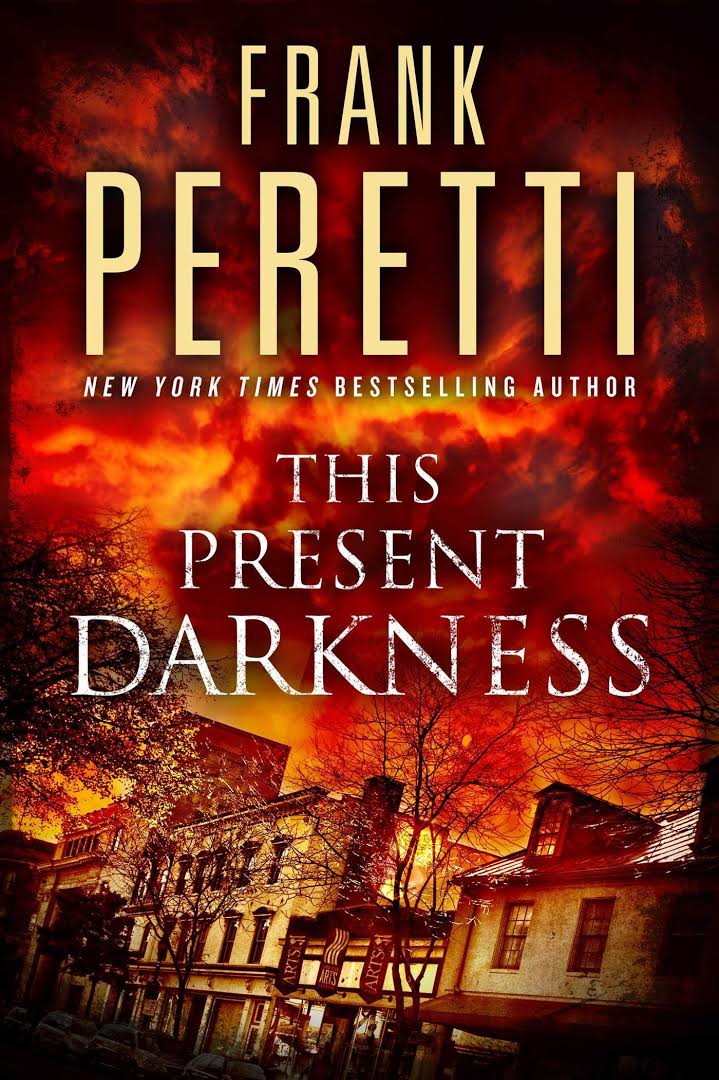
I think we’d all be familiar with Frank Peretti’s Darkness duo of novels (“This Present Darkness” and “Piercing the Darkness”) that had such an influence over our generation of Christian readers. Certainly there were other novels before Peretti that portrayed supernatural themes but these two are famous for their demonstration of a parallel world of angels and demons being influenced and influencing what occurs in the physical world.

When I chat with readers who are passionate about such novels, I find three recurring themes.

1. An interest in the unfamiliar

This is perhaps a key difference to romance novels where certain underlying central themes can be familiar to the reader. Spiritual warfare, a particular personal area of interest, is often not something we hear or read much about. It’s rarely a topic of discussion around the dinner table, catch up with friends nor is it often preached about in some churches.

2. Triumph over evil

Most supernatural novels will feature a strong theme of good versus evil. This can take many forms whether it’s the direct influence of a demon on a human, or villains allowing their fleshly desires to guide their actions. In evil being defeated, the reader is able to witness an expression of God’s incredible love for His creation.

3. Strengthens their faith

This third element can be applied to any genre where we see faithfulness, forgiveness, grace or any number of God’s attributes on display. We close the book with hope in our heart having been reminded of God’s awesomeness.

Writing Christian fiction that’s not preachy is especially challenging. One of the advantages I believe speculative fiction has over other genres is that it is ‘easier’ to introduce a Christian theme by using an otherworldly character, for example, an angel or demon, or a human with a special supernatural gift, or a story that is set on a completely different world/realm/time continuum.

Realm Makers Conference 

Just as the secular world has its Comic Con gigs a group of Christian authors created Realm Makers a few years ago and now host an annual conference. It was recently held in Reno in late July and I understand over 200 people attended to listen to the likes of Dekker, Rubart, Mary Weber and David Farland to name just a few. I’m hoping to get to it next year.

Recent examples of Supernatural Fiction

I’m always looking for good supernatural and speculation fiction. Craig Parshall’s new Trevor Black Series is a good one that combines the grittiness of crime drama with supernatural suspense.

I’m a big fan of the Harbinger novella series. It’s now finished having produced 20 novellas written by 5 authors: Bill Myers, Peretti, Angie Hunt, Alton Gansky and Jeff Gerke. Clever story, form of creation and distribution. We’ll see more of this multi-author style of story in the years to come.

If you haven’t sampled any supernatural fiction recently or ever may I encourage you to put a toe in the water. Perhaps start with one of the Darkness novels, which I mentioned above, or one of Jim Rubart’s. Jim’s latest, The Long Journey to Jake Palmer, is superb and was my favourite novel of 2016. You won’t be disappointed and who knows, you may become a convert.


Ian Acheson is an author and strategy consultant based in Sydney. Ian's first novel of speculative fiction, Angelguard, is available in the US, UK, Canada and Australia. Angelguard was recognised with the 2014 Selah Award for Speculative Fiction.You can find more about Angelguard at Ian's website, on his author Facebook page and Twitter

Monday, 27 June 2016

Writing to Discover Truth … and Yourself

Photo courtesy of moggara12/FreeDigitalPhotos.net
Golly gosh, I’ve struggled writing the sequel to Angelguard. The basic story of Angelguard fell out of me. I was a complete novice (well, I still am really) but the story just kept coming. I’d turn up to the blank page and out it would come.

Nine months later it was done. The first draft. Not to be read by any one, oh, except, Fiona my wife who egged me on and kept giving me new ideas and lots of names for my supernatural beings.

Many years later it was finally published. Even though there had been many many changes to that first draft the essence of the original story of that first draft remained.

Angelguard was a very plot-driven story with a relatively simple premise focused on how the supernatural interacts with the natural world and the significance of prayer in dealing with the darkness.

Second time around I’ve found to be a completely different experience. Where Angelguard was dealing with the supernatural at the “macro-level” I wanted to move to the micro for the sequel. What role do angels and demons play in the daily life of individuals in, for example, their thought life?

Plotter vs Pantser

As you will have gathered Angelguard was definitely written by the seat of my pants. I started with two words (which actually survived the many re-writes and edits) and a general idea about involving angels and demons in it.

But I figured plotting would help shorten the production process. Sure, there’s more work up front, but the actual writing should take less time if you do a reasonably detailed outline.

Well that's what all the books on plotting told me.

I started out with an outline for a story that I thought I loved. Tried a couple of “outlining” methods that seemed to work okay and then started to draft the story.

But the story just wouldn’t come out.

So I shifted gears and worked on another angle, and then another, still grappling with outlining while struggling to bring the essence of the story (what I mentioned above) into it.

I gave up outlining and went back to pantsing. I handed the story back to my characters to see what they’d come up with. Slowly but surely, the story began to get legs and eventually it came out.

Hooray!

Wrestling with Shadows

During the course of the last couple of years of struggling with the story I was also grappling within myself. Sorting through my own mess, my light and dark.

Having completed the first draft early in the year I was able to reflect a little on the process. What become apparent was I needed to go through my own season of discovery about myself to be able to write the story.

I recently read an article Francine Rivers wrote in a recent Christianity Today where she talked through how most of her novels came out of her “questions of faith.”

“But questions of faith kept rising up and with them, characters, to play out various points of view.”

Similarly, I’ve started doing a course Ted Dekker has created (”The Creative Way”). One of the opening comments he makes about his own journey is similar to Francine’s:

“All of my novels began with a question I was wrestling with. A doubt or struggle in my life that I wanted to explore in the context of story.”

I recall other authors sharing similar things and I believe that’s why the latest story is often the hardest one even if you’ve written fifty of them. Because you don’t know what you’re going to learn about yourself when you’re writing it.

We write stories to discover the truth. And in so doing we discover more about the Lord and ourselves.

Yes, the sequel has always had the title, Wrestling with Shadows. To write it, I’ve discovered I needed to do just that myself so I could take my characters through their own transformation.

Did I envisage it being such a struggle when I set out? Never. Sure, I knew getting the story would be challenging enough but I had no inkling the personal battle would be so strong.

If you’re presently struggling with your story be gentle with yourself. Spend more time with the Lord and His Word. Simply hang out and talk to Him not just about the novel but the stuff inside you. He’ll help you sift through it (and others may help as well) and in so doing free you to take your characters on an even better journey in the story.

Grace and peace.


Ian Acheson is an author and strategy consultant based in Sydney. Ian's first novel of speculative fiction, Angelguard, is now available in the US, UK, Canada and Australia. Angelguard was recognised with the 2014 Selah Award for Best Speculative Fiction. You can find more about Angelguard at Ian's website, on his author Facebook page and Twitter

Monday, 18 January 2016

What are your writing goals for 2016?

Photo courtesy of Stuart Miles/FreeDigitalPhotos.net
I read recently the results of an American survey that outlined less than 5% of people set goals, write them down and track their progress.

This surprised me somewhat so I ran my own small poll amongst some loved ones, which essentially validated those results. I typically am a goal setter and will sit down at the beginning of a year to map out a series of goals. For some reason or another I didn’t do a very good job of this last year.  Life was meant to be all about starting out again in a new city, Melbourne. This didn’t eventuate after many dreams, much effort and commuting especially by my wife.

When I spend insufficient time on documenting and tracking goals, like last year, I don’t make as much progress. And this particularly applies to my writing.

So I’ve made a conscious effort of spending quality time in these first weeks of 2016 on both reflecting back on 2015 and establishing goals for this year. We should do this with the Lord. We’re all probably familiar with Proverbs 16:3:

“Commit to the Lord whatever you do, and he will establish your plans.” (NIV)

Sometimes we can read this to believe God will establish what we want. But as my pastor said recently when referring to this verse, the Lord’s likely to mess with our plans for a while and then He’ll tell you what He wants and what He doesn’t want you to do. And then, and only then, will the Lord establish them.

But the first steps are both giving our goals to God and also listening to Him.

Dream BIG

Goals often fall out of our dreams. For example, I want to be a published author? Some people will call this a dream, others a goal. God wants to hear our dreams. The exciting thing is we can’t out dream God so it’s a great place to be in when we’re meditating with Him on what our dreams and goals can be for any given year.

Our dreams will remain forever just that, dreams, unless we engage specific activity to propel them forward. Many of us aren’t working to publisher deadlines rather self-imposed ones and because we’re all busy it’s easy for our writing to take a back seat at times. We’re all familiar with the old adage what get’s scheduled gets done so I find it important to schedule specific time each day to achieve that goal.

Three of my writing goals for this year are:

  1. Complete the edit of my work-in-progress by 31 January 2016
  2. Complete the draft of one 50-page short story by 30 June 2016
  3. Complete one writing craft e-course by 31 March 2016

I consider it important to write specific goals that are time-bound otherwise I will put them off. Yes, stuff comes up which may make it difficult to achieve but put a line in the sand now and deal with the stuff if it happens.

Holding on too Tight

God loves to interrupt us. Whether it’s in our prayer times, in asking us to do something we wouldn’t expect, or something big or small unexpectedly occurs, like the mid-year change I mentioned above. He’ll do that with our writing plans too. Susan’s post last Monday is a great example of it.

And remember these comforting and convicting words from the Lord:

“A man’s heart plans his way, but the Lord directs his steps.” (Proverbs 16:9 NKJV)

Do you set writing goals and if so, what is one of your goals for 2016?


Ian Acheson is an author and strategy consultant based in Northern Sydney. Ian's first novel of speculative fiction, Angelguard, is now available in the US, UK, Canada and Australia. Angelguard won the Selah Award for Speculative Fiction in 2014. You can find more about Angelguard at Ian's website, on his author Facebook page and Twitter

Thursday, 18 June 2015

I dreamed ...

Photo courtesy of sumetho/FreeDigitalPhotos.net
I was watching an episode of our local Masterchef and famous British chef Marco Pierre White gave a short inspirational speech about the power of dreams.

“Dreams … without them you’ll achieve nothing.”

A day later, I popped cross to a blog I hadn’t visited for a few months to find the latest post was an encouragement to write down your dreams. “Ask God again to dream with you. No, to give you His dreams!” (Lynn Donovan)

Okay. I think God might be trying to tell me something.

And just to confirm the following day the daily reading from John Eldredge’s devotional was titled “We Can’t Out-Dream God.” The post stated how the majority of people say they don’t have any dreams and those who do, only a small portion actually write them down and follow them up.

BAM!

Three strikes.

I couldn’t recall the last time I had spent any time thinking about my writing dreams. Life had gotten so muddled for a variety of reasons and I realised I’d kinda lost my way with my dreams for my writing. I was simply plodding along.

“Awakening and owning the dreams that God has placed in our hearts isn’t about getting stuff or attaining something. It’s about embracing who we are and who He has created us to be. In Him.” (John Eldredge)

So I listened.

Opened my heart and started to dream. Again. With Him.

Sure my world didn’t just change overnight but it was like I woke up again and could see a little further down the road. I’d lifted my head up from having spent too much time looking downward.

A fog had lifted. That simmering flame in my heart suddenly received some oxygen and began to burn a little brighter.

“Because the thing about dreams is, dreams come true.” (John Eldredge)

When did you last get in touch with your writing dreams?

If it’s been a while may I encourage you this week to spend some time with pen and paper (or e-device) in hand and chat to God about them.


Ian Acheson is an author and strategy consultant based in Northern Sydney. Ian's first novel of speculative fiction, Angelguard, is now available in the US, UK, Canada and Australia. You can find more about Angelguard at Ian's website, on his author Facebook page and Twitter