Monday, 15 November 2021

Recommended Resources from the 2021 Omega Writer's Retreat


Omega Writers held a successful online writing retreat in October, with inspiring sessions from Edie Melson and Nicole Partridge, and informative panel discussions on publishing and marketing.

Today I’m sharing some of the resources discussed during the retreat, particularly during the marketing panel (which, unfortunately, did not record).

Recommended Resources

Podcasts

Here are some excellent writer podcasts to listen to: I enjoy the Creative Penn and SPF podcasts because they’re both produced by authors who built their reputation and platform on selling genre fiction, and who still write and publish multiple books a year. Yes, they both have courses and nonfiction books, but their focus is their fiction.

Facebook Groups

There are many excellent Facebook groups for writers. The best groups allow little or no self-promotion, as their aim is to help writers (not become a spammy echo chamber). These last two groups are aimed at general market authors, so the language and subject matter can get spicy … but the information is excellent.

Other Recommended Resources

Author Platform

Authors need a website, but how do you build one if you’re not a web designer? An online course may help.

Q&A

There were also lots of great questions in the chat.

How much can an indie author expect to pay up front to publish?

The two main expenses in self-publishing are cover design and editing.

How much does an editor cost?

The cost of editing varies. The first book might cost $2,000 or more, because you’ll probably need two kinds of editors:
  • A developmental editor (looking at genre, plot, structure, characterisation, point of view, and other major aspects of writing).
  • A copyeditor (who looks at the writing at a sentence and paragraph level, making sure the writing is clear and error-free).
It’s worth paying for both sets of edits, especially for newer authors. These will often be two different people. Traditional publishers will use a line editor between the developmental edit and the copyedit. The line editor works on polishing sentences and paragraphs to make sure they say what the author means them to say and in the strongest way possible. A traditional publisher would complete at least two rounds of proofreading once the document has been copyedited by an editor and revised by the author:
  • At least one proofread using the Word document, to catch any outstanding typographical errors. There may be more than one proofreader at this stage, and it would probably be a specialist proofreader i.e. not the line editor or copyeditor.
  • A second proofread on the final page proofs (e.g. the PDF or InDesign file), and would focus more on the look of the test on the page e.g. no widows or orphans (a single line of text on a page), and no rivers (a line of spaces running down a page). At this stage, the proofread would only change the most obvious errors, as adding or deleting a word on page 12 might mean repaginating the entire manuscript.
Self-published authors have different processes depending on their budget. Some hire an editor or proofreader for the final read-through. Others work with a team of eagle-eyed beta readers to proofread. The actual cost of editing depends on word count, the quality of the writing and how many rounds of revision and editing the manuscript has already been through.
  • Lisa Renee (from The Collaborative Press) USD 85 per 10,000 words.
  • Meredith expects to pay around AUD 1,200 for 70,000 words for a main copyedit.
  • Carolyn Miller suggested around AUD 1,000 for 90,000 words if the writing is very clean (which probably means it’s already been thoroughly edited by the author and one or more editors, or is from a multi-published author).

Any tips on cover design?

Genre is key when it comes to cover design, so it’s important to know your genre, know the books in your genre, and select a cover designer who knows what sells in your genre. Check out books in your genre. Authors will often credit their cover designer, so check out books in your genre. Suggestions from those at the retreat: A full wrap paperback and ebook cover is around USD 250 (but a custom or illustrated cover can cost USD 1,000 or more). Premade covers are cheaper, and can start at USD 50. Premade covers are a good option for standalone books (not books in a series, because they should have consistent styling and branding and it’s going to be difficult to find premade covers with consistent branding).

What is acceptable content in Christian fiction?

The US Christian market is very conservative. They won’t drink beer or wine, but they’ll happily eat burgers and pizza for every meal. But the definition of “acceptable content” depends on your target market, and that’s going to be slightly different for everyone.
  • Are you writing for a mainstream Christian audience, or are you writing for the general market and bringing in Christian themes or “grace notes”?
  • Are you writing for the Australian market, the US market, or the UK market?
Each market is different. The best advice is to read a lot in the genre you’re interested in, and observe the trends and standards. Also, work out which publishers and imprints publish in your area, and because that will also help. This is a subject we’ve blogged about before: Acceptable Content in Christian Fiction

How can I get my books into Koorong?

Contact them. They have a form to fill out, and you’ll need to send them a copy of your book. Then they decide. Self-published books will need to be of the same standard as traditionally published books, and you’ll either need to have a solid author platform (e.g. website, email list, or established fan base), or have a unique book that meets a genuine need.

How can you get books in audio?

Those of us Down Under can’t use ACX (Amazon), but we can publish audio through Findaway Voices. Penny Reeve and Cecily Paterson got a grant to produce an audiobook from Create NSW.

Yes, we covered a lot in a short time!

Did you attend the retreat?

What top tips or resources would you like to share?

About Iola Goulton

Iola Goulton is a New Zealand-based book reviewer and editor specializing in adult and young adult Christian fiction. She won the 2016 ACFW Genesis Award (Novella), and copyedited Then There Was You by Kara Isaac, which won a RITA Award from Romance Writers of America. Iola holds a Bachelor of Commerce degree majoring in marketing and has a background in human resource consulting. When she’s not editing, Iola is usually reading or writing her next book review. Iola lives in the beautiful Bay of Plenty in New Zealand (not far from Hobbiton) with her husband, son, and cat.

Monday, 8 November 2021

Resistance is Futile!

This is my Star Trek avatar created on Trekkietar


When I was about fourteen, I discovered Star Trek. I loved it. We only had the original series back thenon rerun, by the way. I’m not that old. I remember going with friends to mini conventions which basically involved dressing up (you didn’t call it cosplay back then) and binge-watching series episodes on the big screen. I was in true geek heaven. When other kids had posters of KISS, ABBA, or The Bay City Rollers (yes, really) on their wall, I had pictures of Kirk, Spock and the starship Enterprise.  

Yep. Geek. How amazing is it that William Shatner recently travelled to space at 90-years-old? 

There have been several iterations of the Star Trek universe since then and while I’ll always love Shatner, Nimoy and DeForest Kelley, in the original series, my favourite Star Trek series is The Next Generation (TNG). Set a hundred years after the original series, Sir Patrick Stewart, as Jean-Luc Picard, gave a new dignity, and eloquence, to the role of Starfleet Captain. 


The TNG crew also featured in my all-time favourite Trek movie, Star Trek: First Contact. This movie was a lot of fun and it showcased one of the most sinister villains of the Star Trek Universe, The Borg. The Borg are black-leather-clad cyborgs. Their starship is a huge cube with weaponry that can overpower almost all other ships. They operate as a hive mindThe Collectiveand are controlled by the Borg Queen. Their goal is perfection, and they operate by assimilating other races into their own by injecting nano-bots into their victims. 


They are a powerful enemy of all civilisations and their demoralising warning to all is: Resistance is futile. The Borg are too strong. Give up now.


By IMPAwards, Fair use, https://en.wikipedia.org/w/index.php?curid=54488873


I won’t spoil First Contact for you (but if you haven’t seen it, where have you been?) but those words, resistance is futile, are used to great effect in the climax of the film.


By now you’re probably wondering what this has to do with writing. 


Well, this week I’ve had the Borg catch-cry in my head as I’ve pondered a different, but very futile kind of resistance: resistance to writing.


I suffer from this resistance a loteven though I love writing. Do you? I know I’m not alone.


To create a world and immerse yourself in the lives of your characters is a thing of joy. You get to know these make-believe people, torture them in some diabolically cathartic way, then cheer them on as they overcome the obstacles you throw before them. What’s not to like? Writing can be so much fun, so why do we resist sitting down and filling empty pages with our words. 


Resistance is weird. Why will we do almost anything other than write our first draft of a fiction novel? I’ll work on my website, write a blog post, take the dog for a walk. Anything. I have a friend who says her cupboards are never cleaner than when she’s drafting a novel.


I’m convinced resistance is different from writer’s block. While these two problems can be related, in my experience writer’s block is usually caused by a problem within our stories. If our plot isn’t working or if the goals, motivations and conflicts of our characters aren’t sound, we can easily stop writing and feel blocked. Resistance, on the other hand, is often experienced even before we sit down to type.


The resistance I’m talking about is also different from the inability to write that comes from serious life situations. I couldn’t write for six months after my brother died. That wasn’t resistance, it was grief.


Resistance to writing is the psychological force that pushes back against us when we try to create. 


In the realm of physics, resistance reduces to the ability of a wire to conduct electricity. The larger the resistance, the less electricity passes. In the same way, resistance to writing holds back the creative flow. 


Inertia is another physics term that says a mass will stay still or keep moving in a uniform way unless it’s acted upon by an opposing force. If you have a large SUV broken down in front of your driveway, it will stay there unless you are strong enough to push it out of the way. The good news is that once you get the SUV moving, inertia helps to keep it moving. The harder you push, the more the vehicle gathers momentum. But if you stop pushing, it will stop moving because of gravity and friction. Now if you are trying to push it uphill and you stop pushing...


Image by Schäferle from Pixabay 


Writing resistance is like that inertia. If we can overcome it, we gain momentum that keeps us moving forward, but if we don’t maintain our force and intention, our stories grind to a halt. 


Resistance to writing can lead to futility. It can stop us in our tracks, take us captive and rob us of the satisfaction of creating a body of work we are proud of. It can cripple our self-esteem, assimilate us into the mundane and crucify our joy.


But fighting resistance is not futile. It can be beaten even if, like me, you have a bad case of this malady.


Here are some things that can help:


  • Start. It sounds simple but the best way to overcome resistance is to begin. Determine that you will write some part of your novel, however miniscule, each day.
  • Make your goal doable. If resistance is a strong force in your writing life, then start with a tiny goal. Forget NaNoWriMo with its 50K words in a month. Begin with 300 words a day. Or say you will spend half an hour a day writing new story. 
  • Give yourself permission for those 300 words to be the worst writing ever. Because words, even badly composed words, can be edited and built upon.
  • Experiment. Try a different approach. I recently discovered the dictation function in the Office 365 version of Word. I am woeful at dictation, but when I use it to get a distracted rabble of words down onto the page, I don’t have a blank page anymore. And the fear goes away.
  • Use a pen name. Sarah Painter in her book, Stop Worrying, Start Writing, suggests if fear of failure is holding you back, tell yourself you are going to publish your book under a secret pen name. Whether you use that name or your real name at the time of publication, doesn’t matter. What matters is that you trick your brain into thinking no one important to you need know these words are yours.
  • Believe in God? Then pray. After all, one of his titles is Creator!
When we start, even with tiny goals, and give ourselves permission to write badly, a strange thing happens. The forces of inertia are overcome, and we begin to move forward. Our 300 words build momentum and become 500 words or 1000, until the story takes a life of its own.

I began this post by talking about Star Trek and the Borg. In this case the Borg were the opposing force speaking words designed to demoralise their victims. Resistance is futile. But resisting the Borg (sorry, spoiler after all ðŸ˜†) wasn’t futile


Nor is resisting resistance. With writing, the power of resistance is itself futile. It can be beaten. 


And no alien cyborg is gonna stop us!


Have you wrestled with resistance? What tactics do you use to beat it? Let me know in the comments below.


Susan J Bruce, aka Sue Jeffrey, spent her childhood reading, drawing, and collecting stray animals. Now she’s grown up, she does the same kinds of things. Susan worked for many years as a veterinarian, and now writes stories filled with mystery, suspense, heart and hope. Susan also loves to paint animals. Susan won the ‘Short’ section of the inaugural Stories of Life writing competition and won the 'Unpublished Manuscript' section of the 2018 Caleb prize. Susan is the editor of 'If They Could Talk: Bible Stories Told By the Animals' (Morning Star Publishing) and her stories and poems have appeared in multiple anthologies. Click here to check out Susan’s writing and artwork on her website.


Thursday, 4 November 2021

Mentors, Godparents and the Writing Thing.

 ‘Me? She really asked if I would consider being her mentor?’


I was flabbergasted. Me. A mentor? I don’t know anything. I’m barely able to work through my own issues in life and someone wanted me to be their mentor? And what was a mentor supposed to do?

Would you believe me if I said I looked up the definition?


A wise and trusted counsellor or teacher. [Pft! Wise? I’ll probably have to look that up in the dictionary too, but I know I’m neither old enough or experienced enough to be wise.]


An influential senior sponsor or supporter. [Ha! I should never be left unsupervised, let-alone influence anyone.]


I checked the thesaurus, maybe there was a better fit than mentor — adviser, coach, guide, instructor, trainer, tutor, counsellor … maybe not.


Photo by Alexis Brown on Unsplash

Lisa Bevere released a new book in late 2020 called, Godmothers — Why You Need One. How to Be One. For some reason I remembered this book after my friend and I had this bizarre conversation about mentoring and thought I would check it out. I mean, I have a young niece / goddaughter who lives interstate and I sadly don’t have much contact with her (purely my fault - life and all that) and isn’t mentoring kind of like being a godparent or part thereof?


Someone to whisper a blessing and a word of courage over your life. Someone to help you close your gaps. A guide who sees your potential waiting to be recognised, your challenges in need of transformation, and your questions requiring honest answers.

— Lisa Bevere


Looking back on accepting the opportunity to write blogposts on this website full of far more experienced, wise and knowledgeable writers than I, I remember feeling the exact same way as I did about the possibility of mentoring someone. 


Me? Write a post, on writing, for Christian writers … who would read it? I had nothing to say. My ‘so-called’ voice was still being developed. I didn’t have a published book, or short story, or poem or article or any other form of writing document. I did however have a very poor, first draft of a novel, a small group of friends who knew I liked to write and an open opportunity to have a go. Was it the right thing to do? I didn’t think so at the time. Was it the right thing for me? Well, let’s just say, that same very poor draft which has been edited here and there over the years (and has miles to go—according to me) was my submission to the Caleb Awards last year. I was one of the finalists in my category.


When we’re afraid of succeeding at the wrong thing, we run the risk of doing nothing. 
— Lisa Bevere.


Those of you who linked in to the Omega Writers Online Retreat last month would have heard Edie Melson speak on Soul Care for Writers. One of my take-aways from her session seems quite small and ironically and hilariously something you’d think a writer, any writer would be already doing. Writing. But not just writing all the stories we have bunched up in our heads, writing down our hopes and fears. Writing though the doubts that constantly hammer each of us everyday. Writing out the logical-sounding ‘why I can’ts' and working through these oppositions with the one thing we like doing the most.


The importance of an idea, dream, or hope can be measured by the opposition you experience when you dare to embrace it. 
Lisa Bevere.


Photo by Brooke Cagle on Unsplash

I know from experience (I can say that now), you don’t need to be the best writer, you don’t need to have something published, you don’t need to feel wise or knowledgeable for that matter. Everyone (yes, I’m talking to you) regardless of what path you’re going through in your journey with Christ, you have something to contribute to this writing community. Be bold. Be brave, or don’t be, but put yourself out there anyway.


Words, whether written or spoken, have the power to highlight our paths. 
Lisa Bevere.


If you think you might want to try your hand at writing a post for Christian Writers Downunder and have been a contributing member to our Facebook page and/or engaged via comments in these posts; and been apart of this group for more than 6 months, let us know. We’re looking for some new blood, a few new voices to help bring fresh ideas, encouragement and blessings on this wonderful writing community we have. You can contact us through our Facebook Page, comment below or email us at CWDBloggers@gmail.com.


Monday, 1 November 2021

Feeding the Reservoir (aka Soaking up the View from my Window)

By Mazzy Adams

A writer’s inclination to observe people and places is common, if not intrinsic, as it informs the character characteristics and settings we create for our readers. But for months, opportunities to casually watch passers-by while sipping a caramel latte inside a coffee shop, or freely travel to another place just to see what’s there, have languished in the realms of wishful thinking. Whether introvert or extrovert, opportunities to top up our creative reservoirs have taken a hit.  

It’s not surprising that, as global conditions have created compelling reasons to stay at home, innovative online groups have created new ways for people to connect and explore the world.

Last year, I joined a group called ‘View from My Window’. Precious glimpses into the daily lived experience of folk from across the globe have broadened my view of the world and the people in it. The views shared range from earthy to exotic, workaday to wondrous, and shabby to sublime, yet each outlook has someone to belong to, and a message to share. 

My home office window offers a homely, garden outlook (complete with bonus self-seeded weeds; freebies courtesy of the birds and the breeze) but, as I recently discovered, the view from my window was waiting, willing, and wanting to refill my depleted creative reservoir with gentle reminders and encouragements. I just needed to stop and listen to its words and stories.   


The garden began life as a goldfish pond, dug by hand out of compacted clay and lined when our children were youngsters; I relive the happy memory of their delighted squeals as they enjoyed a fun-filled ‘test swim’ before we added the water plants and fish.

Years of drought and water restrictions drove the pond’s reinvention into a garden that requires, and receives, minimal maintenance, but the elements I can see—from the plants, to the rocks, to the scar created by the chair which temporarily supports the rainwater tank’s overflow pipe—all bear witness to precious truths. 

The garden has a peaceful palm tree which sheds its dead leaves from time to time, and a beautiful-in-its-wild-and-messy-growth-pattern olive tree which I planted about twelve years ago. 


The palm tree whispers, ‘Don’t hold on to dead regrets, nor things that have passed their season of flourishing and must relinquish their moment of glory to make way for the new things God is doing now. Let them go. Draw water and nourishment from the reservoir of God’s word to grow and nurture new branches for this season.’ Without the weight of these dead things, I can confidently reach ever heavenward, to give my Lord honour and glory, and draw ever closer to Him in relationship. 


The olive tree reminds me to give thanks for my blessed heritage in God, which is rooted in history, in His chosen people, in the promises given in His word and received by faith, for all who are children of God, branches of His Olive Tree, natural or engrafted. 


The agapanthus remind me of the joys of my childhood (when I loved to ‘pop’ their swollen buds to release the bloom). They encourage me to always rejoice in the blessed innocence my Heavenly Father has given to me through Jesus Christ, to come boldly and confidently into His presence as a loved and accepted child, and to bloom and expand where He’s planted me. 


The agaves remind me that, in Christ, I can flourish in the harshest of conditions. I can raise my hands and the centre of my heart and soul to Him even when I’m feeling spiky, or bashed and battered by the hail of adversity. He sends His rain, and His love, upon the just and the unjust alike. When I willingly receive the mercy He rains upon me into the centre of my being, He refreshes me and renews my life. 


The papery bark of the native Australian melaleuca reminds me that God enables my writing and inspires my uniquely Aussie style; I can trust Him to direct and send my words to the world from this Great South Land of the Holy Spirit. 


The violets growing under it remind me that, just as they bring forth purple blossoms in season, as I also dwell in the shelter of the Most High, rest in the shadow of the Almighty, and experience and enjoy all the promises of Psalm 91, then the outworking of His grace will be as evident in me, and attractive as the pretty purple faces of those violets. 


The rocks and pebbles remind me that I am part of the house that is being built together in love and fellowship, founded on Jesus Christ, The Rock of Salvation, and the Chief Cornerstone. 

The visual scar created by the poly pipe—a temporary ‘fix’ to channel the overflow from the water tank—reminds me that God can even use my imperfect efforts and temporary solutions to channel His overflowing, life-giving anointing to where it’s needed. As I turn my attention to my computer screen and keyboard, this knowledge renews my passion and energy for the tasks intrinsic to the ministry of creative writing and publishing to which I feel called.


The jade reminds me to be mindful of the cultural beliefs and sensitivities of others, and to respect every individual, whatever their background or origin. We have one of these growing beside the entrance to our property too. The first day the grandparent of one of our students met us, she was thrilled to see the jade, explaining that, in her culture, it was a positive emblem that bode well for her grandchildren as they sought to advance their education and understanding with us, and that gave her joy, peace, and a feeling of well-being. 


And finally, hidden in the secret place in the depths of the earth, the bulbs of the hippeastrum wait patiently for their time to come, when their blood red trumpets burst forth, rising to announce their presence to the world. And, because I know my name is written in the Lamb’s Book of Life, my heart begins to sing: 

When the trumpet of the Lord shall sound and time shall be no more,
And the morning breaks, eternal, bright and fair;
When the saved of earth shall gather over on the other shore,
And the roll is called up yonder, I'll be there.

Refrain:
When the roll is called up yonder,
When the roll is called up yonder, I'll be there.

On that bright and cloudless morning when the dead in Christ shall rise,
And the glory of his resurrection share;
When his chosen ones shall gather to their home beyond the skies,
And the roll is called up yonder, I'll be there. [Refrain]

Let us labor for the Master from the dawn till setting sun;
Let us talk of all his wondrous love and care.
Then when all of life is over and our work on earth is done,
And the roll is called up yonder, I'll be there. [Refrain]

Just as there is a season and a time for every purpose under heaven, the view from my window is not static and the photos I’ve shared reflect some of those seasonal variations. 

I wonder, have recent seasons caused you to slow down … hunker down … stare wistfully out the window, longing for freedom? 

Whatever elements the view from your window frames—picturesque or ordinary—have they, do they, could they remind you of God’s faithfulness? Speak to you of endurance? Or something even more profound? Will you pause to listen to their stories?


Who knows, perhaps they’ll whisper, ‘It’s time to write and/or send the words you’ve been given out into the world to connect with the very people who wait to receive them.’ What an exciting thought!

[Copyright Information: 
Hymn: When the Roll is Called up Yonder; Music and Lyrics by James M Black, 1893, Public Domain.
Images: Mazzy Adams 2021]


Mazzy Adams is a published author of poetry, fiction, and creative non-fiction. She has a passion for words, pictures, and the positive potential in people. 

Email: maz@mazzyadams.com


Thursday, 28 October 2021

Time to NaNo

 by Jeanette O'Hagan


With November fast approaching, it's that time of year again.  

No, not Christmas (less than two months away). 

Not Hot Cross Buns likely to be in the stores two days after Christmas. 

Not even Supanova Brisbane the weekend after next (6-87 November, where btw you can find Rendered Realms once again.

It's time to dust of your keyboard, bring out your latest big project, clear you calendar and go for it. It's time for NaNoWriMo!

What is NaNoWriMo, you ask?


NaNoWriMo (pronounced Nan-No-Rye-Mo) stands for National Novel Writing Month. It started as a simple challenge to write a novel (or at least 50,000 words) in the month founded by freelance writer Chris Baty in the San Francisco Bay Area in July 1999 (the shift to November came in 2000.)


NaNoWriMo is a non-profit organisation that ‘believes your story matters.’


The challenge is to write 50,000 words on a (new) novel during the month of November.

Or you can be a NaNo rebel  - by continuing an existing project or converting hours of say editing or planning or poetry into words (generally one hour = 1000 words). Shh! Don't tell anyone. No, not really. NaNo Rebels are a sanctioned tradition probably since the early days of NaNoWriMo.  


But Wait - Don' You Have to be a bit Crazy to do NaNo?


Hmm, maybe - but then you have to be a bit crazy to be an author.


So, why do NaNoWriMo? 
  • If you've always wanted to write a novel—or have stalled in the process of writing one, NaNo can give you a jump-start. As I said in 2015, NaNo coverts ‘someday’ into ‘today.’
  • Tangible goals and deadlines, for many of us, are good motivators.
  • It gives you an impetus to write daily or at least regularly over  a limited timeframe (30 days).
  • Writing fast without constantly stopping to edit and review helps you get into the ‘flow’, immerses you into the your story world, and allows your creativity to flourish.
  • There will be time after NaNo to edit messy drafts but you can't edit a blank page.
  • The NaNo goal is achievable—1667 words a day (less than two hours of writing for most people)— but it is still challenging enough to stretch you.
  • Even if you don’t manage 50,000 words, every word counts and you will probably write more words than you would have otherwise. 
  • NaNoWriMo provides support through buddies, groups, badges, write-ins, and events
  • If you finish NaNo, there are some nifty, tangible rewards, like discount codes on programs and services useful to authors. 

So you've decided to take the plunge. What next?


The first step- sign-up to Nano (at https://nanowrimo.org/) and set up your project. 

The next step - add buddies (of writers you know) and join a group (CWD has a Quirky Wordsmiths Downunder Group) where you can interact and encourage each other.

The third step - prepare (if you have time). What will you write? Do you need to plan? What about research?

The fourth step - come November 1st, start writing.  Write each day - or write is larger blocks on the weekend or a day off. Work out what suits you and your routine. Make it a date in your diary and write, no excuses. 

The fifth step - remember to record your word count (or convert your hours - for the rebels among us) on your NaNo project page each time you write. Okay, you can backdate numbers if need be - that is, up to midnight 30 November, but remember to do it. 

The sixth step - celebrate your win & collect your goodies


So Now I'm ready to Publish, Yay!


No, no, no. Not quite.  

What you have is a first draft.  

In other words, your newly birthed book baby isn't ready for University quite yet. 

Even NaNoWriMo recognises that the NaNo draft is not ready for publication. It encourages writers to make December the month of the Edit, and discusses the next steps budding authors can take, including the need for editorial services, and offers discounts on writing programs etc.


Have you done NaNoWriMo in the past?  Are you interested in joining us this November? Let us know in the comments below or on the CWD Facebook group.  Look forward to doing NaNo together :) 


Monday, 25 October 2021

Adult Literacy: Are We Part of the Problem or Part of the Solution?


Many years ago, I knew a woman who'd recently become a Christian. Her first Bible was written in a fairly easy-to-read translation, and she enjoyed reading it. She could understand it. Then one day, I was attending a Christian talk with her, and the speaker made a couple of throwaway comments about this particular version of the Bible. He didn't like it because of a couple of points in the translation. His talk wasn't about Bible translation. He wasn't aiming his comments directly at my friend. He simply dropped those couple of snippets and moved on. But they had an effect. My friend got the impression that she didn't have the 'right' Bible and that she needed to get a 'proper' Bible.


I was annoyed at the time, and I'm still annoyed more than 30 years later. Why? Not because of some finer points of Bible translation, but because this Bible was at a reading level that was comfortable for my friend. Many people have been blessed by this Bible, it sells millions each year, and I have a copy of it next to my bed that I read every night. It's not my main study Bible, but I enjoy reading it. Why put unnecessary barriers in front of people that would make it hard for them to read and understand God's Word?

When looking at children's literacy, we understand that there are a range of different reading levels, and there are different kinds of books that cater to this. However, when we see an adult, especially in Western culture, we assume they can read and do so at a reasonable level. 

My view of this was challenged recently when I watched an excellent SBS documentary series called 'Lost for Words'. Across three episodes, it followed eight adult Australians with literacy challenges. Two of them could only recognise a few sight words. The others could read a bit, but had trouble with a lot of everyday reading tasks that most of us would take for granted; such as reading a public transport timetable, sending an email or looking for ingredients in a supermarket. They were placed into an intensive reading program, and it was amazing to see their progress over the course of the series. If you're in Australia, you can watch the series on SBS On Demand

When we write for adults, do we assume everyone has a high reading level? Do we dig out the thesaurus to find fancy words? When writing Christian books, devotions and study guides, do we use Christian jargon that a lot of Christians wouldn't even understand? Do we see an adult reading a comic book and secretly think they should have left those behind in childhood? Do we inadvertently leave people out of 'the conversation' because they can't read it and understand it?  I'm talking to myself here as much as anyone. 

So What Can We Do?

  • Many people with reading challenges have been shamed in the past and have become adept at hiding their gaps in literacy. Let's watch our own attitudes, expectations and stereotypes and try to create an atmosphere in which people with literacy challenges feel accepted rather than further shamed or stigmatised. 
  • Think about our audience. Are they people with theological degrees? People who've successfully completed high school? The average person on the street? That 'average' person may be someone with a learning disability, someone who has English as a second language, someone who had disrupted schooling due to family trauma. How do we craft our words so that we don't exclude people?
  • By all means use a thesaurus to help you think of other words for variety or for different shades of meaning. But don't use a thesaurus to come up with highfalutin words that make you look clever without regard for the reader. (Actually, 'highfalutin' might be one of those highfalutin words!)
  • If you have to use an unfamiliar or technical term, use context to help the reader grasp what you mean. For example, if you're writing a book set in the 1800s, you might want to use the term 'portmanteau' rather than 'suitcase', as it's more historically accurate. However, you can help the reader by hinting at its use. For example, 'Helena packed her clothes in the new portmanteau she'd bought for the trip.' If you have a lot of technical terms, you could also consider using a glossary. It's not about 'dumbing down'. If we believe God wants us to share his love through our stories, memoirs, poetry, devotions and more, shouldn't we do our best to make our words clear? 
  • Think of alternative ways of presenting your material. For example, audiobooks are wonderful for people who find reading difficult. However, you still need to make the language accessible. Depending on the type of work you've written, summaries and recaps can also help. For example, mystery novels often have sections where two or more characters get up to speed on the latest clues or evidence.
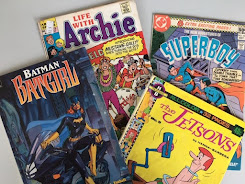
  • Children's stories are often presented in different ways for different reading levels. For example, books featuring superheroes or the characters from children's films such as 'Frozen', have been produced as picture books, early readers, chapter books, comic books, graphic novels and junior novellas or novels. Could our work for adults also be presented in different ways? 

So what happened to the friend I mentioned at the beginning of this post? She did buy a different version of the Bible, and God obviously blessed her with his Word because she's still a Christian today and going strong with the Lord. In spite of all of our efforts, we need to remember that it's the Holy Spirit who helps us to understand God's Word in spite of human failings. May the Holy Spirit guide us as we seek to share the message God has placed on our hearts.

Further Reading

In a recent post about adult literacy for the ACW site, I included some further suggestions and links to literacy organisations and resources. You can read it here.

Photo Credits

Featured photo of alphabet by Monfocus on Pixabay.

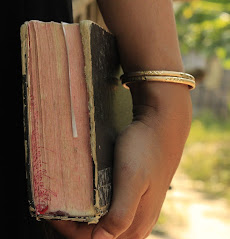
Girl holding Bible by Tep Ro on Pixabay.

Comics from the author's collection. (Yes, she still reads comics!)

Author Bio

Nola Lorraine (aka Nola Passmore) has a passion for faith and social justice issues, and loves weaving words that inspire others with courage and hope. Her inspirational historical novel Scattered was published in 2020, and she has also co-edited the Christian charity anthology Glimpses of Light with Jeanette O’Hagan. She has more than 150 short publications, including fiction, poetry, devotions, true stories, magazine articles and academic papers. She and her husband Tim also run a freelance writing and editing business, The Write Flourish, from the home they share with their two adorable cavoodles in southeast Queensland, Australia. She’d love to connect with you through her website: www.nolalorraine.com.au


Monday, 18 October 2021

A Tree of Life

 by Anusha Atukorala


Have you seen my tongue tricks


When I was growing up, my family was often entertained by them—I could even touch my nose with my tongue! In fact, I still can! I stopped writing now to take a few pictures to prove its truth to you, but ... the photos didn't look decent enough to be aired before your little eyes, so I shall wait a bit longer to satisfy your curiosity.


Recently, a verse in Proverbs spoke to me.

"A soothing tongue is a tree of life." 

Proverbs 15:4


As I read these words, I pictured a sweet young Mum rocking her baby boy on her knee. He's fallen and grazed his knee and his loud wails fill the air. Gently, she wipes his tear-stained cheeks and washes the scrape on his knee.

“Shh… it’s all right. It’s going to be fine, Sweetie!” 

Soon … his sobs die down. One last gulp and then, the flash of an angelic little-boy smile! He has calmed down. Made whole  ... through a soothing tongue.


When I have been badly in need of them, gentle words uttered by family and friends have been like cool breezes fanning a sad heart, a soft shawl around my shoulders on a cold day or a gift that never stops giving. They’ve also been a tree of life. I am able to sit content under the shade of its leafy branches.


A soothing tongue blesses. And we writers have power—the power to wield our pen and our tongues for good, power to bring encouragement and hope to sorrow-filled hearts, power to entertain and bring smiles to faces (and even a tear or two), power to instil courage and joy into lives that are hurting, power to bequeath a renewed perspective of God and His world to enhance a reader’s life.


In Genesis and Revelation we see references to The Tree of Life. Now that is something worth waiting for, isn’t it? Meanwhile, as we wait, in Proverbs we find four comparisons to the tree of life, all life-giving commodities—
Wisdom
Fruit
A longing fulfilled
A soothing tongue. 


We Christian writers need wisdom. Lots of it. Wisdom about life, wisdom about how to best use the language, wisdom about our readers and how they will engage with us, wisdom about how to write well. 

Wisdom is everything. 

Or is it?


" The fruit of the righteous is a Tree of Life.
Proverbs 11:30


This verse implies that in order to bear fruit in our writing, we need also to be righteous - holy - God breathed disciples. Jesus said that what is on the inside of us is what comes out of us. How can we share His words with the world if we are not walking in His ways and pleasing Him in our thoughts, words and deeds, seeking to become more and more like Jesus?


What then does a tree comprise of? Roots, a trunk, branches, leaves, flowers and fruit. Can we writers be trees of life? We can grow roots that go deep into God and His word, a trunk that stands tall against the enemy’s punches, branches that spread far and wide to share our good news with the world, flowers that bring pleasure to life-seeking hearts, leaves that bring healing to the nations and fruit that provides succour, strength, hope and nourishment to those who hunger for it.


The last reference to a tree of life in the Proverbs is about our dreams. Now, dreams are what we writers have plenty of—some obvious, like a lolly bulging in little girl’s cheek as she unsuccessfully tries to hide it from her Mum's watchful eye. Others nestling in our hearts as they are slowly birthed to life through our Master’s gentle touch.


"A longing fulfilled is a Tree of Life." Proverbs 13:12


What kind of longings are in your heart today, dear writerly friend? To publish a book? To sell your books? To be a good speaker? To write good stories? To create a blog? Or maybe you have many other dreams tucked in your beautiful heart that are waiting to be realised. 


May every longing in your heart see the light of day. 


May you be a tree of life, roots going deep into God, standing tall, providing rest and shelter to all who come under the branches of your life-giving words!


"A Soothing Tongue is a Tree of Life" 
Proverbs 15:4


Anusha’s been on many interesting detours in life, as a lab technician, a computer programmer, a full time Mum, a full time volunteer, a charity director, a full time job chaser, until one golden day (or was it a dark moonless night?) God tapped her on her shoulder and called her to write for Him. She has never recovered from the joy it brought her. She loves to see others enjoying life with Jesus and does her mite to hurry the process in her world through her writing and through her life. The goodness of God is her theme song through each season, as she dances in the rain with Jesus.


Her first book 'Enjoying the Journey' contains 75 little God stories that will bring you closer to your Creator. Her second book 'Dancing in the Rain' brings you hope and comfort for life's soggy seasons. Her third book 'Sharing the Journey' is a sequal to Enjoying the Journey also containing little stories that warm the heart. 


Thank you for sharing her journey by reading this blog today!

Do stop by at her two websites to say G’day! 

She'd love to connect with you.

Dancing in the Rain

Light in the Darkness


Dancing in the Rain: To purchase Book


Sharing the Journey: To purchase Book