Showing posts sorted by relevance for query block. Sort by date Show all posts

Wednesday, 13 February 2013

Defeating the Blank Faced Monster


Writer’s block – surely a writer’s worst nightmare.

The blank piece of paper or the white, spotless screen stares back at you, your fingers are poised, you stare and the white expanse mocks you as your mind is as blank as the screen. Too often I find myself researching a topic meticulously, mulling over the issues and teasing out its implications while constantly putting off the actual writing process. The blank page seems to create its own inertia. And sometimes the ideas just freeze.

Is there any writer that hasn't experienced this? At least once?

My most vivid memory of writer’s block was in the middle of Old Testament exam at Bible College. It had been a stressful night with little sleep due to an unexpected midnight clash with someone close and dear to me. Not now, I thought, I have an exam tomorrow. During perusal time, I marked the questions I thought I had prepared the best, jotting down some ideas and then on the first question I wrote too much – I knew I was spending too much time, but I kept on writing twice as long as I should. When I came to the second question my mind went blank though I knew the answer well. No matter how much I bludgeoned, pleaded with it, my brain could come up with nothing, zero, zip. The page stared back at me smugly and I began to panic. I sent up a quick arrow prayer, took some deep breaths and swept that question aside and went on to the next. Suddenly the ideas began to flow again and the white emptiness was filled with my increasingly crazy handwriting.

Writer’s block – I confess that up until 4 hours ago that was not what I was going to write about. From the time I wrote Saints, Seekers and Sleepers in December last year, I fully intended to write a follow on piece. I have done some research, made some notes, mulled over ideas. I had a good idea and basic outline of what I wanted to write – but travel, family commitments, study deadlines etc has made this a busy couple of months. Last week I submitted my 3000 word major assignment (On Slaying Education Dragons) for the unit I’m studying (phew) which left the weekly post due on Tuesday and this blog, due today. I finished the post on Monday with time to spare, ready to tackle the blog on Tuesday – only to wake up with a grade 8 migraine which was still pounding my head and nauseating me this morning. The pain has begun to subside this evening but my brain could not, would not think. As I tried to pull my thoughts together, I prayed– Lord, please give me the words to type, the ideas to explore – as I metaphorically speaking stared at a mind numbing blank page. Writer’s Block. 

Why not write on Writer’s block?

So, God willing, I will write my follow-on piece – but maybe in April when, hopefully, my mind is less in a migrainous hang-over and in the meantime I have a few thoughts on what do when writer’s block or its ugly twin, procrastination (aided and abetted by Facebook) rears its sardonic head and stares you in the face. And I would love to hear of your strategies too of how you deal with this blank faced monster.

Here are some of the strategies I find helpful:
  • Taking time to pray, giving the idea or concept to God, asking for inspiration and direction.
  • Writing an outline with main topics and sub points and breaking down the task into smaller units – concentrating on a smaller achievable goal one step at a time.
  •  Starting to write without worrying too much what comes out or about getting a perfect introductory sentence or about being precisely on topic.  I can go back and review, fine tune and trim later but I can’t edit a blank page.
  • It may help me to stretch, take a break, relax, and go for a walk or to play some upbeat music. 
  • Do a short warm up writing exercise or (with my novels or longer pieces) reread what I have already written.
  • If one section is giving me writers block, I can move to another section and come back to the one giving trouble later. (Hint – that’s what I’m doing at the moment.)
  • Having a dedicated space to write in – I often write best when I get away from the house – with all the chores staring at me – and find a spot in cafe or library.
  •  Writing regularly and often.
  •  Nip the negative self-talk in the bud – and believe that I can do it.


So here we are – with a page nicely filled. Just as with my Old Testament exam – I didn’t get the best mark I’ve ever earned, but I more than passed. And this may not be the most brilliant of posts but I have a hunch it is one that will resonate with many of you. With some divine nudging and a little inspiration the writing paralysis is overcome and Writer’s Block slinks away defeated.

What about you – what works best for you?

Jeanette O'Hagan
Lives in Brisbane with her family, writes fantasy, blogs and other things.


Thursday, 6 July 2023

How to Cite Scripture in Christian Books


Are you going to include scriptures in your dazzling manuscript? Whether you’re writing fiction or nonfiction, here are some things you need to know. 


Copyright and Permission Statements

If you’re using direct quotes of any scriptures in your book, you need to include a copyright and permission statement on the imprints page at the front. (That’s the page that has fun stuff on it like publisher details, copyright info, ISBNs etc.) If you’ve quoted from several different versions of the Bible, you will need a separate copyright and permission notice for each one.

The good news is that if you go to the websites for the publishers of the most common Bible versions, they will usually have information about permissions and may even have sample statements you can include. Sometimes you have to fish around on the site, go to the parent site, or use a few key words in Google. HarperCollins publishes a number of the popular Bibles and if you click HERE, you will find their permissions information.

From there, you can find the specific version you want. For example, if you click on the link there for the New International Version (NIV), they give a number of different permission statements including the following:

Scripture quotations marked (NIV) are taken from the Holy Bible, New International Version®, NIV®. Copyright © 1973, 1978, 1984, 2011 by Biblica, Inc.® Used by permission of Zondervan. All rights reserved worldwide. www.zondervan.com The “NIV” and “New International Version” are trademarks registered in the United States Patent and Trademark Office by Biblica, Inc.®

Please note that the above is a sample only. You would delete the years that don’t apply to the version you used.

Also, be sure to read all of the information regarding what is permitted and what is not. For example, they say you can use up to 500 verses of the NIV without asking for written permission, as long as those verses don’t constitute a whole book of the Bible (among other things). So even though the book of Philippians has fewer than 500 verses in total, you cannot quote the whole of Philippians without asking for written permission.

If the Bible version you are looking for is not listed at that link, you’ll have to go to the website for their publisher and find the information. If you just do a Google search for the name of the Bible and permissions, you shouldn’t have any trouble locating it.

(Please note that I am giving advice here to the best of my ability, but I am not a lawyer or copyright expert. If in doubt, please check.)


How Many Bible Versions Should You Use?

This is like the ‘how long is a piece of string’ question. The various Bible versions sometimes use different words to bring out different meanings or nuances in the text. Some versions use plainer language than others. You may simply like one version more than another because it’s the one you grew up with or the one with which you’re most familiar. All of those are valid. However, remember that you need a separate copyright and permission statement for each. So unless the aim of your book is to compare various versions of the Bible, you probably need to ask yourself whether you really need to quote from ten different versions.

If you have one version you mainly use, and you just have a few quotes from other versions, you can also include a statement in your copyright notice, such as ‘Unless otherwise specified, all scriptures are from the Such and Such Bible’ and then give the rest of the copyright and permission statement for that Bible. The copyright and permission statements for the other Bibles would appear after that.


How Do You Actually Cite Scriptures in your Text?

There are a number of different ways in which you can cite or quote scripture, but two guiding principles are consistency and accuracy.

Consistency

When citing scripture, it’s good to use a consistent format throughout your book. If you have a traditional publisher, they may have their own house style for citing scriptures, so check that.

Although different formats are available, it’s typical to use the full name of a book from the Bible if it’s part of a sentence in your text, but to use the abbreviation if it’s in parentheses after the quote. For example:

‘In Galatians 5, Paul talks about the fruit of the Spirit.’ 

According to Paul, the fruit of the Spirit includes ‘love, joy, peace, forbearance, kindness, goodness, faithfulness, gentleness and self-control’ (Gal. 5:22–23a NIV). 

You’ll see there that you also include the Bible version when giving a direct quote, except where you have already included the ‘unless otherwise specified’ phrase in the copyright and permission statement on the imprints page. (Please see above.) However, if you’re just referring to something that was in the Bible and you’re not using a direct quote, you don’t have to note the version.

Technically speaking, you’re also supposed to use an en-dash rather than a hyphen to indicate a number range, including a range of verses (e.g., 14–17 rather than 14-17).

There are also standard abbreviations for the books of the Bible and different Bible translations. Again, these might differ depending on which guidelines you consult. However, I find the recommendations in the Chicago Manual of Style helpful, as they give a list of all abbreviations. Click HERE for lists of abbreviations for books of the Bible and versions of the Bible.

One of my clients asked if she had to use abbreviations in parentheses because she preferred to use the full names. From memory, I think she was indie-publishing a devotional book or gift book. My advice was that she could use the full names if she preferred, but be consistent. Either use the full names or the abbreviations in parentheses, but don’t chop and change.

Another issue regards when to use a block quotation versus just citing the scripture as part of a sentence.

If you have a long quote, you typically put that in a block quotation format rather than having it running on as part of a sentence. There are different ideas of what constitutes a long quote. One guideline is that you use a block quotation if you have 100 words or more, or eight lines of text or more, but some also use it for shorter quotes if they want them to stand out.

Block quotations are usually indented without quote marks, like this.

Come to me, all you who are weary and burdened, and I will give you rest. Take my yoke upon you and learn from me, for I am gentle and humble in heart, and you will find rest for your souls. (Matt. 11:28–29 NIV)

And then you continue on with your text. Please note that in this case, there are no quote marks and the full stop comes at the end of the quote. If it was part of a sentence, you would do it this way:

Jesus says, ‘Take my yoke upon you and learn from me, for I am gentle and humble in heart, and you will find rest for your souls’ (Matt. 11:28–29 NIV).

Please note that I've indented it as an example, but it would just appear as part of the regular text of your paragraph. Here, there are quote marks and the final full stop comes after the parentheses. An exception would be if the quote finishes with a question mark or an exclamation mark. In those cases, the punctuation mark would come before the closing quote mark.

If you want to omit a few words or phrase from a longer scripture, use ellipses to indicate the missing part (...). However, be sure that the words you omit do not change the meaning or context of the quoted material.

Should you use single or double quotation marks? Single quotation marks are more typical in Australia and double quotation marks are more popular in countries such as the United States. If you're unsure where you're sending your manuscript, maybe use double quotation marks initially, as they're easier to change with a global substitution later if need be. (If you try to do a global substitution on single quote marks, it will also pick up your apostrophes.) The same goes for dialogue.

What about quotes within quotes, such as scriptures that include some speech or dialogue? If you're using block quotations, then you only need quote marks around the bit of speech or dialogue. If you're citing the scripture within the text of a sentence, and you're using double quote marks across the manuscript, then put the double quotes around the whole scripture and single quotes around the piece of dialogue within. If you're using single quote marks throughout, then it's the opposite (i.e., single quotes around the whole scripture and double quote marks around the bit of dialogue within.) Confused? Maybe that's a case for using block quotations or rewording so that you don't need to use the messy quotes within quotes. The challenge is yours!

Although the examples above show the format typically used, there are other styles. If you're being traditionally published, check with your publisher. If you're indie-publishing, you can use a different style, but just be consistent in whatever style you use. If you're not sure yet whether you're going to be traditionally published or indie-publishing, the examples above are a good guide.

Accuracy

When using direct quotes from the Bible, be very careful in transcribing the exact words and punctuation, including different spelling. For example, if you are using Australian spelling throughout your book, but the quote is from an American version that uses American spelling, then use that American spelling in your quote. However, there are a few things you do not need to copy in your quote.

  • You should not embed the verse numbers within your quote.
  • If the version you are using has red type for Jesus' words, just use black in your quote.
  • If the version you are using has superscripts for footnotes or endnotes within the passage, don't copy those over. Otherwise, your readers will think they refer to your own footnotes or endnotes, and they won't be able to find them.

Speaking of footnotes and endnotes, you may prefer to use these as a citation method if you have a lot of scriptures and the constant inclusion of verse and version could break the flow of your points. For example, say you're writing about Jesus' miracles and you have a sentence that lists six of them from different parts of the Gospels. Rather than giving the scripture reference after each miracle, you could put them in a footnote or endnote instead.


Versions of the Bible in Historical Fiction

We’re so familiar with some versions of the Bible, that it’s easy to forget they haven’t always been around. For example, the New Testament in the New International Version (NIV) was first published in 1973 and the complete NIV Bible was published in 1978. (Click here for details.)

So be sure your 1960s heroine doesn’t quote the NIV. You also might want to check that your 1940s characters don’t quote the Amplified Bible (it was first published between 1958 and 1965) and that your 1980s characters don’t quote from the Message version (it came out between 1993 and 2002). My historical novel Scattered was set in 1882, so my heroine consults the King James Version of the Bible. A quick google search should provide the details you need for your version.


This seems like a lot of information to take in, but just remember the four things you need to be aware of—copyright, permissions, consistency and accuracy. What could be simpler than that?  Okay, a lot of things could be simpler, but hopefully these guidelines will point you in the right direction.


Author Note

Nola Lorraine (aka Nola Passmore) is an author and editor whose poetry, inspirational articles, and short fiction have appeared in magazines, journals and anthologies in Australia and overseas. Her debut historical novel Scattered was short-listed for the CALEB award. She has qualifications in creative writing, psychology, and Christian ministry. She and her husband Tim have a freelance writing and editing business called The Write Flourish, which they operate from their home base in Toowoomba. She would love to connect with you through her websites.


Nola Lorraine Author website - https://www.nolalorraine.com.au/

The Write Flourish - https://thewriteflourish.com.au/


Picture Sources

Author photo by Wayne Logan from WRLPhoto.

Featured photo by andremsantana on Pixabay.


Monday, 2 November 2020

Hiding in Plain Sight

 by Jeanette O'Hagan


My original title for this post was going to be 'No Words' or 'When Words Fail' - a reflection on my non-writing year after a decade of writing novels, short stories and blogs and seeing many of my creations in print and new ideas flourishing and never at a loss for words. Yes, I hit a titanium wall this year, mainly due to circumstances beyond my control (but not beyond God's) - and Covid has only been a small part of that. But with recent posts on Writers Block, I've decided to switch topics, because as unassuming as the the CWD blog may seem - it is in fact a treasure trove of inspiration, excellent advice and respectful debate for and by Christian writers. One that I'm not sure our members always use. 

Our CWD Blogsite

The very first post was on 1 September, 2010 by Meredith Resce. Since that first post, we have averaged around 100 posts a year by our many and diverse wonderful bloggers. For what it's worth, this post will be the 1179th with 579,422 total Page(Blog)views over the last decade. 

While some faithful members - such as our very first blogger, Meredith - have blogged for the entirety of that period, many others have joined the team along the way and others have taken a rest, while we can continue to enjoy their legacy. We are grateful for each and every contribution. 

Over this period, we've also teamed up with Australasian Christian Writers and Omega Writers with cross-posts on Craft, Genre or the latest Omega Writers news about the Conference or CALEB. 

The posts from our bloggers are inspiring, informative, challenging. 

They give reflections and tips on:

*the interface between faith and writing

*God's sustaining power 

*the nitty-gritty of a writers life

*practical tips 

*pitfalls to avoid

*writing craft and writing practice

*tips to survive feedback

*creativity

*publishing pathways

*promoting and marketing

*different genres and trends in writing

*hot potato issues

*interviews with members and member highlights.

The blog also provides links to our bloggers' own blogs. 

How to access all these gems?


The easiest and most immediate way to make use of the Blog is to click on the link shared each Monday and Thursday and read the latest blog. Or follow through the email subscription. Or check out the Fifteen Picks http://christianwritersdownunder.blogspot.com/search?q=fifteen+picks.

To access past blogs - use the archive list of past blogs - arranged by year & month (right hand side).

Or use the labels - again on the right hand side of the page or at the bottom of each post.

Or the 'Search This Blog' feature on the top right hand side of the page. 

For example:

Typing 'Publishing' results in this link https://christianwritersdownunder.blogspot.com/search?q=Publishing


  1. Tuesday, 10 November 2015 How to identify a vanity press publisher and avoid being ripped off 
  2. Thursday, 28 August 2014 Publish or Perish? Part Two
  3. Thursday, 4 July 2019 Indie Publishing anyone? 
  4. Monday, 25 August 2014 Publish or Perish? Part One 
  5. Monday, 8 August 2011 Why? A journey to publishing
  6. Monday, 11 June 2012 Writing: A Ministry or a Business?
  7. Friday, 24 August 2012 Aussie writer on the journey: Publishing pitfalls for new fiction writers

etc
  

While 'block' results in this link https://christianwritersdownunder.blogspot.com/search?q=block

  1. Wednesday, 13 February 2013 Defeating the Blank Faced Monster
  2. Thursday, 1 October 2020 Writer Burnout: How I am accepting that I'm not a machine
  3. Monday, 25 March 2019 Trust and Obey
  4. Sunday, 24 February 2013 Your Story Matters
  5. Thursday, 29 October 2020 The Curious Case of NaNoWriMo and Two Very Different Writers
  6. Monday, 5 October 2020 Just Keep Pumping
etc

You can toggle between 'Sort by Date' (puts the most recent blogs at the top)  to arrange the order of the list or 'Sort by Relevance'. 


What difference does it make?

So, back to you. Have you been drawing inspiration from the CWD blog posts? Have any had a impact on you and your writing journey or have given you valuable pointers on a particular issue or challenge? What areas would you love to see covered (or covered again) in future blogs? 

And finally, a big shout out to all our bloggers and admin who have given of their time, creativity, wisdom and experience to encourage and help other writers. 

--


Jeanette spun tales in the world of Nardva from the age of eight. She enjoys writing fantasy, sci-fi, poetry, and editing.

Her Nardvan stories span continents, millennia and cultures. Some involve shapeshifters and magic. Others include space stations and cyborgs. She has published over forty stories and poems including Akrad's Children (Book 1 of the Akrad's Legacy series) & the 5 book Under the Mountain series.

Jeanette lives in Brisbane with her husband and children.


Facebook |Jeanette O'Hagan Writes | Twitter | Instagram | Pinterest


Monday, 8 November 2021

Resistance is Futile!

This is my Star Trek avatar created on Trekkietar


When I was about fourteen, I discovered Star Trek. I loved it. We only had the original series back then—on rerun, by the way. I’m not that old. I remember going with friends to mini conventions which basically involved dressing up (you didn’t call it cosplay back then) and binge-watching series episodes on the big screen. I was in true geek heaven. When other kids had posters of KISS, ABBA, or The Bay City Rollers (yes, really) on their wall, I had pictures of Kirk, Spock and the starship Enterprise.  

Yep. Geek. How amazing is it that William Shatner recently travelled to space at 90-years-old? 

There have been several iterations of the Star Trek universe since then and while I’ll always love Shatner, Nimoy and DeForest Kelley, in the original series, my favourite Star Trek series is The Next Generation (TNG). Set a hundred years after the original series, Sir Patrick Stewart, as Jean-Luc Picard, gave a new dignity, and eloquence, to the role of Starfleet Captain. 


The TNG crew also featured in my all-time favourite Trek movie, Star Trek: First Contact. This movie was a lot of fun and it showcased one of the most sinister villains of the Star Trek Universe, The Borg. The Borg are black-leather-clad cyborgs. Their starship is a huge cube with weaponry that can overpower almost all other ships. They operate as a hive mind—The Collective—and are controlled by the Borg Queen. Their goal is perfection, and they operate by assimilating other races into their own by injecting nano-bots into their victims. 


They are a powerful enemy of all civilisations and their demoralising warning to all is: Resistance is futile. The Borg are too strong. Give up now.


By IMPAwards, Fair use, https://en.wikipedia.org/w/index.php?curid=54488873


I won’t spoil First Contact for you (but if you haven’t seen it, where have you been?) but those words, resistance is futile, are used to great effect in the climax of the film.


By now you’re probably wondering what this has to do with writing. 


Well, this week I’ve had the Borg catch-cry in my head as I’ve pondered a different, but very futile kind of resistance: resistance to writing.


I suffer from this resistance a lot—even though I love writing. Do you? I know I’m not alone.


To create a world and immerse yourself in the lives of your characters is a thing of joy. You get to know these make-believe people, torture them in some diabolically cathartic way, then cheer them on as they overcome the obstacles you throw before them. What’s not to like? Writing can be so much fun, so why do we resist sitting down and filling empty pages with our words. 


Resistance is weird. Why will we do almost anything other than write our first draft of a fiction novel? I’ll work on my website, write a blog post, take the dog for a walk. Anything. I have a friend who says her cupboards are never cleaner than when she’s drafting a novel.


I’m convinced resistance is different from writer’s block. While these two problems can be related, in my experience writer’s block is usually caused by a problem within our stories. If our plot isn’t working or if the goals, motivations and conflicts of our characters aren’t sound, we can easily stop writing and feel blocked. Resistance, on the other hand, is often experienced even before we sit down to type.


The resistance I’m talking about is also different from the inability to write that comes from serious life situations. I couldn’t write for six months after my brother died. That wasn’t resistance, it was grief.


Resistance to writing is the psychological force that pushes back against us when we try to create. 


In the realm of physics, resistance reduces to the ability of a wire to conduct electricity. The larger the resistance, the less electricity passes. In the same way, resistance to writing holds back the creative flow. 


Inertia is another physics term that says a mass will stay still or keep moving in a uniform way unless it’s acted upon by an opposing force. If you have a large SUV broken down in front of your driveway, it will stay there unless you are strong enough to push it out of the way. The good news is that once you get the SUV moving, inertia helps to keep it moving. The harder you push, the more the vehicle gathers momentum. But if you stop pushing, it will stop moving because of gravity and friction. Now if you are trying to push it uphill and you stop pushing...


Image by Schäferle from Pixabay 


Writing resistance is like that inertia. If we can overcome it, we gain momentum that keeps us moving forward, but if we don’t maintain our force and intention, our stories grind to a halt. 


Resistance to writing can lead to futility. It can stop us in our tracks, take us captive and rob us of the satisfaction of creating a body of work we are proud of. It can cripple our self-esteem, assimilate us into the mundane and crucify our joy.


But fighting resistance is not futile. It can be beaten even if, like me, you have a bad case of this malady.


Here are some things that can help:


  • Start. It sounds simple but the best way to overcome resistance is to begin. Determine that you will write some part of your novel, however miniscule, each day.
  • Make your goal doable. If resistance is a strong force in your writing life, then start with a tiny goal. Forget NaNoWriMo with its 50K words in a month. Begin with 300 words a day. Or say you will spend half an hour a day writing new story. 
  • Give yourself permission for those 300 words to be the worst writing ever. Because words, even badly composed words, can be edited and built upon.
  • Experiment. Try a different approach. I recently discovered the dictation function in the Office 365 version of Word. I am woeful at dictation, but when I use it to get a distracted rabble of words down onto the page, I don’t have a blank page anymore. And the fear goes away.
  • Use a pen name. Sarah Painter in her book, Stop Worrying, Start Writing, suggests if fear of failure is holding you back, tell yourself you are going to publish your book under a secret pen name. Whether you use that name or your real name at the time of publication, doesn’t matter. What matters is that you trick your brain into thinking no one important to you need know these words are yours.
  • Believe in God? Then pray. After all, one of his titles is Creator!
When we start, even with tiny goals, and give ourselves permission to write badly, a strange thing happens. The forces of inertia are overcome, and we begin to move forward. Our 300 words build momentum and become 500 words or 1000, until the story takes a life of its own.

I began this post by talking about Star Trek and the Borg. In this case the Borg were the opposing force speaking words designed to demoralise their victims. Resistance is futile. But resisting the Borg (sorry, spoiler after all ðŸ˜†) wasn’t futile. 


Nor is resisting resistance. With writing, the power of resistance is itself futile. It can be beaten. 


And no alien cyborg is gonna stop us!


Have you wrestled with resistance? What tactics do you use to beat it? Let me know in the comments below.


Susan J Bruce, aka Sue Jeffrey, spent her childhood reading, drawing, and collecting stray animals. Now she’s grown up, she does the same kinds of things. Susan worked for many years as a veterinarian, and now writes stories filled with mystery, suspense, heart and hope. Susan also loves to paint animals. Susan won the ‘Short’ section of the inaugural Stories of Life writing competition and won the 'Unpublished Manuscript' section of the 2018 Caleb prize. Susan is the editor of 'If They Could Talk: Bible Stories Told By the Animals' (Morning Star Publishing) and her stories and poems have appeared in multiple anthologies. Click here to check out Susan’s writing and artwork on her website.


Monday, 25 March 2019

Trust and Obey


Saturday morning. We’d just moved into our new home and it was great having extra space to settle into. My husband and I agreed that our new home had lashings of magic in it. Cosy nooks and corners called out to us; picturesque walking areas outdoors greeted us with a warm welcome. I made my beloved his special Saturday brunch which he usually enjoys with a movie. Leaving him to it, I was about to take my own breakfast to our dining area, when I felt a nudge from the Holy Spirit to go out to our backyard instead. “Yes, Lord”, I whispered as I settled myself in a chair outdoors, sipping of a cool fresh autumn day.

I was soon lost in a good book as I tucked into my own breakfast of rice, scrambled egg and spicy sambol. The author mentioned the importance of getting up early to spend time with God. Hmm…. I'd always been a night owl, so waking up early was not an easy accomplishment for the likes of me. In our former home, fiery sunsets had tingled my senses each evening. But here in our new home it was different. A bold sunrise would flash its stunning smile at me every morning through my kitchen window. So perhaps it did make sense to get up to greet the dawn? Was I up to it? It was then I heard the sound. “Pitter patter Pitter patter” yelled the raindrops as they splashed joyfully onto our patio roof. Oh no! I had hung my washed clothes on the line. My husband looked up from his movie as I dashed past him in a hurry to get my clothes.


“It’s raining”. I rushed through our family room and towards the laundry.

“Already?” Shan followed me and joined me in our yard, helping me bring the clothes in, bless him. If I hadn’t sat out in the garden, I’d not have heard the rain on the patio roof because my ears had ear buds stuffed into them with praise music on at full volume. My almost dry clothes could have been soaked. What a good thing I’d listened to God’s nudge that morning to sit outdoors!

“Trust and Obey”. A simple way to live—the only way really. Several years ago, I decided it was time I wrote a novel. I had published one non-fiction book and ten short stories in anthologies. Two manuscripts (one of which was a children’s fiction book), had made it to being finalists in two writing competitions. I was on a roll. I decided it was time delve into writing fiction. I got busy with a host of great ideas. What fun it was to figure out who my characters were! What joy it was to plot and dream! I found the perfect title and I created a believable story-line. I even found pictures on the Internet of what my characters looked like, pasting them in a file to delve into as I wrote. I was excited. I was ready.


The day had arrived! I made myself a cuppa and sat down at my computer. I felt my heart was beating a little faster than usual. Today was the day—the day the magic happened.  I poised my hands over the keyboard, and … and ….. and ….! What happened? When I tried to flesh out my story, nothing happened. No words. No words? No words. Writer’s block? I never have writer’s block! How could this be? I was sure I had it all figured out. I’d enjoyed so many fiction books for over five decades, that I was sure the words would flow out of me like a gurgling brook.

But each subsequent attempt at writing my special work of fiction did not bear fruit. I could not keep going. Gradually, the realisation dawned on me that writing a novel was my idea, not God’s. Oh? I had been driving along this road I had imagined God wanted me on. I now had to reverse and move towards a new pathway, because at last I had got it. And so, my tail tucked between my legs, I began to travel towards my first love, my calling. Non-fiction. Most of my life, I’d read mainly fiction. I'd tried my hand at writing a few children's books when I was a child. But in the previous 10 or 15 years, something had changed. Every time I browsed books at the library, I had found myself choosing a large number of non-fiction books. I had guzzled them down like a hungry puppy wolfing down a chocolate cake he’d found on the kitchen table. 


God wanted me to continue to write non-fiction. I knew that now. I’d taken a wrong turn, following my own desires. As understanding flooded my spirit, I slid the vehicle of my writing journey back into God’s highway—exactly where I needed to be. Hooray! I was back on track. I zoomed off into the sunset, happy as Larry.

Trust and Obey. That’s what it boils down to. God may still lead me to write a fiction book or two eventually and I hope He will. But for now, let me do what He calls me to, not what I think is best. Trust and Obey. How easy it is to make my own plans and to ask God to bless them or to mistake my plans for His. 

"Trust and Obey", God often reminds my wayward heart. Obedience is after all, what He calls me to in every sphere of my walk with Him.

What are your writing plans this year? Have you heard our Father's whispers? How has He led you? I'd love to hear all about it.


Have you learnt what it means to trust and obey?
I’m still learning. Come join me.

May the rest of 2019 see the fulfillment of your writing dreams as you follow God’s heart. Happy Writing and may God richly bless you.
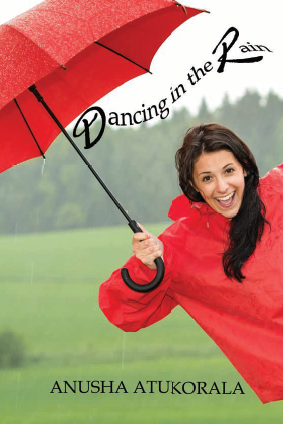
Anusha’s been on many interesting detours in life, as a lab technician, a computer programmer, a full time Mum, a full time volunteer, a charity director, a full time job chaser, until one golden day (or was it a dark moonless night?) God tapped her on her shoulder and called her to write for Him. She has never recovered from the joy it brought her. She loves to see others enjoying life with Jesus and does her mite to hurry the process in her world through her writing and through her life. The goodness of God is her theme song through each season, as she dances in the rain with Jesus. Please stop by at her website Dancing in the Rain to say G’day. Her first book Enjoying the Journey contains 75 little God stories that will bring you closer to your Creator. 

Her 2nd book ‘Dancing in the Rain was released in March 2018 and brings you hope and comfort for life’s soggy seasons.


Mortals make elaborate plans,but God has the last word. Humans are satisfied with whatever looks good; God probes for what is good. Put God in charge of your work, then what you’ve planned will take place. Proverbs 16:1-3 (MSG)


Sunday, 24 February 2013

Your Story Matters


I recently went to a woman’s night – you know the kind – where aching (probably calloused) feet relax in a bubbling foot spa, eyelashes are tinted, sore backs are massaged, giggling is heard and copious amounts of chocolate and desserts are consumed. It was a tired mother’s haven.
   When the initial catch up was over, spot prizes were given out. Questions were asked in order to match up the recipient with each gift. There was the gift ‘for the woman who cannot live without lists’, ‘the woman who is always rushing’, and so on.
   Finally, when the pile of prettily-wrapped parcels had dwindled, there was a pause. “This gift is for a woman who encourages others by sharing her story, her struggles.”
   Everyone was silent until my friend Helen cast a sly smile. She began pointing at me and giggling. I accepted the gift, wondering what I would receive as I peeled back the packaging.
   The little decorated block of wood really made me grin. The meaning for me went far beyond what had been intended. My story matters.

   As writers we sometimes wonder why we do what we do. Are we insane, agonising over a single word choice, staying up all hours to edit one section, pouring out our pain for the sake of unknown others, staring at the page wondering how to impart what an imaginary person is feeling?
   I think not. This particular night I was reminded by this sweet ‘coincidental’ gift, that my story matters. The label may have a different meaning to others, but as a fiction writer I look at that little block of wood and remember that what I am doing, matters. Somewhere, sometime, someone is going to be impacted by my story.
What if you are not a writer? The message is the same. Jesus used stories (parables) to impart meaning and hope to the world. Every one of us has a story, a testimony to share. You just never know what impact your story will have, who will be forever changed because you took the risk of sharing a part of yourself.

Do you need reminding? Let me tell you today – your story does matter.
I’d love to hear some of your stories – those little ‘coincidences’ that reminded you that your story matters, that your writing matters.

Thursday, 1 October 2020

Writer Burnout: How I am accepting that I'm not a machine

By ELIZABETH TAI

I write for a living.

I also write for fun.

This has caused a few problems.

When you write during your day job and free time, you never get a break from the keyboard. Unsurprisingly, writing my fiction has been a difficult task for me, because it felt like work. But over the years, I came up with a system that enabled me to handle that.

When I was a sub-editor for a newspaper, I worked nights and wrote my novels in the morning. Because all I did at work was editing, I was using different mental muscles -- writing my novels, while difficult, was doable.

But things changed when I decided to switch careers, hopping from journalism to the glitzy world of digital marketing. I am a content strategist, and I spend my days writing, editing, analysing data and thinking about new content to create for the companies I work for.

The effort of trying to make my career change a success and trying to build a fledgling indie author career at the same time, took a toll on me.

I have not written a new book for nearly two years.

Writer’s block aka writer’s burnout is real. Don’t let the gurus tell you otherwise.

Crispy on the inside and outside

First, I tried to write at the fringes of my day. I would stare at the blank screen early in the morning or after work, hoping something would come out. It usually didn’t work and what words that emerged felt like tiny droplets squeezed out of the dry, hard rock that my brain had become. 

It didn't make me look forward to writing. In fact, it did the opposite, I began to put off writing. It used to be fun - now, it’s just work. Worse, sometimes it was torture.

I blamed myself. Why was I so lazy, so unmotivated? My friends said that my eyes would light up when I talk to my novels. But if my novels meant so much to me, why couldn’t I write them? I felt like a defective machine. 

Then, I stumbled on Becca Syme’s series of podcasts on YouTube - the one about writer burnout was a revelation.

The road to writer burnout

In the indie publishing word, the word “hustle” reigns supreme. Get your butt in the chair. Write 10,000 words a week. Write a novel a month. But Becca was not about that. 

According to Becca, everyone is gifted with certain strengths. If your writing process is not aligned with your strengths, it often results in burnout.

She also says that people write in different ways. They ideate in different ways. And we should not blindly follow a publishing guru’s prescription on how to “write better”, because what worked for them may not work for us.

“When burnout is the problem, no amount of discipline is going to get the writing to happen again. It has to be a recalibration or a filling of the tank or a rest. There is no other fix,” she wrote in her book, Dear Writer, are you in writer’s block?


Image by ergoneon from Pixabay

Forgiving myself for being human

I believe part of the reason why I suffered from writer burnout was because I blamed myself for not being able to level up as fast as the superstars of the indie world. You know those - the one-book-a-month wonderkids that earn six-figure incomes. 

I used to have an indie author acquaintance who once told me this: “I have a full-time corporate job and I still write a book a month, you have absolutely no excuse!”

It turns out that I do.

My brain worked differently from hers and comparing myself to her was futile.

In the last two years, although I didn’t produce anything new, I learned ways to realign my strengths to my writing processes:

Guard my emotional reserves

Due to my highly empathetic nature, I tend to get blocked when things are not stable in my life or in the world, or when I'm going through emotional turmoil. All my mental energy would go to maintaining my emotional stability. There'd be no energy left for my writing. 

These days, to protect my mental reserves, I avoid unnecessary stimulation and negativity. I write when the day is young and the pressures low. Keeping this up takes a lot of discipline, but it has made a difference in my life.

Give myself time to dream

I prefer to “think over” a story in my head for some time before putting it on paper. Sometimes, for months! I know a story is ready to be written when I can picture it vividly in my head - as if it’s a movie playing in my head. So I have learned not to pressure myself to write, but to dream more instead.  


Image by PublicDomainPictures from Pixabay

Seek inspiration to refill my well

One concept I discovered that made me go, “Aha!” was that the ideas for fiction doesn't come from some magical void with inexhaustible resources. 

Writing nonfiction is very different from writing fiction writing. When you write nonfiction, you have references such as interviews, research and more. That’s why it’s often easier to write non-fiction.

However, when you write fiction, you're literally recreating something out of nothing. And that takes a different kind of mental energy. But saying that we create something out of nothing is not quite right either. 

Fiction is the culmination of the observations, insights, information and inspiration that we absorb in our day-to-day lives. So, what happens when you stop this flow? Your resource for your fiction dries up.

Ask yourself: What makes you go, “Oh gosh I need to write that?” 

What makes your imagination go, “Wow!” 

For me, filling my creative well meant watching movies and television shows - experiencing stories. (I wrote one of my short stories, Blood of Nanking, after watching the Christian Bale movie, The Flowers of War.)

Music also spurs my mind to imagine amazing scenes for my books.

In the last two years, I've been so busy with my career transition that I stopped reading books and watching television -- at least things that were not related to improving my career. 

Revitalising the creative wells

So where do we go from here? 

One of the first things I did was to forgive myself for not being a machine. 

That’s a funny way to put it, but yes - we often get angry that we are human being that’s can’t write like machines! (Incidentally, I did come across a how-to-write book called Be a Writing Machine. Hah!)

I also try to stop guilting myself to write.  

I have learned to accept that this is where I am right now. I am literally building my career from the ground up again and that takes a lot of energy and I shouldn't expect miracles from myself.

I also decided to take one tiny step at the same time towards making my indie publishing dreams a reality.

I am now at the editing stage with two of my novels. I'm so close to completion that at times, I want to rush towards the finish line, but I tell myself: Edit one chapter a day - that's all I can manage now. And if I can’t meet that schedule, I'm not gonna blame myself. 

I am also curbing my tendency to jump into new, shiny projects. I have been a little obsessive about my blog because, perhaps, I felt so paralysed with my fiction that I wanted to feel successful in something creative. My blog was a convenient outlet and writing non-fiction was easy for me. I think that’s great, but I tend to use it as a way to distract myself from my problems with my novels.

But best of all, I’m now watching more television without guilt, knowing that I'm actually filling my well. I'm taking walks. I'm trying to dream about my characters -- perhaps I will try free writing again; it worked well for me last time. (Free writing is where I just let my mind wander and my hands type whatever my brain dreams about.), 

If you are struggling with writer burnout or writer’s block, please realise that it's not your fault. It's not because you're lazy or unmotivated.

Perhaps your writing process is not aligned with your strength. Maybe something’s happening in your life right now and you need to focus on that. 

We are humans, not machines, and we have to accept that we can't do everything -- no matter how much you want it.  

Refill your well, friends. Well-being comes first.


Elizabeth Tai writes for profit and pleasure. She blogs about personal finance and simple living at elizabethtai.com and you can learn more about her fiction at taiweiland.com