Showing posts with label Adam Collings. Show all posts

Monday, 7 January 2019

Fifteen Great Picks from 2018


Each week on Mondays and Thursdays, someone from our faithful CWD blog team uploads a blogpost - sometimes it's inspirational, sometimes a story of writerly struggles or triumphs; sometimes it's funny, other times it's serious or both; sometimes the post reminds us why we write and for who, other times it gives practical tips - on writing, marketing or getting published. And sometimes, it's a member interview or a cross-post with ACE exploring genre. Always, it's the result of thought, research, experience, passion, creativity.

The CWD Admin team would like to give our blogteam a huge thank you for your contributions throughout 2018 (and over the years) and to all our readers who have taken the time to comment and interact with our bloggers.

As we start the new year, we thought we'd honour our bloggers' contributions with a pick of 15 blogposts that have inspired us in 2018. Out of over 100 posts, it wasn't easy to choose and there are many other posts equally deserving of notice. We have a wealth of information and inspiration on the blogsite - accessible on multiple subjects and themes.

We hope you enjoy this selection from a rich smorgasbord of offerings.


1. Clutterbust into the New Year by Ruth Bonetti


Do you embrace or resist making resolutions as you pass that annual threshold? My goal is to declutter. Not just the old year, but past decades.


It's not easy. Mess with closets and mere muddles inflate into chaos.
Breathe. Do it. Breathe.
Believe that beyond the pain threshold lies freedom, lightness of being. 


2. How to Write Awesome Dialogue for Your Film by Charis Joy Jackson 


Today, I thought it might be fun to give all our CWD followers a bit of advice on how to write for film.


When it comes to knowing how to make movies, screenwriters should pay special attention to the dialogue they use for their characters. When it’s good, people don’t notice, but when it’s bad even your gran can tell.


You don’t want this.


I don’t want this.


So how do we write awesome dialogue?


There’s no magical formula -- creativity needs to breathe -- but I do think there are a few tools that can help you. Here are a few things I’ve found in creating awesome and strong dialogue.


3. Total Wipeout or Total Write it Out by Mazzy Adams  


About a decade ago, the first Wipeout game show aired in the USA. Contestants threw and bounced themselves into, around, across, over and through an absurd array of obstacles, mud, more obstacles, mud, creative obstacles, water, (washing off the mud), challenging obstacles, watery downpours … anyway, you get the picture. Total Wipeout, the British (BBC) version, followed hot on its heels, eventually airing in Australia (and currently repeating on ABC ME).
 ... 

 Over the last twelve months, I’ve been whacked and dumped and drowned by a plethora of challenges and disappointments that have seriously undermined my writing progress. I’m sure I’m not the only one. But a couple of weeks ago, the Holy Spirit challenged me with this thought:

Read more here.


4. Story Telling in 3 D by Debbie Roome 


Those who know me well will be familiar with my love of travel. This dates back a few decades but recently has become a way of life. I’ll never forget the day that travelling changed from a postcard view to something more tangible. And no, it wasn’t the day I first climbed into an aeroplane or travelled to a foreign land. I had seen many glossy brochures of London and Europe and could recognise Big Ben, the Eiffel Tower and the Leaning Tower of Pisa, but it was a flat and one- dimensional view.


5. I Need a Personal Bubble for my Writing Space by K A Hart 


A distraction-free writing space. Does anyone have one? I have lived in this house for four years and I still haven’t found the right spot.


Somewhere that’s comfortable, but not too comfortable. A place with a view or inspirational pictures and famous quotes. Coffee, tea, a few snacks. Music. No music. A clean space, clutter-free. That’s what most writers suggest.


So. Writing space. Where have I made my writing space? Where have I not?!


6. Confessions of a Genre Butterfly by Susan J Bruce  


The author platform. Do these words fill you with confidence? Do you say ‘I know who I am as an author and I know who I want to reach? I know what my brand is?'


Or do you think, ‘Eerk!’


Earlier this year I realised that as I belonged to the second category, I really should do something about it.

Read more here.


7. Legacy and Eternity by Elaine Fraser  


Through the mere act of creating something—anything—you might inadvertently produce work that is magnificent, eternal, or important. Elizabeth Gilbert

We don’t always set out to create something as a legacy or for eternal meaning. Creating comes out of who we are on a daily basis, even when we’re not aware of it. When we create, make or design something and release it to the world (or maybe just to our family), when it’s released, the effect it has on others is out of our control. We’ve let it go.

Read more here.


8. Finding Direction by Josephine-Anne Griffiths  


‘Sometimes to move forward in life we need to turn around.
It does not mean we wasted our time –
We just didn’t know then what we know now.’

I’ve talked about the busyness of life before, but what if we are busy accomplishing nothing? That is how I have felt the past twelve to eighteen months.

Read more here.


9. Rights and Responsibilities of a Christian Writer by Melinda Jensen 


Being a Christian writer is clearly not for the fainthearted. We have the right, of course, as human beings, to churn out whatever inspiration comes our way. That’s what so many writers are all about, after all, isn’t it? Freedom of speech? Freedom of the press? Creative license?


As Christians though, our rights are coupled with a weighty responsibility. We are to be ‘in’ this world but not ‘of’ it.

Read more here.


10.  Waiting by Jeanette O'Hagan 


In my latest release, Stone of the Sea, one of the characters thinks, 

Waiting was all they seemed to do these days. Wait for food. Wait for to learn their fate. Wait for Baba to return and take back the realm.


Sometimes being a writer can feel like that - waiting to finish a novel, waiting for feedback, waiting to hear back from agents and publishers, waiting to be published, waiting for sales, waiting for reviews, waiting for traction in the market, waiting for... it doesn't seem to end.

Read more here.


11. Posing Questions by Adam David Collings 


Christian fiction has often been accused of being preachy. Sometimes justifiably so. We’ve all read books like that. These are the types of books that go out of their way to preach a message that pulls you out of the story. In fairness, it’s not just Christian fiction that suffers from this problem. One of the early chapters of the novel Ready Player One (which I loved) interrupted one of the early chapters for an extended tirade against religion, although the author balanced this by introducing a sympathetic minor character who was a Christian.

And yet, the best books are often those that delve into a topic or theme, and explore it. This gives a story depth. So how do you explore an important theme in a story without it feeling “preachy”?


12. Practice Makes Perfect by Nola Passmore 


I got my first guitar when I was seven, and I couldn’t wait to play like Keith and Bruce. Not Keith Richards and Bruce Springsteen. I’m talking about those spunk muffins of the sixties—Keith Potger and Bruce Woodley. Together with Judith Durham and Athol Guy, they formed the fab folkie foursome The Seekers. I was sure it would only take a few lessons and I’d be singing and playing along like my favourite group. It didn’t quite work out that way.


In the first lesson, my music teacher gave me a crash course in theory, taught me the notes on two strings, and sent me home with some exercises to practise.


13. Pillow Talk by Adele Jones


This is not the blog I was preparing for today. I was going to bring my vulnerability and talk to some of those doubts we writers can wrestle. Instead, as I was reflecting on the content of my post, the wise words of a friend came to me: “Get some sleep before you make a decision on that.”

(You would be surprised how closely related my decision and the content of my blog were.)

It occurred to me that my greatest challenge recently has not been self-doubt, but sleep deprivation. Given my constant nemesis doesn’t appear to be going away, I thought I’d share some advice frequently dispensed by my also wise husband. Maybe we can all learn a thing or two about sleep hygiene while we’re at it. Somehow, I don’t think I’ll be the only writer out there in need of some reminders!

Read more here.


14. Your Lights are On by Anusha Atukorala  


When I reached my car, my eyes opened wide in surprise. A lady walking past called out to me ‘Your Lights are On.’ What? How come? As a new driver, I had already done that. Twice. It had of course led to a dead battery each time and a call for roadside assistance. So ever since, I have had Obsessive Compulsive Disorder whenever I leave my car. I check if the lights are off not once but three or four times. I make certain all four doors are locked. I walk around my car ensuring all is well.


How had I left my lights on? Perhaps my rumbling stomach had a lot to answer for?


15. Why Didn't God Book a Room for His Son? by Jo Wanmer 


Why didn’t the Father book a room for His son? He wasn’t taken by surprise the day Jesus entered the world. He could have organised somewhere…after all He is God.


‘No room in the inn’ seems a poor excuse. Jesus’ Father could have booked weeks earlier. God can orchestrate these things. A few years ago, we decided on Tuesday to go away for the weekend. It was Easter. So two days before we left, I searched for a quiet place to rest and recover. I found a lovely cottage–overlooking a river valley, less than two hours away. When we arrived it was the perfect place for us. We asked the hosts why it was still available. They shrugged, puzzled themselves. They’d been booked solid nearly all year - except Easter!


If God could organise a room for me, why didn’t He do the same, if not for his Son, then for Mary. A young girl still a virgin untouched and inexperienced in the realities of women’s struggles. She had to labour on the floor of a barn.

Read more here.


Thanks to our bloggers for taking the time to share their wisdom, experiences and inspiration with us. I'm looking forward to new blogs for 2019. Aren't you?

----

Coming in March - Omega Writers Book Fair 


Friday, 19 January 2018

CWD Member Interview - Adam David Collings

Each Thursday in 2018 we will be interviewing one of the members of Christian Writers Downunder – to find out a little bit more about them and their writing/editing goals.
Today's interview: Adam David Collings

Question 1: Tells us three things about who you are and where you come from.

  1. I was born and bred in Tasmania. I've lived all my life in the beautiful city of Launceston, in the north of the state. Launceston was settled by Europeans in 1806, making it one of the oldest cities in Australia. We have the oldest underground sewers in the country (1860) and the third oldest in the world. Launny was also the location of the first medical operation under anaesthesia in Australia (1847)
  2. I make my living as a software developer for an engineering company. When I'm not writing code, I'm writing sci-fi and fantasy stories, or scripting videos. There's actually a lot of commonality between my day job and my writing. In both worlds I create videos, and crafting a story is surprisingly similar to crafting a piece of software.
  3. I imported my wife from New South Wales, who I met online, before the days of social media. We have two kids. Our daughter is heading in to high school this year, and our son has a superhuman ability to recall dates.

Question 2: Tell us about your writing (or editing/illustrating etc). What do you write and why?

I write speculative fiction, which includes science fiction, fantasy, superhero, and anything else weird. Some of my stories are written for the Christian market, others for the general market. My primary focus at the moment is a space opera series called Jewel of The Stars. This is a long-term series of novellas structured like a TV series. I wrote book 1 very much as a "pilot episode". It follows the adventures of the passengers and crew of a cruise ship in space on the run from an alien armada after Earth is invaded.
I also have a superhero project in the works. This one will be set in Australia. After all, why do all superheroes have to be American?

Question 3: Who has read your work? Who would you like to read it?

Who has read my work? Well, not many people yet, to be honest. Although, my work has generally been received very well by those who have read it. I haven't done any hard marketing pushes yet. I just don't have enough published content in the world to make it worthwhile. Baby steps. As for who I'd like to read it? Maybe some big name celebrity in the geek world, who will subsequently sing its praises for all to hear. Seriously, I would like my work to be read by those who love fantastical stories. I hope my work entertains them as well as makes them think a little.

Question 4: Tell us something about your process. What challenges do you face? What helps you the most?

I'm a heavy plotter, so a lot of "writing" takes place before I actually begin the first draft. First, I spend time thinking about the story, and "dreaming it out". This is a great thing to do while walking. Then I produce a detailed outline, drawing on the principles of story structure and scene structure. Then I flesh each scene out into a first draft. After that, I'll read through and do the first-pass edit myself, before passing it along to my editor.
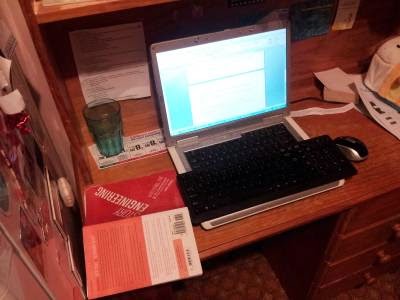
The biggest challenges I face at the moment are time and finance. It takes a lot of both to produce a book, and they're often in short supply. I've found the best time for me to fit in writing time is to do it before work. That way all my energy hasn't been sapped away by the day job. Working from home can be helpful in this, as the time usually spent traveling becomes writing time. I'm moving house next month (no wonder I'm busy) and the new house will have a dedicated "office" for me in the garage. Having a space where you can go to be free from distractions is a big plus, so I'm looking forward to seeing how that will help.
As for finance. Well, there's no easy answer to that one. It just comes down to prioritising, and putting aside something for writing expenses when you have it.

Question 5: What is your favourite Writing Craft Book and why?

I'm a huge fan of Structuring Your Novel: Essential Keys for Writing an Outstanding Story by K.M. Weiland. The concept of story structure (which I first learned about in another excellent book - Story Engineering by Larry Brooks) revolutionised my world. It really made the story-telling process come alive for me. K.M. Weiland's book delves into the nuts and bolts of how stories are structured, even down to the scene level.

Question 6: If you were to give a shout-out to a CWD author, writer, editor or illustrator – who would they be?

I'd like to give a shout-out to my editor Iola Goulton. Without her, I wouldn't have my work out there in the world. I'll also shout out Charis Joy Jackson. She recently finished a book called The Rose of Admirias, which will be released as part of the On The Horizon boxset. I read a little bit of an early version, and am looking forward to seeing how the final product turned out.

Question 7: What are your writing goals for 2018? How will you achieve them?

At this stage, I aim to publish episode two of Jewel of The Stars during 2018. I also want to publish my superhero project. There's not a lot I can achieve toward these goals until I move house in February. After that, it's dedicated slow and steady work.

Question 8: How does your faith impact and shape your writing?

My faith impacts everything I write, mostly on a thematic level, regardless of what market I am writing for. My stories deal with issues that I am thinking through at the time, or facing in my life. For example, in my superhero short story Chronostream's Father I explored some of the challenges I was facing in my parenting, and how my faith imformed how I'd approach it all. In Jewel of The Stars episode 1, I deal with the theme of risk. When is it appropriate to take risk? This lead to me thinking about the links between risk and faith.


Adam David Collings is an author of speculative fiction. He lives in Tasmania, Australia with his wife and two children. Adam draws inspiration for his stories from his over-active imagination, his life experiences and his faith.
Adam is a great lover of stories, enjoying them in books, movies, scripted TV and computer games. Adam discusses these on his own youTube show – Stories with Adam Collings.
Find him at adamdavidcollings.com or sign up to his email list for a short story.

Thursday, 29 June 2017

Taking the Pain Out of Collaboration

Collaboration, or co-writing, is cool at the moment. Four of our own wrote the collaborative novel The Greenfield Legacy a few years back. A group of prominent indie authors recently took an overnight train ride and created a novel together.

The big issue with collaboration, when it comes to self-published authors, has always been the accounting. Somebody has receive the royalties and divide them up each month (potentially the rest of their lives). This needs to be done for each collaboration. Podcaster Joanna Penn has often lamented that there isn’t a platform that makes this process easier. Well, now there is.

A new service by the company BundleRabbit has just launched a service that will distribute a co-written book to all the major retailers, and pay each individual contributing author, for a small percentage. Payment is handled through PayPal. They take care of currency conversions.

Essentially, this makes them like Draft2Digital, but for multi-author projects. This could be a game-changer. I suspect we will see a lot more co-written books in the near future. As with any third-party distributor, you lose a portion of control. The book is uploaded to the retailers by BundleRabbit, so you won’t see the sales information on your KDP dashboard. Instead, sales information is provided by BundleRabbit. However, given the convenience of letting them take care of all the royalties, it sounds like a good compromise to me.

Collaborating on a project can bring some advantages. By accessing each other's reader base, you can expect awareness, and possibly build some new fans. It also brings it own set of challenges, as is inevitable when more than one human being is involved in something.

But BundleRabbit have been around for a while, so what else do they do? In addition to this new service, they make it easy for authors to put together bundles of books, in the same way that the popular sites like Humble Bundle and StoryBundle do. Books can be combined on a subject matter, or other grouping. These bundles will be distributed to the retailers, but customers can also buy direct from BundleRabbit. That’s where it gets interesting. Customers can choose what they want to pay for these bundles (there is usually a minimum price specified). Unlike other bundling sites, anyone can be a curator and make their own bundle (out of books that are on BundleRabbit). For that reason, it may be worthwhile for authors to submit their books. You never know when somebody might include it in a bundle, which will give you sales. (The author has to approve the inclusion of their book.) The curator receives 5% of sales, plus the author share if any of their own books are included. This provides fundraising opportunities. Imagine a bundle of books by CWD authors. Something along the lines of the Super Series Spotlight that our own Jeanette O’Hagan was recently involved in, except that all the books can be purchased in one go, for a discounted price.

My Dream

So all of that said, I have a dream. It’s not something for now, maybe in a few year’s time, after I’ve built a little more experience writing and publishing my solo works.

I imagine getting a group of Christian spec-fic writers together in a video conference, to set up a virtual writer’s room like they use for American TV shows. Together, we’d plot out a season-wide arc for a series. Then, each writer would be assigned an ‘episode’ and write it as a novella. These could be brought together and published as a box set using BundleRabbit.

Just think, a full length book could be produced in the time it takes to write just one novella. The contributing authors could all chip in for the cost of editing, or maybe even have the editor take a percentage of royalties. The possibilities are endless.

So what about you?
Have you ever though about working on a collaborative project?

Adam David Collings is an author of speculative fiction. He lives in Tasmania, Australia with his wife and two children. Adam draws inspiration for his stories from his over-active imagination, his life experiences and his faith.
Adam is a great lover of stories, enjoying them in books, movies, scripted TV and computer games. Adam discusses these on his own youTube show – Stories with Adam Collings.
Find him at adamdavidcollings.com or sign up to his email list for a free short story.

Monday, 23 January 2017

Dictation - by Adam David Collings

Everyone seems to be talking about dictation these days. A number of big-name indie authors swear by it, crediting it for improved efficiency and the high volume of output necessary to reach their level of success. The idea is simple. You talk to your phone or computer, and your voice is converted to text.

When I first started hearing about this new fad I wasn't overly interested. After all, I can type reasonably quickly, and I enjoy the feel of the keys beneath my fingers. Talking is not something that comes naturally to me, so why go down that path?

But there are some potential health benefit to dictation. Those who suffer from RSI in their wrists may find a great deal of relief. Then, there is the ability to walk while you work.

I used to do a lot of walking. I'd walk 15 mins from the car park into work, and then 15 mins back again. This daily ritual began to fade as I found myself working from home more often. My fitness has definitely gone down, and my clothes are getting too tight. Time to get back into exercise. But when? I was recently bemoaning to myself about lack of time. Sure, I could fit more walking into my day, but it's time-consuming, and I'm already trying to squeeze time into my day for writing. Then I remembered the dictation craze. Maybe there was something in this after all. Could I possibly kill two birds with one cliche?

But What about Cost?

The tool that everybody seems to be using is Dragon Dictate/Naturally Speaking. A quick check indicates you'll be out of pocket over $100. A reasonable investment, especially since many have a lot of trouble training the software to effectively recognise their voice. However, there are free options. Modern-day smartphones do a great job of understanding speech without training through products such as Google Now, Siri, and Cortana. It seems Google have been leveraging that technology toward dictation. Google Documents now has a voice typing mode. Another reason to love this free tool, and you can always copy the transcribed text into Scrivener or Word afterward.

What about mobile?

That's all well and good, but you don't want to lug a laptop around with you while you walk, so I had a look to see if I could use the phone app for google documents to dictate. The mobile app doesn't make mention of voice typing itself, but the standard google keyboard has a microphone button, which enables voice typing mode.

I'm using the Android platform, but a quick search indicates that both iPhone and Windows phone also have voice typing options. After a quick experiment, I found that Google voice typing did a pretty good job of understanding my speech. There was an incorrect word here and there, but no less than the inevitable typos that creep into my writing anyway. Getting the punctuation right might be a bit of a pain, but in a recent podcast, author Joanna Penn indicated she planned to dictate without any punctuation, and sort that out at the computer later.

Proponents of dictation often suggest you start by dictating an outline or brainstorming notes, rather than launching straight into first-draft material. This sounds like a good idea. I plan to give this a go sometime soon. With 24 planned episodes in my episodic serial, I have plenty of outlining ahead of me.

Dictation won't be for everyone, it might not even be for me, I don't know yet, but it seems there are no longer any barriers to giving it a go. The only problem that I have yet to find a solution to, is not a technical problem. The issue is that of self-consciousness. Namely, when you bump into someone during your walk, and they notice you talking into your phone. I think a quiet area where you're unlikely to come across other people might be wise.

So what about you? Have you tried dictation? Does it sound like something you might want to try?


Adam David Collings is an author of speculative fiction. He lives in Tasmania, Australia with his wife and two children. Adam draws inspiration for his stories from his over-active imagination, his life experiences and his faith.

Adam is a great lover of stories, enjoying them in books, movies, scripted TV and computer games. Adam discusses these on his own youTube show – Stories with Adam Collings.

Find him at adamdavidcollings.com or sign up to his email list for a free short story.

Thursday, 4 August 2016

Writing with Ambient Sound

It’s a common question for writers. I’m sure you’ve been asked a few times in the past. Do you write with music or silence? It’s almost up there with “are you a plotter or a pantser?” I’ve always come down on the silence side of things. If I’m writing I need to be free from auditory distractions. Even if it’s just instrumental music it can pull me away. Interestingly though, I can program while listening to music, unless it is really intense algorithmic code. But enough about my day job.

I do find music very inspiration for setting the scene, but I’d prefer to listen to it before I write.

Recently, however, I came across something new and a little bit weird. It may work for some people. Writing with scene-appropriate ambient noise.

I write a lot of sci-fi, so many of my scenes are set on a space ship. When Star Trek: The Next Generation was first produced in the late 80s they made the decision to layer the engines of the Enterprise subtly rumbling in the background. If you pay attention you’ll hear it in every single scene set on the ship. It was probably a hotly debated decision. Would audiences really want that sound constantly in their ears while watching the show? It worked out well for them. It really added to the realism of feeling like you were on the ship with the characters.

Did you know that people have made looping videos of the Enterprise engine ambient noise on youTube? Want to get away from it all escape to the 24th century? Just close your eyes, pop on some headphones and listen to this:

That’s right 24 hours of engine humming! Don’t have it up too loud, though. It’s got to be subtle. Some people even fall asleep listening to this.

Getting back to my writing, I thought it would be cool to put this on in the background to enhance my setting. Make me feel like I was on a spaceship. It was pretty cool actually.

That’s when I found that ambient noise is a big thing on youTube. I was writing a story with a Victorian (1800s England, not the state in Australia) setting. Sure enough, I found a nice little video with ambient sounds of a Victorian street at night. It helped me get into the right head-space.

Writing a scene in a jungle?, writing a modern warfare scene? Have a scene on a tropical beach?, a restaurant?, the wild west?, a sailing ship? a city street or perhaps you’re writing a medieval battle scene. And we can’t forget everybody’s favourite sound of all - rain.

These background sounds certainly help me get into the setting. (It helps that I have an unlimited NBN plan). There is still, of course, the potential for distraction, but overall I think it is helping more than hindering, so I’ll continue to experiment with it. Not to mention, it’s just cool fun.

What about you? Do you think ambient sounds would help you get into the setting for your scenes? Have you used it before? What’s the most unusual setting you’ve managed to find sounds for?


Adam David Collings is an author of speculative fiction. He lives in Tasmania, Australia with his wife and two children. Adam draws inspiration for his stories from his over-active imagination, his life experiences and his faith.

Adam is a great lover of stories, enjoying them in books, movies, scripted TV and computer games. Adam discusses these on his own youTube show – Stories with Adam Collings.

Find him at adamdavidcollings.com or sign up to his email list for a free short story.

Thursday, 10 March 2016

I Will Trust in You

My wife’s alarm yanked me into wakefulness. Another hour and mine would be going off as well.

"Adam," she groaned. "I'm in pain and I haven't slept all night." My heart plunged. "I'm going to have to call in sick."

I put my arm around her. The stupid injury kept coming back to taunt her. I re-assured her that she was doing the right thing. She wasn't in a state where she could give her patients the care they needed. A bitter seed began to germinate inside me.

Later that morning I sat alone in a quiet room. I was supposed to be spending some time with God before starting my day. I wasn't in the mood. My wife's contract was a short-term one, and it was coming to an end. The hoped-for extension had never eventuated. Due to an injury, she'd used up all her sick leave. Now it seemed we’d be getting a big fat zero on her final pay cheque. We'd been counting on that money.

I released a sigh. We'd trusted God for so long, through my wife's nursing studies and her attempts to begin building a career. With countless setbacks, it hadn't been easy. My wife was amazing. She'd never given up. With the determination worthy of an epic fantasy heroine she'd gritted her teeth and kept going. I'd stuck by her side through it all, the faithful and devoted Samwise Gamgee. When things were finally looking up, we thought we’d made it, another setback. It was a cycle that I was tired of.

I'd have to work that much harder now. My dreams of taking one day per week off work to focus on my writing career dissolved into smoke before my eyes. I shifted my gaze upward. What was he doing? Had he forgotten about us? Didn’t he care? Maybe I had no right to expect God to take in interest in my first world problems.

David had always been honest with God in the Psalms. When he was angry at God he let it go with both barrels. Well, if it’s good enough for David...

I let it fly. I told God I was hurt and disappointed. I expressed how let-down I felt. Couldn’t he have just let my wife have this last week? Well, that felt good to get off my chest. I wasn’t telling God anything he didn’t already know.

I scrolled through Facebook on my phone. I hadn’t yet opened the Bible app. My eyes fell on a post by Ted Dekker - a favourite author of mine. He was talking about the Superbowl - that American football thing. You know, the one where they show all the cool movie trailers. I’d seen a few Americans barracking for their teams in my feed. I’m not into sport - foreign sport least of all - but I noticed a sentence at the end of Ted’s post. "If you’re not interested in the game, take a moment to see it as a metaphor, for you facing off against the challenges in your life" (well, something to that effect anyway). It was a simple statement, but God used it to spark something inside me. Was I really going to give up now? The story wasn’t over yet. Just like all good protagonists, my wife and I would have to face countless challenges before we reached the resolution at the end of the tale.

Even as I told God how disappointed I was with him - he was using Ted to give me an encouragement. Maybe I should have felt ashamed, but mostly I felt grateful. I’d been given what I needed. Time to grit the teeth and keep going.

Are you facing challenges and setbacks? Are you not seeing the answers that you’ve been hoping for? The story isn’t over yet. Just like Dory in the movie Finding Nemo, we need to just keep trusting (well, she just kept swimming, but you get what I mean).

Now I’m going to let Lauren Daigle sing you a song, because she says all this far better than I could.

So how did it all end up? Well we had a couple of challenging weeks. It was a good reminder how to budget when things are tight. My wife will be getting some work again soon through the nursing pool. She still has her strength and determination. She'll never give up. The adventure continues.

See you on the last page...

Trust photo by Prerana Jangam.

Adam David Collings is an author of speculative fiction. He lives in Tasmania, Australia with his wife and two children. Adam draws inspiration for his stories from his over-active imagination, his life experiences and his faith.

Adam is a great lover of stories, enjoying them in books, movies, scripted TV and computer games. Adam discusses these on his own youTube show – Stories with Adam Collings.

Find him at adamdavidcollings.com or sign up to his email list for a free short story.

Thursday, 23 July 2015

Medieval Mars: Behind the Scenes of my Journey to Authorhood

It was about a year ago that I first heard about Medieval Mars. I was looking at the blog of Christian science fiction author Travis Perry. He often posts about interesting story ideas. That particular day, he shared an idea about a future world in which humanity had colonised the planet Mars, but civilisation had fallen, plunging society back into a medieval culture. This was all very cool, but what really grabbed me was the very first sentence of his post: “I've built a new story world and I'm inviting other authors to come explore it with me.”

I was immediately hooked. I could do this. I had been working on my writing craft for years. Travis would provide editing and would publish submissions of suitable quality in an anthology. This would be a very cost-effective way of taking my first step. Despite my lack of any previously published works he was willing to give me a chance.

My first step was to read the original novella written by Travis, which set up the world and introduced some core characters. The next step was to come up with a story idea of my own.

I wanted to write a fantasy quest story - the medieval settings seemed to lend itself to that. I would send a character on a grand adventure in search of something valuable. Hours of playing King’s Quest in my youth doubtless fuelled this particular fire.

My thoughts drifted back to high school history classes. I remembered learning about the manors that served as the heart of medieval life, with the Lord living in the manor house, and the peasants, or serfs, in the attached village, working the lord’s lands. This was my starting point. My protagonist (Alastair) would be a serf (called a hand in the medieval mars world).

Next, I needed something to serve as the object of Alastair’s quest. The setting provided some fascinating possibilities for that. This wasn’t just a medieval world - it was a medieval world in our future. These people look back on their technological past as “the time of magic”. My hero would be looking for a magical relic possessing scientific powers he wouldn’t begin to understand. I raised the stakes and added extra heart to the story by putting the life of Alastair’s beloved (Lynessa) on the line. Without this magical relic - she would die.

The last thing my story needed was a spiritual theme and character arc. The one thing that sticks out to me about the medieval church is that very few people were able to read the Bible. This lead to a lot of misunderstanding and falsehood. It seemed believable, in a medieval society, that the thing threatening Lynessa’s life would be viewed as a curse - sent by God as punishment for some unknown sin. (Yes I’m being coy - no spoilers here.) This leaves Alastair disillusioned about God. Why would he put his trust in a god who chose to curse the woman he loves?

As he embarks on this dangerous quest, through the jungles of Argyre Planitia, populated with giant beasts and genetically-engineered dragons, he also has to come to terms with the concept of grace, and gain a truer picture of God’s relationship with mankind.

The photo below, taken at the Sydney Botanical Gardens, inspired my description of a tree Alastair uses for shelter in the story.

Along the way he faces an antagonistic force in the form of a native population who will do anything to protect the magical artifact from treasure hunters like Alastair. At the suggestion of Travis, I made these people descendants of colonists from Indonesia. This allowed me to give them a few words of their own language, and some historic weapons specific to their tribe.

Needless to say once my manuscript was written it needed edits. I got it as good as I could, and then submitted it. Travis came back with some issues - some important story problems that needed to be fixed. With his help I got the story into shape and the rest is history.

Medieval Mars: The Anthology went live on 12th of July 2015. It is available in both Kindle and paperback formats. The contract allows me to self-publish my story as a stand-alone, which I plan to do. Hopefully it will serve as a product-funnel to drive interested readers to the full anthology.

So now I’m an author. I get to do all those fun things like set up my goodreads author profile, and add “Author” to my linkedIn, but this isn’t the end. This is the very beginning. I’m hard at work on my next project - a series of novellas set on a cruise ship in space, and I have a novel manuscript that I continue to edit.

I am thankful to Travis for giving me this break, I am thankful for all of you at Christian Writers Downunder who have given me much encouragement, and treated me as an equal, even though I was a wannabe, and I am thankful to God for giving me a gift and an opportunity to use it. May he get the ultimate glory.


Learn more about Medieval Mars at adamdavidcollings.com/books/medievalmars/ or find it in Kindle format or Paperback.

Conjectural map of a mediaeval manor. William R. Shepherd, Historical Atlas, New York, Henry Holt and Company, 1923
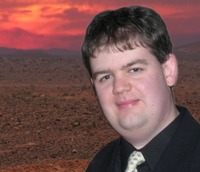
Martian Background in author photo by Stuart Attenborrow.

Adam David Collings is an author of speculative fiction. He lives in Tasmania, Australia with his wife and two children. Adam draws inspiration for his stories from his over-active imagination, his life experiences and his faith.

Adam is a great lover of stories, enjoying them in books, movies, scripted TV and computer games. Adam discusses these on his own youTube show – Stories with Adam Collings.

Find him at adamdavidcollings.com or sign up to his email list for a free short story.

Thursday, 5 March 2015

Episodic Storytelling - A New Type of Book

There’s a new form of story-telling that is slowly gaining popularity. I'm going to call it episodic fiction. These stories are not novels or short stories. They’re something else. These stories are based on the sensibilities of television. Terms such as episode and season tend to be used. You have a cast of characters that appear in each episode (essentially a novella). Each book can be its own story but they combine together to tell a larger story arc. This is more than just serialising a novel in pieces. The episodes combined do not follow the same structure of a novel. They follow the structure of a television season.

I think there are two factors that have inspired this kind of story-telling. The first is the eBook revolution. Novellas were not popular for a long time. It was not financially sustainable to print and sell them on shelves - but they are perfectly suited for electronic media (not to mention the shorter attention span of busy modern people). The other factor is what has come to be known as the ‘second golden age of television’. We are seeing a lot of well-written scripted stories appear on TV. This charge seems to be being led by the premium cable networks in America. These stories have inspired writers to pen the same kind of fiction in written form.

Two of the pioneers of this type of book are Sean Platt and Jonny B Truent. Some examples of their series are the fantastical and somewhat comical Unicorn Western (yes you read that right), and the extremely edgy cyberpunk thriller The Beam (big content warning for this one).


Christian authors are also getting in on the action. In the speculative arena you’ll find multi-author series such as Colony Zero and No Revolution Is Too Big. Each author will generally be ‘cast’ as a character and write their episode from their character’s point of view. It’s not all speculative though. Christian author Tracy Krauss has released a series she calls Neighbours (no not the Aussie TV show) which follows the exploits of a group of people living in an apartment block.


It seems to mainly be indie authors who have blazed the trail with this type of story-telling, but some bigger names are now getting in on the act. Big name Christian authors Bill Meyers, Frank Peretti, Angela Hunt and Alton Gansky are currently working on a supernatural thriller series called Harbingers.


Episodic storytelling offers some interesting new opportunities for Christian writers. Novels generally have a single protagonist. In a Christian novel a spiritual journey is often part of the protagonist’s arc. This type of arc can sometimes come across as 'preachy' to non-Christian readers, no matter how much we might argue that it isn't. The Christian message is perhaps too front-and-centre for them to handle. Interestingly, recent TV shows like Falling Skies and The Walking Dead have shown that mainstream audiences will happily accept Christian characters in the mix of a larger cast. This gives us an opportunity to do the same. Not every episode need be "Christian fiction" but through one or two characters we can bring a Godly worldview and perspective into a story.

I have actually been interested in this type of episodic writing for decades. I just didn't realise that readers would accept it in written form. The pioneers of these stories have shown that they will. I am currently developing a series that I call The Remnant. It is an episodic space opera featuring a mix of characters living in an extraordinary and difficult situation. I'm targeting the story at a general audience, but like everything I write it will still be influenced by my Christian world view. I'm in the midst of writing the pilot episode as we speak and it’s proving to be a blast. I'm still working on my novel, but this new frontier offers up just another way to express ourselves creatively, and that's always a good thing.


Adam David Collings is a writer of speculative fiction from Tasmania. His novella Lynessa's Curse is soon to be published in the Medieval Mars anthology.

He hosts a show on youTube called Stories with Adam Collings.

Connect with him at adamdavidcollings.com

Monday, 10 November 2014

God's Provision - A Tale in a Writer's Journey

First came the announcement of 9-day fortnights. The rest of the company are doing it so we have to as well. Then the rumours of more redundancies. I spent the day sitting at my desk with my heart clenching. Yes, these are uncertain times, but it’s times just like these that God teaches us and shows us opportunities.

The rumours that had me so worried turned out to be inaccurate. My job was safe for the moment. Still, times are tough at my workplace - probably yours too.

With the difficulties and struggles at my day job I've been realising that more than ever I need to get my writing career going. I’m under no illusions that I’ll get rich off writing books, or even make a living off it, but it might help supplement my income. I've heard it said that it’s wise to have something on the side these days, and for me, the obvious choice is to use my writing gift. In order to make it work I’d have to step up my efforts. Despite my busy life I’d have to give my writing more regular and consistent effort.

With the news that I’d have to take three days off before the end of the year (either annual leave or unpaid) came the realisation that the very thing that worrying me was an opportunity. I would treat these days like normal work days - except instead of going to the office and developing software, I’d spend eight hours on my writing. I’d edit my novel and I’d write some more first-draft material to practice my craft. If I could get a novella together I could self-publish it. My idea could be expanded to a series of novellas - each one each one building momentum for the next.

It turns out that this setback was the shove I needed to help move me up to the next level in my writing journey. It was time to stop talking about approaching it professionally, and start actually approaching it professionally.

As all of this was happening it dawned on me that NaNoWriMo was just days away. What better time to try building a new habit and upping my level of commitment to my writing? I’d be joined by millions of others around the world doing the same thing. After a months of writing every day it would start to become second nature right?

In the midst of all this, my wife has just started working as a nurse - fulfilling her life’s dream. That has been a long journey and is a story all its own. If things go badly for me next year at least she’ll be making some income to help us get by. God’s timing?

As I pondered what I would blog about for this article today, I began to see the hand of God around me. He never promises that our lives will be free of trouble, but I can see how he has been putting things in place. Unexpected and undeserved blessings.

I've haven’t got it all down pat yet? I still have my times of doubt an anxiety about the future. I really don’t know what’s going to happen next year. I haven’t written every day, although NaNoWriMo is helping me to up my game and you don’t give up just because you fall over once or twice.

Really, I should be more worried than I am, but I just can’t help thinking that somehow, all will work out as it should. I wonder where I’ll this time next year.


What about you?

What challenges are you facing, and are you seeing the opportunities and blessings from God?

How are you 'upping your game' in your writing?

Can you reach a point where you've got your process down pat, or is there always room for improvement?


Adam CollingsAdam Collings is a writer of speculative fiction and video blogger. He is actively working toward becoming a published author. He lives in Tasmania, Australia. Adam discusses books and movies on his youTube series Stories. You can find Adam on-line at collingszone.wordpress.com or his Google+ Profile

Thursday, 26 June 2014

The Power of Helping Others

In most industries, we refer to those who are doing the same kind of work that we are as our competitors. The aim is to get more attention on your own work and less attention on theirs. It appears to be the total opposite when it comes to creative arts, such as writing. It is our best interest to help our “competitors”.

A Success Story

My video had just finished uploading. I clicked the buttons to share it on several social media sites and leaned back in my chair. I had just released the latest episode of my youTube series - reviewing a book called Synchronic - 13 Tales of Time Travel. I'd lost a little momentum recently due to sickness but was now back on track.

When I checked the next morning I was surprised to see I gained over 40 views while I slept. This was about the same amount that my previous episode had gained in almost two months. I also had a record number of "likes". We're not talking big numbers here, but it was a significant difference.

Mutual Benefit and Community

Why did this particular video fare better than average? Was it particularly well-produced? Had I latched onto a topic that everyone was already talking about? No. So what was it? The book I was reviewing was an indie title, with 13 contributing authors. One of those authors, who I happened to be connected with on Twitter shared it for me. Then another of the authors shared it with all his fans on Facebook and Twitter, tagging all the other authors involved in the project.

I had helped them by giving a positive review for their book, but they had helped me by sharing my video with a bunch of book lovers who would otherwise never have seen it. We helped each other. This kind of mutually beneficial assistance is common in the indie fiction world. It works nicely. Joanna Penn of The Creative Penn calls it Social Karma. We Christians often don't like to use the 'K' word, but all she really means here is that when we help our fellow content creators, we find ourselves getting helped as well. There is a community that builds up. When we help each other, we all win.

I have found that the same helpful culture that exists in the indie fiction world also exists in the Australian Christian fiction industry. There is a wonderful community that is so welcoming of both the experienced author and the growing wannabe. I have been surprised by the help, support and encouragement I have received along my journey.

All of this reminds me of Proverbs 11:25 "A generous person will prosper; he who refreshes others will himself be refreshed."

What do you think?

Do you have any success stories to share? Have you ever experienced a situation where you felt like you were in competition with another author or artist?

Photo credit: prixel creative

Adam CollingsAdam Collings is a writer of speculative fiction and video blogger. He is actively working toward becoming a published author. He lives in Tasmania, Australia. Adam discusses books and movies on his youTube series Stories. You can find Adam on-line at collingszone.wordpress.com or his Google+ Profile

Monday, 17 March 2014

A Cool Drink of water

The other day we had a family dinner & movie night - home-made pizzas and the Disney Pixar film The Incredibles. There is a scene early in the movie where two under-cover superheros are rescuing people from a burning building. Lucius Best AKA Frozone has the ability to create ice, from the water in his body, and the water in the air. In this hot burning environment he is too dehydrated, and there is no moisture in the air. The building starts to fall apart and they find themselves in a jewelry shop - mistaken for thieves.

Frozone is empty, he cannot use his powers. He has to take a quick drink from a water cooler to get back his abilities. This got me thinking. Often in life we can do things that empty us in some way, and need to re-fill. I thought about this in both spiritual and creative senses.

If we keep trying to "do stuff" for God, but never refill from his word and time spent with Him then we’re going to run dry and not be effective. In his post last week, Gregory Morris did a good job of talking about refilling and refueling from God’s word, and there’s certainly nothing more I could add to this.

In relation to our creative life, I think similar laws apply. In our writing, we are pouring out creativity but we need to refill our creative tank sometimes. I’m not talking about reading writing craft books and here, that is also absolutely vital, but I’m think of that as equipping ourselves with the right tools. I think we can refill our creative tank by consuming good stories.

I am trying to change the way I read stories. Traditionally, I've just become swept away by the story, but not thought too much about what the author is doing, and how they’re doing it. I am trying more and more to be a little more aware of what is going on around me when I read for pleasure. I’m not talking about full-on studying the text, but just having a greater awareness. Maybe other people are better at this and just do it naturally.

As example of this happened with me recently.. I’m currently reading A Cast of Stones by Patrick W. Carr. This Christian Fantasy has as its protagonist Eroll - a young drunk. He has no ambition or purpose in his life but to raise enough money for his next ale binge. There is nothing about him to make him a sympathetic protagonist. Contrast Eroll with another character - Liam. Liam is attractive, intelligent, kind and better than most with a sword. In addition to all of this, He is humble about his abilities and not at all stuck up. Everything about this character says we should love him - he is the perfect hero. The fascinating thing is that as we read the book, we identify strongly with Eroll, we care about him, and we quickly learn to dislike Liam. Why?

The author has done a very good job of making Eroll sympathetic to us. We stick very close in his point of view. We live through the danger with him as unknown assassins try to kill him. Then, we view Liam through the lense of Eroll’s jealousy. I was quite shocked at myself when I realised that I had resentful feelings toward Liam. That just shows what a good job the author did. Later in the book, when we find out why Eroll has descended into a drinking problem, we feel for him even more deeply because we already feel close to him.

I think this kind of observational reading can help recharge our tank, just like Frozone drinking that water, and I am going to try to more consciously do it.


Adam CollingsAdam Collings is a writer of speculative fiction and video blogger. He is actively working toward becoming a published author. He lives in Tasmania, Australia. Adam discusses books and movies on his youTube series Stories. You can find Adam on-line at collingszone.wordpress.com or his Google+ Profile

Monday, 23 December 2013

The Most Epic Story Ever Told - by Adam Collings

Epic stories are very popular at the moment, especially amongst those of us who love fantasy and science fiction. Lord of the Rings, Star Wars, we lap it all up. It does something inside us. In these big sprawling stories the fate of entire worlds is at stake. We find ancient prophecies, unworthy heroes stepping up and do amazing things and ultimate sacrifices being made. We can’t get enough of it. Does any of this sound familiar? Ancient prophecies promising the coming of a great saviour, very ordinary parents tasked with the quest of raising God’s own son, the death of said saviour which seems to spell doom for all his plans, then the amazing revelation that it was all part of his plan – that he had to die in order to save the human race from darkness. Certainly, Christmas is the most epic story ever told. It’s almost like all these other stories are trying to emulate the one real-life epic story.

Now don’t get me wrong, as a writer I totally understand the desire to create one’s own epic story. I'm definitely not saying we shouldn't indulge in writing or reading these epics. They're brilliant fun. I believe it’s all part of the creative nature that God placed in us.

We tend to view the Christmas story through such traditional sanitised child-like eyes that we can take it all for granted and miss just how epic it all is.

This is a great time of year to re-examine it all, to really think on it, and realise just how amazing it all was. And most of all, it’s a great time to be thankful, so thankful that God was willing to put this incredible rescue plan into action out of his great love for us – the species that had rebelled against him and abandoned him.

If you’re interested in looking deeper into the gritty realities of the Christmas story, you might be interested in a little book called ‘All About Christmas’ by E.G. Lewis. I reviewed it last year.

Have a great Christmas!

(and now from epic stories to epic cuteness. Check out my little shepherd girl and my little wise man!)


Adam CollingsAdam Collings is a writer of speculative fiction and video blogger. He is actively working toward becoming a published author. He lives in Tasmania, Australia. Adam discusses books and movies on his youTube series Stories. You can find Adam on-line at collingszone.wordpress.com or his Google+ Profile

Monday, 16 September 2013

What If?

"What if?" That has got to be the greatest question in the english language. It is at the heart of all stories, and is a great jumping off point for the imagination. Most of my stories begin with a what if question.

My current manuscript was birthed out of one such question eight years ago. I was sitting in my wife’s room on the maternity ward a few days after she’d given birth to our first-born. That morning I’d been reading the story of the tower of babel in my Bible. We all know it. God confused the languages. People got into tribes and spread out across the earth. As I thought about this, a question pop into my head. What if one of those tribes actually left the planet. What if they had travelled into space and colonised another world. I'm a nerd so I think about questions like that sometimes. This gave a jumping-off point to start developing the mythology for my world’s back story, although the end result has become something a little different than what they first question led me to.

Fast forward a couple of years, and my daughter is no longer a baby, but a little girl who loves princesses. To me, Chloe was my little princess, and still is. I think all fathers of girls believe their daughters are princesses. Suddenly another ‘what if’ question appeared in my head - what if it were really true? What if my daughter really was a princess? Obviously I'm not a king, so what would that mean? This became the basis for my protagonist.

The cool thing about ‘what if’ questions is that they naturally lead to more 'what if' questions. That initial thought about princesses led me down an interesting path. What if there was a monarchist society that sent the first-born heir away to be raised in secret by ordinary people, so that when he or she took the throne, they’d know the everyday struggles of their subjects, and not just the life of privilege enjoyed by royalty. What if this custom came about after a revolt against a previous dynasty that mistreated and abused the poor. What if there was a father who adopted this special child, loved her, all the while knowing that someday she would leave him and become queen. What if she grew up happily ignorant of all of this, just to discover one day that she is the hidden heir that everyone is talking about?

Sometimes these ideas don’t so much lead to other ‘what if’ questions, but rather refining questions. My initial thought about the tower of babel got my little gray cells working. How did these people in the early days of genesis have the technology to travel to other worlds, and why did we lose that ability?

What a fun and creative way to brainstorm a story. Some of the questions that come to you will be dead ends, but that’s okay. These types of question are particularly handy for world-building in a sci-fi or fantasy situation but I think they are equally useful for other genres. I'm looking forward to doing this in a more conscious way in the future. Who knows what I might end up with.

What are some of your favourite ‘what if’ questions from story premises (either as a writer or a reader)?


Adam CollingsAdam Collings is a writer of speculative fiction and video blogger. He is actively working toward becoming a published author. He lives in Tasmania, Australia. Adam discusses books and movies on his youTube series Stories. You can find Adam on-line at collingszone.wordpress.com or his Google+ Profile