Monday, 12 August 2019

Ready, Willing and AGENCY


In my work with young people discussions have arisen over the years of the importance of empowerment to help create positive solutions for their future. Recently a useful tenet has been raised about the necessity of “agency” to be afforded to the young people we engage with. Giving agency means the instilling of hope and a sense of purpose, meaning and belonging in their worlds. Giving agency to the characters in our stories helps our narratives have a deeper meaning as well. 


Sociologists (1) suggest that people experience agency in the context of actions oriented to the past, future and the present. The ‘past’ or “iterational” aspect of agency refers to how a person can selectively reactivate actions based on understanding from actions and thoughts from the past. This may include how people have actions in response to typical situations that help them sustain their interactions, identities and institutions over time. An example of this in our storytelling may be how a character we have created may be able to face and resolve circumstances at the end of their character arc simply because they have experienced other similar situations earlier in their story. 
The ‘future’ or “projective” aspect includes how a person purposefully creates potential future. A character in our storytelling may dream, visualise, imagine, or self-talk about possible future trajectories of action connected to their fears, desires, and hope for the future.
The ‘present’ aspect of agency is the “practical-evaluative element”. It includes the capacity of people to make judgements and chose actions in response to a situation, demand or context. Characters we have developed need to be described with a reasonable ability to reason, have a will, and be shown to be able to function in the variable telling of their stories.


An example of agency from my work as a Chaplain helps explain this:
“James” was a student who was dropping out of school in year 10, experimenting with substance abuse, and had a horrific background.  In a letter at the end of his schooling he related how the first session of meeting with me as his chaplain was enough for him to put aside the plans he had made to seriously harm himself. How this happened was through him regaining a sense of agency (or Hope) in what seemed a hopeless situation. We talked about how little successes from his past could help his future. We talked about the things he could practically action. He also came to recognise that he had people supporting him and to simply be there for him.  James was not only helped though chaplaincy to get the support he needed he was empowered to help himself. James also joined a team helping other students and raised his own support to go on a Humanitarian project overseas helping others.


Empowering Agency in others changes the lives of those being supported, who in turn go on to help change the lives of others as well. A bit of a secret about empowering agency in my chaplaincy  interactions is that it is not about having to “fix” the students I work with, but it means I am there to simply be a role-model that asks good questions that empower the students to design solutions for themselves.  We do well to create the same type of environment and opportunities for our characters. For a student like James living without agency, your friends insist on you making bad decisions, the situation you are in seems hopeless, then you either cope or don't with the situation you've been put in. With agency, you get to work out what you want to do, then make a decision, then deal with the results of that decision. Agency linked with positive influences and empowerment helps design constructive futures. 


The very same thing that agency means in real life, should be afforded to characters in our stories. Giving a character the opportunity to make decisions about what happens to them, rather than imposing a set of circumstances upon them and forcing them to react. When you give a character 'agency' you are also instilling in them the power to fulfill their destiny. Agency is self-determination. Characters can be an 'agent' of their own will. Giving agency means making sure a character has the ability to make choices that drive the story. The options a character has will depend on their history, skills, background, experience, status, training, etc. which are all great options to help embellish a narrative and to  craft a deeper storyline. You want a character that can take action and not just be acted upon. Agency gives characters the ability to make choices. A character’s personality is revealed by their choices, not just by surface elements. What a character chooses when faced with a decision tells you who that character is. This is real, like life. It helps readers want to engage at a deeper level with a narrative. Agency also helps make it all flow. A story is more engaging, an adventure is more fun and a narrative more believable if the protagonist has options and reasons and the actions have consequences, and you help show all of this process.


A well-crafted story that gives agency to characters motivates the reader to lean in, read on and want more. It is engaging. More than this it could empower, equip, and get people mobilised. Agency turns your characters into ambassadors, it empowers protagonists to follow their dreams, sort out problems, and make a difference. A character who is relentless about getting it right, when everything else is not gives a sense of agency. Agency gives individuals in our narratives a will and a reason to want to leave a legacy.
All this ignites a mobilisation faithfulness in your readers, because it’s about inspiration, hope, meaning and purpose.

Are you ready and willing to give agency? Let me inspire you: Go and be an empowerer 😊


 References

(1)    Emirbayer, M. and Mische, A.  (1998). "What Is Agency?". American Journal of Sociology. 103 (4): 962–1023.

Thursday, 8 August 2019

CWD Member Interview – Nikki Rogers


Most Thursdays in 2019 we will be interviewing one of the members of Christian Writers Downunder – to find out a little bit more about them and their writing/editing goals.

Today interview: Nikki Rogers

Question 1: Tells us three things about who you are and where you come from. 

I’m a mother, teacher, Jesus-follower and author/illustrator of Created To Be children’s books. I currently live on the Gold Coast with my husband, two children, and four bantam chickens.

Question 2: Tell us about your writing (or editing/illustrating etc).  What do you write and why? 

I have written and illustrated 7 inspirational children’s books so far. I originally started writing books for my own children to help them understand valuable life lessons, encourage them with the truths that they are unique and inspire them to be all they were created to be. I now hope to inspire children all over the world with these messages and maybe even remind some adults to shine the beauty within. You can find my books at www.createdtobe.com.au

Question 3: Who has read your work? Who would you like to read it?

Many people have read my work. My books have been used as resources in schools and given as gifts to many children around the world. However, I would love every child to read my books; they may be just what kids need to hear.

Question 4: Tell us something about your process. What challenges do you face? What helps you the most?

My biggest challenge is marketing. I believe that my books were God-inspired and will be a blessing to many, but I struggle to promote my books and charge for them. I also often have my doubts about my ability, that I’m not qualified, and my books aren’t professional enough. 

To overcome these doubts, fears and challenges, I find it helpful to look over the many positive reviews I’ve received from people who have really appreciated my books and remind myself that God doesn’t call the qualified, he qualifies the called.

Question 5: What is your favourite Writing Craft Book and why? 

I don’t know.

Question 6: If you were to give a shout-out to a CWD author, writer, editor or illustrator – who would they be?

Naomi Eccles-Smith is an incredible storyteller, gifted illustrator and author of the Dragon Calling Series. Her books and illustrations are amazing!

Question 7: What are your writing goals for 2018? How will you achieve them?

I would love to get my books into the hands of more children and families, renew my passion for why I do what I do and start on a new book that has been on my heart for a while. I hope to achieve this by doing more author talks, gifting books to foster families and surrounding myself with people who encourage me and help me stay focussed.

Question 8: How does your faith impact and shape your writing?

It is in Christ we find out who we are and what we are living for. I feel a great sense of responsibility to be a good steward of what God has given me and I want to bring Him glory through my writing.
The main thing I want people to know is this: You aren’t here by chance. You are not an accident. You were created in the image of God and He is for you. He has amazing plans for you. Go and be all that you were created to be!


Monday, 5 August 2019

Exploring Genre: Fairy Tale Retellings

by Amanda Deed & Jeanette O'Hagan


The remake of the Lion King is currently screening in the cinemas, while the casting for the new Little Mermaid is causing a small furore on the interweb. Hollywood is addicted to remakes and retellings of old classic tales (how many times can you redo Robin Hood?) - and the literary world isn't that far behind with countless retellings of Pride and Prejudice or the other Austen books, or the many Shakespearean Plays.


What is a retelling and why do need another one?


In a retelling an old and usually popular story is 'retold' or adapted to a new audience - perhaps in a new media, or with changes in focus or settings. Fractured retellings give a new twist to the old tale (for instance, Jack and the Beanstalk from the giant's perspective). While they can be overdone or done badly, retellings breath fresh life into old stories for new generations of readers (and viewers).  Sometimes they steer close to the original. In other cases the correspondences are much looser. The best retellings show us something new while breathing the soul of the original tale.


Fairy tale retellings are a sub-set of retellings - they adapt classic fairy tales and present them in a multitude of different ways. Examples abound. Just about every classic Disney movie is a fairy tale retelling. In the general market we haave Kate Forsyth's books, for instance, Bitter Greens, which retells the Rapunzel story against the backdrop of seventeenth century France and sixteenth century Venice. Jane Yolen's Briar Rose uses extermination camps of Nazi germany as the gripping setting for her retelling of Sleeping Beauty. While Marissa Meyer in the Lunar Chronicles intertwines retellings of Cinderella (Cinder), Little Red Riding Hood (Scarlet), Rapunzel (Cress) and Snow White (Winter) in a gripping four book epic sci-fi with a cyberpunk setting.


Then there are the Charming books by Kristine Grayson (aka Kathryn Kristen Rusch) are based on fairytale characters living in our world e.g. Rapunzel, Bluebeard, and Prince Charming (after his divorce from Cinderella). The books are clean romance and are more fairy tale extensions than retellings.

Amanda Deed's Retellings


Australian Christian author, Amanda Deed has recently released some fairy tale retellings set in colonial (nineteenth century) Australia. She is working on a third. This is what Amanda says:

"I must make a confession. I love fairy tales. I love happy-ever-afters, and all the magic that goes with them. I love princes and princesses and true love. Nothing appeals to my romance-loving heart more. Something within me says “this is how it’s meant to be” even if the reality of our world looks a lot different. Eternal optimist? Maybe.

Anyway, my favourite fairy tales on the screen are Beauty and the Beast (Disney), Cinderella (the Ever After version), and now Rapunzel (the Tangled version).

Several years ago I began to grow some ideas to write some of these fairy tales, twisting them a little to fit with my usual genre – historical romance in an Australian setting. And so, Unnoticed (Cinderella) and Unhinged (Beauty and the Beast) came into being.

For me, usually, an idea for a novel comes along with a theme. For Unnoticed, it was essentially about self-esteem. A lovely girl who suffers rejection so much she believes she is worthless, and how that self-belief has to be turned around. So many teenage girls suffer these issues and need to know how precious they really are, so I wanted to put this culturally relevant theme into an age-old fairy tale. For Unhinged, mental health weighed heavily, again an issue that is prevalent in our society but is also as old as time. What if the beast wasn’t an animal transformation, or a physical defect, but what if mental illness made him ‘beastly’? And how does one learn to really love a beast?


Both of these novels were close to home. I have my own story of self-esteem struggles as a teen that I drew from, and there are several people in my life who live with mental illness that also helped give insight to these situations. All that was left was the challenge of making an interesting story that could shine light on these issues and bring hope to people. Hopefully I have done them justice!

Currently, I am working on a third fairy tale, a Rapunzel story, tentatively called Unravelled. This one will be about true freedom. Olivia is a teen convict in Van Diemen’s Land, both longing for and afraid of freedom at the same time. Can you be free even while locked in a prison? Sometimes circumstances can feel like prison walls, but there is a freedom that surpasses every situation."

Christian Retellings


Thanks, Amanda. I've read Unnoticed and loved the intertwining of Cinderella themes in a unique Australian setting and I appreciated the strong themes of God's love throughout the story. Unhinged is sitting at the top of my To-Be-Read pile.

A few Australian Christian authors have ventured into this fertile field.  Melissa Gijsbers has been part of a story in the fractured fairy tell retellings Teapot Tales: A Collection of Unusual Fairy Tales.  Charis Joy Jackson has written a wonderful fantasy and allegorical retelling of beauty and the beast in Rose of Admirias. I had fun with a flash fiction based on Blue Beard with a twist at the end.

Popular American Christian author, Melanie Dickerson, has written several historical fairy tale retellings set in mostly in Europe and with strong Christian themes, such as The Healer's Apprentice (Sleeping Beauty), The Merchant's Daughter (Beauty and the Beast), The Fairest Beauty (Snow White), etc.


Biblical stories can also be retold. A genre we covered earlier here.

Writing Retellings


Often an exact replica can be lifeless.

  • In a good retelling, the writer captures the essence of the story with creative insertion of recognisable and pertinent details (the glass slipper or the poisoned apple). 
  • The transformation/transmutation to a new setting and props feels a natural fit, rather than forced. (I once attended a performance of the Shakespeare's Merry Wives of Windsor at Windsor, Brisbane and with costume, props and stages sets all from1960s Australia and it worked brilliantly.) 
  • The reteller needs to make creative choices about what to include, what to transmute and what to leave out. (For example, including the slipper for Cinderella but leaving out the stepsisters chopping off their toes to fit in the earliest versions.)
  • Retellings of more recent classics may run into copyright issues and permissions (with satire as a possible exception). Fairy tales, Jane Austen novels and Shakespeare plays are popular choices for retellings not only because they are classic stories that resonate down the years, but also because they are in the public domain.
Jeanette O'Hagan


Have you written /attempted a retelling? Have you read any? Which are your favourites and why?


Amanda Deed is an award-wining author residing in Melbourne with her husband (AKA Mr Funny Man), her three zany teens, three cockatiels, three budgies, three bunnies and an elderly hound called Princess. Outside of her family, her life revolves around words and numbers (writing and accounting) with a splash of music here and there.


Her first novel, The Game, won the 2010 CALEB Prize for Fiction, and she has since had several novels final in the same prize. Amanda loves to write about her favourite things: her faith, Australia, romance and Australian history. As such, her novels explore themes involving spiritual convictions, relationships and historical events.

For more information, go to www.amandadeed.com. 

Thursday, 1 August 2019

Books on Writing Craft: On Writing


by Jeanette O'Hagan

On Writing 10th Anniversary Edition: A Memoir of the Craft
by Stephen King (2010; first published 2000)


Stephen King's On Writing is a classic text that hasn't dated. It is part memoir, part writing manual. King writes with a lucid, entertaining and humerous style peppered with the occasional strong language.

Becoming a Writer


The first 1/3 of the books looks at King's childhood and the challenges of his writing career with the occasional application to writing craft. I was fascinated by King’s own writing journey and how his background (from a poor single parent family with strong work ethic and Methodist ties) has impacted on him as a man and a writer. I was particularly inspired by his discussions about how these principles worked in creating his own fiction.

Writing Journey


The middle is a clearly written, practical look at a writer's journey from starting out, craft issues, publishing and more. King’s explains his approach to writing – from the prime rule ‘write a lot and read a lot’, the basic tools in the writers toolbox – vocabulary, grammar, style, and voice. He speaks about the writing process, how to court the muse (work consistently and hard), right through to finding ideas, critique, editing, looking for agents and publishers. He has a lot of good stuff to say about adverbs, dialogue, description, characterisation, back story, research and theme. He is wary of writing groups (but not against them) and is even more sceptical of plotting – being the archetypical pantser. And in all this, for him the story is king.

Overcoming obstacles


The last 1/4 details the King's injuries as a result of a horrific accident and his struggles to get back to writing again.


My reaction


King's style is easy to read, almost mesmerizing and his examples from his own writing and experience or those of others are enlightening.

I enjoyed reading this book particularly because it was so much more than a 'how-to manual'. On the other hand, the structure was a tiny bit jarring and I think the last section could have been shorter (though I can understand with this being such a recent trauma for King at the time, why he might have felt the need for a blow by blow description). I think fans would love the first third, writers can benefit from the whole book, particularly the middle section.

Stephen King is a veteran author who has wooed millions of avid fans with his own special brand of suspense, horror, faith and the battle between good and evil. To date he has written over 65 books and sold over 330 million copies. To be honest, I’ve read only one of his novels – The Stand –  am three-quarters of the way through another  –  It –  and have watched the film adaptation of the emotional The Green Mile. I'm not a particular fan of horror (and have skimmed a few scenes in It), but his writing is clear, gripping, blunt, and gives a great sense of character and place.

As a writer, I found On Writing refreshing and encouraging. Even the middle section takes a much broader approach than the strictly how-to tomes that tend to focus on the mechanics. King’s book doesn't neglect the mechanics but I think he also addresses the heart. He is definitely in the ‘tell it how you hear it’ side of language debate – and is not averse to being blunt. On the other hand, themes of God, faith and redemption often recur in his fiction and he notes that these themes are important to him personally (see here also).

Whatever you may think about his preferred genre, his book on the writing craft On Writing is an influential classic often quoted and still relevant almost 20 years after it was first published.

“The rest of it - and perhaps the best of it - is a permission slip: you can, you should, and if you're brave enough to start, you will.”
 Stephen King, On Writing: A Memoir of the Craft


Jeanette O'Hagan spun tales in the world of Nardva from the age of eight. She enjoys writing fantasy, sci-fi, poetry, and editing.

Her Nardvan stories span continents, millennia and cultures. Some involve shapeshifters and magic. Others include space stations, plasma rifles and cyborgs.

She has published over thirty stories and poems including the five books in her YA epic fanasty - Under the Mountain novella series -as well as Ruhanna's Flight and Other Stories, and her debut novel, Akrad's Children - a Young Adult secondary world fantasy fiction with adventure, courtly intrigue and romantic elements. Most recent publications are Caverns of the Deep & Tales of Magic and Destiny.

Jeanette has practised medicine, studied communication, history, theology and a Master of Arts (Writing). She loves reading, painting, travel, catching up for coffee with friends, pondering the meaning of life and communicating God’s great love. She lives in Brisbane with her husband and children.

Find her on:


Monday, 29 July 2019

Whatever could go wrong? A pantster tale by Jo Wanmer


It was a great idea. Whatever could go wrong?

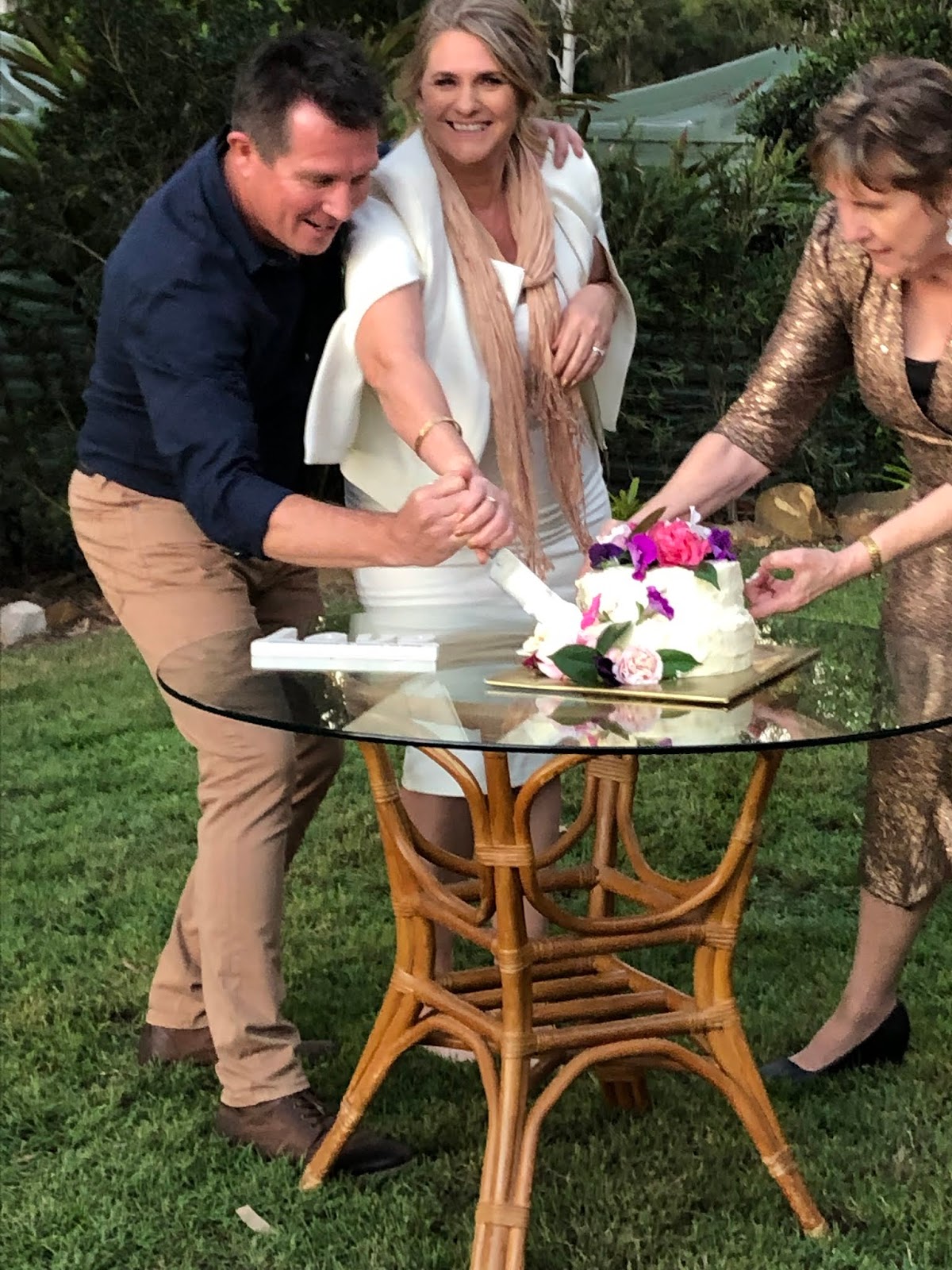
‘I’ll make your wedding cake. Would you like a two-tiered cheesecake decorated with fresh flowers.’ It was my idea. The bride loves my cheese cake so jumped at the offer. At least we had one thing organised for the wedding that was bearing down on us. A wedding organised by a pantster! 

She had a general idea of what they wanted. Casual, and held in their back garden. A grazing table. She was confident it would all come together, but we agreed we really needed a plotter – someone with a plan. Somehow it never happened.

Are you a plotter or pantster? I suspect our writing styles follow our personality types. Are you a carefully organised list-maker? I’m guessing your writing would happen the same way.
Or are you an impulsive, last minute, throw-a-function-together sort of person? I am and I write that way. Of course there are many different personality types and many writers who mix styles very successfully.

But back to our two tier wedding cake. I could see it, covered with cream, smooth sides, soft flowers flowing down from the top to the cake board. It would be so pretty. When I was mixing the beautiful, rich, fluffy concoction, I began to think the model through. Can one cheese cake hold up another? The answer was obvious. No. But there is always a solution. I’d leave the lop layer on the base of the spring form pan and support it with shortened skewers. I walked around the garden and checked for flowers a couple of days before. Yes, I felt organised and so I ignored my daughter’s pleading to make a trial one.

In the middle of the night before the big day, I wondered if soft cheese cake would hold the skewers upright.  Would the biscuit-crumb sides cave in under pressure? I dreamt I should wrap it in sandpaper and smooth cream over the rough side of the paper. In other words, I suffered a pantster panic!

Undaunted, I whipped the cream, having researched how to stabalise it. I washed flowers and leaves, packed everything ready to be assembled on site. Ever cautious (haha) I decorated the top tier, covered the bottom tier with cream, and carried them separately to the table to finish the work of art. Yes, it worked. The bottom cake held up the top tier. The flowers flowed. It was beautiful. 

But…The groom wasn’t quite ready to cut the cake. Then he wanted it moved to another table. Eeeekk. But he was the groom. So with much trepidation I moved it. More minutes passed. This was when I realised making a gelatine based cake wasn’t the smartest idea. It needed a refrigerator. I held my breath. Finally, the bride and groom stood behind the cake and I  began to breathe. But no, they launched into speeches! Others clapped. I prayed.

At last. The words I was waiting for. ‘We will now cut the cake.’

Just then a guest  yelled, ‘It’s falling!’

I ran and caught it on the slide. I held the top tier while they cut the bottom one – the one that had disintegrated on one side, the side away from the crowd.  It caused a lot of merriment and the guests ate every last bit – even creeping into the kitchen to clean the board with spoons.

As I think about this disaster, or near disaster, I am reminded of my writing, of my book in progress. It’s been stalled for a long time. I had a plan for it – a one line plan. From there I’ve written by the seat of my pants. As I’ve progressed, the story has taken on a life of its own, as books do. Dan has run into many adventures I had never imagined. The only planned event was Dan’s encounter with God. Not just learning about Him but having a life changing experience of the living God. 

And now Dan is ready, the plot is ready but this pantster is clueless of how to proceed.

In a previous book, my protagonist found herself locked in a remote hut. When I returned to my manuscript the next morning I realised the whole story was locked up with her. She told the story. Hers was the only point of view. I spent four days wandering around muttering to anyone who would listen, ‘Milly is stuck in a hut and I don’t know what to do.’  Just as the whole plot was about to slide (read hit delete button) the penny dropped. There was a reason for her being there. A great reason. A plot solving reason. My fingers once again flew over the keys.

So now I’m circling this current work in the same way I watched the cake. God encounters are usually orchestrated by God himself. I’m out of my pantster depth. I’m hoping the Spirit gives me revelation soon or maybe this bit of creativity may slip away as well.

Have you had any pantster disasters or are you all calm controlled plotters? Please share your adventures.

Jo Wanmer has decided to give up organising weddings and return to her computer. She is thankful for editors who catch most 
disasters before publication. She lives with her husband of 48 years on the northern outskirts of Brisbane. Her book, Though the Bud be Bruised, was published 7 years ago. Three other manuscripts are currently recovering from pantster writing and being edited by her plotter brain.

Thursday, 25 July 2019

CWD Member Interview – Penny Reeve


Most Thursdays in 2019 we will be interviewing one of the members of Christian Writers Downunder – to find out a little bit more about them and their writing/editing goals.


Today interview: Penny Reeve


Tell us about your writing. What do you write and why?


I’m a children’s and YA author so I enjoy being able to write in a variety or genres and styles. I’ve written picture books, non-fiction for children and junior novels (including the 2018 CALEB Prize winning Camp Max). Most of what I write explores Christian themes for young people, but in 2018 I launched my first YA novel (as Penny Jaye) for the general market. It’s called, Out of the Cages, and tells the story of two young girls trafficked into the brothels of Mumbai and one of them who escapes.
I probably enjoy writing for children because I have such strong memories of growing up and wondering about the world myself. I try to write stories or resources for young people that might help them navigate the world they live in. Stories that recognise their unique potential and value their contribution to life. I also try to write stories that point to hope. Our world can be pretty confusing and, at times, depressing. But it’s also amazing, and beautiful too. And God is still at work despite it all. I hope my stories gently highlight this.

Who has read your work? Who would you like to read it?


Most of my Penny Reeve titles are available in Christian bookstores like Koorong, so they are readily available for Christian families and schools. I’ve had some lovely feedback from people using my tween Bible studies both in church groups and family settings. 
My children’s novels and books often find their way into school libraries, and playgroups appreciate my picture books too. 
Books under my new author name, Penny Jaye, will have a wider audience as they are targeted at the general market. Out of the Cages is classified as a Young Adult novel, but – as commonly happens with YA titles – it’s been read by a lot of adults also. I’d love to see more young adults reading it too, as I believe it has some important things to say, not just about human trafficking and modern day slavery, but about the courage and hope it takes to heal.

Tell us something about your process. What challenges do you face? What helps you the most?


Well, I’m not sure my process is something set in concrete but there do seem to be some trends emerging the more I write. I generally start with a preparation stage: this involves initial research, brainstorming, basic character construction etc. I then may – or may not – do some planning and outline the general gist of the project. (This stage is usually more in depth if I’m working on a non-fiction project). Then I get to writing and try to produce a first draft. The ending is typically rushed and incorrect at this stage, but at least I’ve got something finished! I then head towards my editing process which usually involves more research, careful plot re-analysis, structural changes, ending rewrites and general rewriting. I genuinely enjoy all stages of the journey, even when I find them hard work. 


What is your favourite Writing Craft Book and why?


I’ve really valued Libby Gleeson’s writing craft books: Writing Hannah and Making Picture Books. (Unfortunately, I think they might both be out of print now.) I love the way she shares not just the tips and tricks, but the process of creating stories for children. 


If you were to give a shout-out to a CWD author, writer, editor or illustrator – who would they be?


Too hard to ask for just one! But since that’s what I’ve been asked I’ll say Cecily Paterson. I really respect her tenacity and commitment to her craft. She’s written some great books for young people, as well as producing beautiful colouring books through her Firewheel Press. She’s also a terrific mentor and writing coach (check out her Red Lounge for Writers.) Personally, she’s been a real encouragement and valued writing friend who won’t let me settle for whinging when things get tough, but helps me see the big picture and get back to work.


What are your writing goals for 2019? How will you achieve them?


My main writing goal for 2019 is to complete my master’s thesis. I’m writing on how Christian spirituality is represented within contemporary Australian YA fiction. I’m really enjoying it.
Creatively, I've got a middle grade novel I'm rewriting and a couple of other projects brewing also. I find the best way to achieve my writing goals is to be deliberate about them. This means I schedule them into my weeks, make sure I hit word count targets and don't short cut the research processes along the way.

How does your faith impact and shape your writing?


My faith impacts my writing by shaping my perspectives. The writing life can be very frustrating at times, and also quite draining. We’re urged to market this way, and network that way. To keep putting ourselves forward and write more, write better. By keeping my heart on what I believe God has asked me to do it helps me keep these clamouring voices in perspective. To put my energy where it matters and to write the best I can. 


 Penny Reeve, also writing as Penny Jaye, is the award winning, Australian author of more than 20 books for children, including the popular Madison and Tania Abbey series.

Her books are are fun, real and empower kids to engage with - and respond to - the world around them.  Her most recent book, Out of the Cages, is a general market YA novel published by Rhiza Edge.

Monday, 22 July 2019

Working in a collaborative writing project: is it for you?


While I love being a writer, there are a few things about it that I sometimes find hard.

Going solo on a project from start to finish is one. I was never much of a ‘group assignment’ person even in high school, and always thought I preferred to work on my own, but it turns out I like having a team to help share the highs and the lows.

Another thing I find hard is coming up with plot ideas. That might sound surprising for someone who is working on her eighth novel. I’m good at character development, and for that reason I tend to write stories that are strongly character-driven. But the truth is, I find it hard to nut out a plot.

Working in a collaborative novel project has been a great solution to these two problems. Early in the year I was approached by a person with an idea for a novel. The plot was all there; the characters were created; it was even part of a trilogy of trilogies. This person had all the ability to make it happen, except for one thing—the ability to get the words down on paper. The question was: would I write it?

I considered it for a while. The genre was not something I had any interest in. I’d never read a book like it, and to be honest, I’d probably leave the movie version of it as well. But it was an interesting idea, the main character sounded like she had some depth to her, and as every freelancer can appreciate, it was a job. I’d take it, I said. How hard could it be?

As it turns out, not terribly hard.

Scoping it out


Before I started writing anything, I asked for information.

I needed to have the broad outline of the plot and the general direction of the trilogy in my head, so I could see if it stood up in terms of story structure. I suggested moving a few things, increasing a few sections and decreasing others so that it fell into the usual Blake Snyder ‘Beat Sheet’ that I use.

I also asked for character outlines as well as photos for a visual guide to the people I was writing about. I needed to know who these people were: what motivated them, what they feared, what they longed for. My collaborator also sent me music tracks to listen to, rather like a theme in a movie.

I also needed to work through how I would approach Point of View. My collaborator had outlined the story using multiple points of view, rather like movies are made. I’m not a confident user of omniscient point of view, and I far prefer to write in a deep third person. The problem with that, however, is how to reveal different pieces of information and bring in the variety of characters who populate this trilogy. In the end we decided to use deep third person, to bring the story more depth and colour, but with multiple points of view, focusing mainly on the key character. It’s ended up being approximately three chapters in her POV, one chapter in another.

Writing process


Once we began the process of writing, my collaborator would send me a chapter outline. Some of these were more detailed than others. With the less detailed ones, I’d send back questions to be answered: what’s the setting? Why is that thing there? What’s the mood of the setting? Why did he say that—I feel like I’m missing something? We quickly worked out that the more detail that got put into the chapter outline at the beginning, the more speedy the writing could be.

And it has been speedy. Because the thinking has all been done for me, all I do is write to the plan. I can get 2000 words of a tidy first draft done per hour. Occasionally the characters decide to do slightly different things to the plan, but mostly their actions or words enhance the overall story rather than change or redirect it.

Usually my collaborator is very happy with what turns up on the page. Very occasionally we’ve had a misunderstanding with what the story or a character is doing, but after a second go-through things are fine. (Once I lost a whole chapter outline… oops… and it had to be redone. I apologised big time for that…) I feel like I’m bringing a story to life, and my collaborator is enjoying seeing the fruits of many years of planning and mental labour.

At this point we’re about three quarters of the way through the project. (No names, no details yet... it's a secret!) It’s one of the most enjoyable freelance projects I’ve ever done, and I like having a little ‘team’ to bounce things off about the story. It’s even inspired me to think about another collaborative project.

What about you?


If you’re interested in being part of a collaborative writing project, the benefits can be immense. You’re not on your own. You can focus on the thing you’re good at and excel at it. You can celebrate when it does well, and commiserate when it doesn’t.

Don’t go in starry-eyed, though. You’ll need a contract between the two (or more) parties. (Even if you’re best buddies now, we all know what can happen to even the greatest artistic partnerships.) You’ll need to nut out how the process of writing will work, and how you’ll overcome any differences of opinion. You’ll need to allocate responsibilities, set your limits and boundaries and respect them. You’ll need to decide on who you’re writing for, what your tone and mood will be, what the story will do. There’s a lot to figure out. Plus you need an escape clause in case it all goes terribly wrong.

I’ll definitely pursue collaborative partnerships as part of my writing toolbox in the future. What about you?

Cecily Anne Paterson writes brave-hearted novels for girls aged 10-14 as well as being a freelance writer and editor. Find her at www.cecilypaterson.com and her Write Your Memoir course at www.redloungeforwriters.com


Thursday, 18 July 2019

Meet Our Members: Jan Morris


Most Thursdays in 2019 we will be interviewing one of the members of Christian Writers Downunder – to find out a little bit more about them and their writing/editing goals.

Today interview: Jan Morris – author name Janet Elizabeth

Question 1: Tells us three things about who you are and where you come from.
I am 61 years old and live in Brisbane and have been married to Philip for 30 years. We have a son and have been in Australia for 16 years and became citizens 12 years ago. We love living in Australia and love being Aussie Citizens. I was saved in the rivers Apostolic Centre in Slacks Creek 10 years ago followed by both my husband a week later and son within a couple of months.

I am an army kid and was born in Malaya before it became Malaysia, and have also lived in Singapore, Germany, Spain, Mallorca, Tenerife (Canary Islands) Scotland, London and Wales. We seem to move a lot – even here in Australia we have moved over 8 times in 16 years. Itchy feet!

My work background is diverse, Holiday Resort Manager, looking after holiday makers overseas, Travel Agent, Training and Personal Manager. Business owner and trainer in MLM for 7 years. Now an author / illustrator – which is a total dogleg! I don’t ever remember wanting to be a writer or illustrator.

Question 2: Tell us about your writing (or editing/illustrating etc).  What do you write and why?

About a week after I was saved, my mentor and friend, Christine Gear (who has since gone to heaven) suggested that I journal. She told me to write my questions, worries, ideas, ‘thank you’s’ and general chitchat in my journal as this would give me answers and bring me closer to God. I really liked Christine and, even though I thought that was very weird to suggest chatting to God through a journal, I chose a posh, velvet-covered, gold-embossed journal, and started meeting with God every morning for an hour, writing down everything that was in me. That’s when the rhymes and poems started emerging.  I would read back through my week and think, “I must have seen that somewhere before”, because it didn’t seem like something I would write. Even now, as I dip into a poem in my book “Heaven is all about Him” I often think “wow — that’s so beautiful! Go, God!”
God would prompt me to share these little poems with specific people and they would deliver words from Him and insights into things they were dealing with. It was pretty mind-blowing to me because I’d never come across this before!


After Christine went to heaven, my friends were so encouraging about me putting it into print and continuing to share them with people. Today when someone buys a book - they also get a poem that is specifically for them. The results and feedback from these little poems have been amazing!

The rhyme about the Good Samaritan popped up in the journal too and I felt that God was saying how important it was to teach children about loving everyone in these very diverse times. So The Good Samaritan came from that and as I was searching for someone to illustrate it, a friend told me she thought God wanted me to do it, which was a bit strange because she didn’t know that I could draw.

Anyway she went to her cupboard and presented me with some watercolor paints and brushes. I was scared out of my wits because I really didn’t think my very scrappy hand-drawn style was suitable for books. However, since then I have progressed to watercolor pencils and am really enjoying it!
The Good Samaritan was joined by The Good Samaritan Companion (Puzzles and Colouring) in 2018.

The Prodigal Son was launched in May this year and we had some lovely children who joined me in reading it to our audience. I feel that God has given me 2 more to work on next. Watch this space!

Question 3: Who has read your work? Who would you like to read it?

I have my books in 5 libraries in Logan and online at Vision Christian Media Bookshop and Koorong.

I also sell through my church, have several of the books in local school libraries (Carindale area) and sell through my own website www.jemorrisbooks.com

I would love them to be in more schools and am looking into home schooling with downloadable lessons to go with the children’s books both for schools and home-schoolers.

Question 4: Tell us something about your process. What challenges do you face? What helps you the most?

I don’t really have a process. So far the ideas and subsequent results are as a result of questions and prayer, downloads through my journal. I have to be very discerning because my head is so full of ideas that I can be taken off track very easily. I know that God wants the writing and poems to be simple, there are many many awesome prophets, teachers and writers out there with amazing books and teachings. I feel God wants me to be a 1st step. A little trip to what’s possible starting at ground level. Keeping it super simple! K.I.S.S. Listening to Him helps me the most and my main challenge is the marketing. I love the writing and illustrating and have had to learn a lot about Facebook, website creation and have so much more to learn!

Question 5: What is your favourite Writing Craft Book and why?
I have never sought out writing craft books, I wouldn’t know what one looked like to be honest. I have an enormous respect for authors who work for years on their manuscripts, perfecting their craft. As I have described, the poems and rhymes have been coming as a download and are not something that I sit and ruminate over. They are very simple and come in a note format which I sit on, re-read and work out….always asking, questioning. If something doesn’t feel right I scrap it and start on another tack. My head is so busy I have to have ‘Be still and know that I am God” time-out!

Question 6: If you were to give a shout-out to a CWD author, writer, editor or illustrator – who would they be?

My shout out must be to Maree Cutler Naroba.
She was the first person to acknowledge that the path God has me on is where I should be – not only that but that I’m a fit for it. She invited me to be on a panel of authors at her Deborah Conference. She didn’t know me personally and so it was an absolute thrill to be asked.

We expect that family and friends will encourage us (though some don’t) but when complete strangers start to take note and make wonderful comments and really ‘get’ where God has you; that’s the catalyst of ‘I am where I am supposed to be’
At her conference I also had a prophetic word delivered by Wes Leake that said there would be children’s books. At that stage no - one knew that a rhyme about the good Samaritan had popped up in my journal and I had no inkling that God would be leading me in that direction. I started having conversations with God about teaching children kindness, love, gifts and forgiveness. So it was very on point and gave me permission to explore those subjects further with a sense that I was on track.

I see how many lives she is touching, and I love that she does it with such humility and grace. There’s not one single ‘look at me’ or ‘look how good I’m doing‘ in her. She knows 100% that it’s all about Jesus. Plus she gives the most incredible hugs.

Question 7: What are your writing goals for 2018? How will you achieve them?

I am in the middle of a project that will be released for Christmas. The perfect gift for your family and friends. I also have 3 online courses that are in the ‘ideas and set out’ stage. I am sure that it not only is on track with what God wants me to do but that it will bring me a residual income that will release me to do other things without the worry of finances. (not that it’s worry – but I’m sure you all know what I mean) I have peace. He delivers me peace and joy and they are my most favourite parts of me. I have to be disciplined and on task to achieve this. I’m doing ok so far!

Question 8: How does your faith impact and shape your writing?

Fixed front and centre – there is no Janet Elizabeth - author without Holy Spirit, without Jesus and the Father. They are what I write, how I think, how I love and how I encourage others. They are who I am. My prayer is always that I can be a person that even the most anti-Christian person would be drawn to, so many are lost in the world of me, me, me that I was a part of before I saw that there was another way. He’s got me!


Short bio

Jan Morris writes under her Christian names Janet Elizabeth and she lives in Brisbane with her husband of 30 years. She has been an author for just 3 years.
Her first book is a collection of prophetic poems “Heaven is all about Him” taken from her journal over 7 years. She loves to gift a specific poem to the people who buy the Heaven book and finds that they deliver a special word from God and are usually spot on.

There are also two children’s books featuring her own hand-drawn illustrations and rhymes, re-telling the two most well-known parables of Jesus ‘The Good Samaritan’ and ‘The Prodigal Son’. Plus, she has downloadable colouring pages for everyone who buys a book. You can connect with Janet www.jemorrisbooks.com and on Facebook Janet Elizabeth - Author

Monday, 15 July 2019

Five Things Wimbledon Can Teach You About Writing by Nola Passmore


Did you spend more time watching Wimbledon in the last two weeks than working on your manuscript? If you’re feeling guilty, fret no more. All that ‘tele-tennis’ can actually help with your writing. Here’s how.


Practice Makes (Almost) Perfect


Top players like Rafael Nadal and Serena Williams make the shots look easy. Powerful serves, effortless backhands, precision volleys. If only I had their talent! However, they didn’t master those winning strokes overnight. They practised each one thousands of times before stepping out on court. Now imagine doing all of it in a wheelchair as well. That's exactly what Australian Dylan Alcott did to win this year's inaugural quad wheelchair singles and doubles. You can read more about Dylan's incredible achievements here. If we applied the same discipline to our writing, readers would marvel at our powerful metaphors, effortless dialogue and precision plotting. It’s especially important to practise in your weaker areas. Study the craft, do writing exercises, seek feedback and practise, practise, practise until your words sizzle on the page.  For more detail on the benefits of practice, click here.


The Follow-Through is Key


In tennis, you don’t stop your swing as soon as the racquet makes contact with the ball. You have to follow through to add power and keep the momentum going. ‘Following through’ is just as important in writing. Have you heard or read some great writing tips? Then apply them to your writing in order to cement your learning. Did you promise yourself you’d write more this week? Month? Year? Then do what it takes to fulfil that promise. For more tips on following through, please see a longer post here.


Bad On-Court (Online) Behaviour Comes Back to Bite


There are a lot of wonderful players who show sportsmanship on and off the court—Evonne Cawley, Roger Federer, Ash Barty and Pat Rafter to name a few. However, we’ve also seen the dummy spits. Not only does bad behaviour alienate the player from the public, but it can also result in fines and loss of endorsements. Writers can also lose the good will of the writing fraternity through uncharitable behaviour (e.g. ranting about publishers who’ve rejected their work; debating with readers who’ve given unfavourable reviews; joining online writing communities purely to market their own books without giving back). In the writing world as in other spheres, we’d be wise to ‘do unto others as we’d have them do unto us’.


No Adaptability, No Grand Slam


In order to win a calendar year Grand Slam in tennis, you have to win Wimbledon, the Australian Open, the French Open, and the United States Open in the same year. In adult singles, this feat has only been won accomplished by two men (Don Budge and Rod Laver) and three women (Maureen Connolly, Margaret Court and Steffi Graf). One reason it’s so difficult is that the tournaments are played on different surfaces: grass for Wimbledon, clay for the French Open, and hard courts for the Australian and US Opens. (Though some surfaces have changed over the years). If players can’t adapt to different surfaces, they won’t win all four events. While you don’t have to ‘win’ at all types of writing, you can increase your opportunities by learning to write across various styles and genres. Different types of writing can cross-pollinate. Writing poetry can help you develop fresh imagery in your fiction; writing fiction can help you add more creativity to your nonfiction pieces. Why not experiment with those different surfaces? You might be surprised at the results.


It’s Not All Strawberries and Cream 


Did you know that 28 000 kg of strawberries and 10 000 litres of cream are used during Wimbledon? Well, some of that cream probably goes on the scones, but that still leaves a lot of strawberries and cream to tempt the taste buds. Tennis isn’t just about those delectable moments. It takes a lot of hard work and persistence to succeed. The same is true of writing. We’d all like to be the person who wrote their debut novel in a few weeks and then sat back as it climbed the bestseller lists. However, ‘overnight’ success occurs when writers buckle down and write through the hard times as well as the good. Some days, writing is pure joy. Other days, you want to kill your protagonist for creating so many plot problems for you. Hang in there and it won’t be long before the strawberries and cream are tantalising your writerly taste buds again.


(N.B. Blog Photos from Pixabay and Stencil, free creative commons use; Author photo by Wayne Logan. An earlier version of this post appeared on The Write Flourish writing tips blog.)


Author Bio

Nola Passmore (aka Nola Lorraine) has had more than 140 short pieces published including short fiction, poetry, creative non-fiction, devotions, magazine articles and academic articles. Her debut novel Scattered, an inspirational historical novel, is being published by Breath of Fresh Air Press in 2020. She and her husband Tim run their own editing business called The Write Flourish. When not writing herself, she loves to nag (oops ... encourage) other to write. One day, she should read through all of her blog posts and take her own advice 😄

The Write Flourish website: http://www.thewriteflourish.com.au/


Monday, 8 July 2019

Omega Writers | Announcing the 2019 CALEB Finalists

The results are in!

The books have been read. The score sheets have been completed. The scores have been totalled, and Omega Writers are delighted to announce the finalists for the 2019 CALEB Award.

First, a big thank you to our first-round judges. No writing contest can operate without judges, and we appreciate the time and effort you've contributed.

Published Awards

Picture Book

The finalists in the Picture Book category are:
  • The Invisible Tree: Goodness, written by Kirrily Lowe and illustrated by Henry Smith
  • Lily's Balloon, written by Katrina Roe and illustrated by Helene Magisson
  • Wilbur the Wooly, written and illustrated by Nikki Rogers

Sponsored by: Simon Malcolm Productions

The Picture Book winners will receive their choice of a $400 voucher from Simon Malcolm Productions, or two $200 manuscript appraisals from a children's book specialist.

Young Adult Fiction

The finalists in the Young Adult Fiction category are:
  • Finding Kerra by Rosanne Hawke
  • Out of the Cages by Penny Jaye
  • Being Jazmine by Cecily Anne Paterson

Sponsored by: Christian Editing Services

The Young Adult Fiction winner will receive a $400 voucher from Iola Goulton at Christian Editing Services.

Adult Fiction

The finalists in the Adult Fiction (General) category are:
  • Under a Blue Moon by Phillip Cook
  • Grace in the Shadows by Christine Dillon
  • Iscariot by Mark Worthing

Sponsored by: Fire Wheel Press

The Adult Fiction winner will receive a $400 voucher from Cecily Paterson at Fire Wheel Press.

Biography or Memoir

The finalists in the Biography or Memoir category are:
  • The Sides of Heaven by Hazel Barker
  • Hudson Taylor and China: A Dramatic Biography by David Bennett
  • Hidden Thorns by Marie-Rose Fox

Sponsored by: Apricot Editing

The Adult Fiction winner will receive a $400 voucher from Shona Weston at Apricot Editing.

Unpublished Adult Fiction

The finalists in the Unpublished Adult Fiction category are:
  • Catherine Murray
  • Claire Steel
  • Carmen Thornton

Sponsored by: Book Whispers

The Unpublished winner will receive a $400 voucher from Rowena Beresford at Book Whispers.

Congratulations, everyone!

These entries are now on their way to the final-round judges—I don't envy their jobs!

The winners of the CALEB Awards will be announced as part of the 2019 Omega Writer's Conference. The keynote speaker this year is Christian agent Steve Laube, of the Steve Laube Agency.

Omega Writers Conference

The conference will be held from 11 to 13 October  2019 at the Edmund Rice Retreat Centre, Mulgoa. Transport is easy, as there will be a bus transfer to and from Sydney Airport.

Sign up now—earlybird registration closes on 15 July.

Click here to find out more and register.

Conference Scholarships

Omega Writers have been able to offer are offering one full and two partial scholarships to the 2019 conference. To apply, email president@omegawriters.org with:
  • 500 words of your best writing.
  • 25-100 words telling us what you hope to achieve by coming to the conference, and why you haven’t been able to come before.
Click here to find out more.

Applications close on 11 July 2019, so get in fast!