Thursday, 15 May 2014

I Wish I Hadn't Written That

By Nola Passmore


Have you ever written something you came to regret?  If so, you’re in good company.

In her pre-Christian days, best-selling author Terri Blackstock wrote novels she later regretted.  When one of her readers asked which pseudonyms she had previously written under, Blackstock gave the following response: ‘I don’t like to give that information out, because I don’t want people looking for those books.  I’m ashamed that I wrote them, because they contain things that I have repented of.  I wish I could gather them all up and destroy them, but I can’t.’ 

Of course, regrets do not just afflict novelists.  Larry Norman, the father of Christian rock music, wrote a song called Reader’s Digest in which he attacked a number of people in the music industry.  Comedian Wendy Harmer wrote and performed a parody song entitled Everyone Knows It’s Lindy based on the false assumption that Lindy Chamberlain had killed her baby daughter Azaria.  Both of these artists were later sorry for things they had written and said.

By God’s grace, I was already a reasonably mature Christian before I started sending material off to publishers.  However, I’m sure there would have been regrets if I’d sent out some of my early work.  After all, I did once argue in a school debate that we couldn’t be sure the Bible was real.  Although I was a Christian, I reasoned that it was okay to say that in a public forum because you don’t have to agree with the points you argue in a debate.  D’oh!  And of course, being a more mature Christian doesn’t mean I won’t make mistakes in the future.  It’s scary to think how much damage even one misguided remark on a blog could do.  You can later delete it, but you have no control over how many people have already downloaded it or shared it on other sites.

So what do we do if we’ve written something we wish we hadn’t?

  • First, repent.  That not only means confessing your mistakes to God, but also determining to do things differently in the future.  None of us is perfect, but we can choose to follow God’s plan for our writing and ask Him to guide us.
  • Second, if your words have caused hurt, apologise to the person concerned.  Larry Norman apologised to John Lennon and Paul McCartney for words he had written about them and changed those lines in subsequent versions of the song.  When Lindy Chamberlain was finally exonerated in 2012, 32 years after baby Azaria’s death, Wendy Harmer wrote an open apology in her online column: ‘In pursuit of a laugh, I too carried a burning stick.  Such was the firestorm of hatred, all rationality was lost … Lindy, Michael, I am truly sorry for the hurt I caused you, your family and friends.  I hope you can find it in your hearts to forgive me.’  Lindy Chamberlain’s response?  It takes ‘a huge amount of courage to admit that [you] were wrong … Good on her’.
  • Third, ask God to redeem the situation and any damage that has been done.  Terri Blackstock has had an incredible ministry since turning her writing over to the Lord.  She was even able to get the rights back to some of her books and rewrote them to include Christian themes.  Her Second Chances series was the result.
  • Fourth, pray, pray, pray.  Pray as you write.  Pray before shooting off that email or blog comment.  Pray before entering your work in a competition or sending it off to a publisher.  Pray when you make a make a mistake, then pick yourself up, dust yourself off, and try again with God’s help.

 Have you ever written anything you’ve regretted?  What did you do to deal with the situation?


Nola Passmore is a freelance writer who has had more than 120 short pieces published in various magazines, journals and anthologies (including poetry, devotions, magazine articles, true stories and short fiction).  She and her husband Tim have just started their own freelance writing and editing business called The Write Flourish.  She loves writing about what God has done in her life and encouraging others to do the same.  (Some call it ‘nagging’, but she calls it encouragement).

Monday, 12 May 2014

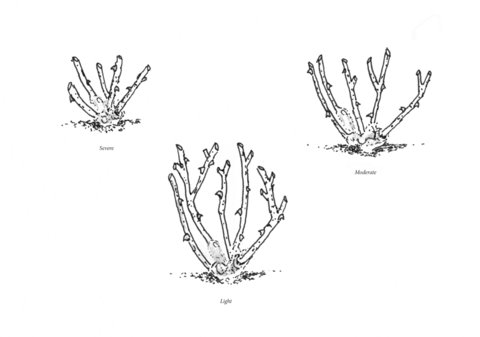
Editing is like pruning rose bushes


My husband and son once borrowed a Lord of the Rings unedited DVD from the library. They wanted to watch all the parts which were later deleted. They'd expected to find a number of extra scenes that hadn't made it to the movie. But there were, in fact, very few extra scenes. Instead, the scenes which were already in the movie had bits trimmed off them. They agreed that the bits that had been cut out were as excellent as the rest of the movie. But they didn't necessarily carry the plot forward. So while the scenery, characterisation and effects in them were fantastic, they didn't "add" anything to the story but just reinforced what was already there.

I think that in this regard, film editing seems very much like book editing. I ought to know. It has been my experience over nine novels. I'm always amazed by how many snips and trims can be made without sacrificing any story line. Sometimes it's just a sentence here and there, a few "How are yous?" or "thank you very muches." Other times, I've managed to delete entire paragraphs, because I've studied them and thought, "Readers will be able to work this out in their own heads without being spoon-fed," or "This is just repeating what I said in the last page, with different words." Sometimes I've managed to shorten a book by 50 or 60 pages just by getting rid of these unnecessary little extras. I've grown to quite enjoy this process.

Early in my writing days, I used to hate it because I thought, "That's goodbye to hours of hard work." And I've had other people tell me that this is the way they feel too. But I've come to see for myself that, paradoxically, taking parts away really does add to the story's quality. It tightens the whole thing and keeps it running more smoothly. A bit like pruning rose bushes or grape vines, I think. All that foliage appears green and healthy, but it gives flowers and fruit so much more opportunity to flourish when it goes.

I think everyone needs to do this type of editing, whether you're Shakespeare or a school student. The human brains seems to be constructed so we're naturally a bit too wordy and verbose in the first drafts. That's a good thing because it means that everything we want to get across is in there, and we just need to trim away the extra bits to make it shine.

Perhaps the biggest surprise of anybody who first begins to tackle editing is that while they might have expected the process to be mostly changing and adding things, this pruning and deleting actually takes up so much of the process.

Paula Vince is the author of nine novels, mostly contemporary dramas with elements of romance, mystery and suspense. She lives in the beautiful Adelaide Hills of South Australia, which she likes to use for the setting of most of her stories. You can visit her here.


Thursday, 8 May 2014

The Little Things


Today I’m blogging not as a writer, but as a reader. Well, partly. You see, lately I’ve been determined to read more into my writing genres. Reading opportunities can be difficult to secure, but I’ve been quite determined. In fact, to mix it up, I’ve made a habit of selecting random titles from authors I’ve never read before.

Through this recent reading spate I’ve discovered something quite dreadful. I’m turning into a book snob!!!!

Maybe it’s the ever developing inner–editor monster I’ve unconsciously fostered through reading from ‘the other side’. Perhaps it’s the failing of my eternal youth, betraying a slightly irritable, at times impatient, time greedy working mother. Could it be the shock that ‘best selling author’ by no means guarantees quality?

At times I’ve wanted to shout, ‘SHOW, don’t TELL,’ after wading through yet another information dump or explanation of how a character is feeling. Other things that set me skimming were overused speaker tags; constant or overuse of unnecessary adjectives and adverbs (in some cases in conjunction with the overused speech tags); plots that took half a book to get moving; or plots driven solely by contrived romantic misunderstandings or complications. (Hey, when you’re reading into the wee hours of morn, it’s a big ask to be patient with Mary’s seventh change of heart for the chapter!)

But amidst these frustrations were sparkling delights. Well developed characters, fully engaging plots, beautifully constructed relationships and dialogues had me effortlessly tuned in. NO head hopping! It made me realise that, as a writer, the little things really REALLY matter.

The Little Things (Okay, maybe not these little things, but they are kinda cute!)
 Now for the confession – I’ve committed all these sins as a writer at various times. I’m sure I’m ignorantly committing others to this day. It’s one thing to say, ‘Show, don’t tell,’ it’s another for someone to clearly demonstrate it. I’ll never forget when, six months into studying creative writing, I re–read the first few chapters of an old manuscript I had on file. It was dreadful! In that moment I realised just how much I had to learn.

And I’m still learning. Constantly.

Something I’ve realised by my purposeful reading is how much this informs my writing. Seeing those little niggles in action really drives home the point! It also demonstrates how important it is to expose ourselves to the work of writers who are more experienced, with more highly developed skills.

For me, investing in my craft through education and being a part of a writers group have been two (of many) invaluable steps in honing my skills. But clearly, writers MUST read.

I’d love to hear how reading has cultivated your inner writer – and if/how you’ve evaded becoming a book snob in the process!


Adele Jones lives in Queensland, Australia. Her writing is inspired by a passion for family, faith, friends, music and science – and a broad ranging imagination. To find out more visit www.adelejonesauthor.com

Monday, 5 May 2014

I can't do all things...

There is a Bible verse that has been appearing in my Facebook newsfeed quite a bit lately:

"I can do all things through Christ who strengthens me." Philippians 4:13

There are also dozens of quotes about being a 'Supermum' and 'having it all'.


Many of the people who talk about the above verse say that as long as our faith is strong enough we can do anything and everything... many have different points as well, but the general feeling that comes across is that we can do EVERYTHING.

Doing it all is a pretty hard thing to live up to.

In September last year, my then nine year old came down with glandular fever. He was very, very sick for a week and didn't bounce back the way the doctors assured us he would, and he is still struggling. The result of this was that many of the balls I was juggling were dropped.

I had to take an extended break from work, writing was pushed aside, I stopped contributing to this blog, and a number of other things had to take second, third or even last place to the priority of looking after a very sick nine year old.

One of the biggest lessons is that I CAN'T do all things - both as a Mum and as a writer - at least, not all at the same time. There are times when writing and editing need to be put aside for other things, and there are times when those other things are put aside in favour of writing and editing.

The other lesson I've learned is to trust in Christ and lean on his strength. This is a lesson I keep on learning.

To me, the verse above isn't about doing everything or having it all, it's more about relying on the strength of Christ to do the things that need to be done.

There are other lessons I've learned during this time too, but these are two of the big ones.

Melissa Gijsbers lives in Melbourne and writes in between working as a bookkeeper and being the mother of two active boys. In August 2013, she had 3 fractured fairy tales published in Teapot Tales: a unique collection of fairy tales. She has also had Christmas stories published in Jingle Bells: Tales of Holiday Spirit from Around the World, and Tales by the Tree: An anthology of Christmas Flash Fiction. Follow her writing journey at www.melissawrites.com.au

Thursday, 1 May 2014

Being a real author

I think I could write a book about my book promotion experiences over the past seven years. In this scintillating piece of literature, I would include some of the more startling and amusing conversations I have had at my book table, such as the following:

‘So what do you have here?

‘These are my six novels and this one, Soul Friend, is non-fiction.’

‘Oh ... what are they about?’

‘Well, I explore different faith themes in my novels such as understanding God’s love, forgiving others, using our gifts to serve God, overcoming rejection, holding onto our faith, and so on. My latest one here, The Inheritance, highlights the importance of dealing with anger and bitterness in our lives and learning to trust God. It has a strong male main character in it as well as a female one this time.’

‘Oh ... so you said they’re novels. Do you mean fiction?  I don’t usually read fiction.’

‘Yes, they’re fiction—but several of them were inspired by real people.’

‘Oh, okay. ... And what about this one here? Did you say it’s non-fiction?’

‘Yes. It’s the story of my own journey with my spiritual mentor Joy.’

‘Oh ... you mean you wrote it yourself? Wow!’

‘Yes. I wrote all these.’

‘You mean ... you mean you wrote all those as well?’

‘That's right.’

‘Wow! I’ve never met a real author before. That’s amazing!’

It’s a little strange how, even when I talk about ‘my’ books or ‘my’ writing in such settings, some people still think I must be selling someone else’s books. After all, their expression says, I couldn’t possibly be an author! Yet I can well understand where they might be coming from. You see, when I was a child, I always thought authors weren’t real people like the rest of us. I think I imagined them as a race apart—some sort of exotic beings from a realm far removed from us whom we could know only via their names on the covers of their books. They must be so clever, I used to think. Only super human beings could weave stories together like that. Imagine writing a whole book!

Now I know differently, of course. Now I myself have joined their ranks. And, as I usually assure those who have such conversations as the above with me, authors are quite normal people—well, sort of! We just happen to love writing, even when that involves many hours of hard work. And some of us also believe that’s how we can best serve God and others.

I never imagined I would be a ‘real author’. I can well remember the day I received the proposed cover of my first novel and how I felt when I saw my name in large letters at the top. My first thought was ‘What have I done?’ Now my work and many of my inner thoughts would be out there for all to see. But in the years since, I have discovered what a privilege it is to be a ‘real author’ and to take hold of every opportunity to honour God and bless others that comes my way as a result.

What are your thoughts about ‘real authors’ or your experiences of being one? Is this a term only published authors can use? Does it differ from the term ‘writer’, which I still prefer to put down as my occupation?


Jo-Anne Berthelsen lives in Sydney but grew up in Brisbane. She holds degrees in Arts and Theology and has worked as a high school teacher, editor and secretary, as well as in local church ministry. Jo-Anne is passionate about touching hearts and lives through both the written and spoken word. She is the author of six published novels and one non-fiction work, Soul Friend: the story of a shared spiritual journey. Jo-Anne is married to a retired minister and has three grown-up children and three grandchildren. For more information, please visit www.jo-anneberthelsen.com or www.soulfriend.com.au.

Monday, 28 April 2014

5 Tips for a Writers Research Trip


5 TIPS FOR A WRITERS RESEARCH TRIP


By Skye Elizabeth Wieland


Last year, I planned my very first solo trip overseas to Ireland. This was to be a soul-searching trip for me as well as research trip for my upcoming series set in Medieval Ireland and the UK. While simply saying I wanted to go to all the castles as well and good, I found that I needed a plan to make my time efficient. Below are 5 tips that I found were pivotal in making my Emerald Isle trip a success.

1.)     Plan ahead, but be flexible.

Have a rough outline of the places you would like to see, but be open to change if you stumble upon something better.  Do some research ahead of time on the kind of things you need to investigate and find out where they lie.  Create an itinerary with these items and prioritize them. 


      2.)   Contacts
Cold canvas some contacts via the internet and social media groups that would be involved in the sort of things you want to research. Write a lovely intro email/letter formally introducing your self and what you are wanting to research. These people will be great to a.) meet b.) keep in contact for the writing process and c.) you may even be lucky enough to be offered to stay with them.


3.)   Time out
We all get excited with the prospect of being in another country, particularly a place we want to write about. But while you are busy soaking in information like a dehydrated sponge, you mustn’t neglect timeout.
Find a quiet spot (like a grassy hill) and sit and meditate. Seek God on what you need to discover and find while you are there. Observe the sites, close your eyes and observe the smells, the feel and the sounds. What birds can you hear? What kind are they? Can you describe their sound? What season is it and what does that smell like?


4.)    Record everything and collect
Gather as much information as you can. Photos, journals, even if you don’t think you need it, it MAY come in handy and it’s not like you can just skip back over to that country tomorrow. Collect catalogues and brochures on the sites you visit and see if you can buy books from local heritage sites and gift stores.


5.)    Double up

As an author, it’s sometimes hard to get out to new places. So if you are planning a long distance overseas research trip. Make some arrangements in advance to promote your previous novels. Contact bookstores and radio stations and organize some book signings. You’ll find that most bookstores in other countries are very welcoming of international authors.


 Ultimately though, it's your trip! Have fun! Structure it how you want it. Have that balance of you time vs work time, because who knows "if" and "when" you'll be back there.

If you are interested in seeing more photos from my trip, or viewing some of the video blog's that I filmed and stuck on YouTube from my trip, feel free to visit the following links.


PHOTOS FROM IRELAND TRIP

YOUTUBE VLOGS FROM IRELAND

FOLLOW ME ON FACEBOOK


Thursday, 24 April 2014

The ANZAC Legend


ANZAC Day – the Legend
This last couple of years I have been studying a Bachelor of Arts/Education at University, and one of the subjects studied was Myths, Legends and History. It was a history subject and I absolutely loved it. We looked in depth at the Trojan War and the Arthurian Legends, but also touched on more modern legends: Robin Hood, Ned Kelly, Jesse James and, believe it or not, the ANZAC legend.

Now what were they inferring by calling ANZAC a legend. By definition a legend is something that has historical basis, but that has been enlarged and exaggerated. Perhaps this idea triggers a defensive response in you. I admit that I certainly had my defensive hackles raised when they began to look at this subject with insinuations that perhaps ANZAC is a figment of somebody’s imagination, but as we went along, I began to see what they were saying.
One hundred years ago, the diggers were just members of the British defence forces. They were commanded by the British and served on behalf of the British interests. They were young men and women who were a half a world away from their own homes and families. Today it is a common ideal that the original ANZACS (Australian and New Zealand Army Corps for our Northern Hemisphere readers) were heroes who fought for our freedom. The ideals of larrikinism, mateship, and irreverence seemed to have emerged as synonymous with Aussie (can’t speak for the Kiwi’s). These ideals, even if we don’t actively engage in irreverent acts of larrikinism, we almost certainly would laugh about it with some sense of cultural pride. But for all this, is that what Gallipoli was all about?

My grandfather was a Sergeant Major with the AIF during the Second World War, and on his return trip home he was put in charge of a prison ship. These were not prisoners of war; they were Aussie soldiers who were on criminal charges, including murder. The following is an excerpt from his diary:

“Well this is nice kettle of fish. I’ve been made a ships patrol and that means policeman and believe me she’s a great ship to be anything on. She’s got prisoners S.N.L.R. (Service no longer required) A.B.C. class men of whom a lot are just thugs and wasters. I’m afraid we are going to have a lot of trouble on board before we get home but still so long as I get home that’s all that worries me.”

From other excerpts in his diary he used other words to describe these Aussie soldiers including “Swine”. He was not impressed, and according to his diary they were violent and troublesome. This image of Aussie soldiers is in conflict with the legendary ANZAC hero. Our youngsters today are hearing about heroes. I bet in a number of cases the word hero is an accurate reflection. But it obviously wasn’t always the case. The lads who enthusiastically signed up for the First World War probably didn’t have any concept of what it was they were signing up for. They were feeling patriotic and up for an adventure, but when they were deathly ill with dysentery, or their feet were rotting with disease from being forever damp; when they were in fear for their life and fled from a call to charge and were subsequently convicted of cowardice; when they got involved with women in various foreign places and caught STDs or left fatherless babies behind. These men were human like the rest of us, but they answered a call to service. It is good to honour the sacrifice of those who died. It is good to honour the mental, emotional and physical price that returned veterans have had to pay, but it is also good to remember that these men and women were human and vulnerable to the weaknesses of character that is common to us all.

As we commemorate ANZAC day tomorrow, April 25th, the day that marks the ill-fated Gallipoli landing, let us honour the service both past and present of those in the armed forces, but let us keep in perspective that they were ordinary young men and women and that war was not then, and is not now, a glorious pursuit, but a terrible conflict of states that requires the blood of those who engage, whether voluntarily or by force.

Re-reading this puts in sharp relief what the subject was saying by ANZAC legend. We want to think of our heroes as above reproach, full of courage and honour, self-sacrificing and willing to die for the sake of others. I know that there were ANZAC heroes who did and do fit that description, but the thing that we can focus on now is that there is a hero who fits this description every time. Of course I’m referring to our Saviour, Jesus Christ, whose story of life, death and resurrection - also a story full of horror - yields to us everlasting hope.


Meredith Resce
Author of 'Mellington Hall' and 'Cora Villa'

www.meredithresce.com


Monday, 21 April 2014

Christian Writers' Conference Update

Thanks to CWD for the opportunity to bring an update on the Christian Writers' Conference. Plans are going well and we have confirmed sixteen workshops with another six on the waiting list. They cover the following topics:

Fictional Writing for published writers/unpublished writers; Non-fiction Writing; Publishing; Self-editing; Characters; Metaphors; Bible Stories; Freelance Writing; Motivation; Marketing; Rejection; Spiritual Obstacles; Time Management; Children's fiction; and Ergonomics.

There is more information about these workshops with presenters' bio's on the website: www.christianwritersconference.dx.am/workshops

We have also confirmed Rev. Dr. David Wilson as our opening speaker at the Friday night plenary session. I first met David when he was principal of Kingsley's College (the Wesleyan Bible College) in Melbourne. Since then he has worked as the Director of Sophia Think Tank with the Bible Society of Australia and in this role he wrote online articles for their website. He is currently the CEO of Urban Seed – an urban community development unit working with homelessness, substance abuse, and mental health issues.

In one of David's articles he made the comment: "Give me a piece of media, any piece of media on any topic and we’ll be able to find principles in the Bible that are relevant in their application." David will speak on this topic which I believe is relevant for all Christian writers regardless of whether they are writing non-fiction or fiction, overtly Christian or subtle Christian material.

Iola Goulton, Nola Passmore and Rowena Beresford have agreed to be editors at the conference. In order to get the maximum benefit from editors' appointments Iola and Nola will be asking delegates to send material in advance, up to a maximum of 20 pages – double spaced which is approximately 5,000 words. So if you would like to see an editor start preparing now!

Publishers Rochelle Manners from Wombat Books/Rhiza Press and Kris Argall from Acorn Press will also be taking appointments. More details about what to send and appointment request forms will be available on the website in August.

There will be an extensive Light the Dark bookstall with all the newest titles.

Check out our website for costs, timetable, venue and other details. Registrations will open in early May.

Hope to see you there.

*****


Susan Barnes likes to write devotional thoughts on Bible passages, book reviews and inspirational articles. She loves to challenge people's thinking and regularly blogs at abooklook.blogspot.com.au. She is also a librarian and pastor's wife.

Thursday, 17 April 2014

Our Creative Natures By Buffy Greentree

There are so many places in the writing journey that we can get caught up and come undone. There are also various strategies we can put in place to combat these obstacles. However, today I want to look at just one simple idea which has saved me numerous times from problems in both the drafting and editing stages.


Your creative nature is not singular. 

The sooner you realise this, the sooner you will know exactly which door to knock on when you need help. So let's look at some of our options.

The Muse:

People talk of a creative spirit or urge, calling it a genius or muse interchangeably as if there were one unknown part of us that performs the creation. As a Christian, we really should acknowledge at least two, our side and God's. Those who have experienced a true creative flow, or have written a work that is so beyond what they thought they knew, must acknowledge that God inspires and helps form anything that we allow him to help on. How can we view anything except God as our 'muse'? Is not the creator himself the thing that inspires all further creation?

For me, the Holy Spirit directly and God's creation indirectly fulfill the ancient role of creative muse. It is the thing external to myself which inspires and encourages my creative work. This is a wonderful realisation, and constantly keeps me on my knees as I write. However, God does not do all the work. There is then the unconscious and conscious work that I must do in the creation of the piece.

The Genius:

A lot of my creation happens unconsciously. I may stare at a computer screen for hours on end, then finally get up and have a bath. Halfway through the bath, while humming along to some tune, a piece of dialogue suddenly jumps out of nowhere that is the perfect answer to my problem. Or I will wake up from sleep, and my character will be there, ready and waiting to tell me what happens next.

While some of this comes from inspiration, there is also the part of me that processes it all. This part I consider my genius. It is not external to me, as the muse is, but it is also not under my control. I cannot force my genius to write when I want to write. He is most secretive. I feed him scraps and ideas, and then leave him alone to digest it all. When he is ready, he will then open up a trap door and hand back out the diamonds he has created.

There are many things that you can do to encourage your creative genius, from the types of food you can feed him to the recreation that best allows him to process. I have found that when in doubt, give him a good meal of problems to solve and juicy words to mull over, then leave him in silence (ie. find a wordless activity to distract yourself with), and see what he churns out.

But your genius is really for when you get stuck. He is not something you can rely on for a steady flow of words. He does not write drafts, he only helps out a bit with the design. For drafting and editing you need your two conscious creative natures.

The Youth and The Elder:

These two aspects of our creative nature were first outlined to me in the wonderful book On Being A Writer by Dorothea Brande (if you haven't read it, it's out of copyright so you can download it for free, which I highly recommend you do right after you finish reading this). She argues that we have two natures that can either work together or against each other, very much like brothers.

First is the youth. He is the creative spark. He loves telling tall tales and playing with words. He is cheeky and a bit irresponsible. He doesn't care about grammar or spelling, and is easily distracted. If you let him have too much control, he will jump from one story to the next, leaving a mess behind him each time. On the other hand, if you restrain him too much, he becomes sullen and won't say a thing. He's a bit of a sulk that way. Without him you will never get through your first draft, but with only him, you will never get a complete book.

Second is his elder brother. He is much more interested in order and control, and he is fantastic at editing. He takes time over word choice, making sure that it is perfect. Then he considers the sentence structure. Did you break any important rules? He's big into rules. He's also pretty good at making sure his little brother sits down and stays on the same story all the way through to the end. Without him, your youth is likely to get overexcited and run off after butterflies. The elder, however, can make sure he stays in his chair until he is finished.

However, the elder can very quickly become overbearing. If you let him off the lead too much in the first draft, he will be watching over his little brother's shoulder, trying to correct the small mistakes or pausing his brother to find a better word. Under this sort of tyranny, any little brother would jack up and hide away.

So you need to balance these two as is appropriate to your stage in the writing process. If you feel you are being stifled or coming up dry in the first draft, it is generally because you are letting your elder creative nature crush your youth. But if you find you have lots of wonderful ideas but never get through them all, you might need to build up and encourage your elder a little, not let him be bossed around so much by his younger brother. Your youth needs to be disciplined just enough to get through to the end of the first draft. Then the elder can take over and brush up in the editing process. 

I find relying on these four aspects of my creative nature, identifying which one has been starved and which I might be trying to rely too strongly on, will get me through most problems. Though, I will admit it is an on going process to build them up and learn how to support them all. But that is part of the fun of being a writer.


Buffy Greentree was brought up in Melbourne, has lived in Japan and the UK, and now calls Brisbane home. She has a B.A. (Hons) in Classics and Archaeology, a Master of Divinity, and a Grad Cert in Business Management. Yes, she spent way too long at Uni. 
She now writes by day, and works as a boarding house supervisor corrupting young minds by night. So, life is pretty good. 
For a further discussion on creative natures and other ways to overcome your fears of writing, see her first book The Five Day Writer's Retreat, available on Amazon and other online retailers. Or follow her at her writing blog: www.100firstdrafts.com.

Wednesday, 16 April 2014

Lego Movie Inspiration.


I haven’t seen many recent mainstream movies with an underlying message of faith. I've seen movies that could potentially inspire the watcher to believe in themselves, in magic, in the power of ‘mother’ nature, or in the love of sisterhood, but I haven’t come across many that would inspire a belief in God. So it was with some surprise that I found a message of faith in Lego.
The Lego Movie was released in Australia last week. 
This is what I took away from the story:
If you believe in ’The Man Upstairs’ He can use an ordinary person like you to do extraordinary things.
In this Lego world ‘The Man Upstairs’ is a small boy who has created the story line and placed the Lego characters in their ‘save the world’ predicament. I won’t go into an extensive review of this movie, suffice to say the Christian message came through to me loud and clear. What struck me about this movie is that it is a story aimed at the mainstream market, and at its heart seems to be a message of faith. It made me think so much about my own writing. Can we, as Christian authors, bring a message of faith to the mainstream world? I think we can. I think we should. I believe that where God inspires the will, He will show the way.
So if it is on your heart to write a mainstream story with a message of faith, but you think you won’t find an audience, think again. If God has given you the calling, I know He will give you the audience.

Hey, If Lego can be used, we can too. :-)

Rose, who holds a Bachelor of Arts Degree, was born in North Queensland, Australia. Her childhood experiences growing up in a small beach community would later provide inspiration for her first novel, 'Back to Resolution'. 
Her novels are inspired by the love of her coastal home and desire to produce exciting and contemporary stories of faith for women. 
'Beyond Resolution', and 'A New Resolution' are the second and third books in the 'Resolution' series. 
Rose's debut novel 'Back to Resolution' won Bookseller's Choice at the CALEB Awards 2012. 'A New Resolution' won the Fiction prize, CALEB 2013. 
She has also released 'The Greenfield Legacy', a collaborative novel, written in conjunction with three other outstanding Australian authors. 
Rose resides in Mackay, North Queensland with her husband, young son, and mischievous pup, Noodle. 

Visit Rose at:

http://rosedee.com/


x

Thursday, 10 April 2014

The Bunny and the Lamb

In just over a week will be the Easter weekend. For most Australians, Easter means:

  • Hot Cross Buns - these days available in the shops shortly after Christmas. My family loves them - though my daughter only likes the nontraditional ones with the chocolate chips.
  • Easter Eggs - mostly chocolate but some of candy or other concoctions. The Supermarket aisles are stacked high with these spheres of chocolate coated air in glitzy coloured foil wrap.
  • The Easter Bunny - many children believe this bunny is the source of all those Easter Eggs. Normally portrayed as small white rabbit with fluffy tail and floppy ears though I had to chuckle at the 6 foot high Bunny with a boomerang in Rise of the Guardians that looked more like a macho kangaroo and spoke like Hugh Jackman.
  • That perennial favourite - an extra long long-weekend. Four days in which families often go camping or visit family.
  • And School Holidays.
For others Easter is the end of Lent and/or the celebration of Jesus' death 2000 years ago and his resurrection some days afterwards. 

I wonder what Easter means for you?

For me it is a time of reflection and wonderment - that the incarnated divine Son would die for me. It tells me how much God loves and values me. It reminds me that I have new life through Jesus, that He can and will mend the brokenness inside of me and that He is a present and powerful.

Easter is an intensely personal. It is both sobering as I think of Jesus on the cross on Good Friday - and exhilarating as I remember that He is Alive - that He has conquered sin (human brokenness) and death itself.

Easter has cosmic as well as personal implications.  It is the turning point of the Story of God and therefore the story of our world. Through the eyes of faith, we can see that Easter is the very crux of history. The Bible tells us that story. Yes, it tells many other things about history, morality, worship, spirituality and reality but running through its pages is a love story - God's love for his broken creation - for his broken people. 

It is a simple story - the eternal triune God created the cosmos. He created humans to care for his creation and to be his friends. But the very first humans rebelled against God, deciding to go their own way so that now they and their world became broken. Instead of destroying us and starting again, God decided to rescue us - through calling a people to show who He was and what he wanted. And then He came, the incarnated Son who died in our place. On the cross, the Son won a decisive victory against death and all evil. He has entrusted his people who believe and follow Him with a mission - of not just living lives worthy of Him in faith and love but of taking His message of freedom and love to the furthest corners of the earth - and to the person next door. One day He will make new the whole cosmos and make a home for His people. 
Easter is not just for me or you - it's for everyone.


The Lamb That Was Slain

A flower nodding in the crevice of a rock
New growth after rain.
The sun’s blushed fire climbing above the horizon
A Lamb that was slain.

Praise God who brings beauty, life and hope
In the midst of the world’s cloying darkness.
A world reclaimed at Golgotha, Skull Rock
By the Lamb that was slain.

Before the sun’s fire ignited and
Craggy cliffs rose above the ocean waves,
Before humanity’s ancient parents stumbled
And brother shed brother’s blood,
Father God planned a people reclaimed.

A new perspective, a life regained
Admitting failure, weakness and pain.
We take on His life, walking in faith
Receiving the Spirit’s renewing fire
Sent out by the Lamb that was slain.

The Lamb’s restored people join hands
In prayer and praise.
An emaciated child is given bread and hope
Broken lives are knitted together again
And a message of love and new life spreads like soft rain
Hands, Feet and Heart of the Lamb that was slain.

Earth trembles, nation wars against nation
Tribal enmities ignite, hate inflames
Tall towers and silvery screens pursue greed and fame
The lamb’s people divided, too often lead astray
Awaiting the coming of the Lamb that was slain.

Fruit redolent on the healing tree
Life giving water flowing through brilliant bridal city
Father’s noon-day light shining on pearl and diamond
Spirit healing, tears wiped and death disappearing
The Lamb as Lion victorious reigns.

Praise God who brings beauty, life and hope
In the midst of the world’s cloying darkness.
A world reclaimed at Golgotha, Skull Rock
By the Lamb that was slain.

Jeanette O’Hagan ©2002, 2014

Wishing you all a happy and blessed Easter.

"Easter Egg image courtesy of  sattva / FreeDigitalPhotos.net"
"Hand heart & cross image courtesy of  luigi diamanti / FreeDigitalPhotos.net"
Jeanette has practiced medicine, studied communication, history and theology and has taught theology.  She is currently caring for her  children, enjoying post-graduate studies in writing at Swinburne University and writing her Akrad fantasy fiction series.  She is actively involved in a caring Christian community. You can find her at her Facebook Page or webiste  JennysThread.com .