Showing posts with label #memoir. Show all posts

Monday, 12 December 2022

Shining Light into Darkness – by Ruth Bonetti

Last Sunday, the third Advent candle was lit in churches to speak of joy. But have you ever wondered at candles on Christmas cards? How can Australians relate to the  light without living through a northern hemisphere winter? During interminable long winters, where the sun straggles out for a few hours before retreating, we learned the significance of solstice light. 

We first celebrated St Lucia Day in Sweden. Scandinavian countries, including Swedish speaking Finland, celebrate St Lucia day on 13 December, drawing on the Italian St Lucia.  Hear my own memories in a narration of Burn my Letters:


St. Lucia was killed by the Romans in 304AD because of her Christian beliefs. It’s told that she secretly brought food to the persecuted Christians in Rome, who hid in catacombs under the city. She wore candles on her head so that she could keep both of her hands free to carry food. It is also from the Italian Lucia that the Scandinavian Lucia gets her red satin belt from portraying Saint Lucia’s blood, and representing her sacrifice.


On my first European tour, we members of Queensland Youth Orchestra arrived in Rome. After a tantalising glimpse of the Coliseum, we visited catacombs. Did I tread similar paths on St Lucia's beat? 


I hoped to replicate St Lucia Day celebrations for my grandchildren (especially lovely Luca whose name means light and who is fascinated by light. As am I. My first name, Helen, means light.) I was rather relieved when the family pleaded December=BUSY! Wake up at 4am to usher in the sun and guests with coffee, fresh baked saffron buns and mulled wine? Get real. 


Solution:

Attend a celebration on the Saturday night before, hosted by Swedes Downunder.


Back in 1995

We drove three young sons through the arctic winter in a campervan. (Crazy brave, non?) Its heating expired at the first snowfall but we were warmed by interludes in snug beds, enjoying hospitality from friends and family across Europe. Rarely did a Jingle Bell jar.  (My allergy to Jingle Bells abated when playing it with Noosa Orchestra and the sassy Kitty Kats vocal trio.)


Along the way we enjoyed many Advent music concerts, especially a sung Christmas Eve mass in Oberammergau. There, my spirit craved a Bavarian wood carving, despite our straightened budget. 


While living near the Arctic Circle, I collected wood-carved nativity scenes, birch bark stars and angels.


Another tantalising thought:

Was my grandfather, WA Back, drawn to develop a sizeable part of the Brisbane suburb, St Lucia, because of his childhood memories? Read all about that in The Art Deco Mansion in St Lucia. 


Hanukkah, the Jewish Festival of Light, begins an eight-day celebration on 18 December. Whatever your faith, consider:


What light can you shed on this Christmas season?


How will you bring the Light of the World into your writing this Christ-mass season? 
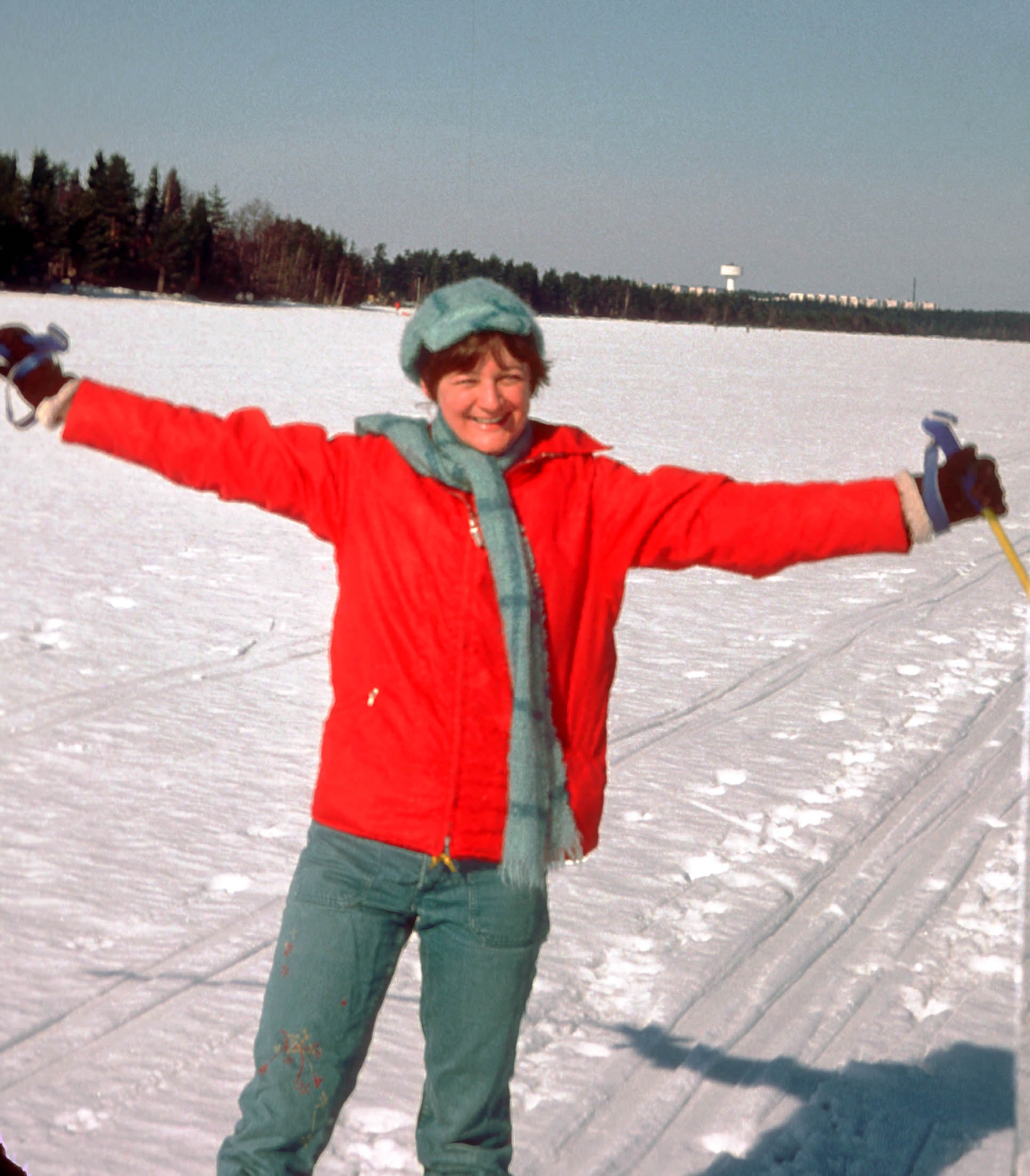


Ruth BONETTI lived seven years in Europe, two in Sweden. There she imbibed her Finland-Swede heritage and was blessed with a treasure trove of letters, parish records and stories. One planned book grew into the Midnight Sun to Southern Cross trilogy. In this, she weaves discoveries of her forbears with her own journey in life and music. 

Email Ruth for information about her January Writing Life Stories webinar and for mentoring. 

Website for autographed copies (books sure beat sox for Christmas gifts!)

Blog

Audio book: Speak Out–Don't Freak Out


Monday, 7 October 2019

Exploring Genre: Memoir


Memoir is one of my favourite genres to read, and I’m in good company, it seems. 

I did a quick google search for ‘best selling Australian books 2019’ as I wrote this article, and unsurprisingly, the first three books I saw were memoirs. 

The right memoir can do exceptionally well. Elizabeth Gilbert sold over four million copies of her Eat, Pray, Love, the story of her quest for meaning and inner peace across several continents. It was equal to Frank McCourt’s Angela’s Ashes, the story of a miserable Irish childhood. Another miserable childhood story, this time from the US, The Glass Castle, sold 2.7 million copies.


Why do we love to read other people’s real-life stories so much?


They’re a good read.

The best memoirs are well-written, with a distinctive voice and a strong story structure that has the beginning, middle and end that every work of fiction relies on. We follow the character through their challenge, quest or discovery, fight their battles with them, and marvel at their transformation at the end.


They give us true insight into other people.

Putting your hopes, dreams and flaws on a page for all to see can feel exposing for the memoir writer, but it’s a gift to the reader. We don’t know many people as well as we know ourselves. When you read someone’s heartfelt story, it’s an opportunity to intimately understand not only an individual, but humankind.


They allow us glimpses into situations we haven’t experienced.

I’ve never lived with drug-addicted parents, hiked a 1200-mile trail or travelled to a war zone to be a medical officer, but I’ve read the experiences of those who have. Their stories opened my eyes, moved me and challenged me. Most of us live safely in the suburbs; reading a memoir is a world-widening experience.


They teach without being didactic.

While I press the point home to my memoir students that writing their story is not the same as writing a sermon (ie. no lecturing!) it’s true nevertheless that readers will learn. Lessons are gained from the writer’s experiences and transformation. Anyone who has ever tried to teach a child—or an adult—will know that we all listen to a story more easily than a ‘you should’. By reading other people’s stories, we learn lessons for our own lives.


Types of memoirs

While it’s true that there are plenty of memoirs written about tragic childhoods, abusive marriages or terrible sicknesses, memoirs don’t have to be miserable. There are canine memoirs, eccentric-mother memoirs, travel and celebrity memoirs and a whole sub-genre based around the ‘My Year Of…’ concept. I’m thinking Julie and Julia, where Julie Powell decided to cook her way through the famed French cookery book, Mastering the Art of French Cooking; and Rachel Held Evans’ A Year of Biblical Womanhood, in which she spent a year following the Bible’s instructions to women, literally and figuratively.

You could argue that blogs, which after all, are mostly personal stories, are memoir in short form. Often, a blog will become a book. My memoir, Love Tears & Autism drew on the five years of blog posts I published following my three-year-old son’s diagnosis with ASD.


If you’re writing a memoir, here are three tips.


A memoir is not the same as an autobiography

An autobiography spans a person’s lifetime and doesn’t necessarily have an overarching story arc that ties it together. Sporting or political ‘memoirs’ are more technically biographies and often are not much more than a series of events or anecdotes in chronological order. It’s important to get the facts and details right in this sort of narrative. A memoir, however, tends to focus on a period or significant event in a person’s life, and is more about how the person perceived the events, was challenged by them, and learned from them.


See yourself as the 'main character' of a story

Any good fiction protagonist must be a well-rounded character, with flaws as well as strengths. If you’re only shining off the page of your memoir, readers will close the book in disgust. We all know that real people have warts. Memoir readers want to see a balanced, honestly drawn character.


See the events as a story

Readers have expectations of what a story will give them. They seek challenge, tension and a win (of some kind) at the end. If you know the rules about story structure, you’ll be better placed to write a memoir that will hook readers and give them exactly what they are looking for.


Looking for good examples of memoirs to read and learn from? You’ll find some of my favourites listed on this page of memoir resources.


Cecily Paterson teaches memoir writing in her unexcitingly named online course, Write Your Memoir. Her own memoir, Love Tears & Autism won Third Prize in the 2012 Australian Christian Book of the Year Award. She’s the author of seven MG/YA novels for girls, with an eighth title to be published with Wombat Books in 2020.

Monday, 21 December 2015

Writing life stories by Ruth Bonetti

What more precious gift to relatives and future generations than to write a family history or memoir? Do it now, before stories and insights are lost to dementia and coffins.

But first consider: for whom do you write?            
                                                                                    Photo 1890: Ruth's grandfather stands front left.

  • Will you circulate amongst family some copies produced at the local print shop? 
  • Or might your stories resonate with Everyman and Everywoman? 
That challenging option, with good marketing and distribution, can reach more readers.
  • Will you present facts as a historical document, with diligent footnotes and bibliography? 
  • Or through creative nonfiction put flesh on bones, words in mouths, and look under the surface to the motivations that drove actions?                                                           
If so, one writes with relatives peering over the shoulder, while wondering what flak the finished book might draw. They caution: “Change the names, write a novel, and avoid offence.”
Kate Grenville took this path with The Secret River.

My attempts to novelise felt stilted. Why waste my treasure trove of archival letters and diminish a great story? Let the characters speak for themselves. Narrative nonfiction morphed into memoir as I discovered and interpreted stories. Accepting my role as storyteller unlocked the cage to write more freely.
Others might write different books, equally valid.

Dare to share?

Fact checking early drafts might elicit useful information–or invite criticism. Steel yourself for unsolicited advice: “Don't include aspects that dishonour ancestors…”

Memorise a short but gracious mantra:
"Thank you. I hear what you say. I’ll choose appropriate content with care and prayer."
Clamp your mouth on justifications.

Black versus white sheep?

Some families draft ancestors into pens of white and black sheep, with little variegation between. What demons drove the reprobate to that more interesting story? Avoiding all conflict makes for dull reading and robs readers of the opportunities to learn from generational patterns.

Shame on the family!

What family tree doesn’t sprout illegitimate twigs? Recent generations shrug but Great Aunt Flossie concealed scandals with hushed euphemisms for 90 years. She threatens legal action if her family name is besmirched. Living relatives cannot sue on behalf of “defamed” deceased. The defamation twins are libel (written words) and slander (spoken) false or malicious statements that damage someone’s reputation. Avoid pitfalls with nonjudgmental, factual reporting. Australian Society of Authors membership includes legal aid if needed.

If you choose narrative nonfiction, cover yourself with upfront disclaimers:  “This is my interpretation...” and intersperse “I imagine that…” and “perhaps...” throughout. Endnotes can delineate fact from elaboration and acknowledge sources.

What is truth?

Contradictions are inevitable when sifting truths from myths of oral history.
Relatives view my many-faceted Grandfather from varied kaleidoscope angles to mine. This is the paradox of history; the events of World War 1 written by people from Germany, France, England or Australia would differ, even contradict in some details.

Relatives who share letters, documents, information and memories may envisage the book they would write and recoil if your version departs from their preconceptions.

My preferred style is life writing, to look under the surface of dates, events and facts and find the persons beneath. What drove two brothers to flee their native Finland to settle at the far end of the earth? Did they struggle, away from the security of the nest? 

After a decade of research, countless drafts and edits, Burn My Letters: Midnight Sun to Southern Cross I'm exploring publication options. I hope it fulfils the calling of Psalm 102:18.

Let this be recorded for a generation to come, so that a people yet unborn may praise the LORD. (RSV)

Want to hear when it’s published? Email

Ruth Bonetti co-founded Omega Writers in 1991. She is author/editor of 12 publications through Oxford University Press and her imprint Words and Music. These and her presentations seek to empower those who present through Words and Music.