Monday, 18 September 2023

Omega Writers | Introducing the 2023 Online Retreat


 It’s that time of year!

Spring has sprung. The trees are blossoming, the bees are busy, it’s time to plant tomatoes, the agricultural shows are popping up all around the countryside AND Omega Writers’ Zoom Retreat is happening.

I read a lament – or maybe just an observation – that many people prefer face-to-face. It’s true. There’s nothing like getting away from the grind of daily routine, settling into an accommodation with writing friends, sharing meals together, and generally enjoying not only the input and teaching, but also the fellowship.

Omega Writers management committee had been considering cutting our conferences to bi-annual because of the enormous cost in terms of human resource (which is mostly volunteer), and also the cost of flying interstate (and for some, internationally). We felt if we had a rest year for the organisational committee that would give delegates time to save up over the two-year period.

While these talks were still in the pipeline, the pandemic hit, and we had to cancel the face-to-face conference scheduled for that year. Most everyone was barricaded in their homes from compulsory lockdowns and were going a little stir-crazy. In South Australia and Toowoomba we had opportunity to move about within our own communities, so it wasn’t quite as bad, but we couldn’t travel interstate. So COVID-19 and the rapid changes in technology offered, dare I say it, an opportunity.

Our president that year, Penny Reeve, decided to push forward with a Zoom Retreat instead. Those of us in Adelaide and Toowoomba met together in our chapter groups and dropped into the zoom together. It was cost effective and successful, and so it fit well with our plans of having the face-to-face only every other year. In line with this bi-annual pattern, it was decided that the CALEB award would split in two: Published work entered on the year we hold face-to-face, and unpublished on the year we hold Zoom Retreat. This also helped with the human resource situation where we need to find judges for the CALEB award.

And so, here we are in 2023, gearing up for the online retreat, and excited about the things we have lined up. You can make it true to the tag line:

Here we are, TOGETHER, by joining with your chapter groups and organising for locals to meet together. (To find your nearest chapter group click https://omegawriters.com.au/resources/)

Please make sure that you register for the Saturday (cost of $50 members/$70 non-members). You can also register for the Friday evening AGM and social session, and the Saturday evening CALEB awards. Different zoom links will be emailed to you from these registrations. There is no cost for the Friday or Saturday evening sessions.

Our keynote speaker is Roseanna White – author, publisher, graphic designer. She will be zooming in from the US (another benefit of having an online retreat), and will be speaking on the following topic:

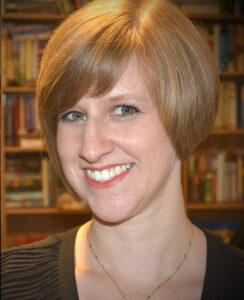
Roseanna M White

WRITE DEEPLY, READ DEEPLY, LIVE DEEPLY – We all want to write stories that leap off the page and into the readers’ hearts, but how do we dig deep enough? Join author Roseanna White as she shares the secrets of writing that resonates… by starting the process long before you sit down to write.

While we are on the topic of in-person conferences, we have a conference committee already at work and well underway planning next year’s event. Conference 2024 – Emerge – Connect, Equip, Inspire - will be held in NSW this time, so all of us from out of state will know to save our pennies for flights.

One last thing that should be mentioned: Omega Writers – Australia’s Christian Writers Network, has been focused on growth this last year.

We have gone through the process of rebranding and launching a new website; adding regular masterclasses which can be accessed from home; and increasing our online presence through social media.

I’m sure it is obvious that none of these new things, or any of the old things facilitated by Omega Writers, happens by magic. There are no fairies who pop in to do all the work necessary. Yes, there is a solid team of volunteers, people who don’t get paid and who take very little credit.

If you have a heart for the writing network that is Omega Writers, and have skills you think might be useful to us – particularly administration or IT - please let us know.

Don’t forget to book in for our Zoom Retreat and get ready to be blessed.

Click here for more information and to book

Thursday, 7 September 2023

Learning to Listen and Love through Research. by Shane Brigg

 I have always enjoyed inquiring deeper about topics of interest to me. When I was in primary school I signed out every book about dinosaurs I could get my hands on. Then I learnt all those latin names of the well-known extinct species like Tyrannosaurus Rex and also obscure ones like Ornithomimus (which means bird-like). Then I made my own stories, picture books and notes about them. I did the same with World War 2 history, bush tucker, survival techniques, Sci-Fi, and other topics. This turned from little childhood projects into major writing projects (some for formal education, most for personal interest). I guess I was just a keen learner. I loved research.


Research is useful for writing. In writing non-fiction, it is expected that our writing flows out of research. In fictional writing, research is often undervalued but necessary. In both occurrences some authors are effective at their research. Some authors, are perhaps, less effective in their research. I thought I would share a few simple thoughts about research that I have gleaned over many years of formal research (I studied my Bachelor of Environmental Science in 1987-1991 (this included Anthropology) and completed my Masters in Ministry (with loads of research) a few years ago) and a life time of learning and how to learn.


It is interesting to note that much scientific and social research (at least formatively) was designed by Christian's seeking to understand and write about creation and people God had called them to (examples of Scientists such as Nicholas Copernicus (1473-1543), Sir Francis Bacon (1561-1627), Johannes Kepler (1571-1630),  Galileo Galilei (1564-1642), Rene Descartes (1596-1650), Isaac Newton (1642-1727) who were instrumental in helping to design the scientific methodology and contemporary Anthropologists such as Kraft and Holloway who reflect a 'scientific' methodology).


Research is useful as a means of critical reflection and a source to evaluate the reliability of our written material, so that when we write we write from a point of clarity, reality, integrity and wisdom. Wisdom might be seen by some as how we take different information, data, insights and theories, how we understand them, test them, and create an interpretation that informs our narratives, communications and potential informing of practice (Anderson 2001).

A basic premise that I use when weighing diverse information or ideas for use is that often the best insight is that “it is not either or but both”. Perhaps this is similar to the Kantian/Hegelian concepts of the process of  Hypothesis, antithesis , synthesis.

THESIS

ANTITHESIS

SYNTHESIS

A thought is affirmed which on reflection proves itself unsatisfactory, incomplete of contradictory ...

which propels the affirmation of its negation, the antithesis, which also on reflection proves inadequate ...

and so is again negated ...

but a potential combining of different ideas to make a thought that is new and different from the items considered separately


There is an abundance of information in books and online about how to actually do research. Many books on writing only discuss the topic peripherally. There are mentions of research in chapters examining the craft of writing, or planning. However, there is little ‘sagely wisdom’ for writers to access ideas for reasonable research.  Considering that reasonably integrous research requires the interplay of thoughtfulness, theoretical interpretation, and wise judgement it is good to briefly consider a trusted proponent of this research acumen who is an esteemed Christian thinker and author on the subject.


Richard Osmer described the importance of research (in the framework of practical theology) that is useful for us as writers to consider. The material that Osmer presents is useful as an introduction to this field. I have found his material to be empowering and useful for further discussion in considering the use of social and scientific enquiry and evaluation within a Christian writer’s context. Osmer notes that research is vital for Christian practitioners to gain knowledge and skills to help confront the challenging situations they encounter with sensitivity, creativity, and confidence. The overflow of this thinking in our writing is that as authors, we too might be more sensitive, creative, and confident. Osmer develops a unique treatise to make sense of any situation by focusing on four reflective questions and then taking action (Osmer 2008:4):


Osmer outlines four tasks (with four questions) that are useful for us to employ as researchers and writers:


1)   The descriptive-empirical task which asks “What is going on in a given context?”

This requires us as authors to discern any patterns or dynamics in episodes, situations or contexts. It requires “Priestly listening”. This begins with a willingness to humbly understand lives, actions and practices of peoples and situations. As an author this may include investigating a specific situation, with a specific context, or it may be less formalised listening and communicating of what is discovered with compassion and empathy.


2)   The imperative task asks “Why is this going on?” It is based on wise judgment guiding people to potentially consult any theories, ideas from others, even considering other disciplines. In our own research this is a useful proposition : listen, look and learn from outside your usual (maybe comfortable) worldview or perspective.


3)   The normative task asks “What ought to be going on?” It uses a framework and understanding that is prophetic in nature (spiritual discernment). It focuses on hearing God’s Word for specific situations to construct ethical norms and learning for humble empowerment, communication, and encouragement of ‘good practice’. As Christian writers this is a salient reminder : Consult God. Pray. Seek His heart and will and understanding.


4)   The pragmatic task asks “ How might we respond?”. How someone might shape the context of various situations to better embody Christian witness and mission? It requires a transforming service that creates strategies  supported by values of servant leadership (Osmer 2008:28-29). As writers this is where the ‘rubber hits the road’ or the ‘pen hits the paper’. Be encouraged : Your writing is a transformative service that is important because this task has the power to bring influence and empower action.


Core to Osmer's thinking is Jesus' priestly, royal and prophetic mediation of salvation with daily reliance on Holy Spirit’s leading. Osmer helps determine a mobilisation of servants to help people become more like Jesus. That is you and I as writers too. Simply put Osmer encourages us to be learning to listen and love through research.


One of the best resources for ensuring wise interpretation of our research are our colleagues. This is what Brookfield (1995) suggests is a key critical reflection tool for ongoing personal and professional development. For Brookfield and others (like for example, Cartledge (2003)) research is seen to occur primarily in a community setting. Our support systems and social capital have valuable input potential into the interpretation task. Having other people who help you work through issues is vital to a writer’s effectiveness and survival. As writers we must be willing to have qualifying conversations with our colleagues or peers.


In my own context I frequently allow myself to be challenged about preconceived assumptions of thinking, research, ministry practise and ideas or narratives I write about. I do this within the framework of reflection conducted in accountable relationships with my work colleagues, friends, godly peers, study mentors, and my wife (the greatest leveller). I keep Journals and Diaries that date back to 1986 to self-review as well. Some things I wrote and practiced years ago, I would never do again, but other things that I do now have become 'best practice' in my ministry delivery and writing, that is constantly being honed. I have discovered that this humility in yielding our assumptions to a broader reflection process with others is vital to effective research and writing.


The type of research we utilise as writers must be determined by what is appropriate and useful to evaluate a particular idea or situation. Both Osmer and Cartledge give several examples of how research and evaluation and methodology link with theology useful for Christians. Cartledge explained the actual methodology he used in his practical research, which consisted of participant observation, study of documents, interviews with and surveys of people, and analysis of data.


Osmer discussed six specific types of research that are useful for us to consider using as writers:

(a) narrative research: telling individuals’ stories;

(b) case study research: studying a small number of cases in depth;

(c) ethnographic research: describing a cultural or social group;

(d) grounded theory research: developing a theory related to the context of a phenomenon;

 (e) phenomenological research: seeking the essence of an activity or experience for a group of people; and

(f) advocacy research: contributing to social change (with an explicit agenda).


With all the above said, it is sometimes claimed that research is a poor substitute for what you have experienced yourself. Perhaps a better way to consider this idea is that writing through direct and indirect experience, is a valuable mechanism for research.


Direct experience is life experience. Direct experience means to take your situations, happenings in your life, your memories and create the basis for a piece you are writing (like creating the inspiration for your narrative in a novel), you can begin by looking at your own unique past. You may have gone places and done things in your life, engaged with people, experienced challenges, resolved situations, and this is researching your topic through direct experience. This is the basic idea that anthropologists utilise in participant observation for researching ethnographic material (Babbie1986). If you have direct experience, you begin transcribing those experiences and making them interesting, coherent, and structured enough for the reader to receive in story form. Novels created from direct experience can be unique, personal and intimate.


Shane with team Sea of Galilea

Where direct experience is not possible, indirect experience can be accessed. This can mean you may delve into the descriptions of what and how others experienced the situations of life during a specific circumstance, time in history, or theme.


A few basic ideas of how direct and indirect experiences have fuelled my research and created authenticity in my writing include beginning with reading copiously. Spend time Listening: Interview, if possible, to derive from firsthand experiences of people. Communicate with others who know about your subject. Travel, seek out experiences, sit in other’s spaces, walk in other’s shoes.


Good research lends credibility to your work and gives the reader the feeling of direct experience. Imagine your readers feeling that they have lived the life of your characters as they read your narrative in a novel and have therefore had a direct (maybe God inspired) experience. What about that for a writing goal?


I have found that experience linked with intentional research is a potent mix for catalysing creativity in my writing. It brings joy to me and others as integrity of material and insights meld with wisdom and a richness of authenticity to produce a valued work. Research helps the reader trust your work. For us as authors, research is learning. Research is listening. Research is loving.


I hope you discover this joy too.


BIBLIOGRAPHY


 Anderson, R. (2001) The shape of practical theology: empowering ministry with theological praxis . InterVarsity Press, 2001: Downers Grove.


Babbie, E (1986) The Practice of Social Research. Wadsworth Publishing Co: Belmont California


Brookfield, S.D. (1995). Becoming a Critically Reflective Teacher. San Francisco: Jossey-Bass.


Cartledge. [2003] Practical Theology: by Paternoster Press.


Osmer, R.R. [2008] Practical Theology. An Introduction. Grand Rapids, Michigan:William B Eerdmans Publishing Co.

Thursday, 31 August 2023

Group Writing Sprints: A fantastic productivity hack—by Susan J Bruce


Track athletes feet in starting blocks, ready to sprint

There are so many great insights available about writing nowadays. Head over to Amazon and you’ll find thousands of books on the writing life and productivity hacks. These books are detailed and thought provoking and if you’re like me, you’ll devour them and…


It makes no difference.


None. Nada. Zilch.


You want to write. You’re compelled to create art through words. You love having written. But resistance to writing leads to feelings of futility. You know you’ve got a lot more words and stories in you than that. 


This problem led me to write my earlier blog post: Resistance is Futile.


But…


This year I found a way that worked for me.


I discovered group writing sprints


I’d been praying for the ability to be more productive for a while, and I had the chance to attend a mini conference run by Craig Martell of 20 Books to 50K fame. 


As with most short conferences, the real power is in the networking. After the conference, one writer I met asked me if I’d like to do writing sprints with her a day a week.


Nothing fancy—just meet on Messenger on Wednesday mornings and write together. Three lots of thirty-minute sprints with some chatting in between.


For me, sprinting is a misnomer. It’s more like a writing 'plod'. A bit like when you are out for a walk and you overtake the person 'jogging' because they are moving slower than you are.


But, miracle of miracles, I began to get words down and make progress in my stalled story. 


These sprints were so helpful that I started another sprint group on Friday morning and invited people from The Christian Writers' Downunder (CWD) Facebook group to join. Then some of that gang joined in on the Wednesday sprints.


Writing. Began. Happening.


And it was fun!  


Person typing on laptop and there's a magical golden glow coming out of the screen

I’m still slow by many authors' standards. I know people who can write in one day what I can in a week, but it’s working.


I finished my second draft of my new cosy mystery novel (more on that soon). I’ve written most of my new lead magnet and I’ve started plotting the second in the series.


Is this me? I’d pinch myself, but I bruise easily and don’t like pain 😎.


It’s sooooo good.


The Pomodoro Technique  


This whole idea is based on tomatoes. They’re great in a salad, but who knew they were so good for writers?


I’m talking about a tomato-shaped timer 🍅


Pomodoro Timer: Tomato shaped kitchen timer
Pomodoro Timer

The classic Pomodoro Technique (pomodoro is Italian for tomato) involves productivity sprints of 25 minutes followed by a 5-minute break—all timed with a tomato-shaped timer. You do this 4 times, then take a longer 15-to-30-minute break. You can find more detail via this YouTube Video. But you don’t have to do all that in-depth analysis to benefit. 


And I use my phone timer. No tomatoes come near my desk. It’s a rule.


Why group writing sprints work for me 


Exhausted pug lying with its head on the keyboard of a laptop
After a hard morning of 'sprinting'

We're all different, and if the idea of writing online with others is anathema to you, ignore all of this. But here’s why it works for me:

  • I’m a people person—a mild extrovert—and I get energy from being with others. I work from home as a content writer, so I need P.E.O.P.L.E. around me or I go stir-crazy. Group sprints are the next best thing.
  • I overcome resistance better when I do tasks with other people. 
  • I have a strong sense of responsibility toward others and I’m better at keeping appointments with other people than I am with myself.
  • I like getting to know other writers—encouraging them and praying for them. And, hey, I also like being encouraged/ prayed for. Group writing sprints create an environment where this can happen.
  • It gives me a point of focus. Even if I only do two hours of work on my manuscript twice a week, I do those two hours.
  • Once I’m in a manuscript, I can keep going. There have been days where I’ve written a thousand words in the 2 hours of sprint time, but then I’ve tripled that in the afternoon because I’m into the story. And then I’ve written again on the following weekend.

If this sounds like you—If you’ve been having trouble focusing, or you’re plagued with resistance to starting writing, then I’d strongly encourage you to get together with another writer or a group of writers and try group sprints. 


Start for two hours, once a week, then take it from there. It could make a huge difference to your writing life.


If you’re already doing sprints (or focused ‘plods’), I’d love to hear about your experiences, so let me know in the comments below. Similarly, if you’ve questions about writing sprints, I’ll be happy to try to answer them.


 Happy writing!


Susan J Bruce is an author, artist and animal addict who writes mystery and suspense stories—with heart. Susan is a former veterinarian and animals often run, jump, fly or crawl through her tales. Her writing group once challenged her to write a story without mentioning any animals—she failed! Susan has a MA in Creative Writing and her first novel (YA), Running Scared, was awarded the 2018 Caleb Prize for an unpublished manuscript. 

Get Running Scared at your favourite online retailer.

Visit Susan at www.susanjbruce.com


Thursday, 24 August 2023

Why Write?

Mazzy Adams

I’ve been a fan of Time Team for many years. Classic episodes from the British television series, which enjoyed a twenty-year run from 1994 – 2014, can still be enjoyed via their new YouTube channel, together with new episodes. As their website states, this ‘ground-breaking history series presented by Tony Robinson helped to popularise the field of archaeology’. While I’ve no doubt that statement is true, it was my father who piqued my personal interest in archaeology when I was little more than knee-high to a grasshopper. 


Cyrus Cylinder (Image by Prioryman)

In the mid 1960s, in connection with his work, my father was involved in a tour of archaeological artefacts and replicas that came through our hometown. I still remember him holding a replica of the Cyrus Cylinder (pictured above) while he explained how those strange markings were an ancient form of writing, called cuneiform. The actual words were commissioned by Cyrus the Great, the same Persian King spoken of in the Bible. I’ve never forgotten the thrill of seeing those 'words' that had been written more than two thousand years before I was born; words that people living thousands of years later had learned to read.

Fast forward a few decades, and I can still remember that same little girl's intense concentration as she wondered which ancient princess had also gazed upon these pretty lapis lazuli beads long ago.


I see that same excitement in the intrepid Time Team experts when they uncover ancient artefacts, or notice discoloured patches in the soil or strata which, to their trained eyes, reveal a wealth of information about the people who occupied the land in centuries, or millennia past. Other experts read the lumps and bumps in the landscape, or old hand-drawn maps, or written records that describe everything from the purchase of land and cost of construction materials and wages to the ideal qualities of a Roman soldier. Satisfaction and certainty grow when archaeological discoveries are confirmed by written records and vice versa. 

I must admit that, while I find the process of Time Team’s explorations fascinating, it is the affable, often mischievous, way host, Tony Robinson, brings the whole story of discovery together that clinches the program’s entertainment value for me. 

Nevertheless, uncovering one piece of archaeological information, no matter how intriguing, does not reveal the entire story; it takes two, three … or many … pieces to bring the stories of our predecessors and their interactions with each other, with creation, and with the spiritual realm, to life.

Image by JamesDeMers from Pixabay


I don’t know about you but, when God shows me something three times in succession, I pay attention. In recent weeks, on three separate occasions, in three different ways, via three different sources, I've been challenged about the importance of leaving a written legacy for future generations. 

On the first occasion, the challenge arrived via a comment from my beloved, who tempered my concern over the monetary cost vs return aspect of writing and publishing by saying, ‘But now your book is out there. You’ve created a written legacy.’ 

Two days later, after a blessed time spent lifting up the Name of the Lord in praise and worship, I sat with a bunch of writers at the recent Brisbane Omega Showcase to listen to an inspirational message by Andrew Stone of Stone Creative. Andrew’s key verse was Psalm 45:1:

My heart is stirred by a noble theme as I recite my verses for the king; my tongue is the pen of a skilful writer.

There, in the midst of the manifold wisdom he shared, God reiterated His message as Andrew spoke of how words could transcend time and space. ‘Your book will outlive you,’ Andrew said. ‘When you write, you’re going to speak to generations.’

Once, twice … I might have missed the subtlety of the third iteration of God’s message, had its impact not already begun to settle deep into my spirit.

It came a few days later, as I watched a dramatic piece of historical fiction which implied King Alfred the Great had a passion for writing things down in English because a written message could not be forgotten, or misrepresented, as easily as a verbal message. 

But … television … fiction … I decided to check out the historical accuracy of the reference.

I found it in the printed pages of my trusty, if voluminous, Norton Anthology of English Literature, which speaks of ‘a king totally committed to, and actively engaged in, learning’ who could ‘see “the footprints” of former lovers of knowledge’ and was ‘determined not to allow recent forgetfulness and destruction to obscure those traces forever’. As a direct consequence of that commitment, I’m able to read a contemporary English translation of King Alfred’s Preface to the Pastoral Care more than 1124 years after his words were first inked onto parchment.  

Unfinished Business 

I’m looking at another page now, one I printed out in 1988. It holds the words of a two-part duet I composed back then, based on Psalm 102:18-22. 

‘Let us record,’ my first verse says, ‘for a generation to come,
Record … what the Lord our God has done,
So that a people yet unborn will know He came,
So that a people yet unborn will know,
And praise His Holy Name.’   

There’s a second verse and a chorus. I can still hear the melody, complete with the interchange of parts and harmonies in my head. I can read the letters I added to indicate which chords to use. But I lack the expertise needed to record the tune in musical notation, or competently play it on a musical instrument. Without that record, as a song, it remains an unfinished project, its melody a fading shadow.

Image by Ri Butov from Pixabay

I hear the words of Psalm 102:3 echo and I ask myself, will I let my words, like my days, ‘vanish like smoke’? Or will I heed verse 18 which says, ‘Let this be written for a future generation.’

On one Time Team episode I watched recently, they uncovered an ‘unfinished pot’. It had softened over time in the damp surrounding soil because it had not been fired. An expert commented that, in all likelihood, the maker of the pot had not bothered to finish it off in the kiln because it was not intended for daily use, but only as a vessel for holding a grain offering to the gods, buried with the dead …

It all makes me wonder …

What kind of literary vessels are we making? Are they filled with the fruit of our experience, with offerings gleaned from the harvest of wisdom and blessing we have reaped during the rich and the harsh seasons of our lives? Will they endure as a legacy for future generations? Or are they temporary? Unfinished? Perhaps discarded because they’re chipped, or broken, or not worth the effort … half-hearted enterprises buried in the ground of failure, sacrificed to the gods of death …

Here's the challenge:

If our literary vessels, filled with the words God gives to us, are to endure as a legacy for future generations, we need to finish them, and dare to submit them to the fiery kiln of public scrutiny. Sure, there’s a risk that some of our vessels might crack in the kiln. The heat may reveal imperfections, but isn’t it worth taking the risk if it means future generations will one day discover the whole glorious story?

What unfinished project is God prompting you to finish so that future generations will benefit? 


Mazzy Adams, Author, Genre Rebel
Intrigue and Inspiration with an Upmarket Down Under Vibe
 
A published author with a passion for words, pictures, and the positive potential in people, Mazzy Adams happily identifies as a bona fide genre rebel. Her picturesque, tongue-in-cheek writing style injects a quirky Down Under vibe to intrigue and inspiration alike. Mazzy's debut thriller, Licence to Die (GRUnGE.001) hit the market in September, 2022. Mazzy also employs her think-outside-the-box neural pathways and passion for words, pictures, and the positive potential in people to guide students through the perplexities of English written expression. Best of all, her wonderful husband, amazing children and delightful grandchildren make Mazzy’s otherwise ordinary life most extraordinary. For that, she is eternally grateful. 

Discover more and connect via https://mazzyadams.com


References:
Cyrus Cylinder image attribution: Prioryman, CC BY-SA 3.0 <https://creativecommons.org/licenses/by-sa/3.0>, via Wikimedia Commons

Scriptures taken from the Holy Bible, New International Version®, NIV®. Copyright © 1973, 1978, 1984, 2011 by Biblica, Inc.™ Used by permission of Zondervan. All rights reserved worldwide. www.zondervan.com The “NIV” and “New International Version” are trademarks registered in the United States Patent and Trademark Office by Biblica, Inc.™

Quotes about Alfred the Great selected from page 109 of The Norton Anthology of English Literature Eighth Edition Vol 1 Greenblatt, S. Gen Ed. published by W W Norton & Co New York

Time Team website: https://www.timeteamdigital.com/


Monday, 21 August 2023

Omega Writers | From the Known to the Unknown


By Jen Richards

When you sit at your keyboard or notebook to write, there are parts of the craft that come naturally – the comfortable, well-worn patterns of practice you’ve employed since you were first inspired to write.

Then there are techniques you’ve sniffed out through reading, tasted through blog posts, or feasted on at conferences. 

 Perched between blog posts and conference lectures are Masterclasses. These professional development opportunities for writers of all levels of experience are: 
  • Short (usually an hour) 
  • Accessible (online, economically-priced, and spread throughout the year) 
  • Taught by experts in their field. 
Feedback shows these courses are particularly valuable for emerging writers, but also for writers in the early stages of their development, and established writers.

“I would highly recommend Omega Writers Masterclass to others as professional development in the writing industry. The presenter brings a knowledgeable perspective as well as expertise with which to sharpen your personal writers armoury.” (April 2023)

Since September 2022, Masterclasses have been part of Omega Writers’ commitment to equipping and encouraging Christian writers. Masterclasses so far have included: 
  • Focus on Fiction with Meredith Resce, September 2022 
  • Writing for the US Market with Carolyn Miller, November 2022 
  • Author PR with Katrina Roe, April 2023 
  • Amazing Book Blurbs with Laura Tharion, June 2023 
  • Hunting for History with Tamara Wenham, August 2023 
Our next Masterclass will focus on marketing principles. Jen Richards will help authors understand and utilise their unique selling point (USP) in their marketing. The workshop is suitable for authors at all stages looking to hone their marketing, including those who are pre-publication.

6 November 2023 at 7:30pm AEST Save the date. We’ll have registration links soon.

So… we’d love your input!

The Omega Writers Committee is planning out the Masterclass program for 2024. We already have excellent feedback from past participants, but would love to know what you would like to see on the program. Please take a couple of minutes and click here to complete this survey.

Future Events

Keep an eye on the Omega Writers Facebook Page for these and other upcoming events. We also share external events and competitions via the Omega Writers Group.

A word about the Omega Writers website and membership

Many of you have been asking about the progress of our website refresh and member access. The site is very close to launch and is just awaiting testing for our new member platform. We plan to be in touch with all current and recent members to confirm the status of your membership once the new system is up and running.

Thank you for your patience and prayers during the last few months. If you have any questions or concerns, please email secretary@omegawriters.org.