Monday, 25 July 2022

Does Your Computer Need an Update?

This post is inspired by Eddie Pinero’s Prove Everyone Wrong Podcast, starting at 23:30 - if you don’t have time to read this through - listen to his podcast instead, then come back. 

My computer usually tells me when there is a new update available for my operating system, but after listening to one of Eddie Pinero’s podcasts recently, I thought I’d check before sitting down to write the draft of this post.


Photo by Magnet.me on Unsplash


There was an update. 

Do you think I decided to update my computer first? It would be considered a great procrastination tool. Most of us writers know a thing or two about procrastination - how to do it, when to use it and why we love it.

The answer would be no, I did not update my OS. It’s interesting I find having to update my computer as an annoyingly, inconvenient thing to have to do. Does anyone else feel like this? Maybe it’s because my computer tells me there’s a new update available at a time when I don’t have time to wait twenty to forty-five minutes while it does it’s thing. Maybe because the notification says, Update now and I’m a rebel and don’t like being told what to do. Maybe it’s because I don’t know what the update will do and I don’t see the point. My computer does everything I need it to do. It’s working fine, so does an update really need to be performed now? Surely it can wait for a more convenient time.

Why am I talking about updating the OS on my computer? This is a writing blog, or it's supposed to be.

I know, but please indulge me.

The operating system on your computer is the brains of the operation. The updates it receives gives the computer new information, new tricks and tips to be better at working for you when you need it to. Think of it as a writing course for your computer. 

Why do we do writing course or go to conferences? Social interaction for the introverted writer? Uh, no. Writing courses, conferences, retreats. These things help us gain better knowledge and skills to improve our writing. We all have a passion and talent for writing, but we don’t know everything. Some people are excellent describers, while others are amazing at dialogue. Some have a knack for compelling storylines and I envy those who know their characters like they're best friends.


Photo by Chris Hardy on Unsplash


God did not create us perfect (okay, he did at the beginning, but we are far from perfect now) and that includes our talents. We all have something to learn which will allow us to enhance our writing techniques … mine included. Most writers want their written work to be the best it can be. Some just want to write that one story and feel the accomplishment of having a physical copy in their hand. That’s fantastic. If that’s you - go forth and enjoy. Other writers like myself have many stories vying for their attention and want to be a published author and earn millions of dollars … so why are we not learning from others and gaining more knowledge to make our stories better? God wants us to learn, grow and experience life. That goes for growing our talents too, don’t you think?

But I don’t have the time, you say. I don’t have the money. I have kids that need looking after, I’m not even writing at the moment, blah, blah, blah. Do you know what I hear? Excuses. And don’t think I don’t make them myself. I don’t have the time. I manage a retail store four days a week and anyone who says it’s just a 9-5 job hasn’t managed one before. I’m also studying an Arts Degree online, majoring in Game Design and Animation. I don’t have kids, but I live with two teenagers and that’s enough for me. I’m not writing at the moment, but that’s not a lack of time (I do watch Netflix …) and do you honestly think I have the money for more courses? Ha!

I get it. I understand, but these excuses are just that. Excuses. I have been contemplating the Omega Writers Conference for so long that I have missed the early bird cutoff date. But it’s only another $50.00 you’re paying and that’s just a family takeout meal you could skip …

Excuse 1 - I don’t have the time.


Photo by Robert Bye on Unsplash


If you’re like me, you have many, many weeks up your sleeve in annual leave. Take some time off for yourself! No one can do that for you but you. Do two weeks worth of study in one week. That next week is free.

Excuse 2 - I don’t have the money.


How much takeout do you have each week? Uber Eats? Menulog? Door Dash? Do you eat a lot of junk food? What about Netflix? Stan? Amazon Prime? Disney? Binge? How many of these you you have? 1, 2 … 3? 4!? If you cut down your subscriptions, stop eating so much takeaway, and got rid of most of the junk food you eat and started to portion your food so your not eating as much as you do (the body doesn’t need nearly as much as you would think it does), you would actually save hundreds per week.

Excuse 3 - I have kids that need looking after (I don’t, but I’m sure someone does).


Kids? If you have a partner, get him or her to look after them for a few days. No partner? No problem. If your kids have friends or you have family members close by (Auntie’s are the coolest), I’m sure a planned sleepover for a couple nights would make you the best mum or dad ever! Kids love sleepovers, especially if it’s a whole weekend. You could always offer to do the same (I’m sure your kid’s friends, parents would love a weekend off too).

If you have a puppy, get a friend to look after the cutie. I'm sure there is someone who loves your puppy nearly as much as you do and would love to dog-sit for a couple days.


Photo by Kevin Stark on Unsplash

Excuse 4 - I’m not even writing at the moment.


I wonder why. You’re working all the time, studying all the time, kids have you on the ropes and words don’t even exist in your reality at the moment. If you’re not writing at the moment, it’s probably because you’re lost the momentum or the inspiration or both. If you still want writing to be a part of your life and those stories are still ticking away in the back corner of that dusty storage room in your brain, then a conference is the perfect place for you. I know. Sounds stupid. You’re not writing at the moment, so why spend the money to even go there when you won’t use the skills you learn? Because I know from experience that being around people who live and breathe writing helps boost that momentum. Being away from the normal, everyday life you live, boosts inspiration and having that moment to yourself, to do something you love, will get you writing again; even if it’s just for that weekend.

Excuse 5 - Enter your excuse here ...


I'm not proficient enough to answer all your excuses, but click here and listen to, Break Your Negative Thinking | Wake Up Positive podcast by Eddie Pinero. I don't think you'll have any excuses for anything afterwards.

So. No more excuses. Looks like I’m going to the conference.


Photo by Usman Yousaf on Unsplash


If you’re still reading and need a little more of a push in the right direction - listen to Eddie Pinero’s Prove Everyone Wrong Podcast from 23:30 onwards. Then go back and listen to the whole thing. Then put his podcast into your favourites. You won’t be sorry.


Kirsten (aka A.T. Richmond) is a born and bred Territorian who moved to Queensland and had no choice but to stay after her assimilation into the Toowoomba's infamous, collective known as Quirky Quills. Since then, A.T. Richmond has had two short stories published (under K.A. Hart). Stone Bearer, appears in Glimpses of Light and Tedious Tresses, in the As Time Goes By Mixed Blessings anthology. She is currently writing a fantasy trilogy (and has been for a while ...), but no more excuses, right?! Coffee helps.

Thursday, 21 July 2022

Writing under a pseudonym


You know me as Claire Bell, but you won’t find my books by googling that name. In fact, you would find a number of authors and editors and have difficulty working out if any of them was me. 

I started using the pseudonymic surname ‘Belberg’ eight years ago in anticipation of being published. I set up my author email and started blogging to build an audience familiar with the name. I sent work out in that name if it was fiction or poetry suitable for mainstream audiences. I continued to use my everyday name for anything more personal or overtly Christian. I figured my secular audience would not appreciate getting a faceful of Christian language if they were hunting up some new mainstream work by me. (I realise some Christian writers would disagree with that decision, but that’s a different topic for discussion.) 

The other reason I chose to use a pen name was to add a small barrier to identity for the sake of my family. Since it’s pretty easy to work out the connection between the two names if anyone wanted to, that was probably a pointless line of reasoning. I would have had to work a lot harder to make it a real barrier. 

The name I chose was created to honour both my families – my birth family and the family I married into. I combined the two surnames after checking whether there were any other authors coming up on search engines with the name Belberg. Bingo! A unique name.

 The question I ask myself now: is it worth it? 

I like the name Belberg and its uniqueness. I don’t actually know if anyone has ever googled it but if they did, they would have found me on the first hit, either my blog or one of my novels. 


But promoting my work in the community that knows me gets a bit confusing. I find I have to keep telling people both names, or if they know me well enough, remind them that the book is under a pen name. It would be so much easier if they could just use the name they know. My Facebook identity is in my everyday name and I couldn’t face adding an author page and having another platform to keep up to date. Facebook, the blog and Goodreads are more than enough – and if you follow me on any of them, you’ll see how patchy my ‘keeping up’ is already!

Filling in forms associated with writing (e.g. lending rights, legal deposit, library distribution) can also be a little confusing. Do they want my author name or my legal name when they simply ask for name?

Having a pen name that is close to my everyday name encourages misspelling as one has a double ‘L’ and the other a single ‘L’. No one will be able to find me if they search the pen name with two Ls. Sigh. In fact, what comes up if you do search that is what a lot of people hear when I say ‘Belberg’ – bellbird. Pretty, but not me. It’s a pity when a piece of work is published under the misspelling, but that can happen with a legal name too. I once read dozens of comments to a Facebook post about this. In every English-speaking country, it seems, even simple names like Bell or Smith can get garbled. In my first transaction as a newly married woman giving my name to a salesperson, they spelled it as Belle. Having traded a commonly misspelled name for a simple one, I was flabbergasted and quite disappointed!

If I had a wide audience, I would probably be unequivocally content to use a pen name. For now it seems a bit of a nuisance and a mite pretentious. Maybe the day will come when it will pay off, when readers keenly search for more works by Claire Belberg and bypass all those Bells. Of course, if they're the readers of my devotionals or Christian poetry, they might still find it hard to pick me out of the crowd. I wonder if I should create another pseudonym for those

Monday, 18 July 2022

What's New from Omega Writers | July 2022


Omega Writers Conference

Today is 18 July, which means the earlybird pricing for the 2022 Omega Writers Conference ends tonight at 11:59pm NSW and Queensland time. Click here to register now to save $50.  Remember, members get a discount on their conference registration fee. You can find the discount code in the members-only section of the website.

  Peppers Kingscliff Resort

Conference Bookshop

One of the best/worst features of conference is the bookshop.
Best, because it's your opportunity to stock up on books by fellow Australian and New Zealand Christian writers, and to get them autographed. 

Worst, because I take no responsibility for the state of your bank account after you've visited the bookshop. The bookshop accepts cash, debit, and credit cards.

  Omega Writer's Conference Bookstall 

For those of you who have booked a seat-only flight to conference, don't worry. The bookshop will post your purchases anywhere in Australia for $12.95, with no limit on order size. (Because you really do need all the books. Honest.) The bookshop will be run by Rowena Beresford of Novella Distribution. If you'd like your books to be available for sale at the bookshop, click here and complete the form.
Please note that only authors who have pre-registered with Novella Distribution will be able to sell books at the conference.
You will not be able to bring your own books to sell.

Promotion Opportunities

Are you an author, editor, publisher, cover designer, formater, or anyone else who provides services to writers? If so, we have two promotion opportunities for you:
  • Include your business card, bookmark, brochure or other writer swag in the conference showbag for AUD 50 (plan to provide a minimum of 70)
  • Sign up for a display table for AUD 150
Omega Writers reserves the right to reject any applications if the content is deemed inappropriate for delegates. Click here to apply.

Hub Appointments

If you're interested in booking a one-on-one Hub appointment with any of our visiting publishing professionals, book now. Several participants have only two appointments left. 


 Note that all Hub appointments are only available to in-person conference attendees (even the Zoom appointments). If you've already booked to attend conference, you can still book a Hub appointment separately. If you haven't booked to attend conference ... book now :) 

For those wondering about booking an appointment with me (Iola Goulton): I have booked to come to conference, and plan to be there in-person (and I am looking forward to seeing everyone again!). However, I'm coming from New Zealand, so my attendance will depend on me staying well and there being no NZ/Australian travel restrictions in early October.

Feedback to Unpublished CALEB Entrants

I had planned to get the feedback out before now, but the day job keeps getting in the way. I am sorry. I haven't forgotten, and I will get the feedback out as soon as I can.

CALEB Finalists

Thanks to those CALEB finalists who have sent through their photograph, bio, and address details. I look forward to receiving the rest soon.

Thursday, 7 July 2022

Talking books – Listen up! by Ruth Bonetti

Word is out that audio books are hot sellers. (Tell me, is it so?) 

Word is out that, like bookshops, Amazon Audible shun small fry accounts. Authors should enlist a third party company to fast track. 

So I outlaid. Speak Out-Don’t Freak Out joined the clamour of audio books. But last week, I realised my audio book had become Phantom of the Audible. Terse phone calls and emails resulted in links to other sites while the go-between negotiates with Amazon Audible to reinstate.


Listen Up and Speak Out!


A lightbulb moment brightened recent gloom. With time on my hands, experience of speaking, of training and coaching speakers to confident performance polish and even the book (but sorry, no T-shirt)... 

Why not narrate my own books

Cue self-sabotage...

I'm a bear of limited tech brain. 

But, aha! I know a savant who revels in such. Musician colleague and former student Kathy is paying off the Classical clarinet I no longer play. She has some time on her hands and welcomes a project. Hear her on Soundcloud, a site she led me to. Rather than borrow her kind offer of tools of trade equipment, we went to an audio shop and I bought the most user-friendly device possible, a Zoom TN1. Too easy!


The mic sports a “dead cat” to block extraneous noise, so I can record out on my deck. I begin narrating Burn my Letters, the first book of the Midnight Sun to Southern Cross trilogy. 


Cue a Molotov cocktail of self-sabotage, frustration and reality check

Have I bitten off an elephant of words! Perhaps it's enough to narrate a chapter of each book as PR teasers? 


And what to do with male Swedish voices who predominate in the book? Its main protagonist hero is a Finland-Swede, and my book includes magical realism conversations with him. I begin to regret this clever trick which enables me to go inside heads and explore motives. 


Northern Light and Sound

Email a friend of 50-years with decades' experience as a music journalist with Swedish Radio. Now retired, he has time on his hands. Professional but humble, Carl (“Calle”) sounds caution. Any mispronounced colloquial words would shriek unprofessional. Feel free to ask another friend of 50 years. But hear Calle in this narration, round 3'40". after an intro précis) reading lines from Kalevela. What say you? 


Email Jan Westerlund, a flautist with whom I performed in Regionmusiken 50 years ago (see pp 47-46 of Burn My Letters). He's interested. 

Sound circles around the globe

So my team consists of two Swedes and we two who live streets away in Brisbane. After recording takes, I drop the SD card into Kathy’s letterbox, she edits and uploads. 


LISTEN UP! Enjoy our team work Introduction and Chapter 1 of Burn My Letters 

It includes an excerpt of Grandad's 1960s radio interview 2'30".


Opportunity: Do you dream of your own titles morphing into audio books? Would a teaser audio chapter boost your book sales? As I finesse my narrative skills and eventually learn editing expertise (meanwhile supported by Kathy's brilliant savvy) I'll offer these to other authors. Contact me if my voice suits your book. 


You, too, could enter a new genre, the talking book.


RUTH BONETTI is author/editor of a dozen publications, firstly in her primary field of music and performance. Her passion is a heritage trilogy Midnight Sun to Southern Cross, of which Burn My Letters won the Omega Writers Nonfiction CALEB award in 2017. 

Website 

Webstore 

Facebook

Ruth channels Karl Johan's Facebook page

Ruth's occasional blog

Order autographed copies of Ruth's books

Thank you for reviews on Goodreads.  They're gold to authors who hate blowing their own trumpets. Though this one is so excited by her new foray into tech, please forgive the many links!


Wednesday, 29 June 2022

The what, why and when of woke

I always thought the word ‘woke’ was the simple past tense of wake, as in ‘I woke up and it was already late.’ Likewise, it has taken time to understand ‘woke’ as an adjective, as being ‘sensitised to prejudice and conscious of its manifestations in society’ (Macquarie Dictionary Online).

When I write, I want to be aware of current trends and I don’t want to disenfranchise my readers. But ‘woke’ philosophy combines with a countercultural protest movement which is as ugly as the sins it seeks to expose, like racism. Yeah, it’s bad. Cancel it. But calling out would-be perpetrators by wrecking their careers without trial? How is that fair?


Attribution: Photo by Tom Chen on Unsplash


Literary classics written years ago are not exempt. The movement has already forced many books from sale including six of Dr Seuss’ works, because they are judged as having racist themes.

The hit movie, ‘The Grinch that stole Christmas’, is also affected. Woke commentators say that the Grinch’s green skin is a deliberate choice showing his inferiority to the white-skinned characters in the book. It doesn’t matter what the author thought. It is how it is perceived, now.

Banning Dr Seuss’ books and those of other authors is extreme behaviour. It is a real-life ‘Fahrenheit 451’ (Ray Bradbury). In that classic fiction, the written word was physically destroyed by fire, thereby cancelling ideas that were dangerous to a threatened ruling collective.


Attribution: Photo by Freddy Kearny on Unsplash

Isms and history

Recently, I completed a survey about attitudes toward indigenous people of Australia. I don’t think myself racist, but I was assessed subconsciously racist.

I don’t deny the reasons. My school taught that England’s colonisation of Australia was history we needed to know—and the correct response was to call it ‘civilisation’. There was also, the subject called ‘English’, being the study of the literature of England. William Golding’s ‘Lord of the Flies’ was still on the recommended reading list, decades after I matriculated. It lauded the governance and culture of the British Empire, and by extension, marked down other models.

Golding is cited as believing that without the constraints of society, humankind would regress to its most base instincts, to hunt and kill.  In ‘Lord of the Flies’, war refugees crash-land on an uninhabited tropical island. Conveniently, only children and youths survive. There is now little life experience to guide decision-making. One of the main characters, Jack, forms an alternate system of government which discriminates against those that can’t hunt and kill effectively. He is drawn as someone unable to think or plan ahead. ‘Order’ is restored when a British Naval officer (Golding was one of these during WWII) sees a burning island and comes to investigate. Golding’s theorem is ‘proved’ and alternate arguments cancelled.

But I wouldn’t cancel Golding despite disagreeing with his logic. The world needs healthy debate rather than being told how to behave, or else.

Many of my teachers and peers have voiced the opinion: ‘I wouldn’t trust Aboriginal people. They are not like us.’ It didn’t occur to me then how racist that was. But it is.


Attribution: Photo by Tom Chen on Unsplash

The majority is not always right.

Alternate beliefs need to be evaluated. Jesus, not culture, is the standard-bearer

Jesus taught social justice such as caring for the widows and defending the fatherless. But in it, he did not raise a hand against his oppressors, even though the offenders included the designated representatives of God—priests tasked with teaching about God and doing his deeds on earth. He spoke of their failures, but he commended the priestly office as he was to become the fulfilment of it through his death, resurrection and ascension into heaven.

Was Jesus woke? Yes—he opened blinded eyes.

And no—he came to redeem the lost, not to cancel them.

How creative people can avoid cultural errors

In today’s world, you must avoid cultural missteps. Authors—indeed, anyone who creates, publishes, or broadcasts—can slip up.

Because most creators are blind to their own bias, make sure your output is not going to provoke an adverse reaction from any segment of your audience. Don’t rely on the AI in off-the-shelf online editors. Using an experienced ‘sensitivity reader’, a type of beta reader, will recognise triggers or inaccuracies specific to your characters. This expert pinpoints cultural missteps, inherent bias, or stereotypes, which can then be redacted from your writing—by you.

You cancel the bad and redeem the message you want to convey.

It might just be the new awakening.

Relevant reading:

‘Netflix pulls Dr. Seuss’ How the Grinch Stole Christmas, Outraging Viewers.’ Cameron Bonomolo. Published December 2, 2019. ComicBook: (https://comicbook.com/movies/news/netflix-removes-how-the-grinch-who-stole-christmas-outrage-viewers-jim-carrey/)

’Woke Horror’, The new monster on the block.’ Mike Duran. Published October 27, 2021: (https://www.mikeduran.com)

‘Top ten books you were forced to read in school: Lord of the Flies.’ Nate Rawlings. Published July 9, 2010. Time: (https://entertainment.time.com/2010/07/09/top-10-books-you-were-forced-to-read-in-school/slide/lord-of-the-flies/)

‘When I woke up.’ Meredith Resce. Published January 20, 2022. Australasian Christian Writers: (https://australasianchristianwriters.com/when-i-woke-up/).


Marc Jeffrey is an Adelaide-based author and poet who loves to craft words in times when his beautiful wife and lively dog (Shih tzu cross Chihuahua) are asleep. He writes of hope and justice, depositing his characters in the nexus between the ‘what is’ and the ‘what if’ – while wondering if he can leave the house without waking anyone up.


He is long-time member of the ‘Literati’ writing group, that grew out of the Tabor Adelaide Creative Writing program. When he’s not writing, Marc listens to his favourite music, which ranges from Cold Chisel to Claude Debussy

Thursday, 23 June 2022

CWD Highlights - April - June 2022


Christian Writers Downunder is a diverse group of writers, editors, bloggers, illustrators. As a group we support each other through our Facebook page and blog.

Today's blog will highlight some of the achievements of our members from April - June 2022


New Releases

The Verindon Conspiracy by Lynne Stringer


Misilina has finished her training at the Academy on verindon and hopes to prove that she’s as good an agent as her father, Keridan. However, her first assignment is guarding Lord Jolan—her childhood tormentor and the son of Overlord Ardon—who is making a planetary visit to Darsair with his bride-to-be, Mandine, to help the Darsairian government improve conditions for the mine workers. But when the miners stage an uprising and attempt to kill Jolan, can Misilina and her fellow agents keep Jolan and Mandine alive?

Lynne Stringer's latest sci-fi adventure, The Verindon Conspiracy, takes place ten years after her Verindon Trilogy, but can be read by first-timers to the Verindon world. 

Date of publication: 30th April 2022
Publisher: Rhiza Edge
It's on sale on Amazon for $2.99 US for a short time only.
 Buy it here 

 Reading Stones Publishing


In April Reading Stones publishing (Wendy Wood and Helen Brown) released the third book in the Gems of Australia Series by Olwyn Harris: Emerald Dreams. 


 Helen Brown’s short story, Casey’s New Life, was short listed for the Power to Change writing competition and was released as part of a combined work. A modified version of this story will also be released along with a series of similar stories written by Helen later this year. 

Helen also released her second work of fiction, Like Father… Like Son, and we were excited to see sales exceed 50 copies within the first week.


In May, Reading Stones produced a small autobiography for Helen’s father, a unique work designed to be distributed at his funeral – life is definitely not boring for us here. We also entered Like Father… Like son was entered in the Bookshelf Fiction competition.

In June, Reading Stones released a non-fiction book about the Old Bakeries of Gympie and their Families, written by John Stark.

Starlit Realms: A Fantasy Anthology


Ten unforgettable stories of mystery and adventure from ten fantasy writers are woven together by the great Storyteller's own eternal magic.

*The mysterious Logunder Library houses no ordinary books, but those created from trees from the Enchanted Forest in a bid to save itself.
*A young princess must choose a husband from four unlikely and undesirable suitors.
*A girl's father goes off to battle dragons in an alternate war and she undergoes dangers to find him.
*A shape-shifting queen risks her life for a family condemned by age-old prejudice.
*One young slave girl risks her life for the sake of reading sacred texts.
*The final day of one of the waterfolk is celebrated with songs and music as she wanders back into the sea.
*A magic boot takes a young couple for the ride of their lives.
*A poor girl deceives the royal family to snag a husband, but it is not as easy as she thinks.
*A biological lab covers up the truth about its research and sends two science students into danger.
*On the summer solstice at Willow Woods Peak, animals may speak and a cat enlists the help of a human to unravel a secret.

The story made it into the anthology along with the stories of a bunch of other great writers - including CWD members  - Elizabeth Klein (the mastermind and editor), Adele Jones, Rebekah Rodda, Jeanette O'Hagan and Jenny Woolsey.

Starlit Realms: a fantasy anthology - is free on Amazon and other retailers. So why not download it and enjoy :)

Awards

CALEB Prize


The Long List for the CALEB prize has been announced - you can see the full list on Monday's post here.  Congratulations to our CWD members who made the long list - Carolyn Miller, Lisa Renee, Meredith Resce, Elaine Fraser, Jenny Glazebrook,  Kristen Young, Susan Brown, Emily Maurits, Dienece Darling, Suzie Pybus, Barbara McKay and Stephanie Walters.  All the best for the awards - which will be announced at the CALEB dinner on Oct 2022.

Sparklit nominee


Helen Brown's the Power of Prayer, published by Kurt Mahlburg and Warwick Marsh (they head up Canberra Declaration) was entered into this year’s Sparklit Christian Book of the Year competition.

Events


Omega Writers Book Fair


Due to the uncertainty due to Covid earlier in the year and also the personal circumstances of the committee member, The Omega Writers Book Fair has been deferred until March next year. We are sad to skip a year but look forward to seeing our readers and authors in 2023.

Coorparoo Presbyterian Church Book Fair


THE COORPAROO PRESBYTERIAN CHURCH

BOOK FAIR

(EMLYN STREET, COORPAROO, BRISBANE)

SATURDAY 20 AUGUST 2022

10 a.m. to 2.30 p.m.


Omega Writers Conference 2022 Kingscliff


Omega Writers have decided to give you a greater opportunity to register for the conference at the early bird price. Instead of finishing tomorrow, June 18, the early bird will now close on Monday July 18.

And don’t forget, if you’re an Omega member, you can use your discount code at the checkout to reduce the price even further. 


Why go to the conference?

This year’s line-up of speakers has been deliberately curated to encourage, resource and inspire you on your writing journey. 

With opportunities to network with other likeminded and supportive writers, you will leave with new ideas, new connections, and a renewed excitement for your writing project.

The keynote speaker will be Steven James, author of Synapse and several books for writers. 

Others speakers include: 
*Collett Smart will present a plenary session on Self-Compassion, Resilience, and Well-being for Writers, as well as a practical non-fiction workshop.
*Lystra Rose, winner of the Black&Write Writing Fellowship will present on The unspoken rules of Indigenous protocols every writer should know.
*Hands-On Workshop Streams for Writers of Fiction and Non-Fiction
*A Marketing Intensive with Lisa Renee
*Tips and Advice on writing for the US Market
*Writing for Children and YA

We will also be offering participants the opportunity to book an appointment in The Hub (for a small fee) with agents, publishers, editors and industry experts to discuss their work in progress, or to pitch a manuscript ready for submission..


Did you have a new release or event or brag point that didn't make it to the Highlights Post? Keep an eye out for the next call for information from members - the next Highlights post will be in end of September 2022.

Congratulations to all our members for your milestones and achievements.


Jeanette O'Hagan

Monday, 20 June 2022

Omega Writers Presents the 2022 CALEB Award Finalists

The books and manuscripts have been read, the score sheets completed, and the totals calculated.

That means it's time to announce our finalists!

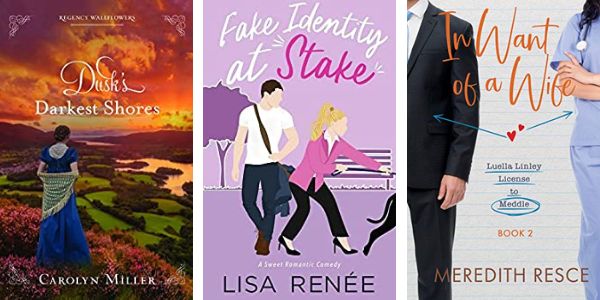
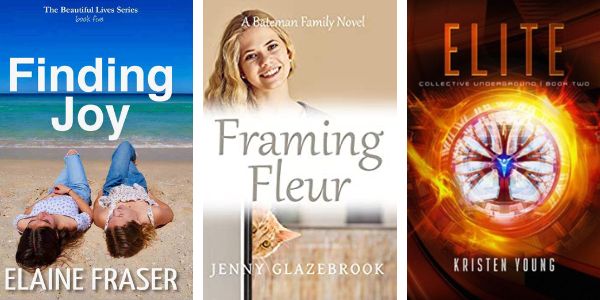
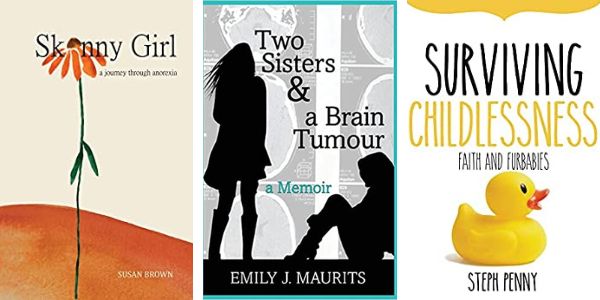
I am delighted to announce the finalists in the 2022 CALEB Awards from Omega Writers: Christian Authors Lifting Each other’s Books.

Published Adult Fiction

The winner will receive a $300 cash prize and trophy.
  • Dusk's Darkest Shores by Carolyn Miller
  • Fake Identity at Stake by Lisa Renee
  • In Want of a Wife by Meredith Resce

Published Young Adult Fiction

The winner will receive a $300 cash prize and trophy.
  • Finding Joy by Elaine Fraser
  • Framing Fleur by Jenny Glazebrook
  • Elite by Kristen Young

Published Nonfiction

The winner will receive a $300 cash prize and trophy.
  • Skinny Girl by Susan Brown
  • Two Sisters and Brain Tumor by Emily Maurits
  • Surviving Childlessness by Steph Penny

Unpublished Adult Fiction

The winner will receive editing services from Iola Goulton at Christian Editing Services to the value of $400.
  • Dienece Darling
  • Samantha Oritz
  • Suzie Pybus

Unpublished Nonfiction

The winner will receive a Manuscript Review and Feedback from Nicole Partridge to the value of $400.
  • Susan Barnes
  • Craig Chapman
  • Barbara McKay
  • Stephanie Walters
Judging for the Unpublished categories is anonymous, so we can't tell you the titles.

Congratulations to all our finalists!

It's great to see a combination of familiar and new names on the lists. The winners will be announced on the evening of Saturday 8 October as part of the Omega Writers Conference. Click here to find out more. The conference is not being streamed online, but we will try to livestream the awards ceremony (technology permitting!). If you haven't yet booked to attend the Omega Writers Conference, then I have good news: the committee have extended the earlybird rate. Sign up by 18 July to save $50. Omega members can save even more - you can find the discount code in the members area of the website.  

Thursday, 16 June 2022

The Value of Unpublished Words


  • A traditionally published book = Value
  • A quality self-published book = Value
  • A homemade photocopied booklet = ?

I’ve been thinking a lot lately about the value we place on various types of writing. As writers, we want to find an audience for our work. In my role as an editor, however, I’ve often had to tell authors that their manuscript needs more work if they want it to be published. Sometimes a LOT of work. Many take feedback on board and polish up their drafts, but I know there are others who’ve felt discouraged and maybe even doubted whether they’re meant to be writers. This is never my intention, as I always try to be encouraging, but I have no control over how people will respond to my comments.

I think one of the problems is that we tend to equate value with publication, but they’re really two separate things. If we want to be traditionally published or produce a quality self-published book, there might be certain things we need to do (e.g., adhere to spelling and grammar conventions, use creative writing techniques, have the work thoroughly edited, ensure that the cover and overall book design are pleasing). However, our work can still be of value even if none of those things happen. Here are some examples.

[Note - This blog was initially published in 2022, but some new material has been added in 2025]


Journaling

You might record your thoughts in a journal on a regular basis or for special occasions (e.g., during a trip). Or you may keep a diary on a particular theme (e.g., a gratitude journal or a prayer journal). You might later use some of this information as the basis for a book. However, even if you don’t do anything specific with it, the practice itself is still valuable. It helps you to recall events such as answered prayers. It hones your powers of observation and reflection. Even the process of writing can be beneficial in helping you to work through issues, including mental health concerns. Click here for some more information on the benefits of journaling for mental health. Whether anyone else ever reads what you’ve written, journaling is valuable.

Blogging

Blogging is similar to journalling, in some ways, only you're making it available on the internet. Technically, that means it's published in cyberspace so people can access it, but I've included it here because blogs in themselves can be undervalued compared to books.

Of course there are different reasons for blogging. Some use it mainly to express their thoughts and opinions, some use it in a professional way to provide people with information or to direct potential customers to their business, and others use it to help or bless others. While some blogs do generate income, that's not always the case. I know many Christians who use their blogs for ministry purposes. In some cases, those authors have also written books, but that's not always the case. I can think of a number of people I know personally who have written hundreds of devotional blogs that have ministered to countless people over the years. We can never underestimate that type of ministry. 


Letters

Back in the Dark Ages when I was at school, I had a lot of overseas pen pals. I also collected stamps, so I loved opening the letter box and finding letters from India, Sweden, Germany, England, Austria and more. With the advent of email, text messaging and social media, we've largely lost the art of letter writing. Even sending Christmas cards is becoming less common. After all, if you've been in touch with someone on Facebook all year, what's the point of sending them a card and Christmas letter? 


While the speed and ease of modern communication certainly has its advantages, there's still something special about receiving an actual letter from someone. They're ideal for those who aren't on social media, such as older folk in aged care homes who might not have a mobile phone or computer. They're more permanent than emails. You can keep them and read them over and over. 

Remember that most of the New Testament, including Luke and Acts, are letters to various individuals or churches. We're still reading them 2000 years later.

Postage can be an issue. I'm old enough to remember when you could post a letter within Australia for 7c and overseas for less than $1.00. Now it's $1.70 for a small local letter and more than $4.00 for small overseas letters. Phew! I guess I won't be sending out 100 Christmas cards anymore (though Christmas rates are cheaper). However, think about who might be blessed by receiving an actual letter and who might like a longer email occasionally. Or depending on distance, you can hand-deliver a letter or card. You can't underestimate the power of an encouraging word. Your words are of value.


Gifts for Family and Friends

I've edited a number of memoirs over the years, and many of those people have since had their books published, either traditionally or indie-published. Some of those books have wider appeal than just family and friends because the authors are sharing lessons they've learned along the way that could help others. However, you don't necessarily have to think that broadly. Maybe you have some stories, poetry or devotions you'd like to share with family and friends. Or perhaps you want to compile a family history that would mainly be of interest to your immediate family. There's nothing wrong with doing things simply rather than going the whole hog with publishing.

I remember one lady from church who invited my husband and me over to her house for morning tea. She told us a bit about her background and then proudly showed us several volumes of family history that she'd put together. She'd typed all of them up in Word, inserted relevant documents and photos, then had them photocopied and spiral bound at Office Works. Could she have done more with them? Maybe, but she was putting them together for her family and the spiral-bound copies were fine for that purpose.

You might have some stories, poems, devotions, reflections or other material you'd like to share with others. It could be your family, a particular group of friends, or just one person. You don't have to wait until some magical day in the future when it's published. You can bless people now.


Zines

A zine is a small homemade booklet that is usually photocopied and distributed free of charge. There’s no ‘right’ way to make a zine. Some zines are produced using computer software, but they can also be handwritten, cut and pasted from other material or a combination of both. Some zines are like newsletters (e.g., they might advertise what’s happening in the local community), while others contain poetry, art, comics, short stories, true stories, opinions, reviews, calls to action, how-to information. There’s really no limit.

 My local book shop (Jeremy’s Book Exchange) has just started a zine library and I felt inspired to have a go at making a little mini zine for fun. Click here to see Austin Kleon’s two-minute video on how to make a little zine from a single sheet of paper.

I used some blackout poetry for this zine, which involves finding some text from newspapers, books or magazines, choosing some words that would make a new poem and then blacking out the rest. Here’s a photo of the finished product.

You can put anything in a zine. You could use it to try out some ideas, to bless other people, to get across some information. Whether it’s just for you, for the members of your family, or for a wider audience, it’s of value.


Writing Prompts and Exercises

We’ve all probably come across blogs, books or classes that have included writing prompts or exercises. But is there any point to these if we’re just writing bits and pieces that aren’t for publication? Absolutely! They help us to hone our craft and get the creative juices going. The process of creating in itself can be good for us. I’ve sometimes written a funny piece just for fun and it’s really lifted my spirits. I’ve also ended up with some publications from snippets that started out as writing exercises, though that shouldn’t be the main aim. Art for art’s sake is still of value.


Intrinsic Value

I’ve only just scratched the surface here and could have easily written longer blogs on each of those topics, but hopefully that’s whetted your appetite for more. Don’t equate your worth or the value of your writing with society’s idea of what’s valid. You are made in the image of God and are of unimaginable value to him. He has also imbued you with interests, desires and gifts to help you and others. Whether published or not, your work has immense value.


Have you got some other examples of unpublished work that’s helped you? I’d love to hear your stories.


Author Bio


Nola Lorraine has a passion for faith and social justice issues, and loves weaving words that inspire others with courage and hope. Her books include the inspirational historical novel Scattered, the Christian devotional book Comfort Zone, and the Christian charity anthology Glimpses of Light which she co-edited with Jeanette O’Hagan. She has more than 150 short publications, including fiction, poetry, devotions, true stories, magazine articles and academic papers. She loves sharing the words and stories God impresses on her heart, and prays that He will use them to bless others. She would love to connect with you through her website: www.nolalorraine.com.au


Picture Sources

Featured photo by hobin on Pixabay.

Journal writing photo by kaboompics on Pixabay.


Zine photo by author.

Author photo by Wayne Logan at Encouraging Photos.

Monday, 13 June 2022

Reliably Write

The first weekend in June heralded WordFest Toowoomba 2022. Hosted at “The Lighthouse”, a fabulous initiative by local Toowoomba “Child Writes” creative, Emma McTaggart, a wintery blast met exhibitors and attendees alike, sending hands diving for pockets of thick jackets and scarves winding tight about necks. All over, it was a modest but enthusiastic gathering.


The second year of the event offered an array of workshops catering to writers and readers across a range of genres. Other familiar faces were also in attendance (Nola Passmore and Jessica Kate). I was thrilled to be on the “Knowing your YA audience” panel with author Verity Croker and chair, Ben Tupas.

This cosy conversation explored (amongst other things) our written works, creative processes, and the topic of the moment: how to know and connect with a young adult audience in a way that is relevant and authentic. (Since, as Ben kindly highlighted, we were not exactly “young adults” anymore. 🤔🤨)

At the close of the session attendees were invited to ask questions. This led to a discussion about narration viewpoints and character/reader perceptions in the context of young, perhaps naïve, protagonists. In essence, an “unreliable narrator”.

“An unreliable narrator is a storyteller whose perspective isn’t totally reliable if we want to get the full picture or the whole truth.” ~ Kaelyn Barron

The unreliable narrator is an interesting concept and a well-used literary device. My personal leaning is that no viewpoint is ever truly reliable, and I too have made use of this technique in my stories to create tension between reader insights and the protagonist’s view of their life, values, goals and the realities they are yet to perceive, whilst challenging the reader’s own.

“Fiction that makes us question our own perceptions can be powerful. An unreliable narrator can create a lot of grey areas and blur the lines of reality, allowing us to come to our own conclusions.” ~ reedsyblog

Interestingly, this concept of “unreliable narration” lingered in my mind into the week—and not in the context of writing.

As Christians, we readily reference scripture and songs that remind us of who we are in Christ. But is it just me, or are there times when you also find yourself engaging the world in a way that conflicts with the new identity that has been placed upon us as redeemed children of Almighty God?

The longer I reflected on this, the more I was reminded of the importance of realigning our “self-narration” with our identity in Christ. For as anyone who has been a believer for more than five seconds knows, some days this is not at all how reality plays out. Just like our written characters, we can narrate our world with horrible unreliability.

In the face of rejection, we don’t always feel or act “beloved”. In the face of massive mess ups, we don’t necessarily feel “chosen”, “forgiven” or “the righteousness of Christ”. In the face of brutal failure, we may seem the opposite of “an overcomer”. When we’re hit with a gut-punch betrayal or loss, we don’t necessarily feel “unforsaken”. And yet all these things, and so much more, are still true when we place our hope in Christ and step into relationship with Him.


Because of Jesus’ life, sacrifice and resurrection, our identity in Him has already been validated. Yet so often we can wrestle with speaking, acting, and even thinking, in accordance with who HE says we are. The importance of spending time in the Word and prayer and building relationships with others who will encourage us in these truths becomes vital in this context. For as we grow in who we’re truly called to be and our self-perceptions become more aligned with our identity in Christ, this will allow us to “narrate” our identity in our world with increasing reliability.


Queensland author Adele Jones writes young adult fringe and near-science fiction exploring the underbelly of bioethics and confronting teen issues that include disability, self-worth, loss, domestic conflict, and more. She also writes historical fiction, poetry, inspirational non-fiction and short fictional works, with themes of social justice, humanity, faith, natural beauty and meaning in life’s journey. Adele’s first YA novel Integrate (book one of the Blaine Colton Trilogy) was awarded the 2013 CALEB Prize for unpublished manuscript. As a speaker she seeks to present a practical and encouraging message by drawing on themes from her writing. For more visit www.adelejonesauthor.com or contact@adelejonesauthor.com