Monday, 5 July 2021

We Are Family


The proverb "It takes a village to raise a child" is attributed as a life motto from various African sources. This motto is reflected in similar motifs that I have discovered in my opportunities to study Anthropology within ethnic groups that would be recognized in the classical sense as hunter-gatherers or tribal societies.  The “it takes a village...” maxim effectively means that an entire community of people is necessary to interact with children for those children to experience and grow in a safe and healthy environment. It is poignant to note that it also takes the collective energy and focus of many people behind us to help craft a well-designed, pleasing, well-published, packaged, marketed and impactful story in book or often in other forms. Perhaps we could utilize some creative license and mix our metaphors a bit by illuminating what I am saying here simply by noting: “It takes a village to write a book”. But before we get too far in this story-writing-production-village-focus, we should start with a basic beginning. We need a writing family.  Our creativity is best expressed, and best crafted when it is moulded together with the (often loving) support of others. Or to put it another way: good story tellers need a good team. This is where we can learn from those hunter-gatherer societies. They tell stories that help raise generations of children into adulthood very well.

Shane Brigg in PNG with a few friends

Hunter-Gatherers' story telling is conducted as a social contract in a mutual context, with friends and family. God has made us to be highly social beings. We like to be with other people, especially with those we know well; and we like to do what our friends do. In our ‘moderno-metroistic’ culture we long for this, we claim to be connected (at least technologically) but are living lives that are seemingly more and more isolated and where we long for closer authentic relationships. We may even be jealous of the seemingly simplistic play-oriented connected reality we might see in documentaries about hunter-gatherers who experience very social lives. Anthropologists have marveled at the enormous skill and intelligence shown by tribal societies in their hunting and gathering. The tools of hunting must be crafted to perfection; and skill in using those tools effectively must be developed through years of play with them and the accompanying stories. Hunters must also learn the habits of hundreds of different species of mammals and birds that they hunt, which the children do in part through games of imitating the animals around them, and by storytelling. They learn to identify each animal by its sounds and tracks as well as by its sight, and by telling their stories. Everything is noticed, considered, and discussed.  Likewise, the gathering of vegetable foodstuffs requires great knowledge and skill. These abilities include physical skills, honed by years of practice, as well as the capacity to remember, use, add to, and modify an enormous store of culturally shared verbal knowledge, all passed on via storytelling. The point I am making is this: Most work in the tribal villages (where we get the adage above) is done cooperatively, and even that which is done individually is done in social settings, with others around. In all this, stories are told that raise the children, empower adults, and shape their society.


As a school Chaplain of many years, I am absolutely honoured to be afforded the recognition and responsibility of being a champion for our village and an encourager of families and the broader school “Family”.  I like to think of this family as a space where everyone can gain hope through a sense of belonging, discovering purpose and even finding meaning as we journey together. In a way I am recognized as one of our school community’s chief story tellers. Like a tribal elder, I am called upon to tell a positive narrative. Not just moralistic, but one that is hope-filled, equipping and somehow wise.  I intrinsically, and humbly see my role as helping to craft the story of all the individuals, families, groups and aspects of our school life, but I hold this in awe and respect as I recognize that it is not just me who is the story maker. It takes many people to help create the narrative that builds for positive futures.


Helping people reframe their stories is positive team business. Across cultures and time, stories have proved their worth not just as works of art or entertaining, but as agents of personal transformation. The vocations of many great novelists, scriptwriters, songwriters, story tellers are developed on this premise (conscious or not). Stories can motivate us to re-evaluate the world and our place in it. New research is lending texture and credence to what generations of storytellers have known in their souls – that books, poems, movies, and real-life stories can affect the way we think and even, by extension, the way we live and move and act. As Stanley Kunitz put it: “I have walked through many lives, some of them my own, and I am not who I was.”  Our Parents’ get togethers are an important part of what I do as a Chappy in our school ‘village’. Each Monday morning, we gather at our Primary School CafĂ© for chats. This is a great way to help share the load, inspire, organically equip each other, and simply support one another on the parenting journey. In this we share each other’s stories and burdens and help redesign the story of people grappling with all sorts of challenges. Stories alter our thinking and, in turn, the way we engage with the world. Stories that we share can help each other. Stories that are created together have the potential to change the world.


The stories that move us shape our thought processes in much the same way that our own lived experience does. When we read a well written story about a character facing a heart-wrenching situation, it’s natural for our own hearts to pound. We argue with stories, internally or out loud. We talk back. We praise. We denounce. Every story is the beginning of a conversation, with ourselves as well as with others. In the context of our school Chaplaincy, we see this played out very powerfully in mentoring. A student being offered mentoring means that they are part of our “mentoring “family”” and this means that there are trusted adults who will be accessible for support and encouragement for students. Mentoring highlights the huge value that sharing stories plays. At a recent mentoring session one of our students communicated in front of his peers and visiting teachers that the vitality of mentoring and the sharing of his life story for him was like having a second family that was in his view more functional and nurturing than his own. It showed to him that someone cared because they listened to his story. He said that it was also helping him have a sense of belonging and had given him skills for life!


Our International Families gatherings at our school are get togethers of people from many different backgrounds sharing flavours, favours, and fabulous insights from their cultures with snacks, games, stories and more. Research shows that bringing migrant children and their families together for culturally appropriate, fun, and safe activities can significantly improve a child’s mental health and wellbeing, as well as help them to navigate school with more confidence. Groups like these also help to enhance parenting skills and develop the social networks of families who share similar life experiences. This has become such a valued time of “family” for many. It is also a good time to reflect on how people are going at looking after themselves and others in the different areas in their lives that require care (physical, emotional, spiritual, intellectual, social, relational and safety & security). It also empowers networks around people that helps to meet those needs.


Perhaps what I have been promoting here is best expressed in a very personal example.

In the writing of what seems to be my magnum opus (mainly because it seems it is taking a lifetime to frame and complete) I have engaged several of the sensibilities mentioned above.

Of eminence is an episode that brought a chapter of my story to completion, and fulfillment in how I had hoped for some time how it might bless others. I had sat writing a particular piece for some time. Writing it. Reading it. Reflecting on it. Re writing it. It was a deep expression of how my main character was coming to terms with her father’s sickness and their strained relationship. I had come to realise that her story was a way of me telling my story. But it never was fully crafted until the week I re wrote it, edited it, formatted it and gave it to my father as a gift. It was never really finished until all that was completed, but especially not done until I sat with my Dad and read the chapter to him. It was the story (like my main character) of how I was wrestling with my own Dad’s sickness, mortality, and frailty and how I loved him in the midst of all the relational challenges that had been raised between us as I grew up and now as an adult reconciling that I loved my Dad, and I knew he loved me. But I needed to get this message to him. The story did this job. As we sat crying and hugging together with my wife and my Mum and of course my Dad. I had said what I needed to say. The story helped me do that. But it also helped my Dad say what he had wanted to say for a long, long time.


Maybe this chapter will get published formally one day. But for me the journey to craft this bit of a bigger story has already made the impact I had hoped for. My life had been raised by loving parents in challenging circumstances. That is true and was an important part of my telling through my fictional characters. Our family -or little village- had successfully helped to raise this child. But the child in some ways could not be the man he is today without the telling of this story, and this meant a listening audience of critics who just happened to be the most important people in my life, who helped not just make the story, but helped bring it direction, clarity, meaning and encouragement to write more.


I guess if I am going to write more, I need to develop the team around me further. Maybe that team starts like the example above (loving family who listen, journey together, encourage, positively critique, nurture, empower and support). Of course, that team needs to be developed beyond friends and family with specialists (editors, publicists, etc) and supporters, but that is a story for another time.


Thursday, 1 July 2021

Title: CWD Member Interview – Marion Kilchester talks to Jo Wanmer


Today’s interview is with Marion Kilchester as she chatted to Jo Wanmer.

 Tells us three things about who you are and where you come from.

Firstly I’m a mum and a grandma. I live at Elimbah in Queensland. I was a music teacher for fifty-six years and an examiner in later years. Though retired, I am still teaching four students. I now live in a snall Grannie cottage on my son’s property with my little dog, Hope.

Tell us about your writing (or editing/illustrating etc).  What do you write and why?

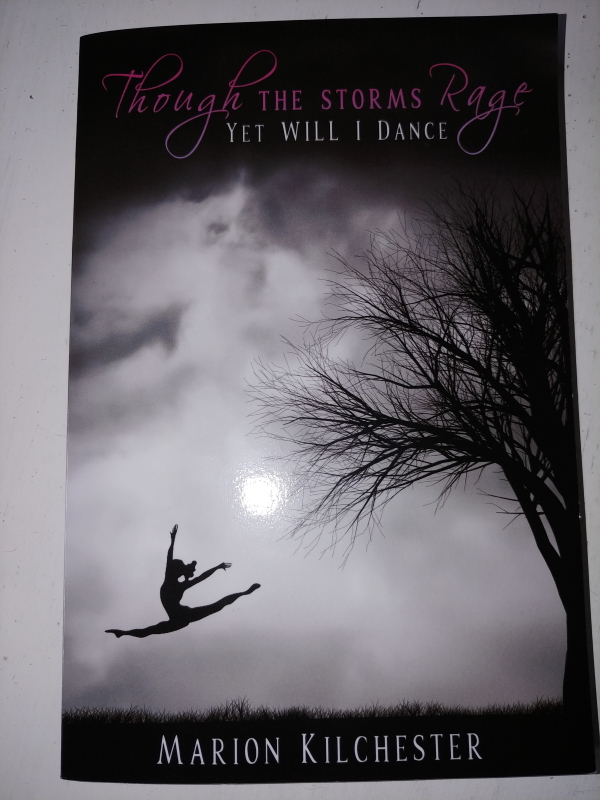
My first book, Though the Storms Rage, is the personal story of my faith as I danced through life’s storms. When God spoke to me the words, ‘Dancing in the Rain’, I knew He was asking me to write a book, though I shelved it for a year. Then a pastor at my church asked me if ‘Dancing in the Rain’ meant anything to me. I knew then I had to write and began writing that night. Although I’d filled countless journals and written a few short stories, writing a book was a huge learning curve.

I am also a composer of music and 2014 I published a collection of twelve pieces, five arrangements and seven originals which are listed with the guild of music, examination syllabus for piano. At the same time, I released a CD, Reflectons, of myself performing these works.

 Who has read your work? Who would you like to read it?

My target audience for my writing is anyone who has gone through tough times. My book was launched on 12th June. It has already been read by women and men of varying ages and beliefs. It has been well received with many sharing the story. One woman is now reading it to her mother who is in a nursing home. I’m excited that God has moved the book into the homes of many who don’t have a Christian faith.

 Tell us something about your process. What challenges do you face? What helps you the most?

I hand write my story because my thoughts flow more easily when I have pen and paper. Mostly I write at my dining room table which has a great view our to my garden.  Later I transfer it onto my laptop.

My biggest challenge is technology. Computers aren’t my favourite things! My oldest son, Tim, designed the cover for me and a friend Rick has helped me out with most of my technological difficulties. I’m still learning to dance in this area!

If you were to give a shout-out to a CWD author, writer, editor or illustrator – who would they be?

Jo Wanmer, who mentored me from the beginning and encouraged me through to the end.

 Nola Passmore (aka Nola Larraine), who edited my book, taught me many things in the process. Click link to read about her editing skills and see Nola's recent release, 'Scattered.' https://www.nolalorraine.com.au/

What are your writing goals for 2021? How will you achieve them?

I’m currently working on a second book about two strong women in my family’s ancestry. Both succeeded against huge odds. Ludmila, my mother-in-law, was born in The Ukraine during the rule of Stalin. She and her family endured eviction, starvation, forced communal living and countless atrocities. She was captured by the Germans and taken by train to a forced labour camp. After the war she, along with hundreds of others, was transported by ship to Australia where she spent five years in a migrant camp at Bonegilla, Victoria. Hardships don’t end here however. She endures flood, loss of a child and other obstacles. But despite all, she learns a new language and succeeds in her life in Australia with her husband and children.

How does your faith impact and shape your writing?

Hugely. My first book is about faith in difficult circumstances. Being able to dance through the storms of my life was and is made possible through my relationship with my God. Both of the women in my next book also had a faith in their God, which enabled them to survive and thrive.

In the process of writing my first book, there were stories I’d decided not to include. However, God impressed upon me that I needed to tell these stories as well. When I questioned God, ‘Really! I haven’t even told my children.’ I felt God instructed me to tell my children and then include those stories. These episodes added depth to my book and I’m sure God will use them to help others.


Marion and Jo have been friends and writing encouragers for ten years. Most of that time they worshipped together at  a church simply know as The Barn. 
Marion is a great gardener and until recently maintained a very large garden that she developed as a 'Garden of Hope,' which was open to the public. 
As well as being a teacher of music, she is a gifted pianist though rarely shares her talent with others.
Marion and Jo both live on the northern outskirts of Brisbane. They love to get together to share their common love of God, their adventures around writing, and stories of grandchildren. Marion can be contacted via mkilchester@gmail.com. 
Jo can be easily contacted via facebook.


Monday, 28 June 2021

Omega Writers | Announcing the 2021 CALEB Finalists


The books have been read, the scoresheets completed, the scores added ...

I am delighted to announce the finalists in the 2021 CALEB Awards from Omega Writers: Christian Authors Lifting Each other's Books.

I'd also like to add a big thank you to our sponsors for supporting Omega Writers, the CALEB Award, and Christian writers across Australia and New Zealand:

Children's Picture Books

Sponsor: Christina Booth

The winners (author and illustrator) will each receive a one-hour manuscript or illustration assessment via Zoom. If the winner is both writer and illustrator, they can choose between the above or two manuscript assessments, one month apart.

The finalists are:

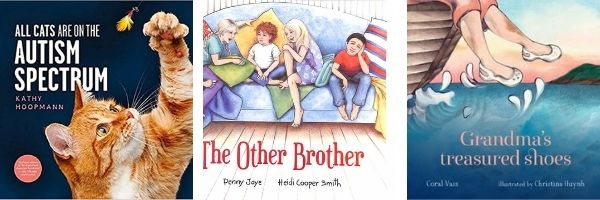
All Cats are on the Autism Spectrum Written and Illustrated by Kathy Hoopman

The Other Brother Written by Penny Jaye and Illustrated by Heidi Cooper Smith

Grandma's Treasured Shoes Written by Coral Vass and Illustrated by Christina Huynh

Children's Fiction (Early Reader and Middle Grade)

Sponsor: Marianne Musgrove

The winner will receive a manuscript assessment of the first 10,000 words (plus three-page synopsis), plus a one-hour Zoom chat.

The finalists are:

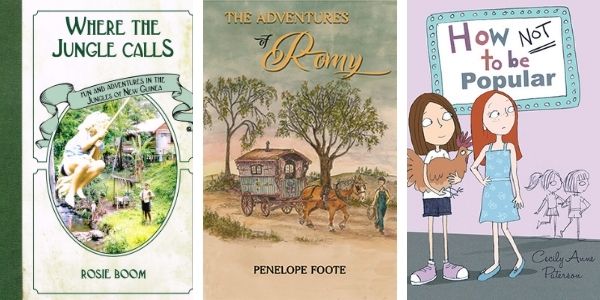
Where the Jungle Calls by Rosie Boom

The Adventures of Romy by Penelope Foote

How Not to be Popular by Cecily Paterson

Young Adult Fiction

Sponsor: Nola Passmore at the Write Flourish

The winner will receive their choice of editing services to the value of $400.

The finalists are:

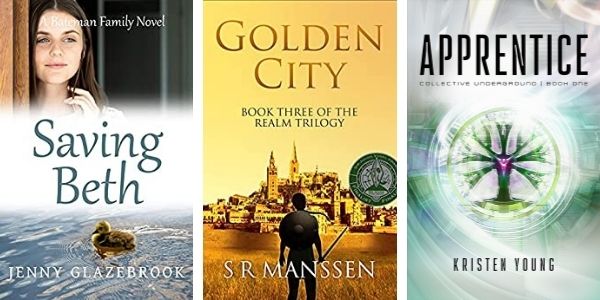
Saving Beth by Jenny Glazebrook

Golden City (Realm Trilogy #3) by Sharon Manssen

Apprentice by Kristen Young

Adult Fiction

Sponsor: Iola Goulton of Christian Editing Services

The winner will receive their choice of editing services to the value of $400.

The finalists are:

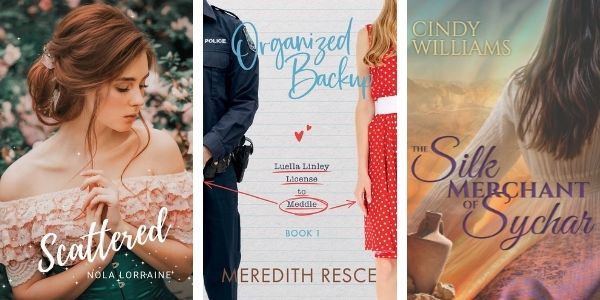
Scattered by Nola Lorraine

Organized Backup by Meredith Resce

The Silk Merchant of Sychar by Cindy Williams

Adult Biography or Memoir

Sponsor: Lisa Renee at The Collaborative Press

The winner will receive a full wraparound cover for paperback and ebook, valued at $400.

The finalists are:

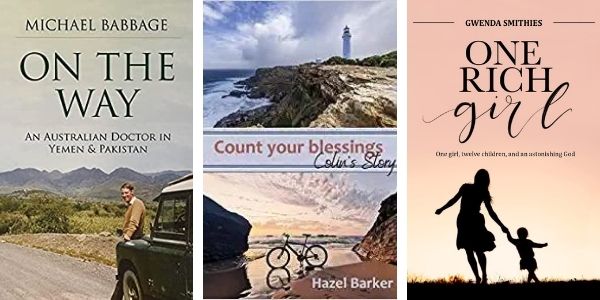
On the Way: An Australian Doctor in Yemen and Pakistan by Michael Babbage

Count Your Blessings: Colin's Story by Colin & Hazel Barker

One Rich Girl by Gwenda Smithies

Adult Nonfiction

Sponsor: Sheree Chambers & Emma Biddle at Impressum

The winner will receive their choice of website updates, a six-week social media calendar, or a cover for their next book to the value of $400.

The finalists are:

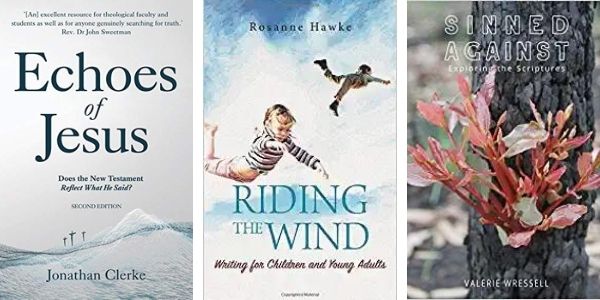
Echoes of Jesus: Does the New Testament Reflect What He Said? by Jonathan Clerke

Riding the Wind: Writing for Children and Young Adults by Rosanne Hawke

Sinned Against: Exploring the Scriptures by Valerie Wressell

Congratulations to all our finalists!

The books will now be sent to our final-round judges, and the winners announced at the Omega Writers Retreat on 9 October 2021.

Omega Writers Retreat

The 2021 Omega Writers Retreat will be held at Peppers Kingscliff, New South Wales, from 8 to 10 October 2021.  
Details and booking information for the retreat will open soon.

Encouragement Awards

The CALEB Awards are about lifting and promoting the best of Australian and New Zealand Christian writing. But there is more to writing than getting published, so we'd also like to encourage our fellow writers. 

    Sponsors:

    • Tamika Spaulding at His Herd (two stationery prize packs valued at $50 each)
    • A New Page (stationery and trinkets to the value of $100)
    • Devonport Bookshop (six Reading Friends soft animal bookmarks valued at $10 each)

    If you're a current paid member of Omega Writers, we would like to invite you to nominate a fellow Christian writer for an Encouragement Award. This could be:

    • A writer who has gone out of their way to support other writers (this will be a NEW CALEB award launched at this year's Retreat)
    • A writer who you believe needs encouragement.

    We have three simple guidelines for the writers you nominate for either type of award:

    1. Nominees must be Christian writers currently living in Australia, New Zealand, or the South Pacific.
    2. Nominees can be published or unpublished writers in any genre.
    3. Nominees do not have to be members of Omega Writers.

    Please email caleb @ omegawriters.org and tell us:

      • The type of Encouragement Award you would like to nominate a writer for
      • Your name and email address
      • Up to 200 words explaining why you believe this writer should receive this prize.
      • The name and email/website address of the author you'd like to nominate (so we can contact them if they win)

    Who do you know who has encouraged you, or who you'd like to encourage? Let us know!

    Thursday, 24 June 2021

    CWD Highlights - April to June 2021


    Christian Writers Downunder is a diverse group of writers, editors, bloggers, illustrators. As a group we support each other through our Facebook page and blog.


    Today's blog will highlight some of the achievements of our members from April to June 2021


    New Releases 


    Rebekah Rodda

    Rebekah had a devotional published in the book ‘Pandemic Devotionals: How the World Overcame Fear by Faith” edited by Alisa Hope Wagner and Holly Smith released on the 27th April 2021.


    This is an anthology of how people found strength through their faith in God despite the pandemic. Available here


    Meredith Resce


    Meredith has released Book in the Luella Linley – License to Meddle series - All Arranged.


    After being jilted, Luella Linley’s 35-year-old son, Pete, is alone and broken-hearted. But he’s not likely to respond to Luella’s usual matchmaking method that was so successful with his sisters. This calls for something special – like in her Regency novels. A parent-arranged marriage where there is no risk of rejection. What could be easier than to place an ad?

    Carrie Davis is dedicated to her career. She had not considered that she might even like a relationship, but now thoughts of loneliness are stalking her. Carrie’s sister, Ellen, knows and when she sees an odd advert in the classified ads, she begins to wonder if this is a prank or an opportunity sent from heaven. “Wanted. For a social experiment. A family arranged marriage.”

    “If you love marriage of convenience tropes, you’ll love this modern-day twist. Realistic characters, laugh-out-loud moments, and a deep emotional journey making “All Arranged” a satisfying read. A stellar novel from Meredith Resce and the perfect ending to the series.”

    Lisa Renee - Author of the ‘Single Again’ series

    Available as both paperback and eBook on all platforms here.


    Elizabeth Klein


    Elizbeth's short story, Zac’s Terrible Idea, was published in Short Tales 7 on 11th May, 2021 by Storm Cloud Publishing. 


    And her Self-published ebook: Mists in Time was released on 14th June, 2021 on KDP. 


    A car crash on the lonely English moor. But that's not Fran Gilbert's only problem. One of the caretakers at the Perilous Lands, the creepy estate where she's recovering, is a serial killer who preys on anyone that wanders through the mist. Will she be his next victim? And how will she return to her own time of 2021?


    Mists in Time is available here.  

    Reading Stones 


    At Reading Stones, we have again been busy this year. Our first book, Fireside Stories, was released for Helen’s father’s 90th birthday in February.


    This quarter got off to a flying start with the release of Arnah Leigh’s children’s book, My Family, on April 5th. ‘Explore the many different kinds of families in this book by Arnah Leigh. Beautifully illustrated, this book demonstrates that, while the make-up of our families might be different, we all have one thing in common - Love.’ She is currently our top-selling author.


    We published three more books by Olwyn Harris, the Guthrie’s Lot Series. It is another three-part series. Book One, A Spacious Place was released on April 8th. ‘In this first instalment of the Guthrie's Lot series, set in the late 1800s, we meet Irvin Guthrie, a practical, no-nonsense man with a sick wife and a small child to care for. When his wife's doctor suggests they move to a warmer climate, he spends everything he has on a property that ends up not being what he expected.’ Book Two, A Level Path, is to be released on July 8th with Book Three, The Crying Tree, to be released on September 7th. We look forward to publishing another six-part series of hers in 2022.

    Helen also managed to complete her first novel. After five devotional books and one poetry book, this was a real change for her. Christmas Journeys was released on June 16th. It is a complete trilogy in the one book. ‘A successful devotional writer, Helen Brown's debut novel takes her characters on a journey through time - to the past, and the future. This book gives us three stories in one. Mary, an 86-year-old has become stuck in her ways. A journey to the past gives her a new perspective on life and faith. Her granddaughter suffers a tragedy and then embarks on a journey of her own which gives her a new hope, and mission for the future of both her family and her country.’

    Wendy Wood & Helen Brown

    Marion Kilchester


    Marion's book - Book: Though the Storms Rage yet Will I Dance - was released in print on 21 May 2021 (first published 11 Nov 2020), Date of Publication: 11-11-20 (first published) by Dusruptive Publishing


    With no memories of her mother and brought up by an abusive stepmother, her life journey took her through many storms. These storms included the death of her daughter, rejection, false accusation, attempted suicide, the death of her husband and learning to dance solo again. Though the Storms Rage is about dancing through those storms of life. This book is a gentle guided tour through her life. The stories are humble; the reactions real and honest. Storms batter and often bruise her, but she hangs on and we find her feet dancing again. This is real life.


    Available here


    Bio: Marion Kilchester, now in her seventies, a mum and grandma, has been a school teacher, piano teacher, music examiner, composer and counsellor.

    Jeanette O'Hagan 

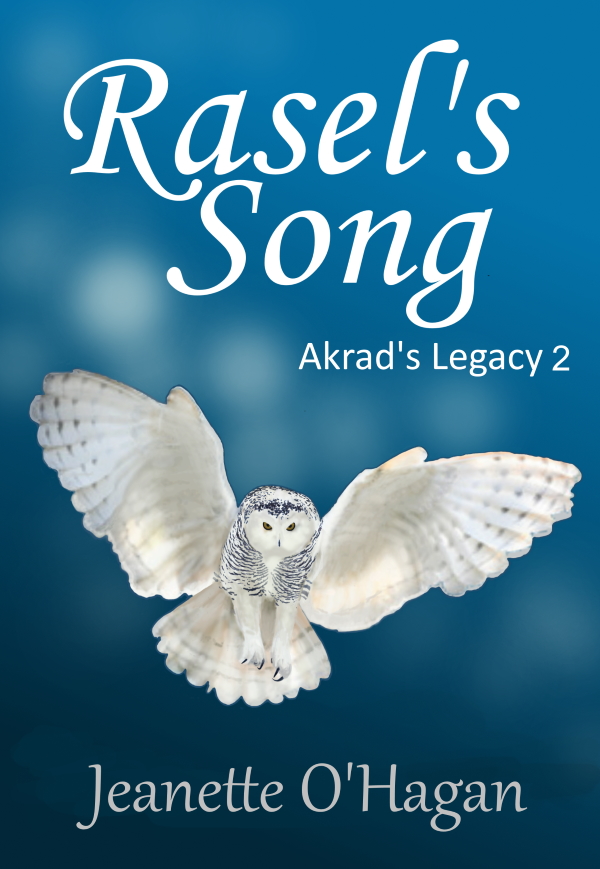
    Jeanette has released the second book in her Akrad's Legacy series - Rasel's Song on 26 April 


    The discovery of would-be assassins dead in their prison cells puts Prince Mannok and his friends in increasing danger and threatens the stability of the realm. The arrival Rasel, a mysterious stranger with hidden abilities, causes further turmoil. Will Rasel bring peace or conflict to Tamra? Will the elusive mastermind behind the assassination attempts be unmasked before someone else dies? Picking up from where Arkad's Children finishes, Rasel’s Song is the exciting second book in the kingdom fantasy, the Akrad’s Legacy series.

    Available here.  

    And until the end of the month - the first book in Jeanette two series - Akrad's Children & Heart of the Mountain are reduced to $1.30 for ebooks. Check out her other books here.


    Events

    Writing Competition

    Get those entries in - the Omega Writers Book Fair (Brisbane)'s writing competition cut off is 1 July. For more information check out here.

    Book Fair


    Omega Writers Book Fair (Brisbane) will be held on Saturday, 31 July 2021 at Hills Church, Queens Road, Everton Hills. The Book Fair will have author stalls, workshops, book readings, and prizes. A great opportunity for Christian authors and readers in southeast Queensland to get together and celebrate books and writing.

    Anne Hamilton will be running a workshop of overcoming the deadly duo -  rejection. Sally Eberhardt, Jeanette O'Hagan and Lynne Stringer will be on a panel on Marketing and Promotion for Writers.

    Mark you diaries - 31 July 2021  For more information check out the website or the event page.

    Coming up


    Omega Writer Conference and CALEB Prize in October. For info check out here.


    Congratulations to all our members for your milestones and achievements

    Monday, 21 June 2021

    Is writing art? Or is it a skill? by Jo Wanmer


    In my last year I’ve taken time to be, to sit, to dream to read and yes, play on my phone. One of my apps is ‘Happy colour - Colour by number’. I enjoy watching the colour emerge under my fingers. It displays where the highlights are, how the shadows bring the painting to life. Some of these pictures are pretty ordinary and would never fall under the category of art, but others fascinate me.


    This week I did a painting, by Angelica Kauffman, called Four children with a Basket of Fruit. (Public domain) As I looked at the paint palette, I wondered about even starting. The colours were so dark. Even when I was nearly finished, there seemed very little light. But the end product amazed me. All that darkness focused my eyes on one girl, the same one that the other girls were looking at. She held the fruit, but it was incidental, made that way by the artists skilled use of colour.


    The other art I’ve been exploring is ‘acrylic pour’ art.

    The artist pours thin paint on a canvas and mixes or moves the colours by various random methods; for example blowing, tipping, spinning. The methods seem endless and the results can be astonishingly beautiful. But is this really art? We have many skilled artists in our midst whose minute attention to detail is incredible. Pour art can’t even be compared to ‘real’ paintings. But they have found a niche. (On the right is one of  myattempts. It is coaster size.)

    Maybe the key word is Skill.

    "What then is art? An art is an exceptional piece of expression. A story. A poem. A sculpture. A movie. Some of these may transcend to become works of art. But you need skill to get there."

    ( Abhideep. https://www.quora.com/Is-writing-a-skill-or-an-art)

    Skill moves art to a ‘work of art’. But skill without concept and talent is nothing.

    Some artists outline their picture before they begin. Others just pour paint but, as they narrate, it becomes clear they too have a result in mind. They both possess a deep understnding of colour.

    Some writers meticulously outline their stories. Others throw words on paper. Both methods are valid but what is common is the need for skill in the editing room. My best stories emerge under the time pressure of NaNoWriMo - writing 50,000 words in a month. It is just like pouring paint. Let the words flow and see what happens. I have two wonderful stories written this way. But they are a long way from works of art, a long way from appearing in a form the reader would enjoy, or even grasp the story I want to protray.

    Skill is needed to polish those manuscripts. Justin Fenech puts it this way.

    'Its is easy to write. But immpossibly hard to write damn well. Many people think they can write. But writing is perhaps more nuamced than any other art form available to man,"

    https://justinfenech.wordpress.com/2018/09/02/7-reasons-why-writing-is-art/

    Most artists instruct their students that mistakes don't matter. Thay can be repainted. I've watched pour-artists scrape large protions off the canvas onto the table because they know it can be better. Likewise we've all heard of whole scenes from a book falling to the editing room floor. Not because it wasn't good, but because it didn't serve the whole.

    As do artists, we writers have to ask ourselves the hard questions. Does this scene develop the story or the character? Is it really necessary or does it muddy the picture? Is there enough light and dark? Does the story ebb and flow? Are there spots that 'pop'?

    A writer I know laments the difficulty of seeing her work as a whole. She envies the artist who can stand back and view the whole canvas. As writers, we don't have the same luxury. Our editing is long, time consuming and demanding. Bata readers can be a great help. They can see the glaring mistakes. And then we go back to the editing room...again.

    And like any artist we have to work out when the task is done and the book is finished. Even after that there is line editing, word searches, cover preparation and more. These elements polish the final product as matting and framing display a work of art.

    So is writng an art or a skill? Let me quote from Quora again.

    "If its an art, well there is not much we can do about it. If its a skill however, it loses its romantic sheen. To master it then you have to spend long, at least appreciable amount of time with it." https://www.quora.com/Is-writing-a-skill-or-an-art

    Infortunately, I agree with him. What do you think?


    Jo Wanmer lives in Sunny Queensland with her Husband of fifty years and a toy poodle with attitude. Her first book, 'Though the Bud be Bruised', won the Caleb unpublished manuscript award and was published in 2012. Several other short stories and articles have also been published. At the moment her editing floor is littered with rejected bits and pieces. It is so messy it takes courage to even enter there! 

    Thursday, 17 June 2021

    Ducks, Duck Ponds, and Return on Investment

    By Mazzy Adams

    One of the delights spread abroad by the Lord in recent times has been the proliferation of church services now livestreamed, many of them made available for later viewing. It’s possible to binge watch church in your lounge room 24/7. I’ve been incredibly blessed while partaking of this abundant feast. 

    I wonder if the streamers realise how many people they’re blessing. Last Sunday, I shared communion with a worldwide fellowship of believers. As I broke my piece of communion ‘bread’ (a gluten free seeds and grains cracker), the Holy Spirit whispered, 

    “Cast your bread upon the waters and after many days it will return to you.” 

    I jotted the words down so I could consider them later. What did I think of? This:


    Image copyright Catie Jay Sercombe. Used by permission. 

    Our family’s favourite picnic spot when our children were young—the duck pond at Lake Annand Park, Toowoomba. It’s changed a bit since those days—the old bridge has been replaced, the lake and islands have been upgraded to incorporate flood mitigation aspects, and the playground is now a modernised safe environment for children. 

    But the ducks are still there, and children still cast pieces of bread upon the waters, and the ducks still come running to partake of those soggy morsels, and children still shriek with delight as they do.

    Last year, before our eldest son and his family cast their hopes (and themselves) abroad to live overseas in obedience to God’s leading, our whole clan gathered for a barbecue at the duck pond. As my beloved and I watched our grandchildren at play, (and feeding a new generation of ducks), we revelled in the blessed return on the efforts and energy we expended raising our children.

    In essence, The Preacher’s words recorded in Ecclesiastes 11:1 reflect the words I jotted down, though translations differ as this Biblehub search reveals. The myriad renderings include:

    CEV: Be generous, and someday you will be rewarded.

    AMP: Cast your bread on the surface of the waters, [be diligently active, make thoughtful decisions], for you will find it after many days.

    ISV: Spread your bread on the water—after a while you will find it.

    NIV: Ship your grain across the sea; after many days you may receive a return.

    NLT: Send your grain across the seas, and in time, profits will flow back to you.

    GNT: Invest your money in foreign trade, and one of these days you will make a profit.

    A little research into the cultural understanding of King Solomon’s day reveals three main ideas, interpretations, and principles drive these variations. Each holds wisdom and encouragement for believers and writers. They work together to remind us not to be discouraged or give up when we don’t see an immediate or obvious return for all our efforts. 

    1. Practice generosity.

    Giving generously of our time, energy, enthusiasm, directed endeavours, capital, wisdom, knowledge, and experience with due diligence and without expectation of return opens a channel of blessing that often surprises and delights us in due season.

    Back in December 2020, my sisters and I received a request from the church my family attended when I was a toddler. They were seeking photos for inclusion in a book and history display for their centenary celebrations in June 2021. While my eldest sister has excellent memories of people and places from that time, as the youngest sibling, I’m keeper of the extensive collection of photos and slides taken by my father who was a keen photographer. 

    Though it was a joy to honour our father through this legacy, and to honour the faithful ongoing ministry of that church, searching, scanning, mending and transforming relevant images into suitable quality for print, exchanging dozens of emails with my sister who lives in another state, and writing and collating information and memories took hundreds of hours. At the time, we had no idea which, if any, of the images would be used, nor whether either of us would be able to attend the celebrations.

    But God … God worked in marvellous ways.


    My sister and I and several other family members were able to attend whilst enjoying a lovely couple of days at the beach together. Several of the images and memories we provided were included in the book. ALL of the images, memories, and testimonies of God’s goodness we provided were utilised in the history display which remains open to the public for a month. 

    My sister met folk who, like me, had attended the Sunday School class she’d taught over half a century ago—once children perpetually captured in a photo she’d taken with a box brownie camera—now adults who love and serve the Lord with all their hearts. Seed she had cast upon the waters as a teenager had fed children hungry for the love of God and resulted in a bountiful harvest.

    For me, perhaps the defining moment attesting to this principle from Ecclesiastes 11:1 came when the lady who had first suggested they create a book said to me, ‘When your photos and stories started to roll in, the whole team got excited, believing we could do this.’ 

    Not only is there a blessing which returns to those who cast their bread, or seed, or efforts, or words upon the waters of God-given opportunity, there’s a flow-on of blessing to a potential ocean of others.     

    2. Consider diversifying your marketing efforts and options.

    Back in Solomon’s time, if farmers could not sell all their produce locally, they would send it overseas on consignment. The wisest would divide their grain (produce) between ships, sending it to many distant ports in the hope that some, if not all, would be purchased, providing a return. This focus explains why some translations use the words ‘ship’, ‘send’, ‘invest’, and ‘spread’.


    Words can travel across oceans. Borders might be closed to bodies, but not to words. 

    As much as we writers may baulk at the thought, this interpretation supports and confirms the wisdom of diversifying our marketing endeavours. It also encourages thoughtful planning, diligence, optimism, patience, and trust when waiting for sales and results.

    3. Take advantage of God-given opportunities and seasons.

    This interpretation derives from the agricultural practice of sowing seed during times of flood; the seed cast upon the water settles to the soil below. When the waters recede, it sprouts in the flood-enriched soil which has been replenished with nutrients. The idea is especially reflected in the words ‘cast’ and ‘spread’. 

    Coconut seeds cast upon the ocean can float a long way before they reach the shore and take root. Even seed dropped or dispersed by the wind during times of drought sprouts into life after flood waters pass over. 

    Hmm … a writer’s efforts are often spread thin when the idiom, “It never rains but it pours” reflects real life. I’m challenged by this thought even as I write it, given the number of times I’ve pressed pause on my writing/publishing activities till after the ‘flood’ subsides. Or been frustrated by a drought of inspiration and enthusiasm. What about you?

    There is another aspect to seed that sprouts after it’s been immersed in water; just as baptism symbolises death and resurrection, it is when we surrender all, cast our bread, our seed, our hopes, ourselves upon the waters of God’s grace and mercy, that his eternal promises and resurrection life return to us, and us to him. 

    And remember, the one who inspired The Preacher to pen Ecclesiastes 11:1 also inspired the Apostle Peter to write, “Cast all your cares upon Him for He cares for you” (1 Peter 5:7).

    How or where has God challenged you to cast your bread? Have you experienced an unexpected return on investment or activity that exemplifies the truths in Ecclesiastes 11:1? I’d love to hear about it. 


    Mazzy Adams is a published author of poetry, fiction, and creative non-fiction. She has a passion for words, pictures, and the positive potential in people. 

    Website: www.mazzyadams.com

    Email: maz@mazzyadams.com


    Monday, 14 June 2021

    Behind the Scenes: Count Your Blessings by Hazel Barker

    Today we go 'behind the scenes' as Jeanette (Jenny) O'Hagan interviews Hazel Barker.


    Jenny: Congratulations, Hazel, on the release last year of Count Your Blessings: Colin’s Story. This is now your fourth book published book, plus a number of short stories. Can you tell us what is this book about?

    Hazel: ‘Count Your Blessings. Colin’s Story’ is about a young Aussie battler who struggles to fulfill his dreams. His mother has mood swings, and his school mates bully him. The Depression Years cast a shadow on his future, and his studies are cut short, but his plucky spirit carries him through one crisis after another and the unexpected turns up.

     Jenny: It sounds like an inspiring tale. One of your books is called Chocolate Soldier. It’s an intriguing title. What does it mean and how does it relate to your book?

    Hazel: Clarence Dover, the protagonist of ‘Chocolate Soldier. The Story of a Conchie,’ was a conscientious objector who trained as an Ambulance worker at Manor Farm, which was only a stone’s throw from Bourneville Village and the Cadbury Chocolate Factory. The estate was owned by the Cadbury family who were anti-war and provided training for conscientious objectors. The men came to be known as Dame Cadbury’s chocolate soldiers.

    After training, Clarence was sent to London as an ambulance driver during the Blitz. When the blitz was over, he volunteered to work in China alongside members of the Cadbury family.


    Jenny: Ah, now it make sense. In some ways, I think conscientious objectors needed twice the courage as non-combatants in a warzone. In Heaven Tempers the Wind you relate events of your childhood during World War Two in Burma (now Myanmar).  How did your early years shape you into the person you are today? Have you ever returned to the land of your birth? Would you like to?

    Hazel: During my early years, we were under Japanese occupation and suffered from sickness and starvation. I lost my elder sister, June, from the plague, nearly lost my young sister from small-pox, and my two older brothers from the bombing.

    One night, an incendiary bomb landed on our house between my brothers’ beds. Fortunately, they had taken refuge in our trench and suffered no harm. My young sister, who had smallpox at the time, could not shelter there, but my mother had taken refuge with her, beneath a table. In her delirium, while bombs were falling overhead, my little sister sang the hymn, ‘Father we thank Thee for the night.’ She recovered and is still alive now. This incident, in particular, has had a profound effect on my life as I have learned to always trust and hope in the Lord.

    In reply to your second question, Jenny, I left Burma in 1967 as a stateless person with no passport and only a certificate of identity. I never wanted to return, but years later, when holidaying in Thailand with my husband, our tour guide told us that we could visit Tachilek markets on the other side of the border, if we bribed the Burmese guard with a US Five dollar note. We did so, crossed the bridge over the Salween River and entered Burma. That is the only time I set foot in Burma, but I have never visited my birthplace, Mandalay. The country has changed so much since I left, but I would love to show my husband the places I frequented as a child, and the towns we had fled to when the Japanese army invaded Burma in 1941.


    Jenny: I'm glad you managed to get a small visit to Burma. I enjoyed showing my husband around my birth town some years ago. And, wow, such a formative moment with danger at every side, yet God's faithfulness shinning through. I also glad you've taken time to write your story. 

    When did you start writing about your life and your family? What have been some of the biggest challenges and joys along the way.

    Hazel: I commenced writing my story as soon as I retired from teaching. It was so difficult telling my story that I wrote it in the third person but feeling that a first-person account would have more appeal, I re-wrote the entire book in the first person. I shed many tears when re-living our sorrows and hardships, but my biggest challenge was not to hurt my family.

    After storming heaven with my prayers, I felt I needed to keep writing. I hoped that others too, would more greatly understand the Lord’s mercy and never give up hope even in the direst circumstances.

    The biggest joy when writing my memoirs was re-living those happy moments, and just holding my books when they first arrive from the publisher.

    Jenny: Good on you for keeping on writing at the Lord's prompting through the difficulties. Holding one's book is a wonderful feeling. Any tips on how to approach writing a memoir or biography?

    Hazel:   1. Read many memoirs and find out what appeals to you about them.

                  2. Write a timeline of your life and decide which events you wish to include in your memoir.

                  3. Think of a theme to link your story.

    4. Start writing your first draft.

    5. Ask clarification about incidents you may not quite recall. Ask your parents, your family or

       anyone who may be able to jog your memory.

    6. Do not delay.


    Jenny: Do you plan to write and publish any other books? What will they be about, and do you plan to publish them?

    Hazel: Yes, Jenny. There are two more books I hope to write before I pass away.

    1.      The last book of my memoirs, ‘Opera, Orchids and Oz.’ I’ll give my publisher, Armour Books, first preference for its publication, as they have already published books one and two of my memoirs.

    2.      My final book will be ‘The Soprano,’ a novel based on a true story of an Australian opera singer. I will give first preference to Rhiza Press as they published my first novel, ‘Chocolate Soldier. The Story of a Conchie,’ which is still earning Public Lending Rights from libraries.

    Thank you, Jenny, for giving me this opportunity to speak of my books, which I hope, will continue to result in more faith and hope in the Lord, as well as heaps of pleasure to my readers.

    Jenny: I love that title 'Opera, Orchids and Oz'. All the best with your two projects and thank you for taking time to share your fascinating and inspiring story with us today.


    Hazel Barker migrated from Burma in 1967. She holds degrees in Arts (UWA), and Education (UNE), and excerpts from her books have been published in anthologies. 

    Hazel’s debut novel, Chocolate Soldier. The Story of a Conchie was published by Rhiza Books in 2016. Both her memoirs, Heaven Tempers the Wind. Story of a War Child (Armour Books, 2016) and The Sides of Heaven, (Armour Books, 2018), were finalists in the CALEB Competitions, 2017 and 2019, respectively.

    Count Your Blessings. Colin’s Story was released by Armour Books in 2020.

    Blog address: http://hazelmbarker.wordpress.com


    Thursday, 3 June 2021

    Why Writing Competitions?

     by Jeanette O'Hagan

    Have you ever though of entering a writing competition?  Does it sound scary?  


    Writing Competitions


    Not all writing competitions are the same.  Some major prizes are for published fiction, others are for unpublished works or writers. Omega Writers CALEB prize alternates between published and unpublished each year.  But by far the most competitions are for short stories, flash fiction and/or poetry. The Australian Writers Centre has a monthly writing competition with a maximum of 500 words while Faith Writers challenges are 750 words.  Poetica Christi have annual poetry competition and publishes an anthology of the best entries. 

    How can you tell a story in just 500 words or less? A poignant story in six words story (attributed to classic novelist Ernest Hemmingway) goes, "For sale: baby shoes, never worn."  

    If you haven't tackled short fiction before, I discuss it in more depth here.

    My first serious  sometimes in the lull times between patients. Writing long fiction felt natural to me and ideas for short stories seemed naturally to turn into novels. 

    But there's more to writing a novel (or a memoir or a biography) than writing down one word after another. Especially if we want other people to read it (not just family and friends).  Yet the journey to publication can be long and frustrating.  I discovered that writing short stories and submitting them to anthologies and writing competitions helped me towards my bigger goal of finishing and publishing my novels.  To be honest, I struggled (and still struggle) with keeping my stories close to the word count. But I kept at it and now I enjoy writing short fiction and poetry. 

    Why enter?


    So why enter a writing competitions?

    1. Often there's the a prize awarded to place getters. The bigger the prize, usually the greater number of entrants and application fees may be higher too. 

    2.  Winning a competition can add kudos and make a writer more visible to publishers and readers. 

    3. You can add the win to your bio or C.V.  'Award-winning author (or writer, or poet)' sounds great - though sometimes, like best-selling author, a little overdone these days.

    4. Some competitions offer the possibility of publication (in print and/or on the website) for the place getters or those on the long list. 

    But there are other benefits even if you don't place in the competition.

    5. Some competitions, like CALEB, offer feedback either to the individual writer or as a general comments on all the entries. 

    6. Competitions often give a theme or writing prompt to work to and offer a deadline which can provide extra motivation to write. 

    7. The discipline of writing to a word limit and making every word count helps hone writing skills that can be transferred to other, longer forms of writing. This is true of poetry too, were each word and sometime each syllable has an impact. 

    8. Your short story or flash fiction can become the basis for a longer work. 

    9. You can have a satisfaction of finishing something.

    10. And you could win! One things for sure, you need 'to be in it, to win it.'

    What have you got to lose?

    So check that the organisation is credible, that entry fees are commensurate with the prize offered, and, if your work might be published, what rights are requested.

    So, now you're all fired up - where to enter.  Writing groups (like QWC, AWC) often list contests. Stories of Life, Faithwriters, Genesis, Poetica Christi, CALEB, Stringybark, state and regional literary prizes etc. There are many and various competitions to enter.  And one more - the OWBF2021 Writing Competition.


    OWBF2021 Inaugural Writing Competition


    And it just so happens that the Omega Writers Book Fair (Brisbane) is running a writing contest this year - for a short story (up to 1000 words) or poem (up to 50 lines) on the theme of Hope. 

    There's a small entry fee ($7 with a discount for Omega Writers members, with the code on the Omega Writers Facebook member group) and prize $50 plus a certificate for the winners of each category. Entrants must be residents of Australia or New Zeland.

    Winners will be announced at the Omega Writers Book Fair on 31 July 2021. The deadline for entries is the 1st July 2021


    To find out more check out the instructions here and for ongoing information check out the OWBF's Facebook page or email omegawritersbookfair@gmail.com


    Jeanette O'Hagan
     has spun tales in the world of Nardva from the age of eight. She enjoys writing fantasy, sci-fi, poetry, and editing. 

    Her Nardvan stories span continents, millennia and cultures. Some involve shapeshifters and magic. Others include space stations and cyborgs. 

    She has published over forty stories and poems, including the Under the Mountain Series (5 books), Ruhanna's Flight and Other Stories, Akrad's Children and Rasel's Song (now available)

    Jeanette lives in Brisbane with her husband and children.


    Sign up to the Jeanette O'Hagan Writes 

    and receive a free short story.