Thursday, 24 November 2022

Behind the Scenes Core Values: Love by Rebekah Robinson & Anne Hamilton


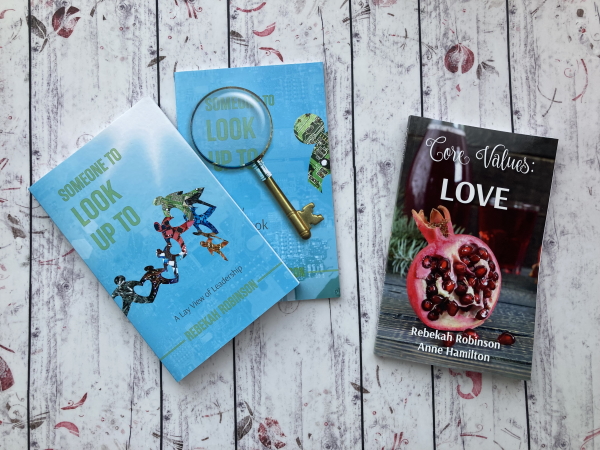
Today we go 'behind the scenes' as Jeanette (Jenny) O'Hagan interviews the fabulous Rebekah Robinson, co-author of Core Values: Love with Annie Hamilton.


Jenny: Congratulations on the new release Core Values: Love. Is having a new release as exciting as it was the first time?


Rebekah: Yes, absolutely! There’s nothing like holding your new book in your hands. With your first book there’s a sort of impostor sensation – ‘Wow, I’m an author now!’ and with the second it’s more of an eyebrow-waggling, ‘Now there are TWO, and I’m a SERIOUS author now!’


Jenny: It's a joy that doesn't get old. Tell us more about Core Values: Love. What is it about, who do you think will read it, and impact do you hope it will have?


Rebekah: Core Values: Love was born out of one of those revelations that seems momentous and blindingly obvious at the same time. If the Bible talks about the fruit of the Spirit … then the fruit must come from the Spirit … which would mean that the fruit is part of His nature, the way an apple comes from an apple tree! So this volume explores what it must mean for God to be Love, and how that works itself out in His children.


I think this book will appeal to people who want to go a little deeper in their understanding of what God is like. We’ve made it lovely to look through, as well as (I hope) intriguing to read. I’m a graphic designer by trade, so I’m a big fan of diagrams and infographics, and making things beautiful as well as functional. I hope that readers will find their spirits lifting in worship to the Lord as they read.


Jenny:  Wow, that sounds awesome. I believe understanding the heart of God's love is transformative and foundational. You co-authorised this book with Annie Hamilton, a prolific award-winning author with a strong following. How did the idea of working together come about? What have been the joys and challenges of the process.


Rebekah: My mother in New Zealand recommended The Singing Silence, and when I read it I was blown away and wrote to tell Annie so. It turned out we lived on the same side of town, so we ended up meeting for coffee and becoming friends. She hired me (in my graphic design hat) to work on her books. Since they touch on similar subjects, I asked if she would be willing to chime in on mine, and she generously agreed. Annie is a joy to work with. She’s walked me through the industry and helped me look at things from completely new angles and find treasures in the Word. I’ve found it a challenge to have to ‘kill off’ the occasional ‘darling’ phrase, of course, but it’s made my writing stronger.


Jenny: It sounds like God's timing. Your first published book, Someone to Look Up To, is also a non-fiction Christian book. Can you tell us what it is about and what inspired you to write it?


Rebekah: It’s about Christian leadership, written from the point of view of a non-leader. So much leadership theory comes to us from people who are providing it, rather than those of us who are living under it. It’s a friendly and helpful look at how some of these practices and teachings impact the church, and what we might then take into consideration. Since it’s geared toward students and fans of leadership, it also has a Study Notebook for use in classes or small groups.


Jenny: An interesting and helpful perspective. Who are your favourite authors and genres to read and why?


Rebekah: I rip through novels like there’s no tomorrow, but non-fiction takes me a great deal longer, because you have to really chew it as you go. I love speculative fiction & fantasy. My favourite secular author is Lois McMaster Bujold. I adore her space opera series because the characters are so deep and round that it’s hard to believe they aren’t real people, flying around out there. And I love Stephen Lawhead’s fantasy books because the cultural worldbuilding and storytelling is so immersive. Patrick Carr’s books are absolutely brilliant. These are just three names from a huge field of talented realms people.


My favourite Christian writer is Adrian Plass. I find his books an emotional workout, from laughing hysterically to crying unashamedly. They help me un-knot myself when I’m overthinking, and get me back in touch with my Saviour’s love in a complicated world. And I’m a big fan of Michael Frost. He thinks outside the box, and challenges me to live a truer Christianity.


Jenny: Some great authors. I concur, Michael Frost is a modern day prophet as in forth-telling. And as a big spec fic fan, I also love Lawhead and have enjoy Carr's books. I'll have to check out Lois McMaster Bujold.


So far your books have been expositional non-fiction aimed at encouraging people in aspects of the faith and ministry. Have you ever felt the urge to write fiction? And if so what would genre would you explore.


Rebekah: I wrote nothing but fiction and free verse in my youth, but got distracted by songwriting for several decades. I started my first novel years ago with a strong theme but gave up when the plot didn’t come and the characters were all ME! Recently I’ve seen a gap in Christian fiction – or an unmet thirst, if you like – and I think maybe I’m being called to fill that gap myself. So, currently I have three fantasy novel outlines percolating in my head & hard drive. It’s a steep learning curve, because every writing field involves the development of niche skills. My blog and non-fiction books have all been about answering questions, and they come more easily because all you do is explore the Word with God and share your heart in a structured manner.


Jenny: Novel writing is a great deal more complicated than most people realise. I look forward to reading your fantasy fiction in due course :) The hyphenated title of the Core Values: Love suggests that this is book 1 in a series on Core Values? Am I right and if so, what other books can we expect in the future? Do you have any other book ideas bubbling away? 


Rebekah: Core Values: Love is the first volume in an 8-part series on the fruit of the Spirit as the DNA of God. So, there are seven more volumes all at various stages of completion. Originally it was going to be one book, but it became too unwieldy. There are two other books I’m percolating for the Someone series – one on marriage and one on the music ministry – and, of course, the three nascent fantasy novels, which will be very loosely linked and will take some time.


Jenny. So many great title to anticipate. Thank you, Rebekah for taking the time to share about your books and experiences. We wish you and Annie God’s blessing on your new release.


Rebekah: Thank you so much!


Rebekah Robinson loves God and people, and writes about Christian living. A missionaries’ daughter, she was born in Christchurch, New Zealand, and lives in Brisbane, Australia with her husband and two young adult children. Freelancing as a graphic designer, she enjoys singing, songwriting and worship leading, and may have a slight digital scrapbooking addiction.

Rebhekah's Website & Facebook Author Page

You can purchase her books here:

Core Values: Love

Someone to Look Up To

Some to Look Up To - Study Notebook


Monday, 21 November 2022

What's New from Omega Writers | November 2022


Ever wanted to write for the US market?

The USA is the biggest market for Christian fiction, and the home of well-known Christian publishers such as Bethany House, Tyndale, and Thomas Nelson. Carolyn Miller lead an excellent session on writing for the US market at the recent Omega Writers Conference. If you missed out, you have another opportunity, as Carolyn will be presenting an encore session of the class as a webinar.

Here are the details:

Date: 28 November 2022 Time: 7:30 to 8:30 AEST Online via Zoom
Cost: $20 for Omega members, and $30 for non-members.

Click here to reserve your space.

Carolyn Miller

Carolyn Miller is the author of over 25 traditionally and independently published novels. She shares her tops and practical considerations for authors wanting to the writing for the US Christian market.

Introducing Nicole Partridge


Omega Writers have recently published an interview with Australian journalist, speaker, literary agent, writing coach, mentor, co-author of several bestselling books, and CALEB sponsor. 

Click here to read the interview.

2023 Zoom Conference

Omega Writers are planning a one-day online conference in late 2023 (similar to the 2021 conference).

Watch this space for details!

Thursday, 10 November 2022

Writing the ‘Feels’: Creating stories that readers love—by Susan J Bruce

Photo by Eleonora Albasi on Unsplash


I recently took myself off to my mother-in-law’s small seaside shack for a writing retreat. Problem was, when I took time out of my busy life I realised how tired I was. It wasn’t just weariness from my day job. A lot has been happening in the Jeffrey/ Bruce household lately and I found it hard to push myself. I needed long walks and relaxation as well as quality writing time. 


I still got about 10K good words written, which is okay, but we always want more, don’t we?


One evening when I needed some TV downtime, I flicked through the different TV streaming services and saw that Timeless was available on 7plus


I first watched Timeless in the middle of lockdown in 2020 and I wonder if that’s why I liked it so much. Things were tough in my life then, too, and it gave light to my shade. Not only were we shut in at home, but I was in the middle of a long, difficult freelance writing job. Each evening for a couple of weeks, Marc and I would sit and watch Lucy, Wyatt and Rufus jump through time to save history and battle with conspiracies that were more than just a theory. It’s a crime the show was cancelled after two seasons and a TV movie.


Incidentally, if you like trivia, the showrunners gave Lucy and Wyatt the surnames Preston and Logan, respectively. If you’ve ever watched Bill and Ted’s Excellent Adventure, all those names, including Rufus, will be familiar to you 😀


Timeless is fun and doesn’t take itself too seriously. It gives lots of delicious fan service, with characters caught in difficult spots often calling themselves by the names of pop culture heroes, as they try and survive and bring down the bad guys and gals. 


But it takes more than in-jokes to make me like a story. As I rewatched the episodes I found myself reflecting on why I’d chosen this show. What made me want to binge it again? 


In addition to the fun, Timeless has lots of poignant moments and more than a touch of romantic adventure, which is probably my favourite genre. But still, why was I so invested?


There have been other stories…


Many years ago, before my husband and I got together, my go-to ‘comfort film’ was Sabrina—the Julia Ormond and Harrison Ford remake of the 1954 movie starring Humphrey Bogart and Audrey Hepburn.


This version never rated as highly as the original, but for some reason I loved it. I’d sit back on a rainy Sunday afternoon with a hot chocolate or a glass of wine and watch this hilarious romantic comedy play out. 


I knew the ending and I knew the characters back to front, but I still loved watching it. I’d feel with Sabrina, trapped in unrequited love, sitting up in the tree gazing from ‘outside’ at the opulent Larrabee family party lights (Sabrina’s dad was the Larrabee family chauffeur). Then I’d revel in how her ugly-duckling-to-beautiful-swan transformation led her to find real love, not the faux infatuation kind.


There have been other movies and TV shows I’ve watched again and again. Some of my faves include: The Princess Bride, Regarding Henry, and Star Wars episodes 4,5 and 6. Throw in certain episodes of Doctor Who and Star Trek, too.  


LOL! I've just realised how often Harrison Ford features in my list 😎. 


There are many, many more, but these are the stories I go to when my heart needs cheering up. I think The Princess Bride is one of the most quoted movies of all time. It’s hilarious, profound, and more than a little prophetic. 


When it comes to books, my comfort reads when I was growing up included anything by Mary Stewart (Moon Spinners, My Brother Michael, etc). I still have these books and read them occasionally, although it’s hard to find time as my current to-read list is of Mount Everest proportions. I also read and reread The Narnia Chronicles and the Outlander books.


My taste is eclectic, as you can see—and Outlander isn't PG rated, so I hesitate to mention it here—but it's a powerful story that draws me back again and again. Why?


You will have your own list of stories you read or watch on repeat. What is it about those stories that you love? 


It strikes me that if we could work out the ‘why’, we could imbibe that essence into our own writing. I’d love to write the kind of book or screenplay a reader/ viewer devours again and again. 


I recently read a book on fiction writing that asks these kinds of questions.


In  7 Figure Fiction, Theodora Taylor says there are elements at the base of the stories we love that trigger something deep inside us. Taylor calls these elements 'Universal Fantasy' or UF. 


Taylor calls UFs the ‘butter’ that gives a story flavour. The more butter you can fold into a story, the more flavour you have, and the more people will want to feast on those tales. 


She uses several fairy tales to highlight this. One of her favourites, Beauty and the Beast, has an abundance of UFs. The list is long, but here are some examples: 

  • Provincial life call. Belle is pulled from provincial life into another life full of discovery and adventure. This is a favourite of mine and I see it with Lucy in Timeless, Luke Skywalker in Star Wars, Claire in Outlander, Peter, Lucy and Edmund in The Lion, the Witch, and the Wardrobe. Provincial life call is the basis of a lot of Hero’s Journey  stories.
  • Fixer-upperer: The Beast needs transforming but only Belle’s love can make him human again. Lots of stories I like have this idea. In Timeless, Lucy transforms not just Wyatt but Flynn (a complex antagonist initially). In Sabrina, Linus Larrabee (the beast), is transformed by Sabrina’s love.
  • Servants who love to serve: In the Disney version of Beauty and the Beast, the cup and saucer delight in serving and dance around while doing so. Think R2D2 and C3PO in Star Wars movies, or Alfred in Batman.


My first thought with some of these examples was: Aren’t these just tropes? Common types of story ideas that can be overused? But Taylor is saying that the buttery goodness is the feeling behind the trope.
 

Most of us write books rather than screenplays, but that just means we have more responsibility to help readers ‘feel’ these aspects of the story. We don’t have actors, directors, video editors and music maestros to help us build the mood. 


I’ve read books with favourite tropes, but they’ve left me flat as there has been very little butter. If we can write in a way that’s rich and fresh, that brings out the story goodness, then people will want to devour our books. As with a deliciously warmed croissant, the more butter our books have, the more readers will want to devour them.


It seems to have worked for Theodora Taylor. She’s pretty successful.


Could it work for you and me?


I hope I haven’t confused you—I’ve just touched on this topic. There are many more examples in Taylor’s book and you probably need to read 7 Figure Fiction to truly understand this concept. She can explain it much better than I can. 


One caveat. Some Christians have avoided 7 Figure Fiction, because later in the book Taylor uses examples from her own secular romance books to illustrate her UFs. But I’m a big believer in taking the best ideas from ‘the world’ and throwing out what doesn’t fit with my faith.


Whether you read Taylor’s book or not, if you want to discover some excellent butter, I suggest you: 

  • Write down the stories that comfort and inspire you—the ones you read or watch again and again 
  • Pinpoint the key elements and themes that draw you and consider how the story magnifies the ‘feels’ behind these elements and themes
  • Apply this rich butter to your own writing!

And please let me know some of your favourite stories, elements and themes in the comments below. I’d love to find some new favourites.


Susan J Bruce is an author, artist and animal addict who writes mystery and suspense books—with heart. Susan is a former veterinarian and animals often run, jump, fly or crawl through her tales. Susan's writing group once challenged her to write a story without mentioning any animals—she failed! Susan currently lives in sunny South Australia with her husband and her always-present menagerie. Susan’s first novel, Running Scared, was awarded the 2018 Caleb Prize for an unpublished manuscript.
Visit Susan at www.susanjbruce.com.


Monday, 31 October 2022

Writing for Children: The Genesis of Pepper Masalah

Rosanne Hawke

When I was six I wrote a story about a cat sitting on a mat. Those were the words I could safely spell but what I really wished was to write an exciting story with interesting words.

Writing for younger readers involves our best writing, interesting words, exciting plots with genuine characters and voice. You may say that’s the same for any age group and you would be correct. So what’s different? For younger readers you’ll also need a child (or animal) main character and a topic that children will be intrigued by. Hmm, take a cat and a storm.

One night on our farm a huge storm blew up and my black cat Harry disappeared. Maybe he was disorientated by the storm and the damage in its wake, for he never turned up. I pinned up posters: a photo of him squeezed into a basket, his huge yellow eyes staring into the camera, and above: Have you seen Harry? No one answered and I hope he’s having a good life somewhere.

People consoled me with their ‘lost cat’ stories. One said, ‘We couldn’t find our cat when we had to leave our holiday place and had to leave him behind. He came home fourteen months later. Apart from sore feet, he was fine.’ Fourteen months went by and Harry didn’t return. I read many stories online of cats who disappeared and reappeared. One sneaked onto a plane bound for France and because she was microchipped the airline was able to send her home. 


All my previous cats were farm or rescue cats so I bought a cat that was born in a cattery. A beautiful black British Shorthair who thought he was a prince and had no idea he could go outside and get lost. My daughter Emma helped me name him Pepper Masalah. He was a spicy cat with great orange eyes and a purr like a generator. He loved carpets and so a story was born.

What if a black cat was sitting on a special carpet and a storm caused the branch of a huge olive tree to crash through the lounge room window. The wind whisked the carpet and cat outside and up in the air, seemingly flying on the wind. But what if the carpet had a heart and the wind had woken it. It wanted to find its master in Kashmir but it had been asleep for hundreds of years. Flying isn’t easy to get used to after being dormant for so long. The carpet would keep landing in the wrong place until it found its wings. And only Pepper Masalah could make it fly.

The children I told this story to during Bookweek loved it and ran to get the globe to see where Pepper and the carpet could land next. The MS went to some publishers but wasn’t accepted. When I told this to a class a student said, ‘You need a boy on the carpet. I’d like to read a story like that where I could fly.’ I rewrote Pepper Masalah and the Flying Carpet with a boy called Zamir who shared in the adventure. After this rewrite, the first publisher I sent it to, said, ‘Yes, we’re looking for stories like this.’

So you see, I really did manage to write a story about a cat sitting on a mat that has more interesting words. And this is what I learned through it all: 

1) That real life needs to be fictionised to work well in a story. Pepper Masalah is now a female cat in the story as there were too many incidences of the pronoun ‘he’.

2) I had to be willing to change my original ideas. 

3) I asked the readership what they thought would make the story work better.

4) To rewrite and never give up on a good story.

5) To have confidence because what one publisher doesn’t need on their list may be a treasure to another one.

Book 1, Pepper Masalah and the Flying Carpet, due March 2023 at Wombat Books.

Beautiful illustrations by Jasmine Berry

Pre-order at https://wombatrhiza.com.au/wombat-books/junior-readers-6/ 


Rosanne Hawke is a SA author of over 30 books for young people. She has been a teacher, an aid worker in Pakistan & UAE, and a lecturer in creative writing at Tabor Adelaide. Her books explore cultural and social issues, history, mystery and faith. She often writes of displacement and reconciliation and tells stories of children unheard. Her novel Taj and the Great Camel Trek won the Adelaide Festival Award for Children’s Literature and was highly commended in the 2012 Prime Minister’s Literary Awards. Rosanne has a PhD in creative writing and is the recipient of 4 fellowships, the Nance Donkin Award for a woman author who writes for children, and a Bard of Cornwall.

Thursday, 27 October 2022

Behind the Scenes: Amelia's Island by Jeanette Grant-Thomson

Today we go 'behind the scenes' as Jeanette (Jenny) O'Hagan interviews the wonderful Jeanette Grant-Thomson  about her upcoming release of her latest novel, Amelia's Island.


Jenny: Congratulations on your latest release. What inspired you to write Amelia’s Island?

Jeanette: Thanks Jenny. I was fascinated by the idea of a place that would be one’s own world, a small island at high tide – but also some unsuspecting person might walk out there and be cut off by the tide. The ideas around that are endless. If it were not for boats and helicopters … And I could have written it so Amelia’s baby was ready to come on the island at high tide and no helicopters available. (Bushfire season.)

I marvelled at the true story of the Phillips family who lived there for over a year and Mr Phillips rowed a boat to work each day. Tough pioneers.

Jenny: Amelia’s Island is definitely a unique setting one that plays a big part in the events in the book. What joys and challenges arose from having the action on a tidal island for you and for your characters?

Jeanette: It was a big challenge for me to have them on and off the island at the right times and to plan the scary episode so the tide cut someone off. Amelia enjoyed the tides and the fragments of shells and other debris washed onto the sand bar but Kathryn was often nervous about being on a tiny island by herself. Head-in-the-clouds Todd, Amelia’s muso boyfriend, found it scary and frustrating. The local people were familiar with the tides and walked or drove on the sandbar at low tide or used helicopters.

Jenny: It is fascinating how the location - the island - reveals the personality and attitudes of the different characters. Tell us more about the main character, Amelia. What distinguishes her from your previous heroines? Did you find her easy or hard to write?


Jeanette: Amelia is less like me or any of my friends than I’ve previously written. She’s vain, selfish and spoilt but beneath it all she feels she has nothing of value left after giving her life completely to Todd. So she nurtures her beauty as part of her identity. For the first part of the novel, she’s less likeable than my other heroines but she changes as God, Dr Jack with his blunt talk, and the interactions with Kathryn and Todd begin to shape her for the better. Her real turning point is when she pours out her heart to God.

I found her hard to write at first and had to remind myself she was vain, selfish and hardened with a likeable girl underneath.

Jenny: You’ve been an author for many years. What do you enjoy most about writing?

Jeanette: Nearly everything except the third proof read onwards. I love getting the ideas and translating them to characters and stories. I love using settings I know well (and have to control my enjoyment of description). I love making characters and deciding what they might do that would cause a crisis or conflict.

Jenny: You have a number of published books, both fiction and non-fiction. Do you have a favourite? How did you get started as a writer and where do your ideas come from?


Jeanette: Wow, that’s a lot of questions. My favourite is Lantern Light, set in a school where I actually taught in the PNG jungle. Jodie’s Story, my first published book, has a special place in my heart as I carried that story like a pregnancy for several years until I just had to write it. I wept through the first interview and on and off as I wrote. Fortunately it was published and sold well. (It’s in its third edition now.)

I began when I was six or seven by standing in the doorway one morning and reciting four rhyming lines of poetry I’d made up myself. My parents then encouraged me to write and send poems to the children’s page of the Brisbane Telegraph, which kindly published them and sent me five shillings each time.

I believe God gives me most of the ideas but my brain is adept at seeing a situation and thinking: What if?


Jenny: Lantern Light is my favourite book of yours and I love the rich descriptions though I know that many modern readers prefer less. And how cool to be paid for your poetry as a child. 

How has your publishing journey changed since the publication of your first book? What challenges and joys have you found in the process? Any advice aspiring authors?

Jeanette: I was lucky (or blessed) to get in at the end of the ‘olden days’ when traditional publishers did all the work once I’d written the book. I managed to get five of my books done that way. The new version of Healing Song and Amelia’s Island were, by choice, self-published with the help of Lilly Pilly and InHouse publishers. I HATE marketing.


Self-publishing took too long (I’m 76). I’ll try hard for a trad publisher next time.

Advice? If you plan to self-publish, get it professionally edited and then check it again. And again. If you want a trad publisher, read their requirements carefully before submitting and send a well- edited manuscript.

Jenny: Great advise and I know what you mean about marketing. Do you have any plans for other books or projects in mind? If so, will they be related to this title or any other of your titles?

Jeanette: Surprisingly, I was asked to write a sequel to Mirage but I probably won’t. I plan to write some of my memoirs. Just some of the salient points, both wonderful and horrific.

Jenny: I look forward to reading your memoirs. I've enjoyed reading some snippets of your experiences on yur blog. Thank you, Jeanette, for taking the time to share about your books and experiences.

--

Jeanette Grant-Thomson is a S.E.Queensland based author. She has been writing and having work published since she was a child and has enjoyed writing in most genres.
Her first novel Jodie’s Story, now in its third edition, is a true story which opened the door for her to write several other works.

Apart from writing, Jeanette enjoys the mountains, the beach, swimming and having coffee with friends. She is a sincere Christian and attends church regularly.

She can be contacted on Facebook, LinkedIn or Goodreads and her books can be seen and ordered on her Author Page - www.facebook.com/jeanette.grantthomson


Thursday, 20 October 2022

Up, Up and Away: Writing Lessons from Superman's Creators


Do you have writing dreams? Maybe you’re working on your debut novel, but the plot and characters aren’t working. Perhaps you’ve tried to find an agent or publisher, but you've received a dreaded rejection letter. Maybe you’re self-publishing, but the learning curve has you bamboozled. Perhaps you sent your book baby off to an editor and it came back with hundreds of corrections and comments.

If you can tick any of those boxes, you have more in common with the creators of Superman than you think. Appearing in the first issue of Action Comics in 1938, Superman has become the iconic superhero that practically invented the genre and spawned a whole industry—radio and TV shows, movies, animated features, merchandise, fan clubs, cosplay, action figures, the list goes on. Superman movies and TV shows are still being made, and Action Comics is still being published by DC Comics. Indeed, Superman is one of the greatest publishing success stories of all time.

Wherever we are in our publication journeys, there are some lessons we can learn from Superman’s creators.


Meet Jerry and Joe


Jerry Siegel and Joe Shuster met in high school when they were about 16. (In the photo, Jerry's the one standing.) They gravitated towards each other through their shared Jewish backgrounds and their love of science fiction, newspaper comic strips and swashbuckling silent screen stars. A few years later, they submitted a comic book story called The Superman to a publisher, but it would be another five years before Superman made his public debut. So how did Jerry and Joe realise their dream?


Lessons for Writing


They Weren’t Afraid to Start Small


Siegel and Shuster started out by working on their high school newspaper, with Jerry writing prose and Joe drawing funny cartoons. They even collaborated on an illustrated series of stories called Goober the Almighty which was a parody of Tarzan.

Lesson – Don’t think that your first publication has to be a book. Short pieces such as blog posts, devotions, short stories, poems, and articles for your church newsletter are worthwhile and can touch readers who may never see your full-length manuscript. There is also a Biblical precedent for this in Zechariah 4:10 (NLT): ‘Do not despise these small beginnings, for the Lord rejoices to see the work begin …’


They Considered Different Routes to Publication


Siegel and Shuster were both fans of the pulp science-fiction magazines of the day, but Jerry submitted a number of stories without getting a sale. Undaunted, they started their own mimeographed publication called Science Fiction, which lasted for a few issues. One of the stories they published was The Reign of the Superman, though that story was vastly different from the Superman we know.

When they came up with another idea for a superhero named Superman, they initially envisaged it as a syndicated strip in newspapers, as that was more lucrative at the time. However, they were also open to it being used in a comic book. Newspaper syndication came after Superman’s appearance in comic books and not before.

Lesson – You may have a vision for your book, but don’t close off other avenues too soon. You may dream of having your book traditionally published, but indie publishing is also well-regarded these days if it is done in a professional manner. You may have an idea for a graphic novel, but it may work better as a novella, or vice versa. This doesn’t necessarily mean compromising on your original vision. If you’re prepared to think flexibly about your project, and keep it in prayer, an opportunity might come your way that you hadn’t even thought of.


They Didn’t Just Have One Idea


Although they dreamed of having their own syndicated comic strip with Superman, they kept working on other ideas. Some of their other stories—including Henri Duval of France, Slam Bradley, Federal Men, and Spy—featured in comic books before Superman.

Lesson – You may have a pet project, but don’t let that stop you from developing other ideas. You never know which one will fly first, and you’re developing skills along the way. Besides, God is the Creator of the entire universe and He’s the one who gave you your creative gifts and talents. With His help, you’ll never be short of ideas.


They Tapped into Universal Needs


Siegel and Shuster came from humble beginnings, and were teenagers during the Depression, so they knew what it was like to be in need. It’s not surprising, then, that they imbued their superhero with an unwavering desire for truth and justice. Siegel puts it like this:

[Superman] was very serious about helping people in trouble and distress, because Joe and I felt that very intensely … We were young kids and if we wanted to see a movie we had to sell milk bottles, so we sort of had the feeling that we were right there at the bottom and we could empathize with people. Superman grew out of our feelings about life. And that’s why, when we saw so many similar strips coming out, we felt that they were perhaps imitating the format of Superman, but something wasn’t there, which was this tremendous feeling of compassion that Joe and I had for the downtrodden. (Daniels, 1999, pp. 35-36).


Lesson  Doesn’t everyone want someone who cares about them and will fight for them against injustice? As Christian writers, we have someone even better than Superman. Our God is the Father of compassion and the God of all comfort (2 Corin. 1:3-4). He is the champion of the fatherless, the widowed, the prisoner, the lonely (Ps. 68:5-6). Jesus defeated sin and death on the cross (Col. 2:13-15)  and is our advocate before the Father (1 John 2:1-2). The Holy Spirit is interceding for us now (Rom. 8:26-27). What a wonderful privilege it is to share God’s love and truth with a hurting world.


They Learned That Waiting Has Its Advantages


Siegel and Shuster had their share of disappointments on their way to achieving their dream, but that dream ended up being realised in ways they could never have imagined. During those waiting years, they kept working on their writing and art, they submitted ideas and comics, they had some publication success, and they had time to refine their pet project. The Superman that was finally published in 1938 was very different from the one that they conceived in 1933. They had time to work on his backstory, his personality and appearance, the supporting cast like Lois Lane, and the overall shape of the story. It also appeared at the ‘right’ time in history, as Hitler’s power was growing, along with his anti-Semitic philosophy that would plunge the world into war a year later. What better time was there for two young Jewish men to create comics about a superhero who would always fight for truth and justice, and stand against the forces of evil?

Lesson – You may feel like your dreams are out of reach, but if they’re godly dreams, they’re on His timeline. As Mark Batterson (2012) notes, ‘God is never early. God is never late. God is always right on time.’ 

Do you have a dream for your writing? Why not submit it to God before submitting it to a publisher. Then see what amazing things God can do through you. Before you know it, your manuscript will be 'up, up, and away!'


Sources

Batterson, M. (2012). Draw the circle: The 40 day prayer challenge. Grand Rapids, MI: Zondervan.

Daniels, L. (1999). Superman: The Golden Age. New York: DC Comics.


Further Reading

See the entry about Siegel and Shuster in Comiclopedia: https://www.lambiek.net/artists/s/shuster_j.htm


Photo Sources

Featured photo is from the author’s own comic book collection.

Photo of Siegel and Shuster is in the public domain; available from Wikimedia:

https://commons.wikimedia.org/wiki/File:Jerry_Siegel_and_Joe_Shuster.jpg

Author photo by Wayne Logan from WRLPhoto


Author Bio


Nola Lorraine (aka Nola Passmore) has recently come out of the closet as a middle-aged retro comics fan and pop culture aficionado. (Yes, she still reads Archie comics.) She has a passion for faith and social justice issues, and loves weaving words that inspire others with courage and hope. Her inspirational historical novel Scattered was published in 2020, and she has also co-edited the Christian charity anthology Glimpses of Light with Jeanette O’Hagan. She has more than 150 short publications, including fiction, poetry, devotions, true stories, magazine articles and academic papers. She and her husband Tim also run a freelance writing and editing business, The Write Flourish, from the home they share with their two adorable cavoodles in southeast Queensland, Australia. 

She’d love to connect with you through her website: www.nolalorraine.com.au


Monday, 17 October 2022

The Curious Convergence of Chaos and Creativity.

Mazzy Adams

The human brain is amazing; intricate elements function as purposed, follow patterns and procedures ordered by nature and nurture, send signals that keep our bodies alive, absorb new information, drive the development of new skills, and power creative endeavours.


Pixabay Image by Charles Thonney

With time, patience, practice, and persistence, our brains can establish alternative neural pathways when existing ones are damaged or adjust to ongoing disfunction; something I’ve experienced.

My persistent brain glitch limits sensation in my left leg, and hinders my immediate short-term recall, a challenge when up-skilling in the age of video tutorials. My work-around of printed instructions and scribbled notes quickly clutters my desk.

While I focused on the final onslaught of Indie Publishing Licence to Die, the hotchpotch of folders, images, and documents filling my computer’s ‘desktop’ screen mirrored the paper jungle overtaking my desk. 

Despite that, with focussed persistence, (and a willingness to read or listen to the same instruction six or sixteen times if necessary) the final product emerged FROM CHAOS, complete, published, and ready for the reading world. 

Did I have to work hard to make it happen? Yes. Was it difficult or challenging? Frequently. Did it bring me joy? Yes (between the tears and the teeth-grinding). Will I keep writing, keep producing chaotic first drafts, edit them, submit them to scrutiny, edit them again, typeset them, design covers and promotional material, and fulfil the million-and-one other requirements for bringing a new book into the world? While God directs and guides me to do so, yes.

Why? Because I was created to fulfil my God-given purpose which, at this time, includes writing and publishing.

If you’re reading this blog, it’s extremely likely you share a similar God-given purpose. (And that’s exciting!)  

Pixabay Image by Arek Socha

Referencing Genesis 1:2 and 2:15, Author, Tim Challies, expounds two important principles in his blog, The High Calling of Bringing Order from Chaos. He explains, “God knows all about order and chaos … As God began to move in his week of creation, he brought order from … disorder. He organized, he formed, he made, he filled. From that unformed substance emerged the beauty, the order, of this world. But it emerged only by his effort, his will, his handiwork.” Challies also says, ‘bringing order from chaos is dignified … God-assigned work.’

(As an aside, if you’d like to explore the alternative translation of Genesis 1:2 which renders the Hebrew words,  tohu v’vohu (formless and void) as ‘uninhabitable chaos and emptiness’, I believe you’ll be blessed and encouraged, as I was, by Sarah E. Fisher’s inspiring lesson at hebrewwordlessons.com)

We are indeed privileged to engage in God-authored (and anchored) activity that begets order and productivity, to reflect our Creator’s image by functioning as He intended we should from the beginning.

Back to that word, ‘chaos’.

When God spoke, chaos conformed to His will. Not so, my messy desk and desktop! Licence to Die may have emerged from that developing chaos, but when it came to drafting this blog post, my inbuilt chaos meter had become overloaded and off the scale. My grey matter may not have been scattered willy-nilly across the jumbled universe of notes, instruction sheets, reminders, works-in-progress, bills-to-pay, records to … record, and other items directing my to-do list, but my free flow of fresh ideas was tangled up and stuck in that inglorious mess. It was time to clear the decks! Re-establish order from chaos! Make way for new creative endeavours.

My efforts left me with an improved desktop presentation ...

(I said improved, not perfect!)

and two ordered stacks of paper; this one awaits a second level sort. I'll recycle the other pile for new notes and reminders. 


Controlled Chaos: MazArt by Catie J

The act of tidying the desk helped tidy my mind too, triggering these thoughts about the relationship between chaos and creativity. I looked up the dictionary definition of ‘chaos’ and got creative with it. Here’s the result:

Chaotic Chaos: MazArt by Catie J

If you enjoy solving puzzles, feel free to decipher (order) the definition of chaos from the word jumble I created. (Or you could just read it for yourself on Dictionary.com)

Either way, it’s good to recognise, and acknowledge daily, the relationship God established between chaos and creativity:

  • When God spoke, formless chaos conformed to His creative will, unleashing life.
  • When Adam rebelled, chaos regained its foothold, unleashing death and destruction.
  • When Jesus obeyed, surrendering His own will to God, He defeated and disarmed chaos and death.
  • When Jesus returns, we’ll see the full manifestation of His magnificent restoration of God’s perfect creation. 

Till then, may we each continue, day by day, in our calling to ‘tidy’ the corner where we are, creatively partnering with God to produce and maintain order and fruitfulness that blesses the world we live in. 

Have you experienced a productive or unexpected result when chaos and creativity converge? Perhaps you could tell us about it in the comments.


Mazzy Adams ~ Author ~ Genre Rebel

Intrigue and Inspiration with an Upmarket Down Under Vibe.

A published author of poetry, fiction, and creative non-fiction with a passion for words, pictures, and the positive potential in people, Mazzy's debut thriller, Licence to Die (GRUnGE.001) has just been released. 

Discover more about Mazzy at https://mazzyadams.com/

Scripture version referenced via BibleHub.Com links are from The Peshitta Holy Bible Translated by Glenn David Bauscher Lulu Publishing Copyright © 2018 3rd edition Copyright © 2019


Monday, 10 October 2022

Omega Writers Presents the 2022 CALEB Award Winners

The winners of the 2022 CALEB Awards were announced on 8 October at the Omega Writer’s Conference. The conference was held at Peppers Kingscliff, New South Wales. The awards dinner was livestreamed in three parts. Click here to watch Penny Reeve welcome members, and Jo Wanmer share about her CALEB win. 2022 CALEB Award

Unpublished Manuscripts

Click here to watch the announcements of the winners of the Unpublished awards.

Unpublished Nonfiction

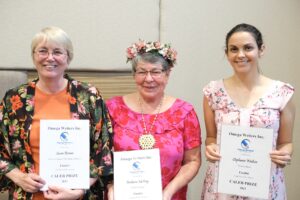
The winner of the Unpublished Adult Nonfiction manuscript prize is Stephanie Walters. Stephanie will receive a Manuscript Review and Feedback from Nicole Partridge, Journalist, Writer and Literary Agent to the value of $400. 2022 CALEB Unpublished Nonfiction finalists

Unpublished Adult Fiction

The winner of the Unpublished Adult Fiction manuscript prize is Suzie Pybus.

Suzie will receive editing services from Iola Goulton at Christian Editing Services to the value of $400.

Published Books

Click here to watch the announcements of the Published awards.

Published Nonfiction

The winner of the Published Nonfiction award is Two Sisters and Brain Tumour by Emily Maurits.

As a teenager, Emily prayed a desperate prayer. Now, in her final year of university, Emily has already witnessed illness tear apart the lives of those she loves. Yet when her younger sister, Jasmine, is diagnosed with a brain tumour, her entire world is turned upside-down. As she watches Jasmine go through more than nine operations in three months, she struggles with what this means for her future, for their relationship, and for the prayer she prayed so long ago. This is the story of two sisters, the brain tumour which tore apart their lives, and the God who used it to save them.

Emily will receive a trophy and $300 cash prize from Omega Writers.

Published Young Adult Fiction

The winner of the Published Young Adult Prize is Elite by Kristen Young, the second book in her Collective Underground series.

Where do you find safety when your world is falling apart? Apprentice Flick thought the Elite Academy was the answer to all her problems. But the revelation of her past turned everything upside down. Now, she is caught between two worlds set on a collision course. Will she embrace the chaotic memories that flood her every waking moment? Or will she run to the security of her Elite training? Discovering her parents’ identities takes her to a secret underground bunker where she finds new friends, opportunities, and maybe even love. But Flick must decide where her allegiances lie soon, or the Triumph of Love festival might bring about her demise.

Kristen will receive a trophy $300 cash prize from Omega Writers.

Published Adult Fiction

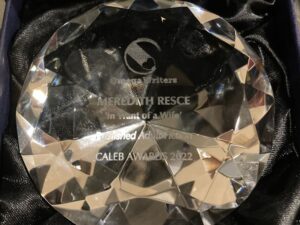
The winner of the Published Adult Prize is In Want of a Wife by Meredith Resce, the second book in her Luella Linley Licence to Meddle series.

The temptation to match-make is too much to resist. Louise has one success already under her belt. Now this handsome, successful lawyer has just admitted he isn’t married. Single and in possession of a large fortune, Michael Sullivan must be in want of a wife. Louise’s second daughter, Chloe, would be just right for him. There is no way Chloe will let her mother organize a blind date for her as she did for her sister. Chloe has her principles—and she has a ridiculous, unjust speeding ticket. The person she needs is a lawyer to help argue her case in court. Is it dishonest, when her mother’s lawyer calls and asks her on a date, to agree with ulterior motives? Michael Sullivan has ulterior motives of his own. This all expenses paid trip to the sunny Gold Coast is merely a case of one person helping the other out—isn’t it? Everyone else might think they’re a couple, but it’s just about winning a court case—isn’t it? Can Regency romance author, Luella Linley (AKA Louise Brooker) hit the target twice in a row? Meddling in her adult children’s lives is almost as much fun as creating fiction characters, except her children have minds of their own and don’t always cooperate.
Meredith will receive a trophy and $300 cash prize from Omega Writers.
2022 Published Adult Fiction Finalists

Congratulations to all our winners!

Hold the Dates

The next in-person conference will be held from 20 to 22 September 2024. We will hold an online event in 2023.

Annual General Meeting

The Omega Writers Annual General Meeting will be held on online on Monday 24 October at 7:30pm New South Wales time. Members will be emailed the Zoom link. In order to be incorporated as a legal organisation, Omega Writers needs at least one Queenslander to be on our management committee and in particular, part of the Secretarial Team. So, if you are a Queensland member, are passionate about supporting Australasian Christian Writers and would be willing to take on some secretarial roles, please contact Omega Writers via the website.