Thursday, 27 June 2019

CWD Highlights - April to June 2019


Christian Writers Downunder is a diverse group of writers, editors, bloggers, illustrators. As a group we support each other through our facebook page and blog.

Today's blog will highlight some of the achievements of our members from April to June 2019

Awards:

Ruth Bonetti


Congratulations to Omega to Ruth Bonetti. 


Ruth was presented with the 2019 Queensland Family History Book Award by the Queensland Family History Society for her second biography/memoir/family history Midnight Sun to Southern Cross. It was a great night and well deserved award.


(If you have a published family history, you could consider entering for this Award for 2020 – entries close on 30 November.)

Submissions & Acceptances:


Elizabeth Klein


Elizabeth Klein's short story "Hidden" was accepted for inclusion in the anthology Short Tales 5 by Storm Cloud Publication on 16th April.  She is also running a writing workshop on 15th June.


New Release & Cover Reveals:


David Rawlings


David Rawlings' The Baggage Handler (released in March 2019 - see previous highlights) is being translated into Dutch (late 2019) - with the Dutch cover shown below.

Title: The Baggage Handler
Publication Date: March 5
Publisher: Thomas Nelson


Blurb:


When three people take the wrong suitcase from baggage claim, their lives change forever.

A hothead businessman coming to the city for a showdown meeting to save his job.
 A mother of three hoping to survive the days at her sister's house before her niece’s wedding.
 And a young artist pursuing his father’s dream so he can keep his own alive.
When David, Gillian, and Michael each take the wrong suitcase from baggage claim, the airline directs them to retrieve their bags at a mysterious facility in a deserted part of the city. There they meet the enigmatic Baggage Handler, who shows them there is more in their baggage than what they have packed, and carrying it with them is slowing them down in ways they can’t imagine. And they must deal with it before they can leave.
In this modern-day parable about the burdens that weigh us down, David Rawlings issues an inspiring invitation to lighten the load.

Available HERE


Bio: David Rawlings is a based in South Australia, with a 25-year corporate writing career behind him and stories that look deeper into life in front of him.

Ruth Amos' Challenge Accepted


In January 2019, author R. J. Amos challenged herself to write a short story every day for thirty days. Using prompts found online, R. J. pushed her creative powers to the limit, writing a full story with a beginning, middle, and end, every day.

She presents a collection of weird and wide-ranging, fun and fantastic stories. Also included are the story prompts that R. J. used so that you too can stretch your imagination.

A challenge for you, should you choose to accept it. Available HERE 


Helen Brown


Helen Brown has published her latest inspirational book Still More Water into Wine.

"Sometimes the encourager needs to be encouraged. People in ministry, regardless of its type, give of themselves. There comes a time, however, when they need to be refreshed, for them to continue to give. "
Helen gave an interview last year HERE.  Her book is available HERE

Jeanette O'Hagan


Caverns of the Deep - Jeanette O'Hagan has released Caverns of the Deep, the fifth and final book in the Under the Mountain series (which started with Heart of the Mountain).

Title: Caverns of the Deep
Publication: 17 June 2019
Publisher: By the Light Books


Blurb:


Seven Gates, locked and warded, stand between life and starvation.
As belts are tightened notch by notch, Watcher Retza and Lady Zara seek to find the seal and open the Gate.
Meanwhile, Delvina, shapeshifter Zadeki and Danel race to return to the Caverns in time to help their friends.
Danger and betrayal stalk the tunnels and shadows grow darker in the deep caverns beneath the mountain. Will Zadeki, Zara and the twins (Retza and Delvina) find a way to save the Glittering Realms and secure a better future?
Join Delvina, Retza, Zara and their friends on their quest to save the Glittering Realm under the mountain.

Available HERE
And the series starts HERE

As part of the Caverns launch, you can win a e-copy of Caverns of the Deep (or one of the earlier books) on the ICFW blogsite. Open up until 29 June 2019 HERE

Wolf Scout in Tale of Magic and Destiny - Also, Jeanette's story Wolf Scout is included in the latest Inklings Press anthology - Tales of Magic and Destiny, currently available on pre-order for a early July release.


Title: Tales of Magic and Destiny
Publication: July 2019
Publisther: Inklings Press

Blurb:

Inklings Press has released it's latest Anthology - Tales of Magic and Destiny. including Jeanette O'Hagan's story Wolf Scout.
Take a trip into worlds of fantasy - where magic and destinies collide.
Twelve stories. Twelve authors. Twelve worlds of fantasy.

The adventure begins here mybook.to/MagicDestiny.


Events & Opportunities


Toowoomba Omega Chapter Workshop - Avoiding Literary Speed bumps. 


The Toowoomba Omega Chapter put on a informative and practical workshop on Avoiding Literary Speed bumps by Nola Passmore. at the Canvas Coworking space on 27 April. 


Topic: ‘How to Avoid Literary Speedbumps’ with Nola Passmore

A literary speed bump is anything that disrupts the flow of your writing and makes your reader go, 'Huh?' It could be an unfamiliar word, a convoluted sentence, an ambiguous pronoun, an unintentional tongue-twister, to name a few. In this workshop, writer and editor Nola Passmore will give plenty of tips and hands-on exercises to help you edit out those glitches that stop readers having a smooth ride through your prose. In will be fun and informative.

The event was well attended and much appreciated.


Toowoomba Omega Writers Retreat


Participants enjoyed another inspiring weekend at the Toowoomba Omega Writers Retreat at the James Byrne Centre near Highfields June 7-9. 

A firelight talk with Jo-Anne Berthelsen on Friday night, Jo-Anne's presentation on Writing Fiction for Non-Fiction Writers (and vice versa), and the Panel of Anne Hamilton, Ruth Bonetti and Jeanette O'Hagan on Indie Publishing were all much appreciated. Jessica Kate did an impromptu fireside chat reprising her workshop on How to Break into the American Market.  And there was plenty of time for relaxing, writing and networking over the weekend. A worship service with prayer for each other ended what was another great program from the Toowoomba Omega Chapter. A big thank you to Nola Passmore, Mazzy Adams, Adele Jones, Pamela Heemskerk, Kirsten Hart, Janelle Moore & Ro. 


Omega Writers Conference

Registrations are now open for the Omega Writers Conference Oct 11-13, Edward Rice Centre, Mulgoa (near Sydney). Steve Laube - an American Christian Literary Agent, a veteran of the bookselling industry with nearly 40 years of experience - is the keynote speaker.

If you've always wanted to go but have never been able to afford it - check out the sponsorships on offer.

Find out more HERE

Wombat Books Conference


CWD member Penny Reeve will be one of the speakers along with other Wombat Children's authors & featured author Kate Forsyth at the Wombat Books Conference (26-27 September 2019). Find out more HERE

Other News:

  • Birdcatcher Books Adventure Stories for Children Competition closes soon on 30 June, 2019 - find out more HERE
  • Entries for Stories of Life are still open until 31 July 2019.  You can find more about it HERE

Congratulations to all our members for your milestones and achievements.

Tuesday, 18 June 2019

Omega Writer's Conference 2019 - Registrations are Open!

Just to help you, this is the information you need to put on your calendar right now:
  • Friday October 11th: Arrive Omega Writers’ Conference
  • Saturday October 12th: Omega Writers’ Conference
  • Sunday October 13th:  Omega Writers’ Conference
And then you can click here to go to the Omega Writers website and find out all the finer details at your leisure.

Or maybe you haven’t even considered coming?

I get it. I really do. Life is so busy. Everything else is shouting for your attention. The cost of living has gone up. People can be draining. It just feels too hard.

But what if conference this year were to provide the refreshment you need? What if you were to make connections that change the path of your future? What if you were to re-connect with old friends and make new ones who will be your greatest encouragers? What if this conference, you hear something – even one thing – directly from God that gives you the strength you need to keep going? And what if you develop and grow in ways you never dreamed you could?

It’s not only possible. I would say it's guaranteed.

We understand how busy life is and we understand how hard it is to be a writer and faithfully use your gifts for God to make a difference in this world. That is why our theme this year is:

Find the words that change the world at Jesus’ feet

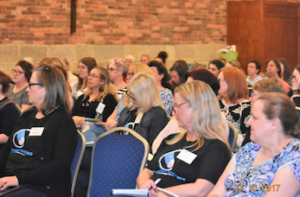
Omega Writer's Conference Session

We want conference to be a chance for you to hear God’s still, small voice amidst the noise of the world.

We truly believe He has something special for you.

We understand that every Christian writer needs support, encouragement, training and pastoral care. We were never meant to go it alone. This conference is an opportunity for all these things. We have experienced writing professionals lined up, waiting to share their wealth of experience and knowledge with you. We have opportunities for you to meet with editors and publishers. We have chaplains available to support you and encourage you along the way. We have, fellowship and fun and so much more.

We cater for all writers at every stage of the journey whether multi-published, pre-published, and even those with no intention of ever being published. If you are a Christian and write (doesn't matter what you write) we want to see you there!

If finances are an issue, there is the option of a scholarship for new attendees. (More details to come.)

We are especially conscious of our first-time attendees and will ensure you do not feel alone or unsupported. You will be welcomed with open arms.

This year our special guest speaker is Steve Laube.

Steve is an American Christian Literary Agent, a veteran of the bookselling industry with nearly 40 years of experience.

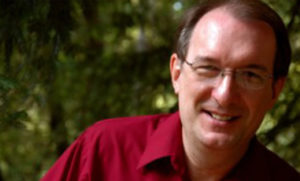
Steve Laube, Literary Agent

If I can’t tempt you with any of the above, let me try with our BOOKSHOP!

It is well known that writers make the best readers just as readers make the best writers. So, we have a bookshop full of all the newest titles (and many of the old) from Australian Christian authors. Not only can you buy these books, you can have them personally signed by attending authors.

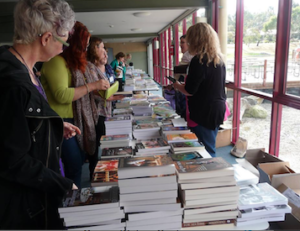
Omega Writer's Conference Bookstall

For those who are unsure what to expect, or who need reminding, we have a link on our website giving you further details, including travel options, accommodation and attendance options, what to do if you have special dietary needs, and much more: Omega Writer's Conference FAQ

There are so many more exciting things I want to tell you about the conference, but at past conferences I've learned valuable things like sticking to my word limit so I'll stop. For further details and all the other things I really want to tell you, go to our website.

Conference is from Friday 11th October until Sunday 13th October, 2019 at the Edmund Rice Retreat and Conference Centre, Mulgoa (Sydney).

Registrations are open NOW!

Click here to register.

Oh, and I think I might have mentioned we have a website.

And click here to visit our Facebook page.

Hope to see you there!

About Jenny Glazebrook

 Jenny Glazebrook writes inspirational Christian fiction. She grew up in the small town of Gundagai, Australia and after years living in other parts of Australia, she have recently returned with her husband Rob and four children, Micah, Merridy, Clarity and Amelia. They have added many pets to our family including two blue-tongue lizards, a cat, a goose, a budgie (parakeet), many chickens, a sheep who thinks she's a dog and a dog who thinks he's a sheepdog.

Find Jenny online at www.jennyglazebrook.com.

Monday, 17 June 2019


The Seasons of Writing

Ecclesiastes 3:1 states, “There is a time for everything, and a season for every activity under heaven.” (NIV)
The New Zealand winter surrounds me and I’ve had my first snow play time this year. It was great fun as some of the family came with us and we introduced our little granddaughter to this cold white stuff! It reminded me of an article I wrote years ago about the seasons of writing and how there is good in all of them. I pulled it out of the archives, dusted it off and here’s the updated version!
Spring Writing 
This is the season of writing where new ideas are birthed, new projects are conceived and stories begin to grow and develop. It’s a time of freshness, hope and inspiration. Thoughts are nurtured in our hearts and enthusiasm and vision abound.

Summer Writing
As spring gives way to summer, ideas mature and blossom and stories are captured on paper. Story lines grow and strengthen and life pours through the words we write. We wish we had extra hours in our day to keep up with the inspiration.
Autumn Writing
This is the time of harvest, when fruits mature and stories are sent forth to touch lives. Projects that once brought us excitement may lose their appeal and there is a sense of ageing and finality as winter approaches.

Winter Writing
Winter often feels like a time of waiting. Everything appears stiff and cold and there is little life or inspiration. Nature is resting and words won’t come. Everything we write feels pointless and dry ... and then the first signs of spring appear and the cycle begins again.

Unlike the natural seasons, writing seasons may differ in length and intensity. From personal experience, I’ve found I can be motivated and excited about one writing project while another lies dormant on my laptop. If I get stuck in a dry season, I tend to take time off and relax. I feed my soul with the Word of God, read inspiring books and indulge in creative activities ... and one day I’ll catch a hint of spring as the tendril of an idea pushes forth.

Thursday, 13 June 2019

Meet Our Member: Jeanette Grant-Thomson


Most Thursdays in 2019 we will be interviewing one of the members of Christian Writers Downunder – to find out a little bit more about them and their writing/editing goals.

Today's interview: Jeanette Grant-Thomson


Tell us three things about who you are and where you come from?


A very long time ago, I grew up in a beautiful old Queenslander in Corinda, Brisbane. We were an artistically talented family but a troubled one, so my growing up years were not easy. I often escaped into reading and writing. When I was about six, I suddenly recited a little four-line poem I’d made up. My proud father made me a notebook called “Jeanette’s Poems” and I proceeded to fill it. After a few years, my poems and short prose pieces were often published in the Saturday Telegraph on the children’s page.


Always keen on acting, while at Queensland University I attended a workshop at Twelfth Night. It was run by Jack Thompson, the film actor. Exciting times! I later did a year’s acting course at Sydney’s Ensemble Theatre, then much later picked up my Speech and Drama training, getting my ACTL letters with Trinity College. I loved my thirty or so years of teaching Speech and Drama.

After a colourful time in the arty scene in Sydney, I began to question the meaning of life and became a Christian. This was a huge culture shock at first but gradually I became a very dedicated Christian and used my talents in church and other Christian areas. One high point in my Christian life was a prayer journey to Uluru with the Australian Prayer Network in 1999.

See my blog, godwhispersjgt.blogspot.com for further Christian adventures.


Sorry, it’s a bit long. The lines between my points are a bit smudgy.


Tell us about your writing (or editing/illustrating etc).  What do you write and why?


I’ve had a go at writing in most forms, ranging from poems to film scripts to the Teen Challenge newsletter. Then on to books.

I’ve often written because there was a need – e.g. Sunday School books and tracts.


I write mainly because I’ve always wanted to write, it just seemed to come naturally, and I’ve written whatever seemed right at the time.


Who has read your work? Who would you like to read it?


Hard one. Most of my books have had different target readerships. To my amazement, Jodie’s Story (my first book) has sold widely. I intended it for teenagers but it’s been read by people as young as twelve (no doubt some younger) and by other people of all ages. It’s been published in Canada as well and has sold in several countries. I feel it has reached its target audience and much more.

The other two biographies have sold mostly in churches or in musical circles.


My two proper novels (JS is also classified as a novel) have been slow sellers but have reached a wide variety of people, nearly all adults. I’d like to write a better novel and have it reach well-read adults. I’d also like to continue to write books that change the lives of readers, as with Jodie’s story.


Tell us something about your process. What challenges do you face? What helps you the most?


I’m unpredictable. Every book is different. JS began with the whole story I’d written in capsule form in a Teen Challenge newsletter so the book was easy to write. Now – cover your eyes if you like! – I didn’t do any rewriting or have it edited! And it was published almost straight away. (Presumably the editor from Anzea did something to scrub it a bit.) Teen Challenge were celebrating an anniversary and wanted it launched then, so pre-ordered some copies. Luck! (Or God!)

Mirage began as a true story. The publisher who accepted it went bankrupt and the lady’s situation had changed, so I rewrote it into a novel. A staff editor made some small changes.

Lantern Light – I wrote the climax first and then wrote from the beginning, rewriting the whole book about four times. I wish I’d had it edited! 

Challenges: I struggle a lot with time pressure, health issues and tiredness and I often get stuck with technological issues.

Praying helps a lot. I’ve even asked God to lead me re which character does what! 

Also I always ask several other people to read my manuscript before submitting it.


If you were to give a shout-out to a CWD author, writer, editor or illustrator – who would they be?


So many of you have given helpful input, ranging from technical to writing tips. Jenny O’Hagan, thanks SO much for your patient help with the tech side of life and for your clear, vivid prose in your books. Nola Passmore, for your writing tips. And Anusha Atukorala for your lovely writing and your never-ending encouragement, which I need so much. My favourite book from CWD is probably Rosanne Hawke’s Zenna Dare.


What are your writing goals for 2019? How will you achieve them?


I’d like to begin another book this year. Preferably a part-biography, part fiction. Faction. I’ll keep blogging just a little longer then have a break.

I’m waiting for the ‘right’ story to come my way. This has always happened so far. So here’s hoping it does again!


How does your faith impact and shape your writing?


I feel God gives me the ideas or leads people with stories to me. My goal in writing is always to reach people with the gospel or with the help Jesus gives.

____________________________________


Jeanette Grant-Thomson is a Christian author living in the Moreton area north of Brisbane. She has been writing in many forms most of her life. Her first book, Jodie’s Story, is in its third edition and has sold quite well overseas as well as here in Australia. She has written four other books and part-written several others. She loves having coffee with friends and walking in the country or spending time at the beach. 


Monday, 10 June 2019

Going Big, Going Small, Making the Most of it All


By Mazzy Adams


The email lands in my inbox filled with punchy phrases designed to provoke and spread excitement about the next big conference in a major US city. It’s only a plane flight away but that’s a fanciful flight too far for my budget.

I press delete.

The state or national writers centre informs me of upcoming events. All very interesting. But the scheduled times clash with other commitments. There is a webinar but that's not the same as being there ...

Delete.

Incoming: A reminder about the early bird discount period for the Omega Conference in Sydney.

If only ...

I spend several minutes organising, if not holding, a personal pity party because the timing’s all wrong. It’s right in the middle of the crucial final countdown for our year twelve students; for their sake I need to be here more than I need to be there.

I know how valuable that conference will be. I pray blessings and safety for those who can make it.

We’ve all been there, longing to gather with like-minded souls, fellow creatives who understand the word-driven psyche. We desperately want to participate, contribute and make the most of any and all opportunities to connect, learn, promote, celebrate, and, er, commiserate. Let’s face it—there’s a unique blessing that comes when chatting to someone who UNDERSTANDS. When I say to a fellow writer, ‘He says, “Just put it up as an ebook”,’ and her spontaneous laughter tells me she KNOWS there’s no ‘just’ about it. She KNOWS it’s not that simple.


(Image by Aleks Megen from Pixabay)

This past weekend, I’ve enjoyed the enormous blessing of sharing these experiences and more at the Omega Writers Toowoomba Retreat. In terms of numbers, we’re not exactly huge. But in my calendar, it’s super significant. Each year, this gathering has been a wellspring of blessing and encouragement to me in my spiritual walk and my writing journey—even the year I was sporting a plaster cast on a broken wrist.


But if the truth be told, the reason this ‘small’ event is such an enormous blessing to me arises from a plethora of tiny moments when I’ve been able to interact with writer friends throughout the year:

  • birthday celebration dinners with fellow Quirky Quills
  • gluing thank you cards and assembling welcome packs with fellow event organiser, Janelle Moore
  • spending an afternoon cheering on fellow author, Jessica Kate, as she shared her experiences breaking into the US market
  • learning ‘How to Avoid Literary Speed Bumps’ at a workshop by fellow author, and editor, Nola Passmore
  • the spontaneous encouragement of a monthly writers’ chat n share in Pamela Heemskerk’s cosy sunroom—especially when new-to-the-experience-but-longing-to-learn friends, (now no longer strangers), join in
  • or the crying-with-laughter emoji posted by a Facebook sympathiser that makes my day.

A hundred and one little moments and short experiences combine to create a gigantic collective fellowship of encouragement (with the odd nag to get on with the business of writing thrown in for good measure; oh yeah, we should do some of that.)

Whether we're writing a six word short story, a three line haiku, flash fiction, blog, devotion, self-help treatise, novella, memoir, novel, epic saga, or multi-book series, a few moments of mutual fellowship and encouragement can make a HUGE DIFFERENCE.

So next time you feel the disappointment at having to let a grand opportunity pass you by, settle your soul with an engaging moment ...  post an emoji, phone a friend, grab a picnic lunch with a critique partner, post a star rating or book review on Good Reads or Amazon, or read or write an encouraging blog.

Above all, be comforted knowing that your little contribution to mutual interaction goes a very long way to make somebody’s day.

Maybe even your own.

Have you experienced, or imparted, a ‘blessed moment’ recently? Big, small, or minuscule, positive connections strengthen and inspire us all.


Mazzy Adams is a published author of poetry, fiction and creative non-fiction. She has a passion for words, pictures and the positive potential in people.

Website: www.mazzyadams.com 
Email: maz@mazzyadams.com

Thursday, 6 June 2019

Meet Our Members – Ian McIntosh


Most Thursdays in 2019 we will be interviewing one of the members of Christian Writers Downunder – to find out a little bit more about them and their writing/editing goals.

Today interview: Ian McIntosh, Children’s Picture Book Author


Tells us three things about who you are and where you come from.


  • I was born in Victoria, grew up in Normanton in outback QLD and now live in Townsville. 

Tell us about your writing (or editing/illustrating etc).  What do you write and why?


  • I write children’s picture books and poems.  
  • I write children’s picture books because they are the type of story ideas that come to me. I also love working with kids, so that works well with the way I think and write. I love writing for children because I can let my imagination run wild. It is also very rewarding to see a child enjoying one of my stories. 
  • I write poetry because I have always liked rhyming. I have written a lot of bush poetry because of my experiences of growing up in the bush.  
  • I also write kid type poems and poems with life messages. 

Who has read your work? Who would you like to read it?

  • Lots of kids, parents and people who work with kids have read my stories.  A few publishers have read my stories too, but they didn’t like them. That doesn’t worry me because my stories are not meant for them.
  • I mainly want kids to read my stories and also parents and people who work with kids, because they will get the most out of them.

Tell us something about your process. What challenges do you face? What helps you the most?


  • I don’t really face any challenges when writing.  My stories tend to appear and I just let them come out however they do. I carry pen and paper with me all the time, as I never know when an idea is going to come to me.  
  • What helps me the most is to just be open to any thought turning into an idea and to be ready to start to write when something comes.

What is your favourite Writing Craft Book and why?


  • Not sure if I understand this question?  But I don’t have a favourite writing craft book. 

If you were to give a shout-out to a CWD author, writer, editor or illustrator – who would they be?


  • Jeff Townsend.  We spent some time working in the Christian music/products business together.  

What are your writing goals for 2019? How will you achieve them?

My main two are …
  • Creating a program to help emerging authors to self publish their first children’s picture book. I am currently working with a team of people to help me put this together.
  • Finish the text for my 4th children’s picture book by August. I have a plan in place to help me to do this.  


How does your faith impact and shape your writing?


  • I pray often and know that God spenaks to me a lot about words. I believe He has created me to write, and I feel His presence when I am writing. A lot of my writing is not overtly Christian however I write a lot of poems and stories that have a message in them that draws parallels to God and faith in God. 


Monday, 3 June 2019

Exploring Genre | Christine Dillon Introduces Women's Fiction

We're continuing our series of joint posts with Christian Writers Downunder. Today, author and missionary Christine Dillon is discussing Women's Fiction (which, despite the name, isn't just for women).


Introducing Women's Fiction

According to Wikipedia, Women's Fiction includes layered stories about one or several characters, often multi-generational that tackles an adult character's struggle with world issues resulting in emotional growth. It may include elements of mystery, fantasy, romance or other subgenres, but is not driven by these elements.

The Women's Fiction Writers Association says:

the driving force of women's fiction is the protagonist's journey toward a more fulfilled self.

When I started writing fiction I hadn’t yet heard of women’s fiction. I called my books ‘contemporary inspirational’ or ‘issues-based Christian fiction’ (a label I invented).

At the same time I was reading a lot of Christian fiction and getting frustrated at the huge number of romance stories out there which just weren’t my thing (with a few exceptions). I started asking around, saying, “You know, books like Francine Rivers writes, tackling an issue like abortion or divorce. Issues that people face in their daily lives.”

“Oh, you’re looking for women’s fiction,” I was told.

My thoughts on Women’s Fiction

My initial response was lukewarm to having my books labelled ‘women’s’ fiction because I hoped men would read them too. There doesn’t appear to be an equivalent genre for men.

When people ask me about my books I still use my own definition of ‘contemporary Australian Christian fiction that tackles issues that Christian’s face in their daily lives.’

Women’s Fiction tends to be contemporary but some historical stories have women’s fiction elements. Think Redeeming Love by Francine Rivers, or biblical fiction—Pearl in the Sand or Land of Silence by Tessa Afshar.

Elements Found in Women’s Fiction

  • A crisis issue like abortion, divorce, spouse having an affair, accident, or unemployment, that triggers emotion and eventually life change.
  • A focus on the emotional and thought-life of the character. It is a spiritual (if it is Christian fiction) and emotional journey for the lead character(s).
  • Nil or minimal romance. If there is romance, it is not the focus of the story. After all, it is pretty hard to avoid any romance if you’re writing about real people.
  • Women’s fiction doesn’t need a ‘happily ever after’ ending, which is something romance readers seem to expect.
  • Character-driven stories rather than action driven.
  • The main characters are often women, but in my opinion don’t have to be. Otherwise my third and fourth books in my ‘Grace’ series are not going to be the same genre as the others.
  • Readers can often say, ‘I’ve experienced that’ or ‘I wonder what I would do in that situation?’ These stories often prompt discussion.
  • The book often ends with a reflection from the main character about what they’ve experienced and how their life will change.

Women’s (Christian) Fiction I’ve enjoyed:

  • Deborah Raney - she specialises in putting people in situations
  • Ginny Yttrup - especially Words
  • Brenda S Anderson
  • Catherine West
  • Francine Rivers - I especially like And the Shofar Blew
  • Ann Tatlock

Here's a question for men:

Have you read books that are labelled ‘women’s fiction’ - what did you think? What did you like or not like?

So which stories have you enjoyed that could possibly fit into this genre?

P.S. Christine has been delighted that many men love her books and she even has younger teen boys who can’t wait for the next.

About Christine Dillon

Christine never intended to become an author. She started with non-fiction but is currently publishing a series of contemporary, Australian Christian novels. In daily life she is a Bible storyteller and trainer working mostly in Asia and Australia. Besides reading, Christine loves the great outdoors especially hiking and cycling. You can find Christine at http://www.storytellerchristine.com

Monday, 27 May 2019

How To Avoid Writing Stereotypes Like A Superhero: Endgame Edition

 WARNING: Article contains spoilers for Avengers: Endgame!
Originally posted on The Independent Initiative

It’s no surprise, Marvel knows how to make movies that move us and leave us with all the feels. I’m ecstatic to talk about one of their best films, Endgame, and how to avoid writing stereotypes like the pros.

It’s gonna be a good one for us because I want to talk about why being a stereotype can be good, and how to use it well and still break out of it.

When it comes to writing a superhero screenplay Marvel is good at using many of the tricks and tips that can be found with a quick google search ...

  1. Make your hero likeable, give them a set of rules with their ability, and never break them
We like Iron Man, Cap, Thor, and all the others, and each one follows a set of rules. Stark has his suit and smarts, Cap is inhumanly strong and lives by a high standard of old-school morals, and Thor has lightning running through his veins because he’s the god of thunder.
  1. Give the hero a villain who is more powerful than them
Thanos is a worthy villain, he’s more powerful than our heroes and if that wasn’t enough, he’s got a huge army that outmatches anything our heroes can provide.
  1. Give the hero a happy ending, one in which they discover they and their ability are the answer to the problem
In the end, we get our almost happily-ever-after ending. Even with a few hard deaths, there’s still hope for the future, and it was only possible when our heroes realise they are the answer to the problem of Thanos. 

Marvel follows the rules, BUT they also know how to make those stereotypes into something unique, and they do this by giving our heroes faults, quirks, and vices. AND they flip the whole concept of Story on its head right from the beginning of Endgame. There are 3000 amazing ways they do this, but I want to focus on two.


THANOS’ DEATH
Let’s start with this major spoiler for the beginning of the film. Here’s me, sitting in the cinema, fully engaged in the story, when our Avengers discover exactly where Thanos is. Our heroes band together to head out to space and take the villain down. 

And they do. 

Without much fuss or fighting. 

Thor knocks Thanos’ head off within the span of a few seconds, and my jaw dropped.
Where were they gonna take the rest of the film? Would they jump into the multiverse and take down every Thanos in every reality? What was the big play? And how the heck were they going to get the infinity stones to reverse what happened at the end of Avengers: Infinity War?

Having Thanos’ death right at the beginning gave us a more complicated story to follow, which made it captivating. Three hours of story was easy to watch.

This is a great inspiration to break the stereotype: What can you do with your story to shake the audience up and avoid the normal journey a film takes? 

To do this well, you need to know story inside and out. Study everything you can about the art of storytelling and then, using your imagination, find a way to stay within the rules, but make it look like you’re breaking them. 

This is exactly what they do with Thanos’ death, they didn’t really break the rule because they end up fighting him again at the end - just like a normal narrative - but it’s definitely with a great twist. The Avengers fight a slightly younger Thanos who hasn’t had the experience of messing with their world as much as the previous version. But because Thanos doesn’t know our heroes as well as the other older Thanos, he’s relying more on a future yet to happen, which in turn makes him like a baby scorpion, super extra dangerous, because he doesn’t know when to stop. Thus the line to the Avengers about them not learning from their failure, so I’m (Thanos) just gonna have to end the whole world now, instead of only half.


FAT THOR
This was such a brilliant move. Something I’ve NEVER seen happen to a superhero. We’ve seen superheroes having a bad day or year in tv shows like The Umbrella Academy, or DC’s Watchmen, but never have I seen a superhero experience such trauma from a failure like we get in Endgame

It’s just so epic. 

Of course, Thor would be riddled with shame and guilt. Half the universe - not just earth, the UNIVERSE - is gone because he aimed for Thanos’ heart instead of going for the villain's head. 

He blames himself for millions and trillions of deaths and because of his many travels to different worlds, he knows better than most of our Avengers, the extreme number of people who are gone. I can’t even imagine the weight he’d be carrying from that, so to make him a drunkard who’s let his body slip into a state of decay makes total sense, but it’s never something we expect to see.

And the best part is he remains this way for the whole film, there’s no quick ‘get fit now’ montage, he has to live with his consequences through the entirety of the film, and it reflects in his lack of ability to get the job done. Giving us not only a great character arc and unique look at a superhero but also a glimpse of the reality of life choices. 

If you find yourself writing a superhero that you’ve seen many times, how can you flip their experiences to make something unique and original? How can you ground that character into reality, while still maintaining their superhero feats? 

Watching Fat Thor go through a gamut of emotions, I found myself wishing I’d written a character like it. He’s a complicated mess, but he’s still written with simplicity. Christopher Markus and Stephen McFeely follow the old cliche “Keep It Simple Stupid”, even while their story is full of intricacies, they know when and how to keep it simple. 

Watching films like Avengers: Endgame with a critical eye can improve your own writing. What character’s journey made you cry? What was it about their dialogue that appealed to your emotions? What about the story made you confused? What took you out of the film? What engaged you most? What little quirks did the characters have that worked? What didn’t work? What about the villain appealed to you? What didn’t? What twists and complications worked? 

These questions and more can help give you an education on writing your own powerful and compelling screenplays, and will definitely help you avoid those cliches and stereotypes. 

What were some of your favourite moments from Endgame where they avoided the stereotype? Leave a comment below for the rest of our film community to learn from you too; now get out there and write!