Thursday, 4 July 2019

Indie Publishing anyone?

by Jeanette O'Hagan


What is Indie publishing? 


What is Indie publishing?  In the past there were two main routes to publishing - through a traditional publisher or through a vanity press. With the advent on e-books, print-on-demand, and online sales, it's become more and more viable for authors to become their own publishers. This means much more than finishing a book and then banging it up with a cover and no editing or proofing on somewhere like Amazon (though that can happen).  A serious Indie publisher is committed to producing a quality book with professional covers, with well edited and structured content that will connect with readers.

Like most authors, my aim was to be traditionally published. I became involved in Indie publishing through writing short stories and anthologies, first with some hands on involvement with the publication of the Tied in Pink anthology (which included my story, The Herbalist's Daughter) in 2014 and then publishing two anthologies in December 2015 - Let the Sea Roar (editor Madeline Calcutt) and Glimpses of Light (editors Jeanette O'Hagan and Nola Passmore). In 2016 I decided to publish a couple of the short stories and then a novella - Heart of the Mountain. The rest, as they say, is history.

Interview - Pros and Cons of Indie Publishing:

At the recent Omega Writers Toowoomba Retreat I was invited to be on the three-woman panel (along with Anne Hamilton and Ruth Bonetti) about Indie Publishing.  Nola Passmore asked us a number of questions and it was great to get three different perspectives as well as to answer questions from the audience. I've reproduced my answers I'd prepared to the questions below.


‘The Road to Self-Publishing’ Panel

Sat 8 June 2019 


Nola: Very briefly, tell us what you have self-published and the genre/s.

Jeanette: Of my own books

The five novella series Under the Mountain. The first book Heart of the Mountain published in 2016 & the last book, Caverns of the Deep released last month.

Akrad’s Children – first novel in the Akrad’s Legacy series

And a collection of short stories Ruhanna’s Flight and Other Stories


I’ve also been involved as either editor, proof-reader, & /or publisher of a number of anthologies

 Glimpses of Light - editor (with Nola Passmore) & also publisher
 Let the Sea Roar – editor Madeleine Calcutt, I assisted & also published the book
& I helped Victoria Carnell publish her first edition of The Call of the Wattle Bird.


Nola: What led you to take the self-publishing route?


Jeanette: I have a few reasons:

The opportunities to be noticed and accepted by a traditional publisher are extremely limited
I like having creative control and while a Indie publisher takes on the brunt of financial commitments up front, they also receive a greater percentage of royalties in the long run, and are not restricted to the publishers timetable and/or change in direction or focus.


Nola: What tasks did you do yourself in the production of the book/s and what tasks did you outsource? Can you provide tips (or lessons learned) from your involvement in any of those tasks? Any useful resources?

Jeanette: The tasks I do are:

  • Write the book & Initial edits
  • Get ISBNs, & register with Library Catalogue, Goodreads etc.
  • Format both e-book & the print book
  • Cover (in most cases)
  • Uploading the book to Amazon, Draft2Digital, Ingram Spark
  • Send legal copies to National Library of Australia (NLA) & State Library
  • Launch, promotion, special offers
  • I also want to work on distribution - to schools, libraries and bookshops.

And I outsource:

  • Editing & Proofreading
  • Cover (in one case)
The mix will be different for each Indie author and there are services like Book Whispers or Lillypilly Publishing or Australian E-Book Publisher that can provide many of these to Indie authors at reasonable cost without taking control of royalties and/or decision making.

I will say that it's important to outsource at least some of the editing and proofing as it's important to get other eyes on the manuscript.


Nola: What costs were involved in producing the book? How did you fund the project?

Jeanette:  For me the main costs are:

  • Pay for professional editing, proof-reading (this is the biggest cost but important not to skimp)
  • Paying for ISBNs 
  • Set-up costs with Ingram Spark (a Print on Demand publisher with a printer in Australia)
  • Software costs 
  • Cost of giveaways – especially print books for reviews or promotional opportunities or giveaways (most will take ebooks),
  • Admin /Promotion costs – such as POBox subscription, domain name, website hosting, Book Funnel subscription,  etc.
  • Also for events & fairs – Table hire costs, Insurance (Duck for Cover), travel & accommodation for book tables at conventions like Supernova or the Omega Writers Book Fair – and a kind gift from one good friend.
  • Advertising – I’ve done a small amount of Facebook Ads but haven’t had the time or budget to invest in this as yet.

To cover these costs, I’ve invested my own available spending money, cashed some shares, also I’ve done some occasional paid editing & formatting. And I do get some royalties from online sales, one anthology & conventions.

It helps if you have some upfront resources to invest, though there are ways to bypass or reduce some of the costs without skimping on quality - but it generally means more time commitment and slower progress. Of course, with God all things are possible.

Nola Passmore: According to Jane Friedman, an author platform is ‘an ability to sell books because of who you are or who you can reach’. What is the most useful or effective thing you’ve done to build your platform and/or market your book/s?

If I discount the early anthologies (Glimpses of Light & Let the Sea Roar) – then it’s a tie between early online Facebook launches & Conventions – like Supernova and Oz Comic Con. 


Nola: You’re all Christian authors, though not all of you were publishing material that was explicitly Christian. What role did your faith play in your publishing journey?

I felt a clear lead from God that this was what he wanted me to do. While my books are aimed for the general market (and I’ve had many non-Christians read and appreciate my books), I write intentionally from a Christian framework and themes. Faith also keeps me going when I feel discouraged.

Nola: What can readers and other writers do to support Indie authors?

Glad you asked :)

Much the same as any author.

  • Pray & encourage them
  • Beta read if requested or critique groups
  • Buy – or borrow their books (& if not in local library or bookstore or school, ask if they can be ordered) & read them :)  (Okay, so my to-read piles are huge - but I enjoy reading other Indie and Small Press authors).
  • Maybe buy their books for friends and family as gifts.
  • Recommend their books to friends, family, other readers – both in person and online
  • Review and/or blog about their books.
  • Subscribe to their newsletter or patreon
  • Like their FB pages, Twitter or Instagram – like, comment, share or retweet their posts. Follow them on Amazon Central, Bookbub, Goodreads. Add their books to appropriate Goodreads lists and/or ask questions.
  • Attend and participate in launches.
Especially, Active support on Social Media, Buy, Review and Recommend their books - and encourage and pray.

Thanks Nola for some great questions and the opportunity to share a little of the Indie journey which can be exhilarating, moving, lots of fun, discouraging and exhausting but always worthwhile. We walk by faith, not by sight. So as someone blessed me today by saying 'Jenny, keep writing' so I say 'Keep writing.' 


Jeanette O'Hagan spun tales in the world of Nardva from the age of eight. She enjoys writing fantasy, sci-fi, poetry, and editing. Her Nardvan stories span continents, millennia and cultures. Some involve shapeshifters and magic. Others include space stations, plasma rifles and cyborgs. 

Her stories and poems have also been published in over twenty anthologies - including The Quantum Soul, Challenge Accepted and Tales of Magic and Destiny in 2019, as well as her Under the Mountain series and Akrad's Children, the first book in the Akrad's Legacy series.

Jeanette has practised medicine, studied communication, history, theology and a Master of Arts (Writing). She loves reading, painting, travel, catching up for coffee with friends, pondering the meaning of life. She lives in Brisbane with her husband and children.


Find her on:


Monday, 1 July 2019

Exploring Genre | Jessica Kate introduces Romantic Comedy


Blast the glitter cannons and dance in the streets everybody, because romantic comedies are BACK!

We all have our favorites, but from Pride and Prejudice to I Feel Pretty, rom coms are one of the most beloved genres by women across the world. And whether they come in book or movie form, they’re also one of the most highly criticized.

Is this criticism justified? How can we make a positive contribution to the genre? What even IS a romantic comedy, and who are the current movers and shakers?

Pull on your fluffy slippers and grab your popcorn – we’re going to Rom Com University.

What Is a Romantic Comedy?

We could debate this all day folks, but for the purposes of today, I’ll keep it short and sweet – a romantic comedy has a romantic relationship at its core, and it’s told in a humorous manner.

 
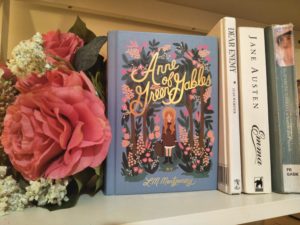
What is a rom com? Jane Austen's Emma qualifies, though Anne of Green Gables still has a plot even without darling Gilbert Blythe.

That said, storytelling is generally more of a spectrum than neat boxes.

Recent additions to the genre such as I Feel Pretty and Isn’t It Romantic focus more heavily on the heroine’s journey, but I still count them. If you removed the romance from either of those stories, there would be no plot left. In Christian fiction, I’d say Bethany Turner’s The Secret Life of Sarah Hollenbeck and Wooing Cadie McCaffrey are comparable. However, I wouldn’t count a movie like Bridesmaids that focuses on the female friendship as the core story and just has a romantic subplot.

The humorous part can be tricky too—how funny is funny enough?

I’ll be honest and tell you that some readers call my novel Love and Other Mistakes a ‘romantic comedy’, while others would say it’s a romance with lots of family drama. I consider it borderline so I call it a ‘sassy romance’.

Regardless, I won’t be nitpicky. Much of the advice today will apply to your funny-women’s-fiction-with-a-romantic-subplot or your sweet-lighthearted-romance.

What’s Happening Now in Romancelandia?

In the world of romance, otherwise known as Romancelandia, romantic comedies are making a strong comeback.

 
Trends in romantic comedies have changed over the years, but the key ingredients stay the same.

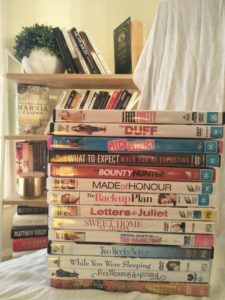
Long story short, for movies at least most people consider the 90s to have been the Rom Com Golden Age (all those Meg movies), the 00s to have been the Fall of Rome, and the 10s to have been a barren wasteland. Or more accurately, this decade has seen few true rom coms, but romantic comedy elements have found their way into all sorts of other genres (including a lot of television).

But now Netflix is once again changing everything…

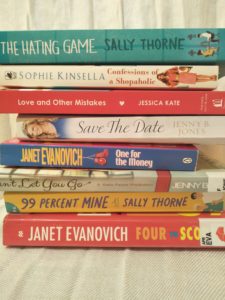
Over in the book universe, Bridget Jones introduced us to chick lit in the late 90s, which was followed by a boom (Confessions of a Shopaholic, anyone?) and bust by the mid to late 00s. Now general market names like Christina Lauren and Sally Thorne are bringing rom com books back in a big way. (Though to be fair, Sophie Kinsella never stopped being awesome.)

 
Writing romantic comedy in book form means an author has less scope for physical comedy, but plenty of opportunity in author voice and description.

In the Christian/sweet fiction market today, Kara Isaac, Bethany Turner, Kristin Billerbeck, Melissa Tagg, and Jenny B Jones are all major players in the contemporary category. Historicals have their share of humorous romance too, with Karen Witemeyer, Mary Connealy, Deanne Gist and Jen Turano all contributing. I’m sure there’s more that I’ve missed (add them in the comments!) and you could probably question the strict definition of whether these are rom coms, but like I said…it’s a spectrum.

Shifts in the Genre

Now that we’ve had a chance to recover from some of the less-awesome rom coms of the 00s, Netflix has recognized what we knew all along—there’s millions of people out there whose Friday nights just aren’t the same without some swooning and laughter. But this is a new generation of romantic comedy, and it’s worth noting the differences between today’s rom coms and those of the 90s and even 00s.

Questioning the premise.

Recent rom coms such as I Feel Pretty, Isn’t It Romantic and even the TV series Crazy Ex-Girlfriend (which its writers call a ‘deconstruction of the romantic comedy) reject the old rom com premise that a man’s love equals a happy ending. Sorry Tom Cruise and Renee Zellweger, but the perfect partner doesn’t complete anyone. These stories focus more on the heroine’s internal journey to self-love, with a strong serving of romance on the side. As Christian authors we believe this can go a step further—to a heroine secure in her value due to God’s love. Don’t be afraid to examine conventions in the genre and flip them on their head.

Smart is sexy.

The modern women in these romantic comedies are far less concerned with the designer brand of their high heels and far more focused on their professional careers or small businesses. These are no damsels in distress—these women kick corporate butt, and the men who pursue them must match their intelligence and wit.

Flip clichés for comedic effect.

Man Up, Isn’t It Romantic and Crazy Rich Asians all find different ways to poke fun at the ‘run to the airport’ cliché—even just by showing how hard it really is to make a grand romantic speech on a crowded airplane. See if there’s any cliched moments that you can twist—your readers will love it!

Write Your Rom Com

Whatever decade (or century) they were written in, the great romantic comedies have the same storytelling principles that serve all genres:

Multi-dimensional characters.

Sweet Home Alabama is one of my favorite rom coms because there’s so many layers to Reese Witherspoon’s dilemma – not just the two men in her life and her flourishing fashion designer career, but complicated relationships with her parents, her friends, her future mother-in-law, her own regrets and her nostalgia. Plus, the secondary characters are more well-rounded the your average ‘best friend’ cardboard cut-out. Everyone has their own flawed lives, not just the main characters.

A strong voice.

Sally Thorne’s wildly exuberant descriptions (like an explosion of rainbows and sherbet for your brain), Janet Evanovich’s deadpan way of describing ludicrous situations and characters, Jenny B Jones’ southern sass—all essential ingredients to the success of their respective stories. Voice isn’t something you can force, but it is something you can cultivate. What tickles your funny bone in rom com books? Take note and make an effort to put your own spin on it.

Witty dialogue.

Is there a rom com in existence that doesn’t have witty dialogue? Jane Austen set the bar high and we’ve been striving to meet it ever since. Good banter takes a while to get right—the first drafts tend to come off abrasive—but seek out feedback and refine, refine, refine. And watch everything Aaron Sorkin ever made.

Comedic situations.

Get creative and see what you can make happen. Janet Evanovich has managed to destroy Stephanie Plum’s car in all 25 novels of the series so far—she even smushed it with a garbage truck once—and it’s a running joke of the series. The ‘proposal story’ one-upmanship scene between Sandra Bullock and Ryan Reynolds in The Proposal is comedy gold, as is Sandra Bullock’s interesting dance moves with Betty White. I Feel Pretty plays with cringe humor, while Confessions of a Shopaholic lets Becky Bloomwood tie herself in knots as she tries to cover up her lies.

Funny description.

In rom com books there’s extra room for comedy in your description. You could compare your heroine’s bed hair to a rat’s nest…or an electrocuted octopus. Contrast a character’s expectations (glamorous night out) with reality (strapless bra cutting off blood supply). Go crazy.

Strong romantic tension.

Stronger than in your sweet romances, these characters feel an irresistible pull toward one another—but they’ll fight it with everything they’ve got! This is why some of my favorite rom coms have characters with history (The Proposal, Sweet Home Alabama, Two Weeks Notice) because the bond of shared history really helps ramp up that magnetism.

An evenly matched hero and heroine.

Power dynamics are important. If one character has an advantage over another (in The Proposal, Sandra Bullock is Ryan Reynold’s boss) then circumstances have to even the scales (Sandy is a fish out of water in Ryan’s Alaskan hometown). Especially in stories with a love/hate trope, the characters will spend the story either fighting one another or fighting a third force side-by-side, so they need to be evenly matched with complementary strengths and weaknesses.

Know your secret spice.

There’s a magic ingredient common to all your favorite books, movies and TV shows, regardless of genre. James L Rubart calls it the theme of your life. If you can’t detect it, go back to that list of favorites and ask ‘what was my favorite moment in each of these stories?’ Knowing this helps you generate story ideas you’ll stay addicted to.

Go deep and make us feel something.

While they’re not romantic comedies, let’s borrow from Pixar’s kid-friendly comedies for a moment. While they’re known for making parents laugh, those movies deliver an emotional kick every time—who doesn’t tear up in Finding Nemo? The pain of the characters’ emotional journeys provide a strong contrast to the humor, like a diamond sparkling on black velvet. It makes us appreciate the laughter that much more!

Whatever brand of romantic comedy you love best, the guiding principles of storytelling remain the same. Study those who tickle your funny bone the most, layer in strong character motivations and whack in some seemingly insurmountable obstacles. And have fun with it! 😊

About Jessica Kate

Australian author Jessica Kate is obsessed with sassy romances.
She packs her novels with love, hate, and everything in between—and then nerds out over her favorite books, movies and TV in the StoryNerds podcast. When she’s not writing or discussing fiction, she’s hunting the world for the greatest pasta in existence.

Her debut novel Love and Other Mistakes releases July 2019, while A Girl’s Guide to the Outback hits shelves in January 2020.

Receive her sassy short The Kiss Dare FREE when you sign up for her newsletter at jessicakatewriting.com, and check out the StoryNerds podcast on Spotify and Apple Podcasts and at www.storynerds.podbean.com.

About Love and Other Mistakes

Jessica Kate’s hilarious, romantic debut novel proves that some mistakes—including love—are begging to be made again and again.

Natalie Groves once had big dreams. But soon after her fiancé, Jeremy Walters, inexplicably broke off their engagement and left town, her father was diagnosed with cancer. Now tasked with keeping her family afloat, Natalie’s grand plans have evaporated . . . and God feels very far away.

Fast-forward seven years, and Jeremy is back in Charlottesville with an infant son and years of regrets. When his niece, Lili, lands on his doorstep in need of a place to stay, Jeremy needs help—and fast.

An internship opening finally presents Natalie a chance at her dream job, but she needs a second income to work around it—and the only offer available is Jeremy’s. They could be the solutions to one another’s problems, provided they don’t kill each other in the process. When they join forces, sparks fly. But they both know there’s a thin line between love and hate . . . and that love will turn out to be the best decision—or the biggest mistake—of all.

Click here to find Love and Other Mistakes at your favourite online retailer.

A Girl’s Guide to the Outback

Romance author Jessica Kate explores the hilariously thin line between love and hate in her heartwarming new novel. Kimberly Foster needs help from the last man in the world who would give it.

She and Samuel Payton fought so much during their three-year stint as colleagues that they now reside in different halves of the globe. She’s still the business director of the Virginia-based youth ministry that Sam founded, while he’s back at his family’s farm in rural Australia.

But Kimberly can’t find a suitable replacement for Sam, and the ministry is in trouble. She needs him back. What she doesn’t know is that the Payton farm’s finances are scarier than statistics on Australian spider bites.

She and Sam strike a deal: if she can use her business savvy to save the farm, he’ll return to Virginia and recruit and train his replacement.

Soon Kimberly’s on the edge of the Outback, working more closely with Sam than ever before. Can she protect his family’s legacy, the ministry, and her heart?

Click here to find A Girl’s Guide to the Outback at your favourite online store.

Thursday, 27 June 2019

CWD Highlights - April to June 2019


Christian Writers Downunder is a diverse group of writers, editors, bloggers, illustrators. As a group we support each other through our facebook page and blog.

Today's blog will highlight some of the achievements of our members from April to June 2019

Awards:

Ruth Bonetti


Congratulations to Omega to Ruth Bonetti. 


Ruth was presented with the 2019 Queensland Family History Book Award by the Queensland Family History Society for her second biography/memoir/family history Midnight Sun to Southern Cross. It was a great night and well deserved award.


(If you have a published family history, you could consider entering for this Award for 2020 – entries close on 30 November.)

Submissions & Acceptances:


Elizabeth Klein


Elizabeth Klein's short story "Hidden" was accepted for inclusion in the anthology Short Tales 5 by Storm Cloud Publication on 16th April.  She is also running a writing workshop on 15th June.


New Release & Cover Reveals:


David Rawlings


David Rawlings' The Baggage Handler (released in March 2019 - see previous highlights) is being translated into Dutch (late 2019) - with the Dutch cover shown below.

Title: The Baggage Handler
Publication Date: March 5
Publisher: Thomas Nelson


Blurb:


When three people take the wrong suitcase from baggage claim, their lives change forever.

A hothead businessman coming to the city for a showdown meeting to save his job.
 A mother of three hoping to survive the days at her sister's house before her niece’s wedding.
 And a young artist pursuing his father’s dream so he can keep his own alive.
When David, Gillian, and Michael each take the wrong suitcase from baggage claim, the airline directs them to retrieve their bags at a mysterious facility in a deserted part of the city. There they meet the enigmatic Baggage Handler, who shows them there is more in their baggage than what they have packed, and carrying it with them is slowing them down in ways they can’t imagine. And they must deal with it before they can leave.
In this modern-day parable about the burdens that weigh us down, David Rawlings issues an inspiring invitation to lighten the load.

Available HERE


Bio: David Rawlings is a based in South Australia, with a 25-year corporate writing career behind him and stories that look deeper into life in front of him.

Ruth Amos' Challenge Accepted


In January 2019, author R. J. Amos challenged herself to write a short story every day for thirty days. Using prompts found online, R. J. pushed her creative powers to the limit, writing a full story with a beginning, middle, and end, every day.

She presents a collection of weird and wide-ranging, fun and fantastic stories. Also included are the story prompts that R. J. used so that you too can stretch your imagination.

A challenge for you, should you choose to accept it. Available HERE 


Helen Brown


Helen Brown has published her latest inspirational book Still More Water into Wine.

"Sometimes the encourager needs to be encouraged. People in ministry, regardless of its type, give of themselves. There comes a time, however, when they need to be refreshed, for them to continue to give. "
Helen gave an interview last year HERE.  Her book is available HERE

Jeanette O'Hagan


Caverns of the Deep - Jeanette O'Hagan has released Caverns of the Deep, the fifth and final book in the Under the Mountain series (which started with Heart of the Mountain).

Title: Caverns of the Deep
Publication: 17 June 2019
Publisher: By the Light Books


Blurb:


Seven Gates, locked and warded, stand between life and starvation.
As belts are tightened notch by notch, Watcher Retza and Lady Zara seek to find the seal and open the Gate.
Meanwhile, Delvina, shapeshifter Zadeki and Danel race to return to the Caverns in time to help their friends.
Danger and betrayal stalk the tunnels and shadows grow darker in the deep caverns beneath the mountain. Will Zadeki, Zara and the twins (Retza and Delvina) find a way to save the Glittering Realms and secure a better future?
Join Delvina, Retza, Zara and their friends on their quest to save the Glittering Realm under the mountain.

Available HERE
And the series starts HERE

As part of the Caverns launch, you can win a e-copy of Caverns of the Deep (or one of the earlier books) on the ICFW blogsite. Open up until 29 June 2019 HERE

Wolf Scout in Tale of Magic and Destiny - Also, Jeanette's story Wolf Scout is included in the latest Inklings Press anthology - Tales of Magic and Destiny, currently available on pre-order for a early July release.


Title: Tales of Magic and Destiny
Publication: July 2019
Publisther: Inklings Press

Blurb:

Inklings Press has released it's latest Anthology - Tales of Magic and Destiny. including Jeanette O'Hagan's story Wolf Scout.
Take a trip into worlds of fantasy - where magic and destinies collide.
Twelve stories. Twelve authors. Twelve worlds of fantasy.

The adventure begins here mybook.to/MagicDestiny.


Events & Opportunities


Toowoomba Omega Chapter Workshop - Avoiding Literary Speed bumps. 


The Toowoomba Omega Chapter put on a informative and practical workshop on Avoiding Literary Speed bumps by Nola Passmore. at the Canvas Coworking space on 27 April. 


Topic: ‘How to Avoid Literary Speedbumps’ with Nola Passmore

A literary speed bump is anything that disrupts the flow of your writing and makes your reader go, 'Huh?' It could be an unfamiliar word, a convoluted sentence, an ambiguous pronoun, an unintentional tongue-twister, to name a few. In this workshop, writer and editor Nola Passmore will give plenty of tips and hands-on exercises to help you edit out those glitches that stop readers having a smooth ride through your prose. In will be fun and informative.

The event was well attended and much appreciated.


Toowoomba Omega Writers Retreat


Participants enjoyed another inspiring weekend at the Toowoomba Omega Writers Retreat at the James Byrne Centre near Highfields June 7-9. 

A firelight talk with Jo-Anne Berthelsen on Friday night, Jo-Anne's presentation on Writing Fiction for Non-Fiction Writers (and vice versa), and the Panel of Anne Hamilton, Ruth Bonetti and Jeanette O'Hagan on Indie Publishing were all much appreciated. Jessica Kate did an impromptu fireside chat reprising her workshop on How to Break into the American Market.  And there was plenty of time for relaxing, writing and networking over the weekend. A worship service with prayer for each other ended what was another great program from the Toowoomba Omega Chapter. A big thank you to Nola Passmore, Mazzy Adams, Adele Jones, Pamela Heemskerk, Kirsten Hart, Janelle Moore & Ro. 


Omega Writers Conference

Registrations are now open for the Omega Writers Conference Oct 11-13, Edward Rice Centre, Mulgoa (near Sydney). Steve Laube - an American Christian Literary Agent, a veteran of the bookselling industry with nearly 40 years of experience - is the keynote speaker.

If you've always wanted to go but have never been able to afford it - check out the sponsorships on offer.

Find out more HERE

Wombat Books Conference


CWD member Penny Reeve will be one of the speakers along with other Wombat Children's authors & featured author Kate Forsyth at the Wombat Books Conference (26-27 September 2019). Find out more HERE

Other News:

  • Birdcatcher Books Adventure Stories for Children Competition closes soon on 30 June, 2019 - find out more HERE
  • Entries for Stories of Life are still open until 31 July 2019.  You can find more about it HERE

Congratulations to all our members for your milestones and achievements.

Tuesday, 18 June 2019

Omega Writer's Conference 2019 - Registrations are Open!

Just to help you, this is the information you need to put on your calendar right now:
  • Friday October 11th: Arrive Omega Writers’ Conference
  • Saturday October 12th: Omega Writers’ Conference
  • Sunday October 13th:  Omega Writers’ Conference
And then you can click here to go to the Omega Writers website and find out all the finer details at your leisure.

Or maybe you haven’t even considered coming?

I get it. I really do. Life is so busy. Everything else is shouting for your attention. The cost of living has gone up. People can be draining. It just feels too hard.

But what if conference this year were to provide the refreshment you need? What if you were to make connections that change the path of your future? What if you were to re-connect with old friends and make new ones who will be your greatest encouragers? What if this conference, you hear something – even one thing – directly from God that gives you the strength you need to keep going? And what if you develop and grow in ways you never dreamed you could?

It’s not only possible. I would say it's guaranteed.

We understand how busy life is and we understand how hard it is to be a writer and faithfully use your gifts for God to make a difference in this world. That is why our theme this year is:

Find the words that change the world at Jesus’ feet

Omega Writer's Conference Session

We want conference to be a chance for you to hear God’s still, small voice amidst the noise of the world.

We truly believe He has something special for you.

We understand that every Christian writer needs support, encouragement, training and pastoral care. We were never meant to go it alone. This conference is an opportunity for all these things. We have experienced writing professionals lined up, waiting to share their wealth of experience and knowledge with you. We have opportunities for you to meet with editors and publishers. We have chaplains available to support you and encourage you along the way. We have, fellowship and fun and so much more.

We cater for all writers at every stage of the journey whether multi-published, pre-published, and even those with no intention of ever being published. If you are a Christian and write (doesn't matter what you write) we want to see you there!

If finances are an issue, there is the option of a scholarship for new attendees. (More details to come.)

We are especially conscious of our first-time attendees and will ensure you do not feel alone or unsupported. You will be welcomed with open arms.

This year our special guest speaker is Steve Laube.

Steve is an American Christian Literary Agent, a veteran of the bookselling industry with nearly 40 years of experience.

Steve Laube, Literary Agent

If I can’t tempt you with any of the above, let me try with our BOOKSHOP!

It is well known that writers make the best readers just as readers make the best writers. So, we have a bookshop full of all the newest titles (and many of the old) from Australian Christian authors. Not only can you buy these books, you can have them personally signed by attending authors.

Omega Writer's Conference Bookstall

For those who are unsure what to expect, or who need reminding, we have a link on our website giving you further details, including travel options, accommodation and attendance options, what to do if you have special dietary needs, and much more: Omega Writer's Conference FAQ

There are so many more exciting things I want to tell you about the conference, but at past conferences I've learned valuable things like sticking to my word limit so I'll stop. For further details and all the other things I really want to tell you, go to our website.

Conference is from Friday 11th October until Sunday 13th October, 2019 at the Edmund Rice Retreat and Conference Centre, Mulgoa (Sydney).

Registrations are open NOW!

Click here to register.

Oh, and I think I might have mentioned we have a website.

And click here to visit our Facebook page.

Hope to see you there!

About Jenny Glazebrook

 Jenny Glazebrook writes inspirational Christian fiction. She grew up in the small town of Gundagai, Australia and after years living in other parts of Australia, she have recently returned with her husband Rob and four children, Micah, Merridy, Clarity and Amelia. They have added many pets to our family including two blue-tongue lizards, a cat, a goose, a budgie (parakeet), many chickens, a sheep who thinks she's a dog and a dog who thinks he's a sheepdog.

Find Jenny online at www.jennyglazebrook.com.

Monday, 17 June 2019


The Seasons of Writing

Ecclesiastes 3:1 states, “There is a time for everything, and a season for every activity under heaven.” (NIV)
The New Zealand winter surrounds me and I’ve had my first snow play time this year. It was great fun as some of the family came with us and we introduced our little granddaughter to this cold white stuff! It reminded me of an article I wrote years ago about the seasons of writing and how there is good in all of them. I pulled it out of the archives, dusted it off and here’s the updated version!
Spring Writing 
This is the season of writing where new ideas are birthed, new projects are conceived and stories begin to grow and develop. It’s a time of freshness, hope and inspiration. Thoughts are nurtured in our hearts and enthusiasm and vision abound.

Summer Writing
As spring gives way to summer, ideas mature and blossom and stories are captured on paper. Story lines grow and strengthen and life pours through the words we write. We wish we had extra hours in our day to keep up with the inspiration.
Autumn Writing
This is the time of harvest, when fruits mature and stories are sent forth to touch lives. Projects that once brought us excitement may lose their appeal and there is a sense of ageing and finality as winter approaches.

Winter Writing
Winter often feels like a time of waiting. Everything appears stiff and cold and there is little life or inspiration. Nature is resting and words won’t come. Everything we write feels pointless and dry ... and then the first signs of spring appear and the cycle begins again.

Unlike the natural seasons, writing seasons may differ in length and intensity. From personal experience, I’ve found I can be motivated and excited about one writing project while another lies dormant on my laptop. If I get stuck in a dry season, I tend to take time off and relax. I feed my soul with the Word of God, read inspiring books and indulge in creative activities ... and one day I’ll catch a hint of spring as the tendril of an idea pushes forth.

Thursday, 13 June 2019

Meet Our Member: Jeanette Grant-Thomson


Most Thursdays in 2019 we will be interviewing one of the members of Christian Writers Downunder – to find out a little bit more about them and their writing/editing goals.

Today's interview: Jeanette Grant-Thomson


Tell us three things about who you are and where you come from?


A very long time ago, I grew up in a beautiful old Queenslander in Corinda, Brisbane. We were an artistically talented family but a troubled one, so my growing up years were not easy. I often escaped into reading and writing. When I was about six, I suddenly recited a little four-line poem I’d made up. My proud father made me a notebook called “Jeanette’s Poems” and I proceeded to fill it. After a few years, my poems and short prose pieces were often published in the Saturday Telegraph on the children’s page.


Always keen on acting, while at Queensland University I attended a workshop at Twelfth Night. It was run by Jack Thompson, the film actor. Exciting times! I later did a year’s acting course at Sydney’s Ensemble Theatre, then much later picked up my Speech and Drama training, getting my ACTL letters with Trinity College. I loved my thirty or so years of teaching Speech and Drama.

After a colourful time in the arty scene in Sydney, I began to question the meaning of life and became a Christian. This was a huge culture shock at first but gradually I became a very dedicated Christian and used my talents in church and other Christian areas. One high point in my Christian life was a prayer journey to Uluru with the Australian Prayer Network in 1999.

See my blog, godwhispersjgt.blogspot.com for further Christian adventures.


Sorry, it’s a bit long. The lines between my points are a bit smudgy.


Tell us about your writing (or editing/illustrating etc).  What do you write and why?


I’ve had a go at writing in most forms, ranging from poems to film scripts to the Teen Challenge newsletter. Then on to books.

I’ve often written because there was a need – e.g. Sunday School books and tracts.


I write mainly because I’ve always wanted to write, it just seemed to come naturally, and I’ve written whatever seemed right at the time.


Who has read your work? Who would you like to read it?


Hard one. Most of my books have had different target readerships. To my amazement, Jodie’s Story (my first book) has sold widely. I intended it for teenagers but it’s been read by people as young as twelve (no doubt some younger) and by other people of all ages. It’s been published in Canada as well and has sold in several countries. I feel it has reached its target audience and much more.

The other two biographies have sold mostly in churches or in musical circles.


My two proper novels (JS is also classified as a novel) have been slow sellers but have reached a wide variety of people, nearly all adults. I’d like to write a better novel and have it reach well-read adults. I’d also like to continue to write books that change the lives of readers, as with Jodie’s story.


Tell us something about your process. What challenges do you face? What helps you the most?


I’m unpredictable. Every book is different. JS began with the whole story I’d written in capsule form in a Teen Challenge newsletter so the book was easy to write. Now – cover your eyes if you like! – I didn’t do any rewriting or have it edited! And it was published almost straight away. (Presumably the editor from Anzea did something to scrub it a bit.) Teen Challenge were celebrating an anniversary and wanted it launched then, so pre-ordered some copies. Luck! (Or God!)

Mirage began as a true story. The publisher who accepted it went bankrupt and the lady’s situation had changed, so I rewrote it into a novel. A staff editor made some small changes.

Lantern Light – I wrote the climax first and then wrote from the beginning, rewriting the whole book about four times. I wish I’d had it edited! 

Challenges: I struggle a lot with time pressure, health issues and tiredness and I often get stuck with technological issues.

Praying helps a lot. I’ve even asked God to lead me re which character does what! 

Also I always ask several other people to read my manuscript before submitting it.


If you were to give a shout-out to a CWD author, writer, editor or illustrator – who would they be?


So many of you have given helpful input, ranging from technical to writing tips. Jenny O’Hagan, thanks SO much for your patient help with the tech side of life and for your clear, vivid prose in your books. Nola Passmore, for your writing tips. And Anusha Atukorala for your lovely writing and your never-ending encouragement, which I need so much. My favourite book from CWD is probably Rosanne Hawke’s Zenna Dare.


What are your writing goals for 2019? How will you achieve them?


I’d like to begin another book this year. Preferably a part-biography, part fiction. Faction. I’ll keep blogging just a little longer then have a break.

I’m waiting for the ‘right’ story to come my way. This has always happened so far. So here’s hoping it does again!


How does your faith impact and shape your writing?


I feel God gives me the ideas or leads people with stories to me. My goal in writing is always to reach people with the gospel or with the help Jesus gives.

____________________________________


Jeanette Grant-Thomson is a Christian author living in the Moreton area north of Brisbane. She has been writing in many forms most of her life. Her first book, Jodie’s Story, is in its third edition and has sold quite well overseas as well as here in Australia. She has written four other books and part-written several others. She loves having coffee with friends and walking in the country or spending time at the beach. 


Monday, 10 June 2019

Going Big, Going Small, Making the Most of it All


By Mazzy Adams


The email lands in my inbox filled with punchy phrases designed to provoke and spread excitement about the next big conference in a major US city. It’s only a plane flight away but that’s a fanciful flight too far for my budget.

I press delete.

The state or national writers centre informs me of upcoming events. All very interesting. But the scheduled times clash with other commitments. There is a webinar but that's not the same as being there ...

Delete.

Incoming: A reminder about the early bird discount period for the Omega Conference in Sydney.

If only ...

I spend several minutes organising, if not holding, a personal pity party because the timing’s all wrong. It’s right in the middle of the crucial final countdown for our year twelve students; for their sake I need to be here more than I need to be there.

I know how valuable that conference will be. I pray blessings and safety for those who can make it.

We’ve all been there, longing to gather with like-minded souls, fellow creatives who understand the word-driven psyche. We desperately want to participate, contribute and make the most of any and all opportunities to connect, learn, promote, celebrate, and, er, commiserate. Let’s face it—there’s a unique blessing that comes when chatting to someone who UNDERSTANDS. When I say to a fellow writer, ‘He says, “Just put it up as an ebook”,’ and her spontaneous laughter tells me she KNOWS there’s no ‘just’ about it. She KNOWS it’s not that simple.


(Image by Aleks Megen from Pixabay)

This past weekend, I’ve enjoyed the enormous blessing of sharing these experiences and more at the Omega Writers Toowoomba Retreat. In terms of numbers, we’re not exactly huge. But in my calendar, it’s super significant. Each year, this gathering has been a wellspring of blessing and encouragement to me in my spiritual walk and my writing journey—even the year I was sporting a plaster cast on a broken wrist.


But if the truth be told, the reason this ‘small’ event is such an enormous blessing to me arises from a plethora of tiny moments when I’ve been able to interact with writer friends throughout the year:

  • birthday celebration dinners with fellow Quirky Quills
  • gluing thank you cards and assembling welcome packs with fellow event organiser, Janelle Moore
  • spending an afternoon cheering on fellow author, Jessica Kate, as she shared her experiences breaking into the US market
  • learning ‘How to Avoid Literary Speed Bumps’ at a workshop by fellow author, and editor, Nola Passmore
  • the spontaneous encouragement of a monthly writers’ chat n share in Pamela Heemskerk’s cosy sunroom—especially when new-to-the-experience-but-longing-to-learn friends, (now no longer strangers), join in
  • or the crying-with-laughter emoji posted by a Facebook sympathiser that makes my day.

A hundred and one little moments and short experiences combine to create a gigantic collective fellowship of encouragement (with the odd nag to get on with the business of writing thrown in for good measure; oh yeah, we should do some of that.)

Whether we're writing a six word short story, a three line haiku, flash fiction, blog, devotion, self-help treatise, novella, memoir, novel, epic saga, or multi-book series, a few moments of mutual fellowship and encouragement can make a HUGE DIFFERENCE.

So next time you feel the disappointment at having to let a grand opportunity pass you by, settle your soul with an engaging moment ...  post an emoji, phone a friend, grab a picnic lunch with a critique partner, post a star rating or book review on Good Reads or Amazon, or read or write an encouraging blog.

Above all, be comforted knowing that your little contribution to mutual interaction goes a very long way to make somebody’s day.

Maybe even your own.

Have you experienced, or imparted, a ‘blessed moment’ recently? Big, small, or minuscule, positive connections strengthen and inspire us all.


Mazzy Adams is a published author of poetry, fiction and creative non-fiction. She has a passion for words, pictures and the positive potential in people.

Website: www.mazzyadams.com 
Email: maz@mazzyadams.com

Thursday, 6 June 2019

Meet Our Members – Ian McIntosh


Most Thursdays in 2019 we will be interviewing one of the members of Christian Writers Downunder – to find out a little bit more about them and their writing/editing goals.

Today interview: Ian McIntosh, Children’s Picture Book Author


Tells us three things about who you are and where you come from.


  • I was born in Victoria, grew up in Normanton in outback QLD and now live in Townsville. 

Tell us about your writing (or editing/illustrating etc).  What do you write and why?


  • I write children’s picture books and poems.  
  • I write children’s picture books because they are the type of story ideas that come to me. I also love working with kids, so that works well with the way I think and write. I love writing for children because I can let my imagination run wild. It is also very rewarding to see a child enjoying one of my stories. 
  • I write poetry because I have always liked rhyming. I have written a lot of bush poetry because of my experiences of growing up in the bush.  
  • I also write kid type poems and poems with life messages. 

Who has read your work? Who would you like to read it?

  • Lots of kids, parents and people who work with kids have read my stories.  A few publishers have read my stories too, but they didn’t like them. That doesn’t worry me because my stories are not meant for them.
  • I mainly want kids to read my stories and also parents and people who work with kids, because they will get the most out of them.

Tell us something about your process. What challenges do you face? What helps you the most?


  • I don’t really face any challenges when writing.  My stories tend to appear and I just let them come out however they do. I carry pen and paper with me all the time, as I never know when an idea is going to come to me.  
  • What helps me the most is to just be open to any thought turning into an idea and to be ready to start to write when something comes.

What is your favourite Writing Craft Book and why?


  • Not sure if I understand this question?  But I don’t have a favourite writing craft book. 

If you were to give a shout-out to a CWD author, writer, editor or illustrator – who would they be?


  • Jeff Townsend.  We spent some time working in the Christian music/products business together.  

What are your writing goals for 2019? How will you achieve them?

My main two are …
  • Creating a program to help emerging authors to self publish their first children’s picture book. I am currently working with a team of people to help me put this together.
  • Finish the text for my 4th children’s picture book by August. I have a plan in place to help me to do this.  


How does your faith impact and shape your writing?


  • I pray often and know that God spenaks to me a lot about words. I believe He has created me to write, and I feel His presence when I am writing. A lot of my writing is not overtly Christian however I write a lot of poems and stories that have a message in them that draws parallels to God and faith in God. 


Monday, 3 June 2019

Exploring Genre | Christine Dillon Introduces Women's Fiction

We're continuing our series of joint posts with Christian Writers Downunder. Today, author and missionary Christine Dillon is discussing Women's Fiction (which, despite the name, isn't just for women).


Introducing Women's Fiction

According to Wikipedia, Women's Fiction includes layered stories about one or several characters, often multi-generational that tackles an adult character's struggle with world issues resulting in emotional growth. It may include elements of mystery, fantasy, romance or other subgenres, but is not driven by these elements.

The Women's Fiction Writers Association says:

the driving force of women's fiction is the protagonist's journey toward a more fulfilled self.

When I started writing fiction I hadn’t yet heard of women’s fiction. I called my books ‘contemporary inspirational’ or ‘issues-based Christian fiction’ (a label I invented).

At the same time I was reading a lot of Christian fiction and getting frustrated at the huge number of romance stories out there which just weren’t my thing (with a few exceptions). I started asking around, saying, “You know, books like Francine Rivers writes, tackling an issue like abortion or divorce. Issues that people face in their daily lives.”

“Oh, you’re looking for women’s fiction,” I was told.

My thoughts on Women’s Fiction

My initial response was lukewarm to having my books labelled ‘women’s’ fiction because I hoped men would read them too. There doesn’t appear to be an equivalent genre for men.

When people ask me about my books I still use my own definition of ‘contemporary Australian Christian fiction that tackles issues that Christian’s face in their daily lives.’

Women’s Fiction tends to be contemporary but some historical stories have women’s fiction elements. Think Redeeming Love by Francine Rivers, or biblical fiction—Pearl in the Sand or Land of Silence by Tessa Afshar.

Elements Found in Women’s Fiction

  • A crisis issue like abortion, divorce, spouse having an affair, accident, or unemployment, that triggers emotion and eventually life change.
  • A focus on the emotional and thought-life of the character. It is a spiritual (if it is Christian fiction) and emotional journey for the lead character(s).
  • Nil or minimal romance. If there is romance, it is not the focus of the story. After all, it is pretty hard to avoid any romance if you’re writing about real people.
  • Women’s fiction doesn’t need a ‘happily ever after’ ending, which is something romance readers seem to expect.
  • Character-driven stories rather than action driven.
  • The main characters are often women, but in my opinion don’t have to be. Otherwise my third and fourth books in my ‘Grace’ series are not going to be the same genre as the others.
  • Readers can often say, ‘I’ve experienced that’ or ‘I wonder what I would do in that situation?’ These stories often prompt discussion.
  • The book often ends with a reflection from the main character about what they’ve experienced and how their life will change.

Women’s (Christian) Fiction I’ve enjoyed:

  • Deborah Raney - she specialises in putting people in situations
  • Ginny Yttrup - especially Words
  • Brenda S Anderson
  • Catherine West
  • Francine Rivers - I especially like And the Shofar Blew
  • Ann Tatlock

Here's a question for men:

Have you read books that are labelled ‘women’s fiction’ - what did you think? What did you like or not like?

So which stories have you enjoyed that could possibly fit into this genre?

P.S. Christine has been delighted that many men love her books and she even has younger teen boys who can’t wait for the next.

About Christine Dillon

Christine never intended to become an author. She started with non-fiction but is currently publishing a series of contemporary, Australian Christian novels. In daily life she is a Bible storyteller and trainer working mostly in Asia and Australia. Besides reading, Christine loves the great outdoors especially hiking and cycling. You can find Christine at http://www.storytellerchristine.com