Thursday, 30 March 2023

To Market to Market – by Ruth Bonetti

Hands up who loves Book PR? 

Quite… Don’t rush me. 


Let’s try a new slant. 

Create opportunities to interest potential readers. If they don’t know about your books it’s no wonder sales languish. 


Opportunities for a live book launch dried in past years. Many creative authors offer virtual book launches. Offer prizes. Showcase. 


BOOK SIGNINGS

Talk with book shop colleagues like Kirsten Hart, Store Manager at Koorong Books Toowoomba. Where Anne Hamilton along with others and myself  will share a signing session on Saturday April 29 at 11am, Centrepoint on James, Shop 3, 37 Prescott St, Toowoomba.


Get together with writing buddies to brainstorm how you can create an event. After such a productive session, fuelled by much coffee, Brisbane Omega Showcase emerged. Put August 11-12 in your diary for a writer's conference that showcases local talent and is also a learning experience. At the Coopers Colonial Motel at Acacia Ridge. Look out for some announcements, TBC. 


MULTI-TASK

Is it just me, or is this normal? Do we all burn pots on the stove while cribbing a little creative time? Deadlines like this blog by 5am Wednesday…If only authors had time to focus on the next w-i-p! Reality is bread and butter work intrudes. I reassure myself that my subconscious ticks away while I’m busy preparing for music performances next weekend with Noosa Orchestra. 


If you are able, come surf at Noosa (while I crib last minute practice) then enjoy uplifting music after.


PEOPLE TIME And family time. 

The demands vary as offspring grow older, as some are blessed to embark on grand parenting. So that book baby can wait. To everything there is a SEASON.

And so it is for any creative, whatever their medium. Indulge me while I share our excitement for eldest son’s break-through world premiere of his composition in the Sydney Opera House. In a glowing review: “Paul-Antoni Bonetti’s The Bright Day Clarion Calls the Quaking Earth, premiering as part of the Sydney Symphony Orchestra's 50 Fanfares Project that commissioned new music from 50 Australian composers, was an unexpected gem...a powerful, cinematic, and instantly likeable piece of music that didn’t feel out of place among these American greats."


                                                        Photo Credit: Megan Bonetti


This is the son who initially didn't pursue music teaching – until he met his lovely wife and embraced fatherhood and a mortgage. Who doubtless pulled many an all-light vigil to complete and finesse his composition. 


The Chinese bamboo tree during the first five years of its growth, puts out a tiny shoot which needs regular watering.  In that time, all of its development is underground and, to all intents and purposes, it seems like absolutely nothing is happening. However, at the end of five years, it suddenly puts on a fantastic growth spurt and in a space of five weeks, it grows to over 30 metres tall.


Whatever your hand finds to do, do it with all your might. 
And TRUST YOUR SEASONS  

ABOUT Ruth BONETTI 

ABOUT Ruth Bonetti

Ruth's many earlier books give practical support for confident performance of words and music, drawing on a lifetime of experience as a musician and educator. Her Trilogy Midnight Sun to Southern Cross has won awards including the CALEB Nonfiction prize. 
Available: Amazon, Bookdepository etc. Autographed copies from ruthbonetti.com and http://www.ruthbonetti.com/burn-my-letters/ 
Facebook: Ruth Bonetti
Burn My Letters: Karl Johan Back
Blog (occasional)
Ruth founded Omega Writers in 1992. 

Thursday, 23 March 2023

The Next 5000 Years!

 by Anusha Atukorala


I love visiting my local library. I return home bringing bulging bagfuls of brilliant beautiful bountiful books! On a recent visit to the library, I found a novel based on a writer’s retreat. Four strangers turned up at a resort, set in a beautiful location. Each attendee had their own room with all their meals provided. The writing instructor who was staying in a cottage next door, turned up each morning to give them several hours of her time and to set writing tasks for them. 


One young woman who turned up at the retreat put me off completely. She was egocentric. She was loud. She was self-obsessed. But then … as I read the back story of her life, I discovered that she’d grown up in a dysfunctional home, and had not received much nurturing. No wonder this seemingly obnoxious young woman behaved as she did! My thoughts about her flipped a 180 degrees! I felt sad realising how hard her life had been! I even started to like her and wanted her to do well. I loved how the author showed us that there are reasons why people act in difficult or surprising ways.


And that’s what we writers are called to do, isn’t it? We tell the world what really goes on. What motivations drive people. How complex our world is. That we can’t judge others on their exterior alone without getting to know their life story. Reading fiction is known to help people learn social skills and empathy and I can understand why. Getting into our characters heads and hearts is always good for us, isn’t it – not only as writers but also as readers?


We Christian writers do many different things. We might expose our readers’ minds to life, truth and the meaning of the universe! We may educate, challenge and inspire. We sometimes teach and instruct. We brighten our readers’ dark times with hope. We entertain. Make readers smile. Drop lightness into their being. We remind them that things are not always what they seem. 


We show them the ugly parts of our world and tell it like it is. We display the need for justice in a fallen world. We even have the joy of giving a glimpse of spiritual truth. A Christ-centered worldview. We open our readers’ minds to the reality of the kingdom of God and to the Light of the world. Jesus.


What kind of impact would you like your books would make? Back in 2007, God called me to write for Him. He asked me to comfort those going through tough seasons so they could learn to dance in the rain. It thrilled my heart to do just that and to point them to Jesus. 

But recently … while listening to a podcast, a comment that the speaker (Dallas Willard) made, was a torch, shining a new beam of understanding into my calling. Dallas asked us what we wanted to do 500 years from now in heaven as we reign with Jesus. 5000 years from now. 10,000 years from now! Now, there’s a challenge! And here I was, unable to think beyond the next 6 months! Wow!


I realised with a start that because life in heaven is perfect, there would be no need for me to comfort and strengthen others through my writing in that celestial city. LIFE after life will be all beauty and light and joy. 


No more stormy weather! (Isn’t that wonderful?)


And so from 2023, I’ve thought beyond my earthly existence to what I’d love to keep doing in eternity. I might as well practice now, don’t you think? So my writing has expanded. Not only to encourage people going through tough times but also to write about living life well as we frolic in the sunshine ... the sunshine of the kingdom of God.


It was deeply encouraging that the first two blogs I wrote for the year in this new vein, had plenty of reader engagement. It was God’s endorsement to me that I am on the right track. Thank You God! And … what about you, dear friend? What burning issues has God placed on your heart to share with His world? Not just for the present but for heaven and the new heavens and the new earth? What would you like to do in eternity? In the next 500 years? The next 5000?


As believers, we prepare for eternity by living our lives the way Jesus called us to – seeking first His kingdom and His righteousness. Becoming more like Jesus. But then … as Christian writers too, we need to prepare for eternity so we can make the cosmos to ring with glory to our amazing Saviour! And learn from Him how best we can reign with God in His kingdom forever and ever!


What do YOU think?


“And they sang a new song, saying: “You are worthy to take the

 scroll and to open its seals, because you were slain, and with

 your blood you purchased for God, persons from every tribe

 and language and people and nation.


You have made them to be a kingdom and priests to serve our

God, and they will reign on the earth.” Rev 5:9-10


Anusha’s been on many interesting detours in life, as a lab technician, a computer programmer, a full time Mum, a full time volunteer, a charity director, a full time job chaser, until one golden day (or was it a dark moonless night?) God tapped her on her shoulder and called her to write for Him. She has never recovered from the joy it brought her. She loves to see others enjoying life with Jesus and does her mite to hurry the process in her world through her writing and through her life. The goodness of God is her theme song through each season, as she dances in the rain with Jesus.


Her first book Enjoying the Journey contains 75 little God stories that will bring you closer to your Creator. Her 2nd book ‘Dancing in the Rain’ brings you hope and comfort for life’s soggy seasons. Her 3rd book, ‘Sharing the Journey’ is a sequel to 'Enjoying the Journey'.


Do drop in on her two websites to say G’day! She’d love to connect with you.

Dancing in the Rain - https://anusha-atukorala.webnode.com/

Light in the Darkness- https://light-in-the-darkness00.webnode.com/


Monday, 20 March 2023

Omega Writers | Call for 2023 CALEB Award Judges

It is almost time for the 2023 CALEB Awards from Omega Writers.

CALEB stands for Christian Authors Lifting Each other's Books.

The CALEB Award:

  • Supports excellence in Australasian Christian books by encouraging and educating writers, regardless of genre.
  • Encourages excellence in Australasian Christian books by recognising and rewarding our best writers across a range of genres.
The CALEB Award will open for entries on 1 April 2023, so if you’re an unpublished Christian writer from Australia or New Zealand, it’s time to polish your manuscript!

The categories for the 2023 CALEB Award are:

  • Unpublished Adult Fiction
  • Unpublished Young Adult Fiction
  • Unpublished Adult Nonfiction
CALEB Award 2023 Call for Judges

In order to run the CALEB Awards, we need judges.

Who can judge?

Anyone! Well, almost anyone.

  • We’re looking for writers and/or keen readers who can read and judge the first fifty pages of between four and ten entries between 1 May and 18 June.
  • This is a contest for Christian writers, so ask that judges agree with the Omega Writers Statement of Faith.
  • Entries are provided as Word files, so you will need to read on your computer, tablet, smartphone, or Kindle device.

All we ask is that you judge each entry fairly, according to the judging criteria.

You can judge any category you haven't entered (so if you enter Adult Fiction, we'd love to have you as a judge for Young Adult Fiction or Nonfiction).

Can I volunteer to judge if I’m entering the CALEB Awards?

Yes! Judging is a great way of giving back to the Australasian Christian writing community.
  • If you’re entering the Nonfiction award but also read fiction, then we’d love to have you judge Young Adult or Adult Fiction.
  • If you're entering a fiction category (Adult or Young Adult Fiction), then we'd love to have you judge Nonfiction or the other fiction category.
  • If you’re not entering the CALEB, then we’d love to have you judge whatever category you like!

What do judges have to do?

First-round judges will have approximately two months to judge between three and ten entries in the category and genre of their choice (so if you hate reading young adult romance, we’ll do our best to ensure you don’t get any romance entries. If you can only judge three entries, we’ll send you three. If you can judge more, we’ll send you more). 

The Unpublished contest is the first 10,000 words of the manuscript, plus a 1,000-word synopsis. Depending on how fast you read, judging should take between 30 and 60 minutes per entry. 

 Those judging the Unpublished contest will be asked to provide written feedback to support their scores, and this feedback will be given to the entrants. 

Feedback is one of the main reasons to enter an Unpublished contest, so we do ask that judges give fair, considered, and prayerful feedback. 

Final-round judges will have approximately two months to pick a winner from three finalists. They will be asked to read the full manuscript (entries are capped at 120,000 words).

Interested? Click here to volunteer!

Thursday, 16 March 2023

Critique Survivor


October, 2022: I [Barbara McKay] attended my first Omega Writers Conference at Kingscliffe, NSW as a CALEB finalist. At 78 years of age, I was probably the oldest participant, but with 2 Tim. 1:7 ‘God has not given us a spirit of timidity, or cowardice or fear’ uppermost in my mind, I head-butted my fears.

Nola Passmore from the Toowoomba Chapter of Omega Writers (Quirky Quills) drove me to the resort. I pretended to be intelligent in my conversation. After that weekend, I joined the Toowoomba group.

On the 4th Feb, 2023: came the directive: ‘Bring two pages of writing, double-spaced, for those who will critique your work.’

My children’s story (about 500 words) was about rescuing an injured koala. We broke out into small groups, landing me with fellow Chapter members, Adele and Pamela, who took time to read my story. I felt as if I were in a court of law: The judgement of my writing began—with both written and verbal words.  


In feedback, I received comments such as:

‘Show [do] not tell’ 

‘POV – whose point of view?’  

‘Clearer story progression needed’

‘Use strong verbs’ 

I was in a daze as I walked away and spoke to another new writer to the group, about our ‘Crit Session’. For me, writer’s block set in. For two weeks I contemplated ‘Point of View’ when writing. ‘How do I re-write this story?’ I asked myself.

The 17th Feb (two weeks later): Pamela sent a message on the Writing Messenger thread.

‘How are you going with your story, Barb? I can see the picture you painted with you writing. Look forward to reading it again.’ 

Shock set in as I read her words. I responded. 

‘O dear, Pamela, a writer who is taking me seriously! [I feel like] I’m sitting in the Year 6 classroom listening to the teacher explaining “Point of View”. How do I write from the perspective of an 8-year-old? And you, the teacher, will not let me out of the classroom till I do this task?’

Pamela responded:

‘Oh Barbara. I don’t want to see you give up! [A]bsolutely—you can write from an 8-year-old point of view. It could be fun!’  

She added:

‘I rather think we who have been writing a while have developed a kind of rhino hide. And have forgotten how very hard it is to be in the early days, feeling so vulnerable at sharing your work.  You and Donna are so brave.’

Pamela’s words were the stimulus I needed. ‘I’m not scared of these authors,’ I told myself.

I sent a text asking a question about a suitable thesaurus and ‘Point of View’.

Dear Mazzy, who was on Day 1, Post Surgery, responded from her hospital bed with very encouraging words, and personal exhortation.  

In tears, before tackling the re-working of my koala story, I wrote:

Those Omega writers in Toowoomba … giving us a critique of our work, and then having the audacity /courage to check up on me to see if I have rewritten it. 

Maybe, the Holy Spirit is giving me a gift revealing to me that, ‘Yes, I can write’, but also saying, ‘You can improve, and [those] girls are here to help you.  You go girl!’

Maybe, God is saying [to me and all of us who write], ‘Release your uncomfortable, uneasy thoughts to Me, for I am a God full of compassion and love.  Yes, you are overwhelmed and refuse to write, but hey, people say, “you have a gift”, so keep writing.’

Thanks, Omega Writers from Toowoomba.  You are the best!


Barabara McKay is a new student to the classroom of writing (year 6, that is 😉) and determined to leave a written legacy of her life for her family and the generations to come. A minister's wife for forty-one years, she now resides in the peaceful town of Crows Nest, Queensland, writing adventures of the highs and lows of her life and God's faithfulness in every circumstance.

Thursday, 9 March 2023

'Write it Down' by Jo Wanmer

There is no more important time to write than now. Across the world we see God moving in a new way. A few weeks ago, in Asbury, Kentucky, we saw students at a Wesleyan Bible College start to pray and worship 24 hours a day, 7 days a week. Why? It seems that one young student had a revelation of his sin and publicly started to repent at the end of a chapel service. Just as John the Baptist’s call to repentance made way for Jesus, so this repentance opened the way for Jesus and He came! Then He came to other universities, schools, communities. He is pouring out his spirit on Generation Z. It’s a revival marked by worship and love of Jesus.

God is up to something big. There are reports of revival from Indonesia, Uganda, Philippians….. and, yes, here in Australia. Every move of God comes with fresh revelation and new understandings of the Word. Such a revelation caused Martin Luther to nail his thesis to the door, regardless of threats against him. New understandings caused the Wesley brothers to be kicked out of churches. They continued to preach in the fields, highways and byways, while writing over 6,500 hymns.
It is imperative for us to write. We must journal as we sit with God and record the ideas he drops into our hearts. Well known bible passages open wider, mean more, go deeper, affecting our hearts. As writers called by God, we have a responsibility to share the new, to find the words to explain what He’s saying. This is why we are wordsmiths. Where would we be today if those called by God didn’t stop and put pen to paper? God said to Habakkuk, "Write down the revelation and make it plain on tablets so heralds may run with it.” (2:2) He spoke similar words to Jeremiah, John, and others.

 On Mt Sinai He used His own finger to write on the stone tablets. God instructed Moses to write. Because of this we have a record of the birth of history. He watches over His Word zealously. During World War II, Warsaw was completely destroyed. Only one wall remained standing vertical. It was part of the building the Bible Society occupied. On the wall was written "Heaven and earth will pass away, but My Word will never pass away."    

He guards His word to the extent that even if it is hidden for centuries, He can bring it to light just as He unearthed the Red Sea Scrolls. Could our words be that important? If we are following Him I believe so.

In the age of the internet, methods of communication have changed. Tic-tok, live stream, zoom and other similar apps have pushed us to verbal and video communication. However, I believe the Lord is still saying, ‘WRITE IT DOWN!’ Maybe one day your grandchild will find an old journal and God will use it to speak to them. Or someone will open and old book you’ve written and find Jesus. Take the revelations God gives you at this time and write booklets. write poems, songs and memes. Insert the ideas in your novels. Let your characters walk out deeper spiritual understandings. 

This week I have heard several people quote Esther 4:14. See picture for the verse, but I’d like to rephrase it for us, for today. 
"If you keep quiet (stop writing) at a time like this, deliverance and relief for our world will arise from some others, but you and your relatives will miss out. Who knows if perhaps you were made a wordsmith for just such a time as this?”

Esther had to risk her life to pass on a message. It was impossible without prayer and fasting, determination, wisdom and self-sacrifice. She could have claimed she was too young, too inexperienced, insignificant. All that was true. But she said yes and God made a way. 

All God is asking us for is a ‘Yes’. A willingness to lay down the old long held precious beliefs and embrace Him as he leads us, his church, into the new. Our agreement and prayer enable him to get the right words on our paper.

 Father, I pray for every son and daughter of yours who read these words today. May your spirit quicken our hearts and minds. I pray you will open the eyes of our hearts and our imagination that each of us will know You and Your power on our writing.

Jo Wanmer is sitting in her chair in North Brisbane. Today she has pushed past the heavy opposition to write, the opposition that comes against us all. Pray for her that she too will write everything He would have her to write.

Her book 'Though the Bud be Bruised' was published ten years ago. There are other stories in anthologies. Other books are waiting for her to jump the publishing hurdle

Monday, 6 March 2023

Highlighting Editing

 by Jeanette O'Hagan


The End! 

Typing these simple two words can give a rush of excitement, the sense of achievement. Like a runner putting their all into the race and feeling the tape break against their chest as they cross the finishing line. Something long planned for, something that has taken up so much time and energy, is now finished. It's surely time to celebrate.  

And indeed it is. You have achieved something that many, many writers never do - finished that book or even finished the story.  Well done.

So now, all you really need to do is send it off to a publisher or upload it to Amazon and your job is done. Right?!

Well, not quite. 

What often distinguishes a great writer from a so-so one is feedback and editing.

Why Edit?


Why Edit? Because both publishers and readers have expectations. 

A well edited manuscript can be the difference between your manuscript catching the eye of an agent or publisher rather than languishing in the reject pile.  In the past, publishers may have accepted a manuscript that needed work, but not any more, not unless you are famous. Publishers are inundated with manuscripts - the slush pile - and have limited time to decide which manuscript is worth investing time and money. 

But what if you self publish? True, you can upload almost anything to Amazon.  But readers can be scathing in reviews or report your book to Amazon for quality issues if they see (or think they see) errors or if the book does not meet their genre expectations.  It's the plethora of unedited or badly edited books that often gives self-publishing a bad name. 

But, you might say, I'm good at English, maybe even an English teacher, I don't need someone else to edit.  Firstly, as writers, we see what we expect to see plus we don't know what we don't know - especially in terms of stylistic and genre expectations which have changed over time. 

Different Levels of Editing

Not all editing is the same. There are different levels of editing. 

Structural or Developmental Edit


Structural or Developmental Edits are like an architectural plan, It looks at the bigger picture, at the basic structure of the book and how it all fits together. 

In a novel, the editor would look at  the story, the plot and how it is narrated and by whom as well as the structure - introduction, inciting incident, turning point, climax etc.  In addition, point of view, the characters, setting, themes, suspense, pacing, foreshadowing, dialogue, consistency, accuracy, and believability will all be scrutinised.

Different genres have different expectations and structure - a romance generally has a HEA (happily ever after conclusion) whereas woman's fiction or chic lit might be unresolved. A murder mystery needs clues, red herrings, a decretive and the big reveal at the end.

Non-fiction also has expected structure and conventions  depending on whether it is a text book, self-help, a memoir or biography or creative non-fiction.


Style or Line Edit


A style or line edit is more like the finishes and furnishings of the house. While a structural edit looks at the manuscript as a whole and often results in a manuscript report - the stylistic or line edit looks at the the manuscript line by line. 

While the editor might pick up inconsistencies of point of view, of the characters, setting and genre etc. they will particularly look word use and sentence structure. For instance, the use of weasel words (filler words or qualifiers that don't add meaning like "that", "very", "almost" etc), use of passive language, or dependence of adverbs and too many adjectives rather than strong verbs and nouns, the repetition of words or use clichés, as well as at the accepted use of dialogue and action tags, the effective use of metaphors and other rhetorical devices. 

A strong, fresh style that reflects the author and is appropriate to the story keeps the readers engaged.

Proofreading

Proof reading is like the quality assurance or final inspection once the building is complete. A proof reader looks for those pesky persistent typos, grammatical and spelling mistakes, punctuation as well as obvious mistakes. 

Better to first get the structure and style right before proofreading sections that might end up on the cutting floor. 

Different Kinds of Editors


Who can you ask to edit? 

Self-Editing


The very first editor - is yourself.  Often it's a good idea to give the book a few weeks rest (to get some distance), then take off your creative writing hat, put on your editor's hat and read through the manuscript yourself as a demanding reader would. 

The more editing you do, the less editing someone else has to do. Plus, it helps you learn and develop your own voice.

Crit-reads


If you are part of a writers group or connected with other writers, particularly in your genre, then getting feedback on each other's work can be helpful (even before your book is finished).  Sometimes, writers of the same genre can swap their finished manuscripts for critical feedback. 


Beta-reads

Beta readers are non-professionals, often fans of your genre or part of your target audience who are prepared to read and give their personal response to your book.  If you can, get a few beta-readers.

Professional editing


In general, before you send your book to a publisher or publish it yourself it's advisable to get professional editing, preferably an editor who knows your genre, is up to date with current trends and knows what they are doing.  

Not sure how to get a professional editors? 

Check out Omega Writers , ask in the group, or make an editor's appointment at the upcoming Omega Writers Retreat (Toowoomba Chapter) in May.

Proof Reader

Once you are happy with the final result, then it's time for  a proof reader. 

Accepting Feedback


Receiving criticism or suggestions can be hard. All six kinds of feedback and three tyes of editing are useful. Hopefully the feedback is constructive - though even brutal criticism (once we get over the shock) can be helpful.

Once you receive the feedback, take a deep breath, listen to what is said and reflect on it, weigh it up, take it seriously. 

That said, you don't have to accept everything that is said. This is still your book and it needs your voice, your vision and your passion.  

One the other hand, if a reader stumbles over a part of your book, then others are likely to do so also.  And if four or five people say the same thing or have the same problem, then it is worth taking note. Still, when readers indicate a problem, once alerted to the fact, you may have a better solution than the ones they suggest. 

Take seriously what a reputable professional editor says.  I find it helps to know the 'why' of recommendations as well as the what. To break the rules effectively, it helps to know them. 


Publishing a book is a triathlon  - but the journey has many rewards along the way (some even material). God bless you in your writing adventures.


Jeanette O'Hagan has spun tales in the world of Nardva from the age of eight. She enjoys writing fantasy, sci-fi, poetry, and editing. Her Nardvan stories span continents, millennia and cultures. Some involve shapeshifters and magic. Others include space stations and cyborgs.


She has published over forty stories and poems, including the Under the Mountain Series (5 books), Ruhanna's Flight and Other Stories, Akrad's Children and Rasel's Song, the first two books in the Akrad's Legacy series - and new short story in the Starlit Realms: Fantasy anthology.

She has been to numerous conference, retreats and events. She doesn't like receiving criticism but knows as a writer that feedback is gold and she is grateful for all the people who have helped her hone her writing along the way.

To get a free copy of Ruhanna's Flight - sign up to Jeanette O'Hagan's newsletter here.


Monday, 27 February 2023

Short Fiction


by Jeanette O'Hagan


Christian Writers Downunder anthology
 2015


Less is more - or so they say. Often when we think about writing, we think about novels or memoirs, full length books that may take months, or more likely, years to write.

However, short fiction can often be a good way of honing writing skills and may be easier to have something accepted for publication.

Why bother with Short Fiction?


For Readers

At conventions, people often say they love to read but don’t have the time to do so. In a time-pressed word, short fiction can be enjoyed in one sitting. Readers an also sample a range of both known and unknown authors in an anthology.

Short fiction may leave a reader wanting more character development and/or world building or plot complexity. At its best, short fiction can be thought-provoking, evocative, original, experimental.


For writers:


Writings shorts can be a great way to break into the market, as there are many opportunities for competitions or anthologies or to self-publish.

While not necessarily easy to write , short fiction requires less investment of time and money (for editing etc) than a full length novel. It can give the freedom to experiment with subject, genre, approach without a huge investment in time (so it's not so critical if it doesn't work out).

Short fiction can help a writer to hone their skills - to write powerfully with less words, to set the scene or show character without the fluff, to better understand plot and story structure. 

And when short fiction is tied into the author’s other longer works or story world, it can be used to introduce the novel, continue momentum between books, fill out the story world or give greater depth for characters, and/or it can be offered as a freebie in promotions.

Short fiction can come in any genre - and a range of sizes, from six words up to 50,000 words. And while it may seem easier to write less, short fiction requires its own set of skills to do it well.

Types of short fiction:


Mirco-Fiction


Mirco-Fiction - up to 100 words.


Hard to write well, they fit well with the world of mobile phones and texting and twitter (240 characters). Clearly, every word must count.


Ernest Hemingway's famous example of a six-word story is as follows

'For sale: Baby shoes, never worn.'

Flash Fiction


Flash Fiction - between 100-1000 words.

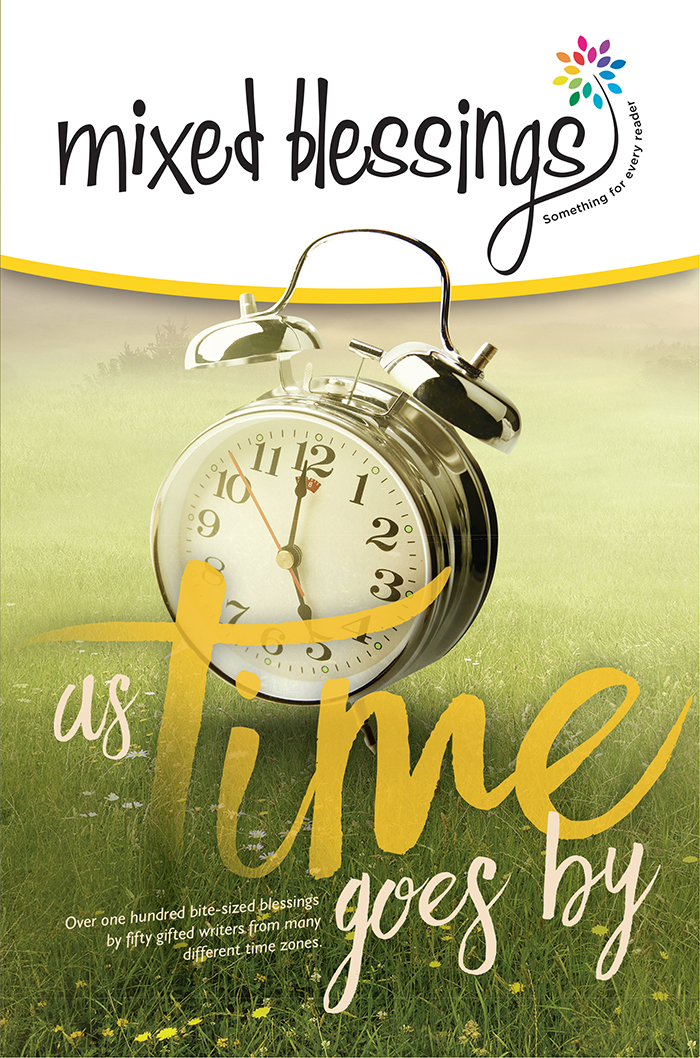
Flash fiction can be used as 'palate cleansers' between longer stories or collected in anthologies (as with the Mixed Blessing books).


The Australia Writers Centre has a monthly Furious Fiction challenge – 500 words written between Friday and Sunday, and incorporating required elements (theme, words or some other element)

Writing flash fiction helps tighten one's prose. The focus is usually on one or two scenes or on the climax of the story. My Ruhanna’s Flight was originally a flash fiction (less than 1000) words which I later expanded to a 7000 word story.

Short Story


Short Story - between 1,000 - 7,500 words

This is often what we think of as a short story. Many competitions, periodical, 'zines and anthologies require this length - often around 2000 to 3000 words. Speculative fiction (sci-fi and fantasy) have bigger words counts of between 7000-10,000 words.


The Starlit Realms fantasy anthology edited by Elizabeth Klein

There is more room (or words) to manoeuvre, but focus and tight writing are still essential. It's important to streamline — limit the story to a short period time, small cast of characters, with few if any subplots, and start the story close to the finish.

Novelette

Novelette - 7,500 - 20,000 words

A novelette falls in between a short story and a novella. My Heart of the Mountain started life as a short story (my original attempt at the 7000 word limit for submissions for Glimpses of Light anthology) but blew out to over 11,000 words. Later, I expanded HOM to 15,500 words as the first book in a novella series.


The term 'novellette', is not well known and tends to cause confusion. For some, it means a novella. Many others have never heard of the term. So, I've called Heart of the Mountain 'short novella'.

Novella


Novella - 20,000 - 50,000 words

A novella (and to some extent a novelette) allows more complexity, with perhaps more characters and twists and it develops over a longer period of time.


Some famous classical works are novellas - for instance Robert Louis Stevenson's Strange Case of Dr Jekyll and Mr Hyde (1886), H. G. Well's The Time Machine (1895), Charles Dicken's A Christmas Carol (1843), Geroge Orwell's Animal Farm (1945) and many others. 

The other four books in my Under the Mountain series (sequels to Heart of the Mountain) are novellas.

Opportunities


Who Publishes Short Fiction


Periodicals, zines, collections and anthologies are usually the home of short fiction. However, short fiction can be published on its own either as e-books or even in print. Short fiction can also be collected in boxed sets.

Another innovative approach is publishing short fiction as a series (similar to TV series) in which 'episodes' within a 'season' are published with individual story arcs plus an over-arching series arc. Adam David Collings is taking this approach with his Jewel of the Star series, having recently published the third in the series, Legacy of War. Amazon's Kindle Vella also takes this approach - with authors publishing episodic short stories. In some ways, it's a return to the past - Charles Dickens books were published this way, serialised in a magazine rather than online.


Current Calls for Submission


Interested in having a go at some short fiction. Keep an eye out for various competitions. Here are some ideas to start with:

Furious Fiction - check it out here.
Elizabeth Klein is look for retellings of lesser known fairy tales for an anthology (due 1st April 2023)
Wombat in Rhiza Edge Short Story Competition want dystopian or steam punk stories for their anthology (open until May 2023) - More info here. 
Inklings Press are looking for Mystery stories for their next anthology - until 30 April 2033. See more here.

Please share in the comments below (or on the CWD FB page) if you know of other opportunities.

Have you written (or read) short fiction? What do you like (or dislike) about this form? Who do you think does it well?


Jeanette O'Hagan with Lynne Stringer
Jeanette O'Hagan has spun tales in the world of Nardva from the age of eight. She enjoys writing fantasy, sci-fi, poetry, and editing. Her Nardvan stories span continents, millennia and cultures. Some involve shapeshifters and magic. Others include space stations and cyborgs.

She has published over forty stories and poems, including the Under the Mountain Series (5 books), Ruhanna's Flight and Other Stories, Akrad's Children and Rasel's Song, the first two books in the Akrad's Legacy series - and new short story in the Starlit Realms: Fantasy anthology.


To get a free copy of Ruhanna's Flight - sign up to Jeanette O'Hagan's newsletter here.

Thursday, 23 February 2023

Highlighting Blogs and Blogging

 by Jeanette O'Hagan


Each week CWD's faithful team of bloggers share wisdom and inspiration, challenge, inform and entertain on the Christian Writers' Downunder blog (aka here!)

What is a blog and why do we do it?

A blog (shortened from Web Log) is a site that shares regular entries or posts on a website. Generally, the latest blog is posted first, with blogs available in a chronological order - though Labels, the Search box or the Menu Bar (to your right) can help you access particular topics or posts. 

Blogs can be personal like a web diary sharing certain aspects of a person's experience - say about a trip around the world, or daily (mis)adventures as a parent, or an interest in a hobby.

Blogs can also be used by businesses, organisations,  or creatives as part of a platform - i.e. to build a presence or visibility, to engage with clients or fans, and to share relevant information - like new releases or achievements.  

They can also be group blogs (like Christian Writers Downunder and the Australasian Christian Writers blogs), where bloggers take turns to blog sharing their experiences and knowledge on a common subject or interest. 

What about Christians Writers Downunder Blog?


The CWD blog's primary aim is to serve our members through posts from our member bloggers (and the occasional special guest) with inspiring and practical blogposts about writing and the writer's life as informed by our experiences and faith. 

It also provides a platform for our members - to share our triumphs and wins (as in the quarterly Highlights posts), help introduce our members (in the Meet Our Members Posts) or share information from our sister groups (Cross posts with Omega Writers and Australasian Christian Writers).

And for our bloggers - it gives an opportunity to find and develop a voice through blogging and to help visibility in the vast trackless ocean of the interwebs. 

Comments can also encourage the blogger and provide interaction between members. Though in recent years, comments on the the Blogger platform has become more difficult to some. We also share the link to the blog in the Facebook group, and responses can be made in the comments of the post, sparking interaction in the group.

Personal Blogs

Many of our members have their own personal blogs that are worth checking out. 

*Paula Vince blogs about books and always has an interesting take on the Vince Review
*Nola Lorraine (aka Nola Passmore) gives tips on craft, interviews other authors and put interesting quizzes at Nola Lorraine. 
*Jo-Anne Berthelsen's inspirational blogs Jo-Anne's Berthelsen's Blog gets one thinking.
*Adam Collings not only has a blog but also regular You-tube blogs and podcasts.
*Mazzy Adams also adds her Musings to her website - Mazzy's Musings
*Lynne Stringer includes a blog about sci-fi and writing - Lynne Stringer Author and Editor
*I also have a blog (a little neglected of late) with updates, interviews, reviews etc. Jeanette O'Hagan Writes (by the Light of Two Moons)

Some Changes A Foot


Christian Writers Downunder started as a Yahoo group in 2009, with the very first blog post in 2010. CWD is on Facebook, and over the last 13 years,  CWD has expanded from a few enthusiastic members to over 1300 members.  The blog has over one thousand posts. It has had a few minor changes in format over that time in terms of frequency of blogs, different feature bloggers, and new members of the blog team, but it has basically continued in the same format. 

This year we will be making a few minor changes. 

While Monday mornings have been the primary time for our Blog team share posts, we will be switching this to Thursdays, with every second Monday reserved for the Highlight, Behind the Scenes , Meet Our Members, Fifteen Great Picks, and Admin announcement Posts and the Omega Writers Cross-posts. 

So, remember to keep an eye out on Mondays and Thursdays for the CWD blog - be inspired, encouraged, informed and challenged in your journey as a writer.  

Are you a blogger - what joys and challenges have you experienced? Do you have some favourite blogs you would like to share with others?


Btw - Did you have a new release or event or brag point that didn't make it to the Highlights Post? Keep an eye out for the next call for information from members - the next Highlights post will be in about 4 weeks, on 3rd April 2023 (for January-March 2023).


Jeanette O'Hagan has spun tales in the world of Nardva from the age of eight. She enjoys writing fantasy, sci-fi, poetry, and editing. Her Nardvan stories span continents, millennia and cultures. Some involve shapeshifters and magic. Others include space stations and cyborgs.

She has published over forty stories and poems, including the Under the Mountain Series (5 books), Ruhanna's Flight and Other Stories, Akrad's Children and Rasel's Song, the first two books in the Akrad's Legacy series - and new short story in the Starlit Realms: Fantasy anthology.

She is also an avid reader and enjoys tracking down family tree conundrums. 

Monday, 20 February 2023

Omega Writers | Calling Unpublished Authors!

Calling Unpublished Authors!

The 2023 CALEB Award will open for entries in April 2023. This year's award will welcome entries in the following categories:

  • Unpublished Adult Fiction
  • Unpublished Young Adult Fiction
  • Unpublished Adult/Young Adult Nonfiction

Omega Writers created the CALEB Unpublished contest to support and encourage unpublished writers towards the pursuit and achievement of excellence.

The CALEB Unpublished Award therefore considers unpublished authors, not unpublished manuscripts.

There have been a couple of minor rule changes this year. The main change is that only completed manuscripts will be accepted. This year, entrants will upload two files:

  • Their first 10,000 words, plus a synopsis of up to 1,000 words.
  • Their full and complete manuscript.

The opening and synopsis will be judged in the first round, while finalists will be judged on their full manuscript. Only the contest coordinator and final-round judges will see the full manuscript.

So it's time to get writing, to ensure you have a full manuscript and are therefore eligible to enter the 2023 CALEB Award.

Why should you enter a writing contest?

I can think of several good reasons:

Honest Feedback

Writing contests are a great way to get honest feedback on your writing, and we all need honest feedback. Feedback is a gift which can show us what we’re doing well, and where we need to improve on.

Feedback from Writers

But it’s important to get feedback from the right people. We can ask family and friends for feedback. While they might give encouraging feedback (You’ve done a great job! Keep it up!), it might not be accurate. Family and friends will be proud of you for having written a book, and may be able to tell you what they enjoyed and why, but they probably can’t tell you what needs to be improved (unless they happen to be successful writers who know your genre).

In contrast, contest judges are fellow writers, usually people who write in the same genre. Some will be fellow unpublished authors, some will be published authors, some will have won awards. All are willing to give up their time to help other writers improve their craft.

Targeted Feedback

Because they are writers (or editors, or agents), they know what good writing looks like, and they will judge accordingly. Most contests use a score sheet which looks at different aspects of the writing, such as the opening, the characters, the plot, and use of point of view or showing vs telling. Entering a writing contest will show you if you have issues in some of these areas.

Finding out you’re not using point of view well may be painful, but it’s better to find out from an anonymous contest judge early in your writing career than to polish the manuscript for months (or years), submit to a publisher and be rejected because of your point of view. (And point of view isn’t your opinion on a subject. If you’re a fiction writer and don’t understand what I mean by point of view, you need to learn).

Anonymous Feedback

Judging in unpublished contests is blind, which means the judges don’t know whose entry they are reading and judging. Most contests for unpublished writing ask writers to say who has read the entry so the contest organiser can avoid assigning the entry to a judge who may be biased. In addition, judges are encouraged to notify the organiser if they have seen any entries before so they can be reassigned.

Blind judging means judges can give feedback without worrying about that feedback potentially affecting a relationship (as can happen if you ask family or friends to critique your writing).

Bragging Rights

Finalling in or winning a contest gives you bragging rights aka a line in your query or proposal to an agent or editor. Many well-known Christian writers credit contests with helping them land an agent and/or publishing deal.

Genesis Contest

If your fiction manuscript is already complete, you might want to consider entering the Genesis contest.

The Genesis Contest is run by American Christian Fiction Writers, and judges the first fifteen double-spaced pages plus one-page single-spaced synopsis. Entries “must be consistent with a traditionally accepted understanding of Scripture and Christian world view.”

The award has the following categories:

  • Contemporary
  • Historical
  • Historical Romance
  • Mystery/Suspense/Thriller
  • Novella
  • Romance
  • Romantic Suspense
  • Short Novel
  • Speculative
  • Young Adult

Yes, these are all fiction categories ... American Christian Fiction Writers contests are for fiction manuscripts only. However, ACFW isn't just for American Christian writers--international authors are welcomed, and become part of the Beyond the Borders zone.

Entries are currently open, and close on 15 March 2023. The entry fee is USD 35 for ACFW members and USD 95 for non-members.

If you are looking to publish in the US market, then I recommend entering the Genesis Contest. Many Christian authors are previous Genesis winners or finalists, including David Rawlings (who went on to win a Christy Award for his debut novel, The Baggage Handler.)

Click here to find out more about how to enter.

Click here to check out lists of previous winners (I'm sure you'll recognise some names.)

Will you enter the 2023 CALEB Awards?