Showing posts with label Short stories. Show all posts

Thursday, 12 March 2026

Creative Seasons


I know it's autumn here in the Southern Hemisphere - but in the creative space, I feel like I'm emerging from a long winter. Not a Brisbane winter, where the trees keep their leaves, and wattle and poinsettia splash flamboyant colour against the cloudless cobalt blue of the sky. More a Melbourne winter, with grey low skies, dizzling rain and the cold that seeps deep into your bones. 

The main reason for this long winter over the last few years, where everything seems an effort and motivation is hard to come by, was grief due to family drama (which I won't go into). It was hard to focus on the complexity of my characters' journey and intricate plots when my heart was dealing with the jagged edges of emotional pain.

Thank God for short stories - that keep the creative juices going - and poetry. And time and healing and mending.

Short stories are bite sized - though mine tend to be giant-sized bites - with simplier arcs and shorter timelines. Poetry is even more condensed, where every word can matter - and can express emotion in a way prose can struggle to do.

Despite a hiatus of a couple weeks travelling, I participated in the Month of Poetry again this January - with a special challenge each Saturday - ranging from ekphrastic poems inspired by an art work (sculpture, painting, photograph etc), writing a poem inspired by or in the voice of a favourite book character, writing a compunctual poem (two poems interlaced in interaction with each other - hard to do), a poem inspired by a line of poetry you admire, and finally, a poem about what poetry means to you (Five Saturdays in January this year). 


I also went to my very first Genre-Con this year - on the theme of Inklings - and it was particularly inspiring. Apparently even after 15 years of seriously pursuing writing and getting a Masters in writing, there are indeed new things to learn. I loved the Manga stream under Professor Belne from Japan with a hands-on workshop. The three golden nuggets I took away from the weekend (as Lori-Jay Ellis encouraged us to look for)
1 ) the comparion of the 3 Act Hero's Journey popular in the West with both the lesser known Heroine's Journey and the 4 Act Eastern Kishōtenketsu (with a unexpected asteroid-sized shift in Act 3) (Thanks Belne, Queenie Chan, Genieve Flynn and L.E. Daniels).
2) Scott Wilson's enthuiasm was uplifting as he explained the making of the Indigiverse - and how the powers of his superheros are based on the character and strengths of his great-grandmother, mother, and other people important in his life.
3) I also enjoyed Michelle Birrell's demonstration of using mind-maps to take an idea of a story to one with legs (or rather characters, conflict and context).

And the whole weekend was so much better sharing it with a friend.

Filling the creative well helps keep the creatve spark alive (to mix metaphors).

Though, in many ways, it's also time and God's healing presence that mends. 

I prefer to avoid pain, like things to be easy - yet life isn't easy and sometimes it can break you. God walks with us even when we can't feel his presence, maybe especially then. And it's often in those dark winter fallow times when nothing (or very little) seems to be happening, that the soil is broken up and enriched and the seed grows.

The steadfast love of the Lord never ceases:
his mercies never come to an end;
they are new every morning;
great is your faithfulness.
Lamentations 3:22-23, ESV*

Have you experienced fallow times - what has helped renew your creativity?

P. S. here's two of my poems form MOP (I resisted the urge to share a third) - the first on the stillness of cats, the other an acrotic on inspiration. Enjoy.


The Stillness of Cats


The stillness of cats
a movable feast of perfected rest
stretched out trapeze like to impossible length,
curled pretzel close, nose to tail,
spine twisted in unlikely spiral,
or paws curled in post-mortem pose
not a whisker or a muscle twitching
as still as death, yet replete with curled up life
a fracture in reality and time.

The stillness of cats, majestic, magical, mystical
suspends time, tears at the curtain of reality
triggering inexplicable yearning
like the infinite arch of the blue, blue sky
the effortless stretch of the restless ocean
the song of the wind dancing between the leaves,
whistling whistling across country,
the slow sink of the sun, the rise of the plump fullfaced moon
the exuberant splatter of stars against the purple-black sky
the wonder and thisness of the world
stirring emotions hard to name, an unspoken promise
unreachable perfection wrapped in eternity
the great beyond calling, calling, calling
further up and further in.

28 January ©  Jeanette O’Hagan


Inspiration - an Acrostic

Inhale the shy sparks of imagination
Nourishment for mind and soul
Simmering, swirling, unspooling
Percolating in quiet places and the routine
Incubating in dreams, in the shower, on walks
Reverberating with rhyme and rhythm and rhetoric
Activating, unannounced, in media res, bums on seats
Torrents of creation causing creek banks to overflow
Incited by the everyday, the minutiae of living
Outrageous too, sparked by the weird, the wonderful
New emerging like phoenix from the cinders of the old. 

2 Jan 2026 ©  Jeanette O’Hagan


Jeanette O'Hagan has spun tales in the world of Nardva from the age of eight. She enjoys writing fantasy, sci-fi, poetry. Her Nardvan stories span continents, millennia and cultures. Some involve shapeshifters and magic. Others include space stations and cyborgs.

She has published over forty stories and poems, including the Under the Mountain Series (5 books), Akrad's Children and Rasel's Song, the first two books in the Akrad’s Legacy series and more recently, Rise of the Consortium. Her story in Stepping Sideways, 'In a League of Her Own' won the 2024 Aurealis Award for YA Short Stories & 'Anomalies at Prospero Base' (in Rise of the Consortium) was shortlisted in the 2025 Aurealis Awards.

Jeanette has practised medicine, studied communication, history, theology and writing. She loves reading, painting, travel, and pondering the meaning of life. She lives in Brisbane.


*Scripture quotations are from the ESV® Bible (The Holy Bible, English Standard Version®), copyright © 2001 by Crossway Bibles, a publishing ministry of Good News Publishers. Used by permission. All rights reserved.


Monday, 27 February 2023

Short Fiction


by Jeanette O'Hagan


Christian Writers Downunder anthology
 2015


Less is more - or so they say. Often when we think about writing, we think about novels or memoirs, full length books that may take months, or more likely, years to write.

However, short fiction can often be a good way of honing writing skills and may be easier to have something accepted for publication.

Why bother with Short Fiction?


For Readers

At conventions, people often say they love to read but don’t have the time to do so. In a time-pressed word, short fiction can be enjoyed in one sitting. Readers an also sample a range of both known and unknown authors in an anthology.

Short fiction may leave a reader wanting more character development and/or world building or plot complexity. At its best, short fiction can be thought-provoking, evocative, original, experimental.


For writers:


Writings shorts can be a great way to break into the market, as there are many opportunities for competitions or anthologies or to self-publish.

While not necessarily easy to write , short fiction requires less investment of time and money (for editing etc) than a full length novel. It can give the freedom to experiment with subject, genre, approach without a huge investment in time (so it's not so critical if it doesn't work out).

Short fiction can help a writer to hone their skills - to write powerfully with less words, to set the scene or show character without the fluff, to better understand plot and story structure. 

And when short fiction is tied into the author’s other longer works or story world, it can be used to introduce the novel, continue momentum between books, fill out the story world or give greater depth for characters, and/or it can be offered as a freebie in promotions.

Short fiction can come in any genre - and a range of sizes, from six words up to 50,000 words. And while it may seem easier to write less, short fiction requires its own set of skills to do it well.

Types of short fiction:


Mirco-Fiction


Mirco-Fiction - up to 100 words.


Hard to write well, they fit well with the world of mobile phones and texting and twitter (240 characters). Clearly, every word must count.


Ernest Hemingway's famous example of a six-word story is as follows

'For sale: Baby shoes, never worn.'

Flash Fiction


Flash Fiction - between 100-1000 words.

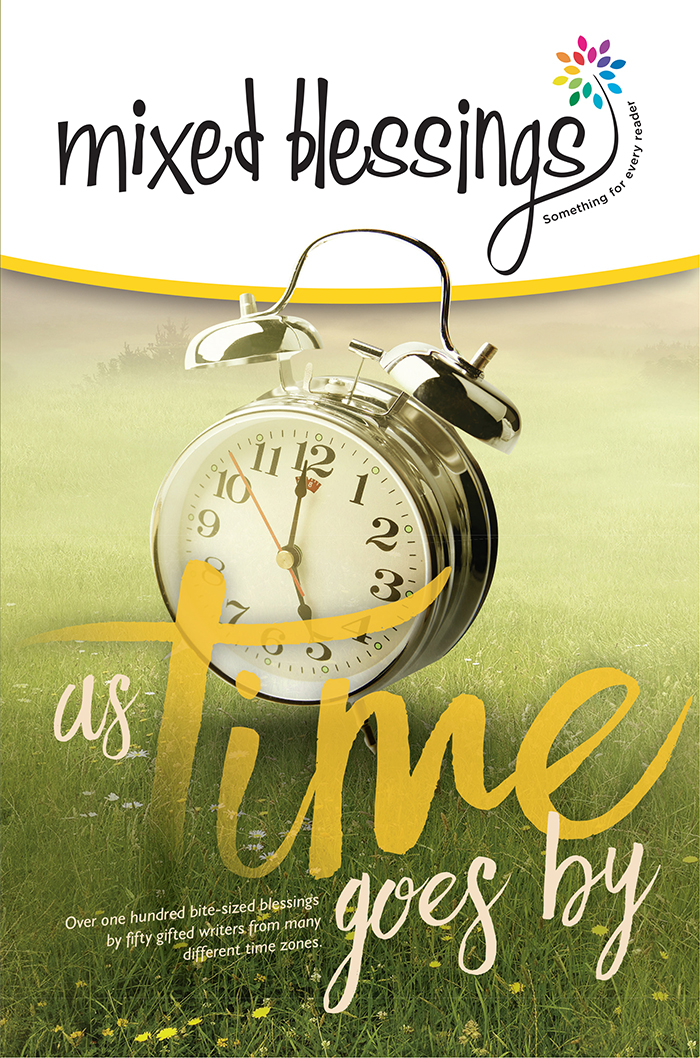
Flash fiction can be used as 'palate cleansers' between longer stories or collected in anthologies (as with the Mixed Blessing books).


The Australia Writers Centre has a monthly Furious Fiction challenge – 500 words written between Friday and Sunday, and incorporating required elements (theme, words or some other element)

Writing flash fiction helps tighten one's prose. The focus is usually on one or two scenes or on the climax of the story. My Ruhanna’s Flight was originally a flash fiction (less than 1000) words which I later expanded to a 7000 word story.

Short Story


Short Story - between 1,000 - 7,500 words

This is often what we think of as a short story. Many competitions, periodical, 'zines and anthologies require this length - often around 2000 to 3000 words. Speculative fiction (sci-fi and fantasy) have bigger words counts of between 7000-10,000 words.


The Starlit Realms fantasy anthology edited by Elizabeth Klein

There is more room (or words) to manoeuvre, but focus and tight writing are still essential. It's important to streamline — limit the story to a short period time, small cast of characters, with few if any subplots, and start the story close to the finish.

Novelette

Novelette - 7,500 - 20,000 words

A novelette falls in between a short story and a novella. My Heart of the Mountain started life as a short story (my original attempt at the 7000 word limit for submissions for Glimpses of Light anthology) but blew out to over 11,000 words. Later, I expanded HOM to 15,500 words as the first book in a novella series.


The term 'novellette', is not well known and tends to cause confusion. For some, it means a novella. Many others have never heard of the term. So, I've called Heart of the Mountain 'short novella'.

Novella


Novella - 20,000 - 50,000 words

A novella (and to some extent a novelette) allows more complexity, with perhaps more characters and twists and it develops over a longer period of time.


Some famous classical works are novellas - for instance Robert Louis Stevenson's Strange Case of Dr Jekyll and Mr Hyde (1886), H. G. Well's The Time Machine (1895), Charles Dicken's A Christmas Carol (1843), Geroge Orwell's Animal Farm (1945) and many others. 

The other four books in my Under the Mountain series (sequels to Heart of the Mountain) are novellas.

Opportunities


Who Publishes Short Fiction


Periodicals, zines, collections and anthologies are usually the home of short fiction. However, short fiction can be published on its own either as e-books or even in print. Short fiction can also be collected in boxed sets.

Another innovative approach is publishing short fiction as a series (similar to TV series) in which 'episodes' within a 'season' are published with individual story arcs plus an over-arching series arc. Adam David Collings is taking this approach with his Jewel of the Star series, having recently published the third in the series, Legacy of War. Amazon's Kindle Vella also takes this approach - with authors publishing episodic short stories. In some ways, it's a return to the past - Charles Dickens books were published this way, serialised in a magazine rather than online.


Current Calls for Submission


Interested in having a go at some short fiction. Keep an eye out for various competitions. Here are some ideas to start with:

Furious Fiction - check it out here.
Elizabeth Klein is look for retellings of lesser known fairy tales for an anthology (due 1st April 2023)
Wombat in Rhiza Edge Short Story Competition want dystopian or steam punk stories for their anthology (open until May 2023) - More info here
Inklings Press are looking for Mystery stories for their next anthology - until 30 April 2033. See more here.

Please share in the comments below (or on the CWD FB page) if you know of other opportunities.

Have you written (or read) short fiction? What do you like (or dislike) about this form? Who do you think does it well?


Jeanette O'Hagan with Lynne Stringer
Jeanette O'Hagan has spun tales in the world of Nardva from the age of eight. She enjoys writing fantasy, sci-fi, poetry, and editing. Her Nardvan stories span continents, millennia and cultures. Some involve shapeshifters and magic. Others include space stations and cyborgs.

She has published over forty stories and poems, including the Under the Mountain Series (5 books), Ruhanna's Flight and Other Stories, Akrad's Children and Rasel's Song, the first two books in the Akrad's Legacy series - and new short story in the Starlit Realms: Fantasy anthology.


To get a free copy of Ruhanna's Flight - sign up to Jeanette O'Hagan's newsletter here.

Thursday, 4 August 2022

Beauty and Short Stories - Writing 'Touching the Sky'

Rosanne Hawke

My work in progress is a middle-grade novel. I’ve had the idea for this story for a while and even wrote a short story about the character with a different name, Zander. That short story is called ‘Touching the Sky’ and will be published soon in Dust Makers, an anthology of climate-change stories from Rhiza Edge. This is not the first time I have written a short story, then written the novel. This time I started with the idea for the novel first but wrote the short story as I began the draft to get to know my character and his voice better. I find I can’t really start writing until I know a lot about my characters, e.g. what they are like, what they want, and especially how they sound.

I also wanted to see what would emerge as a most important time in my character’s life, for this is where stories and novels most differ, I think. A short story is a slice, a moment, exploring one main event and idea in a character’s life, whereas the novel can develop many such moments into a journey the character embarks upon for months or more. I started writing with short stories – we all do because at school that’s all there is time for. One of my stories was published in a high school magazine, but my writing career began with novels. That’s what my kids wanted to read. Once I’d discovered the full canvas of a novel, I decided short stories, though beautiful, were harder to write. Rather than fine miniature painting with water colour, I think I’d prefer slapping oils on a canvas. Guess that’s not the best analogy as novels also need to be polished and fine-tuned to be beautiful – but they do give room to move with all the ideas growing from a central one. 

So why can I write a short story about climate change? I grew up in a drought in Outback Central QLD. When I wasn’t at our one teacher school or on the hour-long bus run in a converted cattle truck, I walked with my kelpie-cross dog, climbed windmills, fell off horses and was last in the bath. I learned never to waste water. 


When writing ‘Touching the Sky’ I was rereading Frederick Buechner’s books and like his father, I realised that Zander’s dad had suicided. The death of Buechner’s father affected him all his life – it is present in most of his work. Mental health is a huge problem in our rural areas, especially with the effects of climate change where crops can’t be seeded since rain doesn’t come, bushfires occur and burned animals need to be shot, and now the effects of covid on the farm business. These events have affected the most resilient of farmers. 

When writing I always hope the story will be beautiful in some way, that it will touch a reader. But what could be beautiful when a dad dies in a story? We could think of the form, the words, the way the character heals, but I’m wondering if beauty has more to do with light. There is a story about the famous Dutch artist Vermeer where he was unhappy with a painting. The character was portrayed well, the composition correct, but he knew something vital was missing. He finally realised there was no light. He painted in a window so light could shine on the side of a face, on the folds of a dress – subtle use of colour to show beauty. In our writing where does the beauty originate? From the Light of the World. I’m learning that a thing is beautiful not because we deem it so, but because Christ Jesus has made it so.

In a story, this beauty and light will shine in the way the theme is treated, the form of the story, the setting, choice of words, images, that phrase which paints a picture without even using an adjective, the arresting verbs, the light shed on the face of the character and in his heart. May this Light in our stories become God’s way of wooing a reader into a loving relationship with him. 

The anthology Dust Makers will be released in October by Rhiza Press

Pre-order at http://wombatrhiza.com.au/Dust-makers 

Image credit: Ailsa Green, Dust Storm near Hawker, South Australia, used with permission.


Rosanne Hawke is an Australian author from Penola, South Australia who has written over 25 books for young adults and children. She teaches tertiary level Creative Writing at Tabor Adelaide. She has a PhD in Creative Writing from the University of Adelaide.


Monday, 6 June 2022

Starlit Realms

 by Jeanette O'Hagan


I don't know about you, but I've always struggled with words - that is in writing too many.  

With essays and assignments, I'd usually spend a good proportion of my time removing the huge pile of words over the word limit. In one Arts assignment on medicine in ancient Egypt, after shaving off all the that I possibly could, I 'killed my darling' and surgically remove a beautiful paragraph on the Egyptian pregnancy test. 

So. Hard. To. Do. 

So it won't surprise you that most of my stories turn into novels and my novels turn into series and my series beget other series. 

When various pundits suggested short stories as a way to hone one's writing, I was sceptical. I didn't know how to write short stuff. But I gave it a try - first for a charity anthology - Tied in Pink.

The word limit was 5000 words - so not as restrictive as many such enterprises. In the end, it took me three tries and three stories to hit the mark - Wolf Scout, Full Moon Rises - and finally The Herbalist's Daughter. Each one of those stories included a mention of a pink ribbon (part of the requirements of the anthology), but it was the last that made it within the word count and into the anthology.


The Herbalist's Daughter, in 2014, was my debut into publishing. And I discovered along the way that, yes I can write short stories - usually long short stories - but short stories none the less.  


(Here's another confession - it took me two goes to hit the more generous word limit of 7000 words for the Glimpses of Light anthology - Heart of the Mountain (which later became the first novella in the Under the Mountain series), was my first failed attempt, with the second attempt, Ruhanna's Flight coming out at exactly 7000 words. 

Strangely enough - I have more success in keeping to 700 or even 500 words than 3000.  

 From being a sceptic, I became a believer. I love short stories because:

*Getting a short story accepted is easier than finding a home for a novel
*It's fun to write them
*They help sharpen writing skills
*It's encouraging to collaborate with other writers 
*While not exactly easy to write, they do take up less time (I almost said lives) than a full novel
*Short stories are a great way to experiment or try something new.


Since that first heady acceptance, I've continued to write and have short stories accepted and published - as well as a few knock backs. Mostly, I'm neck deep in edits of my novels - and probably will be for a while as I hone and polish my next two or three drafts. 

At the beginning of the year, I jumped at the chance to write a new short story for submission to the Starlit Realms anthology. Writing a new story revitalised me. Even though I linked the story to my other stories in the world of Nardva (in this case the prequel to Ruhanna's Flight), I explored new characters in a different time and background. 

The story made it into the anthology along with the stories of a bunch of other great writers - including some fellow travellers - Elizabeth Klein (the mastermind and editor), Adele Jones, Rebekah Rodda. Sally Odgers and Jenny Woolsey. 

Starlit Realms: a fantasy anthology - is free on Amazon and other retailers. So why not download it and enjoy :) 

Ten unforgettable stories of mystery and adventure from ten fantasy writers are woven together by the great Storyteller's own eternal magic.
*The mysterious Logunder Library houses no ordinary books, but those created from trees from the Enchanted Forest in a bid to save itself.
*A young princess must choose a husband from four unlikely and undesirable suitors.
*A girl's father goes off to battle dragons in an alternate war and she undergoes dangers to find him.
*A shape-shifting queen risks her life for a family condemned by age-old prejudice.
*One young slave girl risks her life for the sake of reading sacred texts.
*The final day of one of the waterfolk is celebrated with songs and music as she wanders back into the sea.
*A magic boot takes a young couple for the ride of their lives.
*A poor girl deceives the royal family to snag a husband, but it is not as easy as she thinks.
*A biological lab covers up the truth about its research and sends two science students into danger.
*On the summer solstice at Willow Woods Peak, animals may speak and a cat enlists the help of a human to unravel a secret.


And, if you haven't already, give short stories a go. 


Jeanette O'Hagan has spun tales in the world of Nardva from the age of eight. She enjoys writing fantasy, sci-fi, poetry, and editing. Her Nardvan stories span continents, millennia and cultures. Some involve shapeshifters and magic. Others include space stations and cyborgs.


She has published over forty stories and poems, including the Under the Mountain Series (5 books), Ruhanna's Flight and Other Stories, Akrad's Children and Rasel's Song, the first two books in the Akrad's Legacy series - and new short story in the Starlit Realms: Fantasy anthology.

Jeanette has practised medicine, studied communication, history, theology and a Master of Arts (Writing). She loves reading, painting, travel, catching up for coffee with friends, pondering the meaning of life.

Monday, 27 April 2015

Short Story Writing - for fun!

by Catriona McKeown
I love writing short stories.
I love novel writing too, the way you can explore characters and situations and see the character change in a way that readers will be able to relate to. But short story writing and novel writing are two very different sorts of writing. Sometimes, I need to walk away from the drawing-blood-from-my-fingertips, oozing-sweat-from-my-brain that novel writing is and just have some fun with my technological pen.
Short story writing lets me do that.
In short story writing, I can just grab any character that sways, staggers or strolls into my imagination. I name them, work out their age, what their occupation is or was, and a relationship status. Then I throw them into a situation to see what they do. Most often, I don't even know what that situation is. I just put the character somewhere - on a beach, in a car, standing at a front door - and describe how they're feeling. I give them an emotion and describe how their body is reacting to that emotion; which body parts are they aware of? What are they seeing? Smelling? Hearing? Tasting? I love contemplating their feet or their hands - how these body parts feel in a character. Revealing some of a character's senses is a great aid for the reader to emotionally engage with the character and understand them.
Then I have my character meet someone and the story flows from there.
Usually, my character has an obvious, small dilemma, but underpinning it is a larger issue they are unaware they need to move on from. In my short story Remembering Rosemary Carter, Rosemary suffers from short term memory loss and needs to discover where she is and why. But running through the story is the importance of forgiveness in families. Another story I am finishing at the moment is about a retired doctor who has had a panic attack after proposing to the woman he loves - but underpinning it is the issue that he hasn't fully recovered from the death of his first wife and daughter.
Short stories are glimpses into a character's life. It may only be ten minutes of their day, but it is a pivotal ten minutes. These stories are such a challenge! Especially if you're writing for a competition that is imposing a word limit. To have a character that is engaging from the beginning, to pull the reader in and make them care about him/her, place them into a situation that is going to impact the character and have them come out different in the end - all within 1500 words? Who wouldn't love it!
What about you? Do you love writing short stories, or do you do something altogether different to take a break?