Showing posts with label professional editing. Show all posts

Monday, 6 March 2023

Highlighting Editing

 by Jeanette O'Hagan


The End! 

Typing these simple two words can give a rush of excitement, the sense of achievement. Like a runner putting their all into the race and feeling the tape break against their chest as they cross the finishing line. Something long planned for, something that has taken up so much time and energy, is now finished. It's surely time to celebrate.  

And indeed it is. You have achieved something that many, many writers never do - finished that book or even finished the story.  Well done.

So now, all you really need to do is send it off to a publisher or upload it to Amazon and your job is done. Right?!

Well, not quite. 

What often distinguishes a great writer from a so-so one is feedback and editing.

Why Edit?


Why Edit? Because both publishers and readers have expectations. 

A well edited manuscript can be the difference between your manuscript catching the eye of an agent or publisher rather than languishing in the reject pile.  In the past, publishers may have accepted a manuscript that needed work, but not any more, not unless you are famous. Publishers are inundated with manuscripts - the slush pile - and have limited time to decide which manuscript is worth investing time and money. 

But what if you self publish? True, you can upload almost anything to Amazon.  But readers can be scathing in reviews or report your book to Amazon for quality issues if they see (or think they see) errors or if the book does not meet their genre expectations.  It's the plethora of unedited or badly edited books that often gives self-publishing a bad name. 

But, you might say, I'm good at English, maybe even an English teacher, I don't need someone else to edit.  Firstly, as writers, we see what we expect to see plus we don't know what we don't know - especially in terms of stylistic and genre expectations which have changed over time. 

Different Levels of Editing

Not all editing is the same. There are different levels of editing. 

Structural or Developmental Edit


Structural or Developmental Edits are like an architectural plan, It looks at the bigger picture, at the basic structure of the book and how it all fits together. 

In a novel, the editor would look at  the story, the plot and how it is narrated and by whom as well as the structure - introduction, inciting incident, turning point, climax etc.  In addition, point of view, the characters, setting, themes, suspense, pacing, foreshadowing, dialogue, consistency, accuracy, and believability will all be scrutinised.

Different genres have different expectations and structure - a romance generally has a HEA (happily ever after conclusion) whereas woman's fiction or chic lit might be unresolved. A murder mystery needs clues, red herrings, a decretive and the big reveal at the end.

Non-fiction also has expected structure and conventions  depending on whether it is a text book, self-help, a memoir or biography or creative non-fiction.


Style or Line Edit


A style or line edit is more like the finishes and furnishings of the house. While a structural edit looks at the manuscript as a whole and often results in a manuscript report - the stylistic or line edit looks at the the manuscript line by line. 

While the editor might pick up inconsistencies of point of view, of the characters, setting and genre etc. they will particularly look word use and sentence structure. For instance, the use of weasel words (filler words or qualifiers that don't add meaning like "that", "very", "almost" etc), use of passive language, or dependence of adverbs and too many adjectives rather than strong verbs and nouns, the repetition of words or use clichés, as well as at the accepted use of dialogue and action tags, the effective use of metaphors and other rhetorical devices. 

A strong, fresh style that reflects the author and is appropriate to the story keeps the readers engaged.

Proofreading

Proof reading is like the quality assurance or final inspection once the building is complete. A proof reader looks for those pesky persistent typos, grammatical and spelling mistakes, punctuation as well as obvious mistakes. 

Better to first get the structure and style right before proofreading sections that might end up on the cutting floor. 

Different Kinds of Editors


Who can you ask to edit? 

Self-Editing


The very first editor - is yourself.  Often it's a good idea to give the book a few weeks rest (to get some distance), then take off your creative writing hat, put on your editor's hat and read through the manuscript yourself as a demanding reader would. 

The more editing you do, the less editing someone else has to do. Plus, it helps you learn and develop your own voice.

Crit-reads
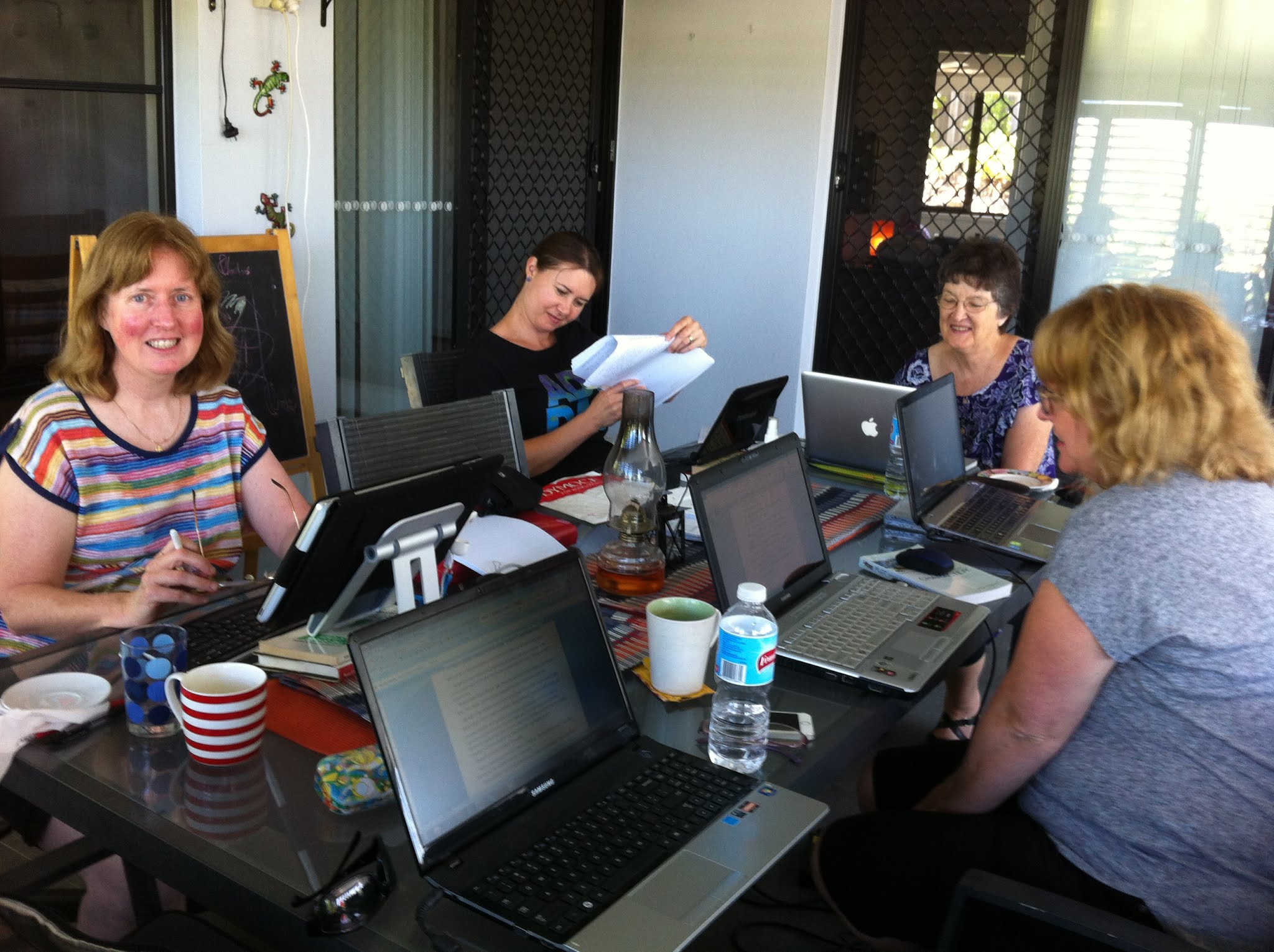

If you are part of a writers group or connected with other writers, particularly in your genre, then getting feedback on each other's work can be helpful (even before your book is finished).  Sometimes, writers of the same genre can swap their finished manuscripts for critical feedback. 


Beta-reads

Beta readers are non-professionals, often fans of your genre or part of your target audience who are prepared to read and give their personal response to your book.  If you can, get a few beta-readers.

Professional editing


In general, before you send your book to a publisher or publish it yourself it's advisable to get professional editing, preferably an editor who knows your genre, is up to date with current trends and knows what they are doing.  

Not sure how to get a professional editors? 

Check out Omega Writers , ask in the group, or make an editor's appointment at the upcoming Omega Writers Retreat (Toowoomba Chapter) in May.

Proof Reader

Once you are happy with the final result, then it's time for  a proof reader. 

Accepting Feedback


Receiving criticism or suggestions can be hard. All six kinds of feedback and three tyes of editing are useful. Hopefully the feedback is constructive - though even brutal criticism (once we get over the shock) can be helpful.

Once you receive the feedback, take a deep breath, listen to what is said and reflect on it, weigh it up, take it seriously. 

That said, you don't have to accept everything that is said. This is still your book and it needs your voice, your vision and your passion.  

One the other hand, if a reader stumbles over a part of your book, then others are likely to do so also.  And if four or five people say the same thing or have the same problem, then it is worth taking note. Still, when readers indicate a problem, once alerted to the fact, you may have a better solution than the ones they suggest. 

Take seriously what a reputable professional editor says.  I find it helps to know the 'why' of recommendations as well as the what. To break the rules effectively, it helps to know them. 


Publishing a book is a triathlon  - but the journey has many rewards along the way (some even material). God bless you in your writing adventures.


Jeanette O'Hagan has spun tales in the world of Nardva from the age of eight. She enjoys writing fantasy, sci-fi, poetry, and editing. Her Nardvan stories span continents, millennia and cultures. Some involve shapeshifters and magic. Others include space stations and cyborgs.


She has published over forty stories and poems, including the Under the Mountain Series (5 books), Ruhanna's Flight and Other Stories, Akrad's Children and Rasel's Song, the first two books in the Akrad's Legacy series - and new short story in the Starlit Realms: Fantasy anthology.

She has been to numerous conference, retreats and events. She doesn't like receiving criticism but knows as a writer that feedback is gold and she is grateful for all the people who have helped her hone her writing along the way.

To get a free copy of Ruhanna's Flight - sign up to Jeanette O'Hagan's newsletter here.


Thursday, 21 August 2014

Editor Appointments

Some years ago I met with an editor at a writing conference. She very graciously gave me a significant amount of time to look at my non-fiction manuscript. Amongst other things she told me that I was hiding behind other peoples’ experiences. I had filled the book with illustrations and quotes from other people. This seemed reasonable to me, after all, they were obviously more spiritual and better writers than me! Yet what she said resonated with me and I knew it was true. I felt like she was looking straight into my soul. After the conference I went home and rewrote the whole book.

I have worked with other editors both before and after this incident and often they say things about my writing that deep down I know are true. But I haven't been able to fix the problem because either I haven't wanted to admit the truth or I have been standing too close to know how to fix it. Editors bring unbiased eyes to a manuscript where their sole concern is the quality of the writing not the fragility of the author's ego. This is what you want in an editor, although it can be painful. I feel very ambivalent when I receive work back from an editor. I can't wait to read what they think but I dread all the alterations they suggest.

At most conferences there are lots of opportunities to talk to editors, publishers, consultants and peers about your work. Although this may be a scary thing to do, to put your work in the public arena, it is also very beneficial and helpful. It will make for a better manuscript and turn you into a better writer, especially if editors keep correcting the same mistakes (I speak from experience!).

At the upcoming Christian Writers Conference the following people are available for appointments:
  • Rochelle Manners - Wombat Books and Rhiza Press
  • Kris Argall - Acorn Press
  • Deb Porter - Breath of Fresh Air Press
  • Penny Reeve - Children’s Book Consultations
  • Iola Goulton - Christian Editing Services
  • Nola Passmore - Write Flourish Freelance Writing and Editing Services
  • Wendy Sargeant - Editing Services
  • Rowena Beresford - Editor

  • If you are attending the conference (or considering attending) and interested in making an appointment with a particular editor or publisher, forms are available via this link (scroll down to Appointments): Conference Appointments

    *****


    Susan Barnes likes to write devotional thoughts on Bible passages, book reviews and inspirational articles. She loves to challenge people's thinking and regularly blogs at abooklook.blogspot.com.au. She is also a librarian and pastor's wife.

    Wednesday, 15 August 2012

    Critiquing or Editing? That is the Question.

    How do you feel when you've finally come to the end of your story? Like little Eliza here, it's really hard to let go.

    I have to admit I don't belong to a critique group, but I think I'd be unlikely to hand it over to so many varied ideas and suggestions. Some authors do find this a great way to go as it seems to fire them up in a fresh way. You know "steel against steel" sharpens the mind.

    Francine Rivers admitted she wouldn't join a critique group as it would be too much like a committee...too many ideas. And she also commented that the great authors of the past didn't work that way. They wrote alone and unaided. However, getting your work edited by a professional is an entirely different matter. Apart from grammatical errors, they pick up on the flaws in writing style, pacing and scene structure that novices aren't aware of. Of course they can charge big time as it's their time and skill involved.

    I just love the way Debbie Ridpath captures what most of us authors struggle through! It's good to have a special reader whom you trust willing to read through your manuscript with helpful comments and willing to talk over any weaknesses. It really does help to understand a reader's point of view. Something you think think you've explained so well might be as clear as mud to someone just as intelligent as you are! And it comes as a shock to discover there might be another perfectly acceptable way of writing it.

    I'd love to know how all you other authors out there think about this. Go it alone or work with a critique group?


    Besides contributing to several US anthologies, Rita Stella Galieh has authored two novels, Fire in the Rock and Signed Sealed Delivered, Book I of a trilogy. She blogs weekly about true stories of women & occasionally men at http://inspirationalromance.blogspot.com . While waiting for her 2nd and 3rd books to find a publisher she scripts and is co-speaker for a Christian radio program, Communication, broadcast throughout Australia and HCJB, Missionary Radio.