Showing posts with label speculative fiction. Show all posts

Thursday, 14 January 2021

CWD Member Interview – TP Hogan


Each Thursday we will be interviewing one of the members of Christian Writers Downunder – to find out a little bit more about them and their writing/editing goals.

Today interview TP Hogan

Question 1: Tells us three things about who you are and where you come from. 

  1. I’m Australian born and bred and have lived all of my life up and down the eastern states of the country. Most recently I’ve moved the to beautiful Atherton Tablelands near Cairns.
  2. I never thought I’d be an author. My year 11 teacher did. At the end of that year, she asked for my signature on one of my assignments because she wanted my first ever autograph. It was still, even years after that, when I started writing in earnest, and considering I might actually have what it takes to be an author.
  3. I’m the eldest of a set of twins. Fraternal. No swap-me-for-you shenanigans in our childhood…unfortunately. There were a few of my maths classes, I’m sure I would have loved her taking for me. (Fair is fair. I would have offered to take her English classes. Honest.)


Question 2: Tell us about your writing (or editing/illustrating etc).  What do you write and why?


Why do I write? To stop the voices in my head, mostly.

What do I write? I write Speculative Fiction. That’s an umbrella term which covers Fantasy, Urban Fantasy, Paranormal, Steampunk, Science Fiction and Horror. I have a Paranormal Romance (Shattered), an Urban Fantasy series (Nephilim Code), and the start of another Urban Fantasy series (Therianthrope Series) published. Currently I’m working on book two of the Therianthrope Series and an Anthology of Fractured Fairy Tales.

Why do I write what I write? When I first started writing, I thought I wanted to write Romance. I had contact / networks with other romance writers, and they were fantastic mentors, but I didn’t want to write a romance where the characters were great in the bedroom, but nothing else was strong about their relationship. So, I wrote Shattered. How do you ensure your characters can’t jump into the physical side of the relationship straight away? Curse him into a mirror.

After Shattered was published, I stared at a blank page and realised I didn’t want to write romance, at least not the romance my author friends were writing. I sat down and had a good hard think about what I liked to read and watch on TV. Without realising it at the time, I had written it into Shattered. I love things where there is a ‘hidden world’. Where the way things appear on the surface is not the reality of what is going on. That’s when I found Speculative Fiction was a thing, and I haven’t looked back.

This is also why the slogan for my stories is – Escape…and explore hidden worlds. 


Question 3: Who has read your work? Who would you like to read it?


I’d love for everyone to read my work. Doesn’t every author? 


I’ve had feedback emails from thirteen-year olds through to retirees who have read and enjoyed my stories. While they are classified as Young Adult, they seem they appeal to a wide audience. They wouldn’t appeal to anyone who enjoys gritty, hard-hitting, in your face stories, but I’ve been told they are great, easy-to-read stories, to wile away a Sunday afternoon. 


Question 4: Tell us something about your process. What challenges do you face? What helps you the most?


My writing process has changed over the last few months. I’ve actually outlined my next story. 

When I first wrote, I had no idea ‘outlining’ was a thing. I simply wrote as the story came into my head, and jotted bullet points for the story threads I wanted to follow. That was easy for Shattered. Not quite so easy for Nephilim Code. Zeph (book #3 Nephilim Code) needed nearly a complete re-write because nothing was plotted. I determined I didn’t want to do that again, so looked for ways to help not re-write so much…and came across outlining. I researched and attempted so many outlining methods. Oh, my gosh that was a struggle. Nothing seemed to get me knowing the next scene. I knew it had to be a better way, but I simply couldn’t get my head around it. It nearly took the joy out of writing. 


Then I came across Sarra Cannon. She has a Youtube channel called Heart Breathings where she has an outlining series of videos (not sponsored by her, just happy to recommend the outlining series) where she goes through her outlining process. For some reason, maybe the way she explained it, her method clicked with me. Using that, I’ve actually outlined book two of the Therianthrope Series and feeling confident about it. 


That’s the process and challenges answered, as for what helps the most? I’d say community. Having people you can talk to about writing – the craft and the motivation needed to get words on a page; talking about characters, about story threads, plot lines, backgrounds, the whole kit-and-kaboodle. 


When it is just you with a blank page, writing can seem to be a lonely and daunting challenge. Finding a community of like-minded people is perhaps the most helpful thing a writer can do.


Question 5: What is your favourite Writing Craft Book and why? 


It’s a series of Writing Craft books by Angela Ackerman and Becca Puglisi. I call them the ‘Writing Thesauruses’. I’m not sure if the series actually has a ‘series’ name. It is a collection of writing guides teaching show-don’t-tell description within various situations. 


The Occupation Thesaurus

The Character Trait Thesaurus

The Emotion Thesaurus

The Emotional Wound Thesaurus

The Positive Trait Thesaurus

The Negative Trait Thesaurus


I’m sure there’s more but they are the ones I can remember. And no, I don’t own them all…but I want to.


Question 6: If you were to give a shout-out to a CWD author, writer, editor or illustrator – who would they be?


Adele Jones. 


I first met Adele at an author event in 2014 (2015?) where I had attended as a ‘reader’ even though I had a book published and met the criteria of attending as an Author. Truth was, I was so lacking in confidence as an author, I didn’t think I was good enough to attend a – gasp – actual author event. 


I was wondering around looking at tables and taking notes of the things I’d need if I were to attend as an author (Stands, signage etc.) and attempting to ask authors questions about attend author events. Most of the authors there, when I spoke to them, told me…’sure, you’ll love attending as an author, go for it’, but were more interested in ‘spruiking’ their books.


When I walked up to her table, Adele seemed to instinctually know (or maybe it was simply her generous nature) I needed more than casual assurances. She spoke to me about her process, why she was attending as an author, what benefits she was experiencing, some of the ‘could-be-improved’ situations, what she’d do the same next time, and what she’d change. Also, in a sea of Erotic Romance Authors, she was an unabashedly Christian author who wrote Young Adult Science Fiction. And she didn’t ‘spruik’ her books once in the entire conversation.

About six months before the next Author Event was due, she contacted me to encouraged me to attend as an author. A few months later, she contacted me to see how my preparations for the author event was going. When I got there, she made sure to come over to my table to say ‘hi’, and that she was proud of me. Then when things got stressful (my assistant got food poisoning and I was at my table on my own – for my first event) she made sure I was okay, and met up for lunch with me to check in.

Since then we’ve kept a friendship. We live in different towns, and possibly don’t catch up as often as either one of us would like, but when we do…it’s like it’s only been a few days since we’ve met.  


(By the way, I have since purchased and read her Blaine Colton series, and I’m happy to ‘spruik’ them for her. You should go and check them out.)


Question 7: What are your writing goals for 2021? How will you achieve them?


I am currently writing the fifth story of a five book Fractured Fairy-tale Short Story Anthology. These stories will be published at the second half of 2021. (Yes, five books in one year – after a nearly two-year writing hiatus, let’s do this). I also have it scheduled to finish writing the second book of the Therianthrope Series, this year, for release early 2022.


Therianthorpe Series: Book 1


Question 8: How does your faith impact and shape your writing?


Without God, I wouldn’t be writing. It’s as simple as that. 


I don’t write overtly Christian stories (though some of my characters have a Christian faith or influences in their lives), but each of my stories has at least one ‘biblical truth’ as one of its themes. Some have more than one. To me, those themes are ‘seeds’ within the story. Some people may read the story, and not notice them. Some may read and notice, but take no further action. Some may read, notice, and be responsive. God is in charge of that. Not me. I don’t need to see ‘growth’ or a ‘harvest’ as a result of my stories. All I need to do is ensure I sow the seeds. He’ll take care of the rest. 


Thursday, 12 July 2018

Meet our Members: Ian Acheson


Each Thursday in 2018 we will be interviewing one of the members of Christian Writers Downunder – to find out a little bit more about them and their writing/editing goals.
Today's interview is with Ian Acheson

Tell us three things about who you are and where you come from.
Hi all, I’m Ian from Sydney. I’m a strategy consultant and author. I’ve released one supernatural fiction novel, Angelguard, many moons ago. The second in the series, Wrestling with Shadows, is written and ready to be published (I say recognising it will need another round of edits, ideally by an editor from a publishing house).
I’ve also started work on a non-fiction project that explores the topic of ‘Intimacy’ and how there is a genuine lack of it in the modern world starting with our relationships with God who desires it for every one of us.
Tell us about your writing (or editing/illustrating etc).  What do you write and why?
I write fiction to answer questions I have on the Christian walk. So in Angelguard I was led to explore the thin veil that exists between the natural and supernatural as I genuinely believe it exists. Angelguard was a plot-based story and in “Shadows” I wanted to go deeper with Jack Haines, the hero, and how he grapples with his own darkness (ie, his shadows). The third in the series, which I’m researching now, I’m looking to have Jack on “fire for the Lord” and to see what this looks like in a fictional context of good up against some pretty mean bad guys.
Who has read your work? Who would you like to read it?
A bunch of kind of readers who gave up a few hours of their time to meet Jack. I’d like a lot more readers to do similar.
Tell us something about your process. What challenges do you face? What helps you the most?
With Angelguard I started with two words: “It’s time.” That’s it and some vague notion of having angels and demons battling while humans went about their day. I sat and wrote 2,000 words a day (because Stephen King did it) for 9 months and produced a monster of a manuscript of 707 pages. Yes, you guessed it, I didn’t know what to leave out.
Having gone through a laborious process of edits and more edits and some more edits I didn’t want to repeat the process with “Shadows” so I tried a bunch of plotting techniques which just didn’t work. Eventually I gave up and trusted in Jack to take me on a merry ride once again. A dear editor friend of mine helped me re-work the first 50 pages and reviewed my overall story. And I’m planning on doing similar with the third one.
What is your favourite Writing Craft Book and why?
King’s “On Writing” was the only book I read before starting out on Angelguard. I figured I better see if I really do have a story in me before I spend time reading more books.
Since then I’ve found I have a love/hate relationship with craft books. I’ve bought dozens of them, read the first 50 or so pages and then moved on. I think I work better with a coach. My first editor who, yes, read most of the 707 pages of Angelguard, taught me how to write and since then I’ve enjoyed working with two others, the one I mentioned above, and Jan, who my publisher, Lion Fiction, engaged for me. I go in with any editor with the attitude that I have so much to learn and in so doing find it very easy to take on board their recommendations, no matter how gentle or severe they may be.
One craft book I have finished is Story Engineering by Larry Brooks which I found really useful and I still refer back to it. Here’s my review on ACW. 
If you were to give a shout-out to a CWD author, writer, editor or illustrator – who would they be?
I’d like to shout out to Simon Kennedy on his Safe Harbour success. It was a bit of a treat to hear his name mentioned last week on the Logies. Simon, did you get an invite to the night?
What are your writing goals for 2018? How will you achieve them?
I have two: find a new publisher for the two Angelguard novels. Lion Fiction went through a hard time a year or so back and in the end gave me the rights back to Angelguard. My second goal is to get a wriggle along on book three so I can demonstrate to a prospective publisher that the third one is not too far away.
How will I achieve them? Write, write, write and then contact two agents who I know to see if there is any interest from them to representing me.
How does your faith impact and shape your writing?
I can’t separate it as the premise of my stories is to explore a question I have on the Christian experience. My challenge is to minimise the “telling” in the message.
I think writing great Christian characters is hard. To be able to show the intimacy of a relationship with God in all its facets is challenging without “telling”. It also creates a new layer of challenge in demonstrating the fruits of the Spirit alongside the “story” and all the while showing characters having a vibrant or otherwise relationship with an invisible God. It’s what makes writing Christian fiction so much fun.


Ian Acheson is an author and strategy consultant based in Sydney. Ian's first novel of speculative fiction, Angelguard was recognised with the 2014 Selah Award for Speculative Fiction.You can find more about Angelguard at Ian's website, on his author Facebook pageand Twitter

Monday, 5 March 2018

Genre Trends

by Jeanette O'Hagan

Over the last year (2017), our CWD/ACW posts have explored different genres. We have just scratched the surface and will be looking at more genres in the coming months.  However, last year Ian Acheson suggested we look at current genre trends for 2017.


Why Worry about Genre Trends?


What difference does this make? Some genres tend to be more popular. Romance is generally big, and also thrillers, mystery and crime as well as science fiction and fantasy and children’s picture books. In non-fiction, cookbooks, self-help, biographies might be popular. In recent years, there have growing trends for Young Adult and Graphic Novels. On the other hand, literary fiction may have a more limited, perhaps refined audience whereas poetry – once the Queen of literature – is often hard to sell.

And different sub-genres – Amish or paranormal romance or dystopias or Nordic noir or solar punk - may be all the rage -- often on the back of a popular block buster (Twilight, Hunger Games, the Girl with the Dragon Tattoo) or ongoing trend (like Amish). Or, perhaps the once favourite genre is already passé.

Of course, trending could mean either what readers buying/reading OR what agents and publishers looking for/accepting. It stands to reason that what readers want and what agents and publishers are looking for are the same thing – but not always. For instance, publishers may choose more literary titles or have particular biases and interests. And there are often big differences between what sells from the big publishing houses compared to the big sellers for Indie authors.

 Knowing which genres are trending may help in choosing or refining our target audience and the genre we write in.  Writing to a popular genre or sub-genre can make a difference to how many readers and royalties we garner. If you have more than one potential project, knowing the trends may help choose which to write next. Or maybe we can tweak what we are already writing to appeal to a specific audience. 


Even so, there is often a niche audience for most sub-genres, even obscure ones. Besides, a trend may be on its way out of a saturated market by the time it takes to write our book and get it published. And predictions are just that – predictions – at best educated guesses based on current trends, at worst just plain wrong.

Besides, there may be good reasons why you don’t want to write a particular genre or sub-genre, no matter how hot it currently is. It’s better to write what you are passionate about, than to slog out a book in a genre you hate because it sells (readers will notice). 

So, what are the trends?

In General


In A D Hurley’s 2017 report on Amazon sells, Romance took 66% of books, with 87% of the top 100 selling slots. Other top-selling genres go to Sci-Fi/Fantasy, Non-Fiction, Mystery/Suspense/Thriller, Children’s, and Literary Fiction, respectively. Whereas, for the Big 5 publishers literary fiction heads the list, then 2. Mystery/Suspense/Thriller, 3. Children’s, 4. Non-Fiction, 5. Science Fiction/Fantasy and 6. Romance.  Small press publishers might have their own preferences and specialities.

Within the broader categories, some subgenres are trending.  Hurley reports (2017) ‘LGBT books have seen a 200% increase, comic books and graphic novels — an 119% bump, and Teen and YA novels are on a 63% rise.’ 


Dena of Batch of Books suggests that YA & Children’s books with diversity (people of colour, disability, woman and LGBT), unique or strong woman characters, humour and ‘love, hope and dreams’ will do well in 2018  Other pundits suggest an increase in mystery books. While some suggest, in contrast to the pessimistic dystopian books, the optimist Solar Punk is making its mark.

Other areas that is growing, according to Lauren Wise, are novellas, anthologies, and co-authoring and book bundles. In part as marketing strategies for authors, but also because shorter fiction is easier to publish as an e-book, and readers often have less time and appreciate shorter reads.

Some of these trends provides a challenge for Christian authors, but also an opportunity.

Christian Books


Non-fiction (Bibles, devotionals, Christian living and biographies) probably dominate the Christian market. How do genre trends translate into Christian Fiction?

USA


Traditionally, in the USA, Christian fiction has been driven by romance, historical and biblical fiction – with a strong emphasis on Amish and bonnet fiction. 

For 2018, Publisher Weekly reports that some suggest Amish is waning, while others feel it is still going strong and that there may be a trend toward romantic suspense. Speculative fiction and mystery have struggled with CBA though there has been a trend for cross-over and edgier fiction with small press – such as Gilead’s acquisition of Enclave and expansive publishing model -- and a move to more realistic fiction that addresses difficult issues with some publishers.  (See also this.)


Australasia


The Australian and New Zealand markets are much smaller, especially in Christian fiction and non-fiction with limited publication opportunities and difficulty competing with big titles from across the Pacific.

Christian readers downunder often favour more realistic, maybe edgier, fiction than the America market. Once again, romance is a major player, though Rhiza Press publishes a range of genres, and Stone Table Books is actively looking for speculative fiction. Perhaps mystery and (non-romantic) thrillers are underrepresented.

The Future


Whatever the trends, God holds the future. And while it’s in some ways harder than it was a few decades ago, there are different opportunities as well. Part of our challenge is to respond the heart cries of the world with the grace and hope of the gospel - whether explicitly or implicitly. 

So over to you – What trends would you predict for 2018? What’s your favourite genre or sub-genre to write or to read? And what’s the strangest genre you’ve come across?

ACW/CWD Cross post.

***


Jeanette started spinning tales in the world of Nardva at the age of eight or nine. She enjoys writing secondary world fiction, poetry, blogging and editing. Her Nardvan stories span continents, time and cultures. They involve a mixture of courtly intrigue, adventure, romance and/or shapeshifters and magic users. She has published numerous short stories, poems, two novellas and her debut novel, Akrad's Children. Find her on Facebook or at her webpages Jeanette O'Hagan Writes or Jenny's Thread.


Monday, 4 December 2017

Exploring Genre 2017

by Jeanette O'Hagan


This year, the cross posts between Christian Writers Downunder and Australasian Christian Writers are focusing on genre. I've found it an interesting series and some more in depth look at different sub-genres in more depth. So just to recap -

Why Genre?


Iola Goulton started off the year asking the question - why genre?  She reminded us that genre's are useful for managing reader expectations and in helping to target promotion and marketing.

Then over the next several months we've looked at specific subgenres - or some broader categories - in fiction, non-fiction and poetry.

Fiction


Fiction has a number of broad categories such as romance, speculative fiction (science fiction and fantasy), crime and detective fiction, historical dramas, thrillers, military, women's fiction and literary - among others.  Fiction can also be aimed at children (picture books, chapter books, middle-grade), young adult (teens), new adults (teen-early twenties) or adults.

Romance


While romance can often be a subplot or theme in a range of other genres, in category romance the focus is on the relationship and the obstacles to a romantic relationship between the hero and heroine or romantic couple.  Category romance is hugely popular and generally has some firm expectations. It can also range from sweet to steamy (or blend into erotica, which is really another category).

There are a wide range of sub-genres with romance.

Carolyn Miller introduced us to historical romance (romance set before the present day) and in particular regency romance - romance inspired by Jane Austen and set in or around the regency period - eg. early 19th century.  You can find her delightful post here.

Nicky Edwards took us on a tour of rural romance (set in the country) and medical romance (with nurses or doctors as protagonists and which includes medical drama), usually set in contemporary times. You can read more here.

Speculative Fiction


Speculative Fiction images a different reality - whether that be a variation of earth as we know it or different world altogether. It is generally divided into Science Fiction (where science or a imagined science explains the world) or Fantasy (in which a non-scientific - often super-natural - explanation is given), though these can cross-overs such as science fantasy and mixtures. There is easily over 100 sub-genres within this field - including crazy mash-ups like gaslamp fantasy or weird west.

Adam Collings  introduced us to Space Opera - epic Science Fiction set in space with a focus more on the story than a detailed or hard science - think Star Trek or Doctor Who.  And, also the Superhero sub-genre which can used a scientific (Superman) or a supernatural (eg Thor) explanation for the special powers.  Read more here.

Jeanette O'Hagan introduced Secondary World and Portal fantasy - both of which are set on an alternative (non-earth) world. In the first the world exists without reference to earth, whereas in the second, the protagonist travels through a door or portal to the other world. Read more here.

Ian Acheson introduced us to Supernatural Fiction - which focuses on supernatural beings such angels, demons and/or ghosts (and is related to paranormal and urban fantasy). It can have a faith or Christina focus or be more 'secular' in its approach. Read more here.

Shorts


We also looked at 'short fiction' from flash to novellas (though it could also be non-fiction). Read more here.

Poetry


Poetry can be non-fiction or fiction, it can be strongly narrative (ballads, for instance) or focus on a moment or a feeling or be metaphorical.

Valerie Volk gave a wonderful introduction to Poetry (here)  while the following week we explored Free Verse (poetry without a set rhyme) and Verse Novels (telling a narrative in verse)  (read more here).

Non-Fiction


And finally, Nola Passmore introduced us to creative non-fiction (and how that differs from reportage). Read more here.


It can be tempting to see genre as a straitjacket or a way of pigeon-holing our fiction.  It can be seen as restrictive or reducing writing to formula (the HEA, the red herrings and clues, etc).  Some genres have stricter guidelines  - the category romance, the cozy mystery - while others almost by their nature tend to push the boundaries  or like cross-overs with a meld of different genres (speculative fiction, Young Adult).

Writing within a genre still allows amazing variety and ingenuity, especially when there are so many.

ACW & CWD are thinking of extending this dip into genres and subgenres next year. With that in mind,

Have  your found the series helpful? How?
What did you learn (if anything)?
And are there any particular genres you'd love to find more about?

List of posts (chronological order)

Genre  
Creative Non-Fiction


Spaceship image courtesy of digitalart at FreeDigitalPhotos.net
Cover Image Valerie Volk In Due Season
Other images copyright Jeanette O'Hagan

...............


Jeanette started spinning tales in the world of Nardva at the age of eight or nine. She enjoys writing secondary world fiction, poetry, blogging and editing. Her Nardvan stories span continents, time and cultures. They involve a mixture of courtly intrigue, adventure, romance and/or shapeshifters and magic users. She has published numerous short stories, poems, two novellas and her debut novel, Akrad's Children. Find her on Facebook or at her webpages Jeanette O'Hagan Writes or Jenny's Thread.

Monday, 4 September 2017

Exploring Genre - Supernatural Fiction (Cross over post with ACW)

By Ian Acheson
This year, the cross posts between Christian Writers Downunder and Australasian Christian Writers are focusing on genre. So far, we’ve had posts on meeting genre expectations, in Space Opera and Superheroes, Portal Fantasy and Secondary World Fantasy, Poetry, Free Verse and Verse Novels , Regency and Historical Romance and Rural and Medical Romance 

Today I’m looking at the Supernatural Fiction sub-genre and will also reference Speculative Fiction together and Paranormal Fiction.

Supernatural fiction. What is it you ask? Let’s look at a few definitions.

It is often included in the “speculative” catchall that features in many places, whether it is award programs (eg, ACFW) to certain publishers that focus entirely on novels that “explore the boundaries of the imagination” to borrow from Marcher Lord Press now rebranded Enclave Publishing. We even have a publisher down under in New Zealand that specialises in such fiction: Grace Bridges’ Splashdown Books.

It’s pleasing to know that the world’s largest Christian publisher, Thomas Nelson, has it’s own supernatural fiction category. It is the home of some of the biggest authors of the genre: Ted Dekker, Jim Rubart and Erin Healy to name just three, all of whom happen to be particular favorities of mine.

Back to the definition. In its most basic form it is simply that the story contains elements that are outside the laws of the physical world. The story typically involves a power that goes beyond natural forces and is attributed to a god or deity. The ghost story is the archetypal supernatural story. However, some commentators would treat a ghost story as “paranormal fiction.” There’s a big overlap in all these genres and sub-genres of weirdness. Angels and demons fit in the supernatural while vampires, werewolves, zombies are probably classified as paranormal. Paranormal would also include extraterrestrial life (think ET, Independence Day), UFOs, etc.

In the past decade or so we’ve seen an explosion in secular artforms showcasing all this weirdness. Whether it’s the Twilight novels and movies to The Walking Dead graphic novels and TV series plus the many spin-offs where other worlds are portrayed that typically collide with our physical world in the shape of creatures including vampires, fairies, werewolves, zombies and such like.

Increasingly we’re finding Christian authors are exploring some of these boundaries with an uptake in horror novels and even the undead. I don’t read such novels but having spoken to readers who do, they have indicated these stories explore how God triumphs over Satan in his various evil guises.

Supernatural Faith

Our faith is a supernatural one. We believe in God who exists outside of our physical world. The Bible is a supernatural book and we’re participants in a spiritual war whether we like it or not. There is another world that exists all around us. In fact, it continually intersects with what we experience with our five senses. It is in the intersection where supernatural fiction typically resides.

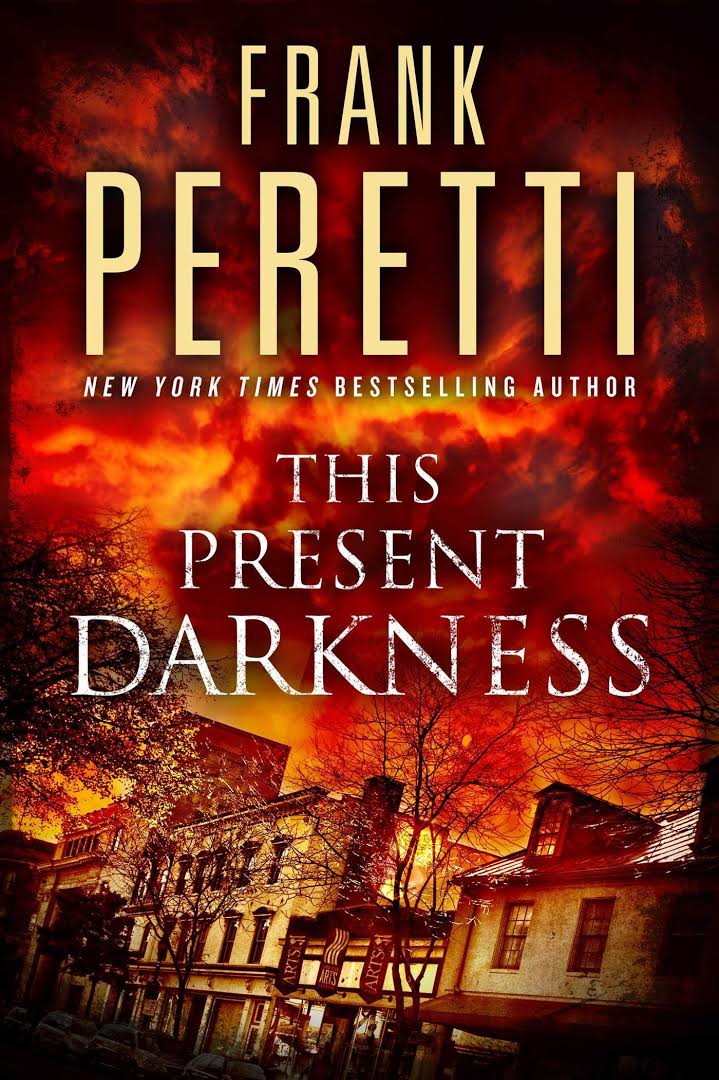
I think we’d all be familiar with Frank Peretti’s Darkness duo of novels (“This Present Darkness” and “Piercing the Darkness”) that had such an influence over our generation of Christian readers. Certainly there were other novels before Peretti that portrayed supernatural themes but these two are famous for their demonstration of a parallel world of angels and demons being influenced and influencing what occurs in the physical world.

When I chat with readers who are passionate about such novels, I find three recurring themes.

1. An interest in the unfamiliar

This is perhaps a key difference to romance novels where certain underlying central themes can be familiar to the reader. Spiritual warfare, a particular personal area of interest, is often not something we hear or read much about. It’s rarely a topic of discussion around the dinner table, catch up with friends nor is it often preached about in some churches.

2. Triumph over evil

Most supernatural novels will feature a strong theme of good versus evil. This can take many forms whether it’s the direct influence of a demon on a human, or villains allowing their fleshly desires to guide their actions. In evil being defeated, the reader is able to witness an expression of God’s incredible love for His creation.

3. Strengthens their faith

This third element can be applied to any genre where we see faithfulness, forgiveness, grace or any number of God’s attributes on display. We close the book with hope in our heart having been reminded of God’s awesomeness.

Writing Christian fiction that’s not preachy is especially challenging. One of the advantages I believe speculative fiction has over other genres is that it is ‘easier’ to introduce a Christian theme by using an otherworldly character, for example, an angel or demon, or a human with a special supernatural gift, or a story that is set on a completely different world/realm/time continuum.

Realm Makers Conference 

Just as the secular world has its Comic Con gigs a group of Christian authors created Realm Makers a few years ago and now host an annual conference. It was recently held in Reno in late July and I understand over 200 people attended to listen to the likes of Dekker, Rubart, Mary Weber and David Farland to name just a few. I’m hoping to get to it next year.

Recent examples of Supernatural Fiction

I’m always looking for good supernatural and speculation fiction. Craig Parshall’s new Trevor Black Series is a good one that combines the grittiness of crime drama with supernatural suspense.

I’m a big fan of the Harbinger novella series. It’s now finished having produced 20 novellas written by 5 authors: Bill Myers, Peretti, Angie Hunt, Alton Gansky and Jeff Gerke. Clever story, form of creation and distribution. We’ll see more of this multi-author style of story in the years to come.

If you haven’t sampled any supernatural fiction recently or ever may I encourage you to put a toe in the water. Perhaps start with one of the Darkness novels, which I mentioned above, or one of Jim Rubart’s. Jim’s latest, The Long Journey to Jake Palmer, is superb and was my favourite novel of 2016. You won’t be disappointed and who knows, you may become a convert.


Ian Acheson is an author and strategy consultant based in Sydney. Ian's first novel of speculative fiction, Angelguard, is available in the US, UK, Canada and Australia. Angelguard was recognised with the 2014 Selah Award for Speculative Fiction.You can find more about Angelguard at Ian's website, on his author Facebook page and Twitter