Showing posts with label achieving our goals. Show all posts

Monday, 1 February 2021

Reaching for our creative goals in 2021


Photo of a man on a mountaintop, his arms raised in triumph.
Photo by Xan Griffin on Unsplash


2020 was a bad year for most of us: The COVID outbreak, the restrictions, loss of work, weeks of being focused on the news, pondering our mortality, some even losing friends and family to the awful thing... We’ve done okay in Australia compared with many countries but still COVID took its toll on life as a whole including our finances, mental health and especially on our creativity. My friends in Victoria have done it especially tough, with three months in hard lockdown. I spent much of the year ghostwriting a non-fiction book and even with deadlines there were weeks when I couldn’t write. When I was done I wanted to get straight into a project for myself but I couldn’t. I was mentally and emotionally exhausted.


But 2021 is a new year. We have hope of a vaccine program for COVID and we’ve (hopefully) had some kind of break or holiday over Christmas. It feels, at least for me, that it’s time to start running again. A new year brings new hope and new purpose as we reach for our goals. 


You may already be doing this. If you’ve stayed focused and super-productive through 2020, I applaud you. In the comments, please share some of the things that have helped you do this. For the rest of us – those wanting to pick up again and get going afresh in their creative journey – let’s take a quick look at some things we can do to help us rock our creative goals in 2021.


Define your goals


I've never been a huge fan of the goal-setting gurus and their five-year plans. Especially not when they recommend the hyper-organised break-everything-down-into-the-minutia approach to goal setting. Maybe I should be. I know some people thrive with that level of organisation and they are a lot more productive than I am. But I get exhausted even thinking that way.


My writing ‘muse’ doesn’t like too much pressure. She’s sometimes like a frightened kitten – only sneaking out of her hiding place when everything is quiet to lap from a saucer of fresh milk and nibble at juicy chunks of topside steak. The pressure of high-powered goal setting immediately sends the poor thing hissing and spitting back into its dark corner under a cupboard. 


Having said that, I don’t work well without any goals, either. If we don’t aim toward a target, we are unlikely to hit it, right? I think it’s all about balance: having clear goals that guide our focus but don’t put so much pressure on us that we become creatively catatonic.


Have you thought about your goals for 2021? What's your definition of success?


I recently read Stop Worrying; Start Writing by Sarah R Painter. It’s a lovely book about overcoming your fears and neuroses as a writer (hint: I have lots ;)). Some books on productivity make you feel guilty – and exhausted before you get started. But Painter is so encouraging... like having a good friend grab your hand and say, 'It’s okay, keep going. You can do this!' 


One of the things she encouraged writers to do was to consider their own definition of success. For some it might be to one day win a literary prize, for others it could be having a book published for their family and friends to read. Others could have the goal of becoming a high-earning independent author. Success is a very individual thing and that’s okay. We shouldn’t feel pressured to have the same goals as our author friends.  


This is how Painter defines her own success:


Wouldn't this be fantastic? I had to copy this because her words echoed my own long-term desires – except I would have thrown in ‘and honouring God’ at the end of the last sentence. The problem is that for me you’d need an earth-bound version of the Hubble telescope to see that far into the future. I earned freelance income last year but nothing from my fiction writing.


It’s generally held that good goals should be both measurable and achievable. I also think that if we are to succeed in reaching our goals, they need to reflect our deepest motivations, otherwise, we’ll start out okay but fall away quickly. The ghostwriting experience I mentioned at the beginning of the post taught me a lot. I gained valuable experience, but it also showed me I don’t want to spend my writing life crafting someone else’s words. I gave it everything I had, but it didn’t satisfy my deeper desire to have my own words set loose to scurry around the universe and dive into readers’ hearts.


Photo by Ian Schneider on Unsplash


While there are many facets to creative success for me in 2021 the most important is to get my own words down on paper. 


Success for me involves planning a series of books and writing at least one new novel to a publishable standard in 2021 (ideally, I’d like to write two – or three – I'm greedy). 


There are other parts to my creative journey. I want to encourage others, so I’ll still do some freelance editing work. I also have a YA novel that needs a publishing home (or to be published independently). I'd also like to develop the animal art side of my creative business. However, the priority is getting new words of my own ‘out there’.  


What about you? What is your definition of success in 2021?


What changes are needed to reach your goals?


One of the things many of us are guilty of, is saying we want something but then not counting the cost and doing what it takes to get there. If we are to reach our goals, we’ll need to make some changes. Here are some things to think about:


Make your creative goals a priority


As a society we often devalue creativity, but I reckon that if it's important to God, it needs to be important to us. If creativity wasn't valued by God we'd be living in a flat monochrome world, where everything functioned but there was little beauty. Instead, he gave us a world with soaring mountains, azure oceans and brilliant blue butterflies. 


Not only does creativity make our life more meaningful, our creativity can help and heal others. Books and poetry are powerful. Wouldn't it be fantastic if the book we wrote made someone's life better for a few hours and gave them the hope they needed to keep going in hard times? 


Even if we are convinced that our creative goals are important, it's easy for life to subvert them. How much do we want this? Very few of us can do everything we'd like to do, so we need to set priorities. If we're going to write fresh words this year, we need to allow time and energy for this. 


Make your wellbeing (and the wellbeing of others) a priority too. 


On the other hand, there's no point reaching our goals if we make ourselves sick or neglect our family and friends. It's important to look after ourselves and others as we go. This may mean moving more slowly than we would like or doing things differently. 


Make changes with both your goals and wellbeing in mind. 


I hurt my back badly last year working under pressure with a less than ideal desk set-up, so it's important for me to make changes that help protect my health. For me this means trying to lose some weight, moving more (hydro-exercises are my friend), learning Dragon dictation and hopefully increasing my hours of non-writing part-time work so I can afford to spend my desk-time on my fiction. This will hopefully help me reach my creative goals ðŸ˜ƒ.


I also need to develop regular quality time for creative flow that fits in with the rest of my life. I do my best and most focused work between 10 pm and 2 am, which is okay if you never have appointments in the real world, don’t need to work a part time job, don't have a husband to encourage and don’t suffer from a fatigue-inducing chronic illness. The late night/ late mornings are not conducive to my health and the rest of the flow of my life. If I’m to accomplish my goals, I need to change. Will it be hard? Yes. Will it be worth it? Definitely!


I could say a lot more here but I’m out of time and well out of word count. Now it’s over to you.


What are your creative goals for 2021? What steps are you taking to get there? Let me know in the comments below. I’d love to hear what you are reaching for this year. 


Susan J Bruce, aka Sue Jeffrey, spent her childhood reading, drawing, and collecting stray animals. Now she’s grown up, she does the same kinds of things. Susan has worked for many years as a veterinarian, and writes stories filled with themes of suspense, adventure, romance and overcoming. Susan also loves to paint animals. 
Susan won the ‘Short’ section of the inaugural Stories of Life writing competition and won the 'Unpublished Manuscript' section of the 2018 Caleb prize. Susan is the editor of'If They Could Talk: Bible Stories Told By the Animals' (Morning Star Publishing) and her stories and poems have appeared in multiple anthologies. Her e-book, 'Ruthless The Killer: A Short Story' is available on Amazon.comYou can check out some of Susan’s art work on her website https://www.susanjbruce.com.


Monday, 6 July 2015

'One Day' by Sue Jeffrey

Late last year I decided to start blogging. I love writing and I like to express my opinion on things that matter. A blog seemed to be a natural outlet for those opinions. Alas, nothing happened. I'd think about setting it up then all too eagerly relegate the idea to my ‘one day’ pile. There were good reasons for this. Unexpected health issues, other writing projects, general busyness of life and church, along with paid work, are all factors that fuelled my exceptional gift for procrastination. [My honorary PhD in this subject will be coming in in the mail soon, I’m sure…] 

I might never have started but for Nola calling for writers for this blog. I reasoned that it was a great opportunity to begin. Even if it were just a one-time-only trek up the snow-capped mountain of bloggerdom, it would be a start. And so here I am. Hi, everyone!

I know I’m not alone in succumbing to the ‘one day’ phenomenon. It’s rife in our world where there are so many demands on our time and peace of mind. As writers we are especially at risk. This thing we do has no immediate productive value as our society judges it, unless we have a contract and a deadline. Even then there are those who question us.

‘Isn’t writing something you do when you retire?’ one woman said, when I enrolled at Tabor Adelaide to do my Masters (creative writing). I laugh about it now, but sometimes I still hear the whisper in my soul that creativity isn’t important. Not really. Not now. Maybe one day…

But it is important. For most of us Christian Writers Downunder, writing is a key part of our heart and our call. Our Father, the creator of all things, whispers into the deepest places of our being, saying, ‘Come, create with me.’  We obey as best we can but sometimes it’s still tempting to say, ‘Yes - but one day.’

In Ephesians 5:16 Paul tells us to make the most of every opportunity, as the days are evil. How we do that depends on our call. But we need to do it now – not one day – because one day might never come.

Adelaide is still reeling from the news that a prominent sporting personality was murdered last Friday – by his son. It’s unbelievable. Phil Walsh was senior coach of the AFL team the Adelaide Crows and in that role was a well-liked mentor to many young footballers. He had been a strong influence at several clubs before this. I remember reading an article about Phil before the current footy season. In 2012 he had an accident while on holiday in Peru. He was hit by a mini-bus and his injuries left him in hospital for weeks. He realised that life was precious – and brief – and he needed to take risks and make the most of his potential. When he returned to Australia he listed all the things he wanted to accomplish. Until that time he’d been content to be an assistant coach but in late 2014 he agreed to be the senior coach at the Crows. He died a few months later.

The whole thing is tragic and many in their grief will ask ‘why?’ There is no answer other than ‘the days in which we live are evil’.

I don’t know where Phil’s heart was/is with God – only the Lord knows that – but I do believe that when he died he was fully engaged in what he perceived was his life purpose. 

Are we?

Our God is gracious as he calls us forward in our craft. He forgives our procrastinations. He whispers to us as we feel his tug to co-create. ‘Begin afresh, my child. Forget about yesterday, don’t worry about ‘one day’, today is here. It is precious; so are you!’

What has God put on your heart to accomplish? What will you do today?


Sue Jeffrey was born in Scotland but moved to Brisbane, Australia with her family when she was just a wee lass. After a childhood spent reading, drawing and accumulating stray animals, Sue studied veterinary science and later moved to Adelaide where she worked as both a vet and a pastor. After a sojourn of several years in the Australian Capital Territory, Sue returned to Adelaide with two dogs, a very nice husband, and a deep desire to write. Sue recently completed a MA in creative writing at Tabor, Adelaide and now lives in Grange, South Australia, with her husband, two ancient doglets, a fat, tortoiseshell cat and a recently rescued cockatiel (yes, she still accumulates strays). Sue also paints animal portraits.


Thursday, 10 July 2014

Base Camp

by Jeanette O'Hagan

     The Sovereign Lord is my strength;
    he makes my feet like the feet of a deer,
    he enables me to tread on the heights.
     Habbukuk 3: 19 (NIV)

In 1996 Bear Grylls broke his back in a parachuting accident, severely crushing several vertebrae. Fortunately, his spine was not severed. In the long months following the accident a photo of Everest and an old crazy dream to conquer its summit motivated his recovery.
‘So much of my focus during my recovery centred on Everest. It gave me something to aim for, but no one in my family really took it seriously.’ Bear Grylls 2011
Almost two years later, at the age of 23, Bear became the youngest person to reach the summit of Mount Everest (at that time).
‘At 7.22am on May 26, 1998, with tears still pouring down my frozen cheeks, the summit of Everest opened her arms and welcomed me in. My pulse raced and in a haze I found myself suddenly standing on top of the world.’ Bear Grylls 2011

That journey didn’t happen with a snap of a benevolent Genie’s fingers. It took determination, guts, preparation, training, providence and time. Time in hospital, 3 months bedridden at home, 8 months of 10 hours a day rehabilitation, a tester expedition to Mount Ama Dablam (6858m) in 1997 before he even started the Everest Expedition. Once on the mountain, it took  another 3 ½ months – some weeks to acclimatise to the mountain, 6 weeks to reach the final base camp, more preparation and setbacks - before finally Bear and his companions began their gruelling 10 ½ hour climb to the summit.  All the while knowing that on average 1 in 6 climbers died in the attempt.

Just so you know – I’m not planning on climbing Mount Everest (8848 m) anytime soon. But sometimes I think that there are marked similarities between climbing the world’s highest peak – and being a writer. I don’t know what the attrition rate of aspiring authors is – but I do know that the dream doesn’t materialise overnight. It takes determination, guts, preparation, training, providence and time. Sound familiar?

And part of what makes the climb possible is the base camps.
  • The base camp is a place of preparation – where one marshals one’s resources, enhance one’s skills and plans the next step of the ascent;
  • The base camp is a place of acclimatisation, of adapting to the new conditions so that what seemed hard becomes natural;
  • It’s also a place to recuperate and recover after setbacks, injuries or failed attempts;
  • Even getting to the base camp is an achievement;
  • There is more than one base camp before reaching one’s goal;
  • Base camp is also a place to reflect and sometimes to re-imagine one’s goals. There are, after all, other times, other seasons, maybe even other goals.
Because of the need to adapt to the low oxygen environment, Bear and his companions spent as much time descending as ascending, each time going up ‘just a little bit higher.’   
 ‘They actually say you climb Everest seven or eight times over just because of this process of ascending and descending.’ Bear Grylls 2010a

Receiving rejections and criticisms, often scathing, are part of what it means to be a writer. Sometimes these negatives are deserved, sometimes they are not. It takes time to hone one’s skills, to make connections, to find those elusive opportunities or to make them. And there are many summits along the way – the day we decided to sit down and write, the day we finished our first draft, the day we sent it (properly edited) to a publisher, and then submitted it to the next one. For me the summit is publication – but the summits don’t stop there – with marketing, networking, writing and publishing more books, becoming established, keeping the ideas flowing, gaining an audience and so on.

‘It was about knowing and believing that dreams are worth taking a risk for. Dreams come at a cost. And the rewards don't always go to the strongest or the bravest or the fittest or the cleverest. The rewards go very simply to those who can understand it means: never, ever quit.’ Bear Grylls 2010b

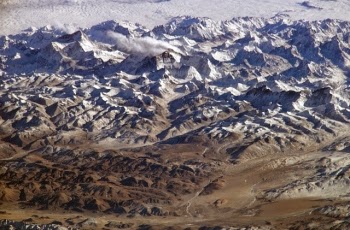
If we are following the call of our Lord, we know we do not climb alone. And it may also be that while we are fixated with the summit, God has other plans in mind. As Paula Vince reminds us, Mount Everest is just another hard to see bump from space. She says, ‘I now like to think that from a lofty enough heavenly perspective, all the good we do just becomes part of the earth's fabric.’ (Vince 2014) What’s important is the journey, not the climb – knowing that our Master blesses us and through us, He blesses others, through each small obedient action we take along the way.


 Jeanette has practiced medicine, studied communication, history and theology and has taught theology.  She is currently caring for her  children, enjoying post-graduate studies in writing at Swinburne University and writing her Akrad fantasy fiction series.  She is actively involved in a caring Christian community.


You can find her on her Facebook page http://www.facebook.com/JeanetteOHaganAuthorAndSpeaker or webistes Jeanette O'Hagan Writes  JennysThread.com .

Images:

Mount Everest (Public Domain CCO) sourced from Pixabay
The Himalyas (Public Domain CCO) sourced from Pixabay 

References:

Bear Grylls 2011 ‘Bear Grylls: How Climbing Everest Was a Perfect Cure for a Broken Bake’ in Daily Mail,  http://www.dailymail.co.uk/news/article-1389519/Bear-Grylls-How-climbing-Everest-perfect-cure-BROKEN-BACK.html#ixzz373tmdIC5
Bear Grylls 2010a ‘Bear Grylls Describes Deaths of His Climbing Mates on Everest’ in Webex, http://blogs.webex.com/webex_interactions/2010/08/bear_grylls_death_on_everest.html
Bear Grylls 2010b ‘Bear Grylls Survives the ‘Death Zone’ and reaches the summit at last’ in Webex, http://blogs.webex.com/webex_interactions/2010/08/bear_grylls_everest.html
Bear Grylls 2012 Mud, Sweat and Tears William Morrow

Paula Vince, 2014, ‘We May Have Mount Everest Syndrome’ in It Just Occurred To Me, http://justoccurred.blogspot.com.au/2013/10/that-we-may-have-mount-everest-syndrome.html