Showing posts with label On Writing. Show all posts

Thursday, 1 August 2019

Books on Writing Craft: On Writing


by Jeanette O'Hagan

On Writing 10th Anniversary Edition: A Memoir of the Craft
by Stephen King (2010; first published 2000)


Stephen King's On Writing is a classic text that hasn't dated. It is part memoir, part writing manual. King writes with a lucid, entertaining and humerous style peppered with the occasional strong language.

Becoming a Writer


The first 1/3 of the books looks at King's childhood and the challenges of his writing career with the occasional application to writing craft. I was fascinated by King’s own writing journey and how his background (from a poor single parent family with strong work ethic and Methodist ties) has impacted on him as a man and a writer. I was particularly inspired by his discussions about how these principles worked in creating his own fiction.

Writing Journey


The middle is a clearly written, practical look at a writer's journey from starting out, craft issues, publishing and more. King’s explains his approach to writing – from the prime rule ‘write a lot and read a lot’, the basic tools in the writers toolbox – vocabulary, grammar, style, and voice. He speaks about the writing process, how to court the muse (work consistently and hard), right through to finding ideas, critique, editing, looking for agents and publishers. He has a lot of good stuff to say about adverbs, dialogue, description, characterisation, back story, research and theme. He is wary of writing groups (but not against them) and is even more sceptical of plotting – being the archetypical pantser. And in all this, for him the story is king.

Overcoming obstacles


The last 1/4 details the King's injuries as a result of a horrific accident and his struggles to get back to writing again.


My reaction


King's style is easy to read, almost mesmerizing and his examples from his own writing and experience or those of others are enlightening.

I enjoyed reading this book particularly because it was so much more than a 'how-to manual'. On the other hand, the structure was a tiny bit jarring and I think the last section could have been shorter (though I can understand with this being such a recent trauma for King at the time, why he might have felt the need for a blow by blow description). I think fans would love the first third, writers can benefit from the whole book, particularly the middle section.

Stephen King is a veteran author who has wooed millions of avid fans with his own special brand of suspense, horror, faith and the battle between good and evil. To date he has written over 65 books and sold over 330 million copies. To be honest, I’ve read only one of his novels – The Stand –  am three-quarters of the way through another  –  It –  and have watched the film adaptation of the emotional The Green Mile. I'm not a particular fan of horror (and have skimmed a few scenes in It), but his writing is clear, gripping, blunt, and gives a great sense of character and place.

As a writer, I found On Writing refreshing and encouraging. Even the middle section takes a much broader approach than the strictly how-to tomes that tend to focus on the mechanics. King’s book doesn't neglect the mechanics but I think he also addresses the heart. He is definitely in the ‘tell it how you hear it’ side of language debate – and is not averse to being blunt. On the other hand, themes of God, faith and redemption often recur in his fiction and he notes that these themes are important to him personally (see here also).

Whatever you may think about his preferred genre, his book on the writing craft On Writing is an influential classic often quoted and still relevant almost 20 years after it was first published.

“The rest of it - and perhaps the best of it - is a permission slip: you can, you should, and if you're brave enough to start, you will.”
 Stephen King, On Writing: A Memoir of the Craft


Jeanette O'Hagan spun tales in the world of Nardva from the age of eight. She enjoys writing fantasy, sci-fi, poetry, and editing.

Her Nardvan stories span continents, millennia and cultures. Some involve shapeshifters and magic. Others include space stations, plasma rifles and cyborgs.

She has published over thirty stories and poems including the five books in her YA epic fanasty - Under the Mountain novella series -as well as Ruhanna's Flight and Other Stories, and her debut novel, Akrad's Children - a Young Adult secondary world fantasy fiction with adventure, courtly intrigue and romantic elements. Most recent publications are Caverns of the Deep & Tales of Magic and Destiny.

Jeanette has practised medicine, studied communication, history, theology and a Master of Arts (Writing). She loves reading, painting, travel, catching up for coffee with friends, pondering the meaning of life and communicating God’s great love. She lives in Brisbane with her husband and children.

Find her on:


Monday, 27 August 2018

Some Top Writing Books

by Jeanette O'Hagan


To some extent we learn to write by reading and by writing.  As we read fiction we get a sense of what makes a good story. The more we read, the stronger that intuitive sense develops. Writing also helps us to hone our skills. 

Yet like most skills, we can also learn from mentors, teachers, blog posts, podcasts, and craft books.  Moreover, what readers, publishers and editors are looking for in stories and writing style can and does change over time.

Fiction from the eighteenth and nineteenth century was often narrated from an omniscience (God's eye-view) point of view, included long descriptive passages, convoluted and flowery sentences, authorial intrusions ('dear reader' passages) and unsolicited opinions, and many many pages.

While we can still enjoy such classics, a modern reader has less time and patience than their eighteenth century counterpart. They also have a much wider knowledge of the world (through TV, movies, social media, travel) and don't need scenes to be painted for them in loving and florid detail over several paragraphs or pages.

Writing styles currently favoured usually have a focused or deep first or third person point of view (no head hopping please), less flowery more muscular prose (out with adverbs, too many adjectives, creative dialogue tags, weasel words etc). A modern novel is often expected to be faster paced, with a tighter narrative structure.  And often publishers and readers will make up their mind about a book after the first paragraph or page (and certainly by the first 100 pages).

That in mind, in today's post I will share a number of writing books that I've found helpful along the way. 

Self-Editing for Fiction by Renni Browne and Dave King


Self-Editing for Fiction Writers: How to Edit Yourself Into Print


This book is a good starting point for the beginner writer and covers a number of style issues.


Rayne Hall's books for writers 


In particular The Word Loss Diet - brilliant and practical guide at making one's writing taunt and tight. But I also appreciated her books on Writing Vivid Settings and  Writing Deep Point of View.  She includes lots of writing examples. Her excerpts of her own fiction showcases her tips, though are not my preferred genre - supernatural horror.  My review of The Word Loss Diet and Writing Vivid Settings.

K M Weiland  Structuring Your Novel


Weiland's blog Helping Writers Become Authors has a great number of practical tips on plot structure, hero's journey, character arcs etc. which are distilled in a range of books, including Structuring Your Novel. She is a plotter (in a writerly sense), but pansters can still learn a lot about how story works.

Stephen James Story Trumps Structure


James is more of a panster, though his book can apply to both plotters and pansters. I found his book excellent for understanding certain elements that make a story work - such as the need to escalate the stakes as the story progresses. My review is here.

Lisa Cron's Story Genius


I found the psycho-evo-technobabble and black and white claims in this book rather annoying. On the other hand Cron delves deep into the emotional arc for characters which is I think is worth exploring. My review is here.

Blake Synder's Save the Cat


Save the Cat: The Last Book on Screenwriting You'll Ever Need


This is aimed more at scriptwriters but has a ton of good tips on story structure, engaging the reader, drafting the story, as well as story premise and pitching.  It's an easy and fun read.

Stephen King's On Writing


Part memoir, part craft book, this is a well worthwhile read (even if  you don't enjoy King's books). Another panster, he has some great tips on writing style, creativity and process. My review is here.

Margie Lawson


Not a book, but Margie runs Immersion classes, online classes and has lecture packets available from her website. While she doesn't deal with structure, she has a whole raft of tips on how to keep the reader's engagement and make your words sing. Her website is here.

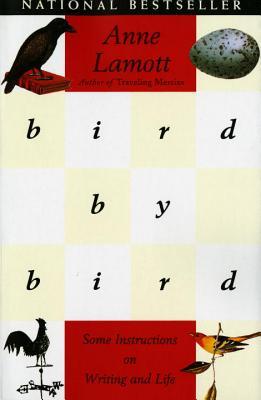
Anne Lamont's Bird by Bird


Bird by Bird: Some Instructions on Writing and Life

Again, part memoir, part reflection on the writing journey, Lamont has some pertinent insight in the mind-set of the writer. Her book is both witty and poignant. A Christian, she doesn't shy away from hard issues. Here's my review.

Joanna Pen's Making a Living by Writing


A practical look at how one might be a full-time writer - if that's part of your goals then it's worth a read.  Joanna also has other books, a website and podcast with useful information in this area. My review here.


This, of course, is just a small sample of all the writing books and how-to books that are out there. I've got a good number on my to-read list.  (I've included links to some of my reviews, which you or may not agree with :) ) Not every book will strike a chord and with each book, we need to weight what works for us as a writer and what doesn't. 


On the other hand, don't dismiss something out of hand, until you're considered it and maybe even experimented with it. Best of all, understand 'why' something is recommend or the reason for common 'rules' as that helps you know when and if you should 'break' them.

If you have some recommendations for books about writing that you've benefited on, I'd love you to put them in the comments below. Let's share our discovery of gems, in order to help each other.

-----

Jeanette started spinning tales in the world of Nardva at the age of eight or nine. She enjoys writing secondary world fiction, poetry, blogging and editing. Her Nardvan stories span continents, time and cultures. They involve a mixture of courtly intrigue, adventure, romance and/or shapeshifters and magic users. She has published numerous short stories, poems, two novellas and her debut novel, Akrad's Children and new release Ruhanna's Flight and other stories.

Jeanette has practised medicine, studied communication, history, theology and a Master of Arts (Writing). She loves reading, painting, travel, catching up for coffee with friends, pondering the meaning of life. She lives in Brisbane with her husband and children.


Find her on:

Thursday, 21 June 2018

Meet Our Members: Jeanette O'Hagan


Each Thursday in 2018 we will be interviewing one of the members of Christian Writers Downunder – to find out a little bit more about them and their writing/editing goals.
Today's interview – Jeanette O’Hagan

Question 1: Tells us three things about who you are and where you come from.


I was born in Mt Isa and spent my childhood in Mt Isa, Sydney, Kitwe (Africa), Melbourne and Hamilton (Victoria) – but mainly in Mt Isa and Kitwe, before coming to Brisbane to start Uni.

With my dad (1928-2018) and two brothers


My forbears were adventurers and immigrants; my grandparents came from three continents (Europe, Africa, Australia) and four countries (Ireland, South Africa, England, Australia). Nevertheless, after moving round so often, I am now firmly planted in Brisbane with my husband and two children.

My brother used to joke that I’m getting better by degrees (medicine, arts, theology, TESOL and now MA writing). I love to learn facts, knowledge, all sorts of titbits across the arts and sciences, but I’m abysmal at trivia about music and sports.

Question 2: Tell us about your writing.  What do you write and why?


I mostly write fantasy (with a dash of sci-fi), poetry and blog posts. I fell in love with books early on and was a voracious reader as a child. About fourth or fifth grade I began telling myself stories, and these extended daydreams grew into a world (Nardva), with characters I loved having thrilling adventures. I write to bring that world and the characters and adventures to life.  It’s exhilarating, fun, a wild ride. I also hope God’s love and grace shines through my world and words.


With the poetry, it’s more an expression of life as I experience it — moments, strong emotions, reflections, cameos, events. While blogging is a way of musing about stuff and passing on the things I’ve learned along the way.

Question 3: Who has read your work? Who would you like to read it?


Who has read my work — my family, other writers and reviewers, and some keen readers – in Australia, New Zealand, USA, Canada, UK, maybe even France and Germany — still a fairly small and select circle at this stage, but I’m hopeful it will continue to expand.  I was thrilled at Gold Coast Supernova earlier this year when a couple of times, strangers stopped by to enthuse about reading my books and wanting more stories.  But even more special was when my mum asked me to read to Dad a couple of poems I’d written from experiences growing up – Thunderstorm & Floating (in Inner Child, Poetica Christi).

As to who would I like to read my books – I write for the general market, in the hope my books might seed the imagination with divine possibilities, to inspire faith, hope and love in my readers.  


Question 4: Tell us something about your process. What challenges do you face? What helps you the most?


Each story is different. My first novel started from a lucid dream and was completely pantsed (Finding Elene – yet to be published). Some I’ve daydreamed for months and years, allowing the characters a lot of freedom, before I’ve set out to write their stories (Akrad’s Children).  Other stories have I written from a theme, with the characters and plot emerging out of the setting or concept (eg Heart of the Mountain). I usually have some idea where I’m going – with major incidents or turning points or the ending in mind, but not always.

Challenges are getting time to write (not getting distracted) and sorting out the structure, especially with books that are part of a series.

What helps me most is writing consistently. I’m much more creative and in the flow if I write every day (or every other day). And second, getting feedback from critique partners, beta-readers and editors.

Question 5: What is your favourite Writing Craft Book and why?


It’s hard to keep it to one. I think two of the most helpful and freeing has been Stephen James’ Story Trumps Structure and Stephen King’s On Writing.  I do appreciate the more prescriptive books and the insights they give, but I find it hard to be creative with strict formulas, I am suspicious of ‘one size fits all’ approaches (especially when touted as revolutionary) and I like to understand the why behind the rules so I know when I can bend them 😊 .


Question 6: If you were to give a shout-out to a CWD author, writer, editor or illustrator – who would they be?


Without a doubt Nola Passmore (our illustrious former CWD coordinator) who has been a huge encouragement and who has wrangled me along to courses like Year of the Novel and Margie Lawson immersion, as well as been a great beta reader and editor. Plus, she is an amazing writer and I love her work. Though of course there are so many others, Paula Vince, Anusha Atukorala, Lynne Stringer, Adele Jones, Adam Collings, and many, many others. 


Question 7: What are your writing goals for 2018? How will you achieve them?


My goals for 2018 is to finish writing the last two novellas in the Under the Mountain series, edit the first draft of Rasel’s Song (sequel of Akrad’s Children), and start on a dragon novel (Dragonspite) and/or my cyborg trilogy (The Chameleon Protocols). I’ll achieve this by making time to write, keeping focus, and a big dose of God’s grace.


Question 8: How does your faith impact and shape your writing?


My faith is the bedrock and source of my writing. I believe God has given me the desire, the passion, the abilities, and this time, this moment, to write. I trust that He will continue to provide those opportunities, though He is sovereign, and I commit my plans and the outcomes to Him. Because I write for the general market and because I write fantasy, my stories aren’t usually ‘in your face’ Christian. But I believe they are consciously written from a Christian worldview, informed by Christian values, and threaded through with Christian themes and references, though perhaps subtly at times as in many of the parables. I’m grateful to my Maker in whose steps I attempt to follow.


Jeanette O’Hagan first spun tales in the world of Nardva at the age of eight or nine. She enjoys writing secondary world fantasy, science fiction, poetry, blogging and editing. Her Nardvan stories include a mixture of courtly intrigue, adventure, romance, and/or shapeshifters.

Recent publications include Akrad's Children—a Young Adult kingdom fantasy; Heart of the Mountain and Blood Crystal— the first two novellas from the Under the Mountain series; plus Ruhanna’s Flight and Other Stories. She has stories and poems in seventeen other anthologies, including The Quantum Soul, Tales From the Underground, Like a Woman and Futurevision.

Jeanette has practised medicine, studied communication, history, theology and a Master of Arts (Writing). She loves reading, painting, travel, catching up for coffee with friends, pondering the meaning of life. She lives in Brisbane with her husband and children.


Links:

Sign up to my Newsletter http://eepurl.com/bbLJKT and receive a copy of Ruhanna’s Flight: a short story.